
Supreme Court on Tribunal Reforms Act, 2021
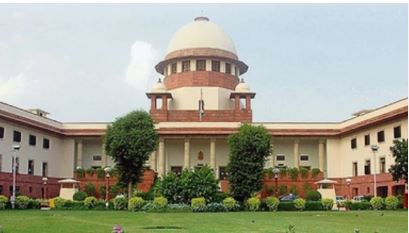
- 21 Nov 2025
In News:
In a landmark judgment delivered in November 2025, the Supreme Court of India struck down key provisions of the Tribunal Reforms Act, 2021, holding them unconstitutional for violating the principles of judicial independence, separation of powers, and equality before law. The Court also directed the Union Government to establish a National Tribunal Commission (NTC) within four months, terming it an “essential structural safeguard” for the tribunal system.
Background: Tribunal Reforms Act, 2021
The Tribunal Reforms Act was enacted in August 2021, soon after the Supreme Court had struck down the Tribunal Reforms (Rationalisation and Conditions of Service) Ordinance, 2021. The Act sought to:
- Abolish several specialised tribunals and transfer their functions to High Courts.
- Centralise appointments and service conditions of tribunal members.
- Fix short tenures (4 years), impose a minimum age of 50 years, and empower the executive to frame rules on salaries and allowances.
The stated objectives were efficiency, uniformity, and rationalisation. However, critics argued that it enhanced executive dominance over tribunals where the Union Government is often the largest litigant.
Supreme Court’s Key Findings
A Bench led by the Chief Justice held that the Act amounted to an impermissible “legislative override” of binding Supreme Court judgments, particularly the Madras Bar Association (MBA) IV & V cases. The Court noted that Parliament had merely “repackaged” provisions already struck down, without curing the underlying constitutional defects.
The Court struck down provisions that:
- Reintroduced a 4-year tenure, undermining security of office.
- Fixed a minimum age of 50 years, excluding younger advocates and experts.
- Allowed the executive to choose from a panel of names, diluting the role of independent selection committees.
- Tied service conditions of tribunal members to those of civil servants.
The Bench emphasised that norms on tenure, age limits, qualifications, and appointment procedures are not abstract judicial preferences but constitutional requirements flowing from Articles 323A and 323B, read with Article 14 and the basic structure doctrine.
National Tribunal Commission: Court’s Direction
The Court directed the Centre to establish a National Tribunal Commission within four months. The NTC is envisaged as an independent body responsible for:
- Appointments and evaluation of tribunal members.
- Administration, infrastructure, and staffing of tribunals.
- Ensuring uniform standards and insulating tribunals from day-to-day executive control.
Until a fresh, constitution-compliant law is enacted, the safeguards laid down in the MBA judgments will continue to govern tribunal functioning.
Significance of the Judgment
- Reaffirmation of Judicial Independence: The ruling reinforces that tribunals, though statutory, perform core judicial functions and must remain free from executive influence.
- Limits on Parliamentary Power: While Parliament can legislate on tribunals, it cannot nullify or bypass constitutional defects identified by the Supreme Court through re-enactment.
- Protection of Separation of Powers: By rejecting executive dominance in appointments and service conditions, the Court preserved the balance among organs of the State.
- Institutional Reform through NTC: The judgment revives the long-pending idea of a National Tribunal Commission as a systemic solution rather than ad hoc reforms.
Way Forward
The verdict underscores the need for a fresh tribunal law aligned with constitutional principles—ensuring reasonable tenure (at least five years), transparent and merit-based appointments, and institutional autonomy. Strengthening tribunals through the NTC, rather than weakening them or overburdening High Courts, is essential for delivering speedy, specialised, and impartial justice.
Conclusion
The Supreme Court’s decision is a decisive assertion of constitutional supremacy and a reminder that efficiency-driven reforms cannot come at the cost of judicial independence. By striking down the Tribunal Reforms Act, 2021, and mandating the creation of a National Tribunal Commission, the Court has laid down a principled roadmap for sustainable and constitutionally compliant tribunal reform in India.