
Implications of the US–Israel–Iran Conflict for India
- 14 Mar 2026
In News:
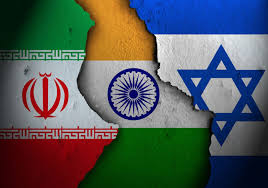
The escalating tensions involving the United States, Israel, and Iran have disrupted global supply chains and exposed vulnerabilities in India’s energy security, trade flows, and macroeconomic stability. The crisis has also created a complex diplomatic challenge for India, which maintains strategic relations with all three countries while pursuing a policy of strategic autonomy.
The conflict has raised concerns about India’s ability to maintain its current “Goldilocks” macroeconomic balance of high growth with relatively low inflation, as disruptions in the Gulf region threaten energy supplies, fertilizer imports, and agricultural exports.
Impact on India’s Energy Security
India imports over 85% of its crude oil requirements, with a large share coming from Gulf countries such as Saudi Arabia, Iraq, the United Arab Emirates, and Qatar. Much of this energy trade passes through the strategically important Strait of Hormuz.
Disruptions in this maritime chokepoint could halt the flow of crude oil and liquefied natural gas (LNG), triggering surges in global oil prices and increasing India’s import bill. Rising crude prices can lead to imported inflation, currency depreciation, and a widening current account deficit, potentially affecting India’s projected economic growth of over 7%.
India’s Strategic Petroleum Reserves (SPR) currently store around 5.33 million metric tonnes of crude oil, which provides only a limited buffer compared to countries such as China that maintain much larger reserves.
LPG and Natural Gas Vulnerabilities
India is the second-largest consumer of Liquefied Petroleum Gas (LPG) in the world, largely due to expanded access to clean cooking fuel through the Pradhan Mantri Ujjwala Yojana. Around 60% of India’s LPG demand is met through imports, mainly from Gulf nations.
Most LPG shipments pass through the Strait of Hormuz, making supplies highly vulnerable to regional disruptions. India’s underground LPG storage capacity is about 1.4 lakh tonnes, sufficient for less than two days of consumption, while daily demand is about 80,000 tonnes.
To address supply disruptions, the government invoked the Essential Commodities Act, 1955 and directed refineries to maximise LPG production by diverting propane and butane streams. This increased domestic output by around 25%, though it resulted in supply constraints for commercial users such as hotels and restaurants.
India also consumes roughly 195 million metric standard cubic metres per day (MMSCMD) of natural gas, with nearly half imported. Disruptions in LNG shipments have forced the government to prioritise supplies for household fuel and fertilizers while limiting industrial consumption.
Fertilizer Supply Risks
India depends heavily on imports of key fertilizer inputs from the Gulf region. These include:
- Merchant ammonia from Oman, Saudi Arabia, and Qatar
- Sulphur from the UAE, Kuwait, and Saudi Arabia
- Phosphoric acid and rock phosphate from Jordan
Domestic urea plants also rely on imported LNG for production. While India currently holds comfortable fertilizer stocks—about 5.5 million tonnes of urea as of early 2026—a prolonged disruption could force the government to divert natural gas from industries to fertilizer production in order to protect agricultural output and food security.
Impact on Agricultural and Food Exports
The conflict also threatens India’s agricultural exports to West Asia. According to the Global Trade Research Initiative, nearly USD 11.8 billion worth of Indian food and farm exports to the region are at risk.
Countries such as Saudi Arabia, Iraq, the UAE, and Iran are major buyers of Indian basmati rice and other agricultural products. Over 3,000 shipping containers have reportedly been stranded at ports such as Kandla Port and Mundra Port due to disruptions in shipping routes.
The region accounted for about 21–22% of India’s agricultural exports in 2025, and disruptions could affect farmers and exporters in states including Punjab, Haryana, Uttar Pradesh, Andhra Pradesh, Telangana, and Maharashtra.
Impact on Core Industrial Sectors
- Construction and Cement: India imports significant quantities of limestone and gypsum from Gulf countries, which are essential inputs for cement production. Supply disruptions could increase construction costs and delay infrastructure projects.
- Steel Production: A large portion of India’s steel industry uses the Direct Reduced Iron (DRI) process, which relies on natural gas. LNG supply disruptions could reduce steel output and affect industrial production.
- Manufacturing and Gems: India imports over 50% of its copper wire from Gulf countries, a critical input for power transmission and electronics manufacturing. Additionally, India’s diamond-processing hub in Surat depends heavily on rough diamonds imported from the UAE and Israel, making the sector vulnerable to trade disruptions.
Financial and Currency Pressures
- The conflict has also put pressure on the Indian rupee, which has weakened due to rising oil prices and capital outflows. To stabilise the currency, the Reserve Bank of India has reportedly intervened in the foreign exchange market using a portion of India’s USD 730 billion foreign exchange reserves.
Concerns for the Indian Diaspora
- India has a large diaspora of nearly 10 million people in Gulf Cooperation Council (GCC) countries, who collectively send over USD 51 billion annually in remittances. Ensuring the safety and evacuation of Indian nationals during escalating tensions remains a major policy priority.
Measures to Reduce Strategic Vulnerability
To mitigate the long-term impacts of such geopolitical shocks, India may adopt several policy measures:
- Diversifying energy imports by expanding supply agreements with countries in Latin America, West Africa, and the United States
- Expanding Strategic Petroleum Reserves to meet the global benchmark of around 90 days of import cover
- Accelerating renewable energy and green hydrogen development under the National Green Hydrogen Mission
- Increasing domestic gas production through exploration policies such as the Hydrocarbon Exploration and Licensing Policy (HELP)
- Promoting alternative fertilizers such as nano urea and nano DAP and strengthening the PM PRANAM initiative to reduce chemical fertilizer use
- Creating a war-risk insurance pool through the Export Credit Guarantee Corporation (ECGC) to support exporters
- Expanding alternative trade routes such as the Chennai–Vladivostok Eastern Maritime Corridor to reduce dependence on Middle Eastern chokepoints.
Conclusion
The West Asian conflict underscores India’s vulnerability to global geopolitical shocks due to heavy reliance on imported energy and critical inputs. Strengthening energy diversification, strategic reserves, resilient trade routes, and domestic production capabilities will be essential for safeguarding India’s economic stability. Building such resilience will enable India to transition from a supply-dependent economy to a strategically secure and self-reliant economic power in an increasingly uncertain global environment.