
Indian Bond Market: Resilience Amid Global Volatility
- 26 Aug 2026
In News:
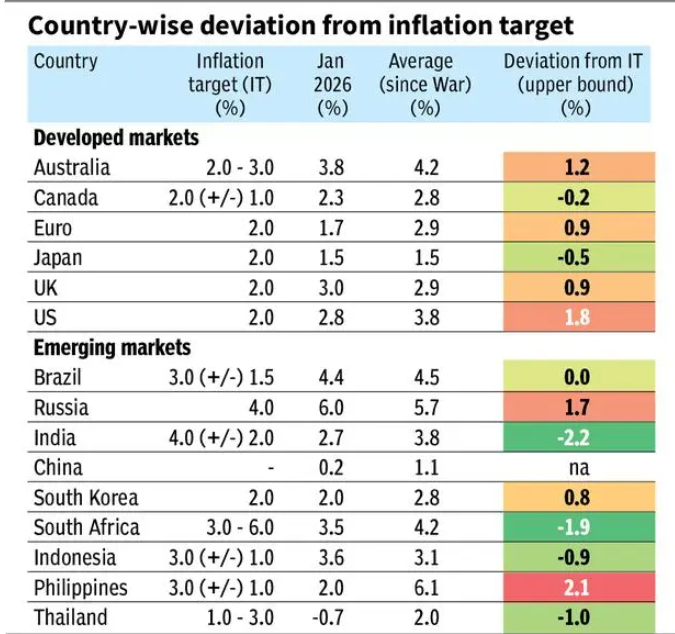
Despite heightened global financial volatility, India’s government bond market has remained relatively stable. During the six months up to August 14, 2026, the 10-year Indian benchmark yield increased by only 8 basis points, compared with substantially larger increases in major economies. This resilience reflects the interplay of benign domestic inflation, stable growth, fiscal credibility and targeted RBI interventions.
Understanding Bonds and Bond Yields
A government bond is a debt instrument through which the government borrows for a specified period, paying interest and returning the principal at maturity. Bond prices and yields move inversely: when demand for bonds falls, prices decline and yields rise.
Government bond yields are important benchmarks for the broader financial system because they influence borrowing costs for banks, companies and households. Rising yields may indicate expectations of higher inflation, tighter monetary policy or fiscal stress, while relatively stable yields can signal investor confidence in macroeconomic stability.
India’s Relative Resilience
Over the six months to August 14, 2026, 10-year yields rose by:
- US: 60 basis points
- Japan: 66 basis points
- UK: 56 basis points
- South Korea: 72 basis points
- Indonesia: 78 basis points
- Philippines: 61 basis points
- India: only 8 basis points
India nevertheless faced significant external pressures, including the West Asia conflict and higher energy prices, alongside concerns surrounding rainfall and El Niño. These were offset by relatively contained inflation, resilient economic growth, a stable fiscal outlook and improvements in the external sector.
Monetary Policy and Inflation
- The RBI’s Monetary Policy Committee (MPC) maintained a neutral stance for three consecutive meetings rather than following the rate-hiking cycle adopted by several emerging economies.
- India's comparatively favourableinflation-growth combination provided this policy space. Supply-side interventions and management of second-round effects helped limit the transmission of energy-price shocks into broader inflation. Particularly moderate core inflation further reduced the immediate need for monetary tightening.
- Thus, the RBI could adopt a wait-and-watch, data-dependent approach rather than responding to external pressures through immediate rate hikes.
RBI’s Targeted Liquidity and Foreign-Exchange Measures
Instead of relying exclusively on the policy rate, the RBI used targeted measures to strengthen dollar inflows through channels such as:
- FCNR(B) deposits
- External commercial borrowings
- Overseas foreign-currency borrowings
These measures attracted approximately $56.8 billion between June 8 and August 13, including around $52.3 billion through FCNR(B).
The resulting foreign-exchange inflows also improved domestic banking liquidity. Average surplus liquidity increased from around ?1.3 lakh crore in July to ?3.2 lakh crore during August 1–13. Easier liquidity pushed overnight rates towards the lower end of the policy corridor.
The stronger deposit base also reduced banks’ dependence on relatively expensive market-based funding such as certificates of deposit.
Foreign Investment in Government Debt
Foreign investor sentiment received a boost from measures such as tax exemptions for foreign debt investors and efforts by the RBI to streamline investment restrictions and broaden eligible securities. Debt inflows reached $5.6 billion in June, the highest monthly inflow since January 2020.
However, the July 31 deferment of India's inclusion in the Bloomberg Global Aggregate Index temporarily weakened sentiment and delayed the anticipated benefits of index-linked foreign inflows.
Significance and Outlook
Stable bond yields have several benefits:
- For the government: lower and more predictable borrowing costs amid substantial fiscal expenditure.
- For businesses and households: greater stability in financing costs.
- For the financial system: stronger liquidity and improved banking-sector funding conditions.
- For monetary policy: greater room for the MPC to respond to actual domestic conditions rather than external market pressure.
Going forward, the interest-rate trajectory will depend particularly on West Asia developments, El Niño/monsoon conditions and US Federal Reserve policy. The policy path is therefore likely to remain calibrated and data-dependent.
Conclusion
India’s relatively stable bond market amid global turbulence reflects the strength of its inflation-growth mix, fiscal credibility and targeted policy interventions. The episode also demonstrates that macroeconomic resilience need not depend solely on conventional interest-rate adjustments. Maintaining credible fiscal management, stable inflation and deepening the domestic bond market will be crucial for sustaining this resilience.