
India–Israel Relations in a Volatile West Asian Landscape
- 26 Feb 2026
In News:
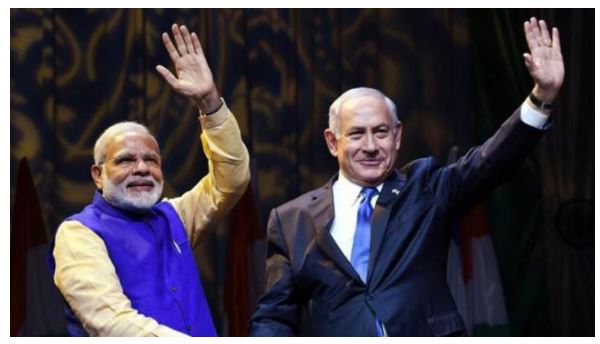
Prime Minister Narendra Modi’s official visit to Israel — his first since the landmark 2017 visit — comes at a time of heightened regional instability. While the 2017 visit marked the first-ever trip by an Indian Prime Minister to Israel after the establishment of diplomatic ties in 1992, the current engagement unfolds amid a fragile Gaza ceasefire and rising tensions involving Iran and the United States. The visit underscores both the maturity of bilateral ties and India’s evolving West Asia strategy.
Historical Evolution of Ties
India recognised Israel in 1948 but delayed full diplomatic relations for over four decades due to domestic political sensitivities and solidarity with the Palestinian cause. A decisive shift occurred in January 1992 when Prime Minister P.V. Narasimha Rao established full diplomatic relations. Palestinian leader Yasser Arafat publicly respected India’s sovereign decision, easing the transition.
Even before formal ties, limited defence cooperation existed. Israel supplied weapons during the 1962 India–China war and provided critical precision-guided munitions during the 1999 Kargil conflict, strengthening mutual trust.
Consolidation Phase (2000–2014)
The early 2000s saw growing political engagement. High-level visits, including that of Israeli Prime Minister Ariel Sharon in 2003, institutionalised defence and security cooperation. Strategic ties expanded quietly, even as public discourse focused on agriculture, science and technology.
Transformation After 2014
After 2014, India–Israel ties were brought into the open. PM Modi’s 2017 visit marked a diplomatic departure by delinking Israel from Palestine in scheduling protocol, signalling strategic autonomy. Subsequent reciprocal visits, including PM Netanyahu’s 2018 visit to India, deepened engagement.
In recent years, cooperation has expanded beyond defence to include:
- Cybersecurity
- Artificial Intelligence
- Agriculture and water management
- Advanced technologies
- Negotiations toward a Free Trade Agreement
India and Israel also signed defence agreements in 2025, reflecting growing operational coordination.
Strategic Significance for India
- Defence and Security Partner: Israel is among India’s top defence suppliers and a key source of advanced military technology.
- Technology and Innovation: Collaboration in AI, precision agriculture, and water conservation supports India’s development priorities.
- Economic Connectivity: Israel is a critical partner in the proposed India–Middle East–Europe Economic Corridor (IMEC).
- Indo-Abraham Accords Context: The normalisation of ties between Israel and several Arab states under the Abraham Accords has reshaped regional alignments.
Emerging Geopolitical Challenges
The October 7, 2023 Hamas attack triggered a prolonged Gaza war, resulting in heavy casualties and destruction. Though a US-backed ceasefire currently holds, tensions persist.
Simultaneously, the June 2025 Israel–Iran conflict and US strikes on Iranian nuclear facilities have escalated regional volatility. Iran remains an important partner for India, particularly for energy security and connectivity projects like Chabahar Port.
India’s Diplomatic Balancing Act
India must carefully navigate:
- Its strong defence ties with Israel
- Energy and connectivity interests involving Iran
- Strategic partnerships with Gulf nations
- Broader West Asian stability
The visit reflects India’s attempt to pursue multi-vector diplomacy — strengthening strategic partnerships while maintaining regional balance.
Conclusion
PM Modi’s visit to Israel highlights the transformation of India–Israel relations from cautious engagement to open strategic partnership. However, in a deeply polarised West Asian environment, India must balance strategic cooperation with diplomatic prudence to safeguard its long-term geopolitical and economic interests.