
India’s Green Resurgence: Achieving Global Leadership in Renewable Energy
- 12 May 2026
In News:
India has secured its position as the world’s third-largest country in installed renewable energy (RE) capacity, trailing only China and the United States. According to the Renewable Energy Statistics 2026, India recently surpassed Brazil, marking a significant milestone in its journey toward the Viksit Bharat @2047 vision and its commitment to the Paris Agreement.
As of early 2026, India’s non-fossil fuel capacity has crossed 283.4 GW, accounting for more than 50% of the total installed power capacity—a target achieved five years ahead of the 2030 schedule.
Key Pillars of Growth: Solar and Wind Dominance
The transition is primarily fueled by a record-breaking expansion in solar and wind infrastructure. In the fiscal year 2025-26 alone, India added 55.3 GW of non-fossil capacity, the highest annual increase in its history.
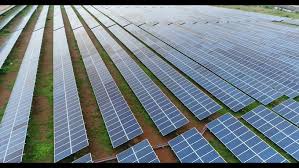
- Solar Surge: Solar energy remains the fastest-growing sector, with installed capacity reaching 150.26 GW (a 53-fold increase since 2014). This growth is driven by utility-scale projects and a massive push for Distributed Renewable Energy (DRE), including rooftop solar and the PM-KUSUM scheme.
- Wind Momentum: Wind capacity has climbed to 56.09 GW, with 2025-26 witnessing a record annual addition of over 6 GW.
- Energy Mix: In July 2025, renewables met a historic 51.5% of India’s peak electricity demand, proving that green energy is now a backbone of the national grid, rather than just a supplementary source.
The Morgan Stanley Insight: Manufacturing vs. Imports
While the installation pace is world-leading, a recent report by Morgan Stanley underscores a critical strategic challenge: the upstream supply chain.
1. The Manufacturing Leap: India has successfully scaled its "downstream" manufacturing. Solar module production capacity has skyrocketed from 2.3 GW in 2014 to approximately 172 GW in 2026. This allows India to meet much of its domestic demand for finished panels and even look toward exports.
2. The Upstream Bottleneck: The "upstream" components—polysilicon, ingots, and wafers—remain a point of vulnerability. India still sources 60–80% of these critical materials from China. Morgan Stanley warns that until India localizes the production of solar cells (currently at ~25-27 GW) and the raw wafers, its energy transition will remain susceptible to global supply chain shocks and geopolitical tensions.
Policy Catalysts and Future Outlook
The government has deployed a mix of fiscal and regulatory tools to sustain this momentum:
- PLI Schemes: Production Linked Incentives are being utilized to bridge the gap in cell and wafer manufacturing.
- Green Hydrogen Mission: With an outlay of nearly ?20,000 crore, India aims to produce 5 MMT of green hydrogen by 2030, integrating RE into heavy industries like steel and shipping.
- Grid Modernization: Significant investments in Green Energy Corridors and smart metering are ensuring that the intermittent nature of solar and wind does not destabilize the national grid.