
Youth Unemployment in India
- 27 Jul 2026
In News:
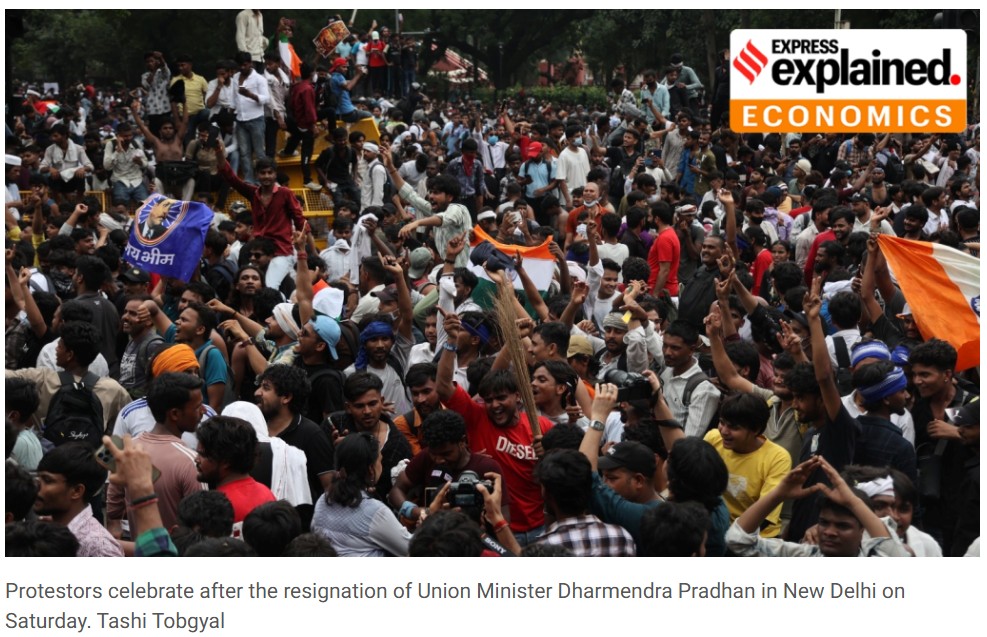
The NEET paper leak triggered widespread protests, but economists argue that the larger issue is India's rising youth unemployment, which poses a serious challenge to harnessing the country's demographic dividend.
Youth Unemployment: A Growing Structural Challenge
According to the Periodic Labour Force Survey (PLFS), youth unemployment (15–29 years) increased to 16.2% in June 2026, up from 13.8% in April 2025, the highest since monthly PLFS data collection began. At the same time, the Labour Force Participation Rate (LFPR) declined from 42.7% to 40.3%, indicating that even fewer young people are actively seeking work. Normally, a decline in LFPR lowers unemployment, but the simultaneous rise in unemployment points to deeper structural weaknesses in the labour market rather than temporary fluctuations. However, the Ministry of Statistics and Programme Implementation (MoSPI) has cautioned that monthly data may vary due to seasonal and academic factors.
The trend is not confined to a few regions. Between 2022 and 2025, youth unemployment increased across several States, including Andhra Pradesh, Delhi, Telangana, and West Bengal, with young women experiencing an even sharper rise in many States.
Why is Youth Unemployment Rising?
The slowdown in the informal sector, traditionally the largest source of employment, has weakened India's employment cushion. Job creation in the sector fell to 74.5 lakh in 2025, compared to 1.1 crore in the previous year, while wage growth also moderated significantly.
Another major concern is the growing education-employment mismatch. Despite increasing educational attainment, employment outcomes remain weak. According to the State of Working India 2026 report, fewer than 7% of male graduates secure permanent salaried jobs within a year of graduation, while only 3.7% obtain white-collar employment. Around 1.1 crore graduates aged 20–29 were unemployed, and graduate unemployment among those below 25 years stood at 39.33%.
Why Does It Matter?
India's demographic dividend depends on creating productive employment for its large working-age population. With the country's median age currently around 29 years, this is the critical period for accelerating economic growth. However, as the population ages and the dependency ratio rises in the coming decades, the opportunity to leverage this demographic advantage will gradually narrow. Persistent unemployment, especially among educated youth, risks turning India's demographic dividend into a demographic burden.
Way Forward
Addressing this challenge requires promoting labour-intensive manufacturing, strengthening MSMEs, improving industry-oriented skill development, bridging the education-employment gap, increasing female labour force participation, and encouraging entrepreneurship and innovation.