
Powering India’s Green Transition and Strategic Self-Reliance: The Role of Critical Minerals
- 03 Nov 2025
In News:
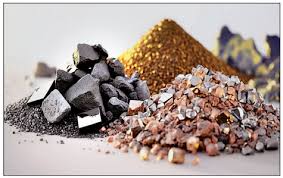
India’s commitment to achieving a low-carbon, technologically advanced economy has sharpened the focus on securing access to rare earths and critical minerals, which underpin clean energy systems, electronics, aerospace, and defence platforms. The launch of the National Critical Mineral Mission (2025) marks a decisive step toward building resilience in mineral supply chains and reducing external dependencies, thereby aligning India’s development trajectory with its climate and strategic objectives.
Significance of Rare Earths and Critical Minerals
Critical minerals are indispensable to the global green transition. They power electric vehicles (EVs), lithium-ion batteries, solar photovoltaics, wind turbines, and semiconductor devices. Their role extends into national security domains, informing the design of precision-guided weapons, jet engines, satellite systems, and next-generation communication networks. Rare earth elements (REEs)—a subset of critical minerals—enable high-strength magnets essential for renewable energy, robotics, and missile guidance. As countries race toward net-zero commitments, the demand for these minerals is projected to increase severalfold, amplifying concerns over supply vulnerabilities.
India’s Context: Climate Goals and Strategic Imperatives
India seeks to reduce the emissions intensity of its GDP by 45% by 2030 and achieve net-zero emissions by 2070. Meeting these targets requires rapid expansion of renewable energy and storage capabilities, both of which depend heavily on minerals such as lithium, cobalt, nickel, graphite, silicon, neodymium, and dysprosium. Despite possessing the fifth-largest rare earth reserves globally, India lacks adequate refining, metallisation, and magnet-manufacturing infrastructure, leading to significant reliance on imports. More than 60% of global processing capacity lies in China, exposing India to supply disruptions and geopolitical risks.
Applications Across Sectors
- Renewable Energy: Silicon, gallium, and indium drive photovoltaic technologies; rare-earth magnets enhance wind turbine efficiency.
- Electromobility & Storage: Lithium, cobalt, and nickel form the backbone of battery chemistry for EVs and grid-scale storage.
- Electronics & Semiconductors: Copper, tungsten, and tin support microprocessors, circuit boards, and high-end computing.
- Defence & Aerospace: Titanium alloys and REE magnets strengthen jet engines, missiles, and satellites.
- Medical Technologies: Critical minerals are used in MRI machines, pacemakers, and imaging equipment.
Challenges in Building a Secure Mineral Ecosystem
India faces multiple hurdles:
- High import dependence for crucial minerals and processing technologies.
- Technological gaps in advanced separation, refining, and recycling processes.
- Environmental concerns over mining-related pollution, requiring stringent safeguards.
- Regulatory delays due to fragmented jurisdiction and slow clearances.
- Skill and financing deficits for large-scale exploration and processing.
Government Initiatives
The National Critical Mineral Mission (2025) aims to create an end-to-end domestic value chain—from exploration to recycling. Reforms under the MMDR Act (2023) introduced 24 critical minerals for centralised auction, improving transparency. The KABIL joint venture has secured lithium assets in Argentina and strengthened partnerships with Australia. Customs duty exemptions on critical minerals (2025), establishment of processing parks, and the promotion of circular-economy-based recycling reflect a multi-pronged strategy.
Way Forward
India must prioritise building a domestic value chain encompassing exploration, processing, magnet manufacturing, and battery component production. Enhanced funding for R&D and startup innovation in refining and recycling technologies is essential. Diversifying imports through strategic partnerships, enforcing sustainable mining norms, and integrating mineral strategy with Make in India, the Green Hydrogen Mission, and energy transition policies will be critical.
Conclusion
Critical minerals form the backbone of India’s green transition and strategic autonomy. The National Critical Mineral Mission represents a shift toward resilience and long-term sustainability. By investing in exploration, innovation, and circularity, India can emerge as a global hub in the clean-tech and critical mineral value chain, strengthening both its climate commitments and national security.