
Electoral Integrity vs. Democratic Inclusion: The Special Intensive Revision (SIR) Controversy in West Bengal
- 12 Apr 2026
In News:
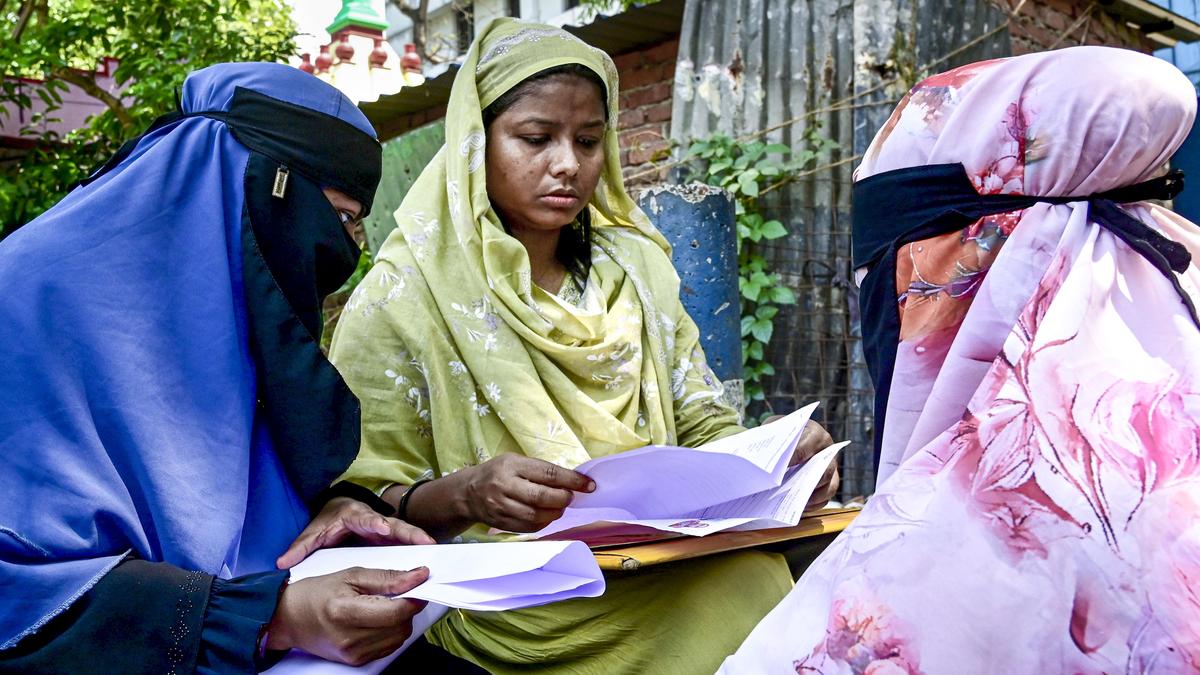
The Special Intensive Revision (SIR), initiated by the Election Commission of India (ECI) across 13 States and Union Territories, has emerged as a landmark event in India’s electoral history. While designed to "purify" electoral rolls, its implementation in West Bengal has sparked an unprecedented institutional standoff involving the ECI, the State Government, and the Judiciary.
1. Understanding SIR: Objectives and Methodology
The primary mandate of the SIR is the "cleansing" of the electoral database to ensure the sanctity of the democratic process.
- Purification of ASDD: Targeting the removal of Absent, Shifted, Dead, and Duplicate voters.
- Technological Shift: For the first time, large-scale AI-based verification was used to scrutinize data anomalies across decades.
- Identification of Ineligible Voters: Aimed at identifying "illegal immigrants" and individuals who do not meet the criteria for citizenship or residency.
2. The West Bengal Scale: A Statistical Breakdown
The magnitude of deletions in West Bengal has raised alarms regarding the potential for mass disenfranchisement.
|
Category |
Statistical Detail |
|
Initial Voter Base (Nov 2025) |
7.66 Crore |
|
Final Eligible Voters |
6.77 Crore (Net reduction of ~90.8 Lakh) |
|
Logical Discrepancies |
1.2 Crore cases flagged (Age gaps, gender-name mismatch) |
|
Unmapped Voters |
30 Lakh voters with no linkage to the 2002 revision |
|
Under Adjudication |
60 Lakh voters temporarily excluded pending verification |
AI-Flagged Anomalies: The algorithm identified "logical discrepancies," such as parent-child age gaps outside the 15–45 year range, grandparent-voter gaps under 40 years, and instances where more than six voters were linked to a single ancestor.
3. Institutional and Judicial Intervention
The controversy led to a unique "trust deficit" between the ECI and the West Bengal government, prompting the Supreme Court of India to take an extraordinary step.
- Judicial Supervision: A Bench led by CJI Surya Kant ordered judicial officers to oversee the adjudication process, effectively replacing executive officers (EROs/AEROs) in their quasi-judicial roles.
- Special Tribunals: While 27 lakh names were struck down under supervision, remaining disputed cases were referred to 19 special tribunals.
- Separation of Powers: This intervention has sparked a debate on the judiciary stepping into executive functions to safeguard fundamental rights.
4. Critical Concerns and Challenges
The SIR process has faced intense scrutiny from civil society and political entities:
- Allegations of Targeted Exclusion: Reports suggest disproportionate deletions in specific districts (Murshidabad, Malda) and communities (Muslims and Matuas), leading to charges of "electoral cleansing."
- Algorithmic Transparency: The "Black Box" nature of AI-based decision-making lacks public audit mechanisms, raising questions about accountability.
- Institutional Trust: The breakdown of coordination between the Constitutional body (ECI) and the State government threatens the federal spirit.
- The "Freeze" Effect: With rolls frozen before upcoming elections, millions under "adjudication" may lose their right to vote, challenging the principle of Universal Adult Suffrage.