
Operation Sindoor: Redefining India’s National Security Architecture
- 07 May 2026
In News:
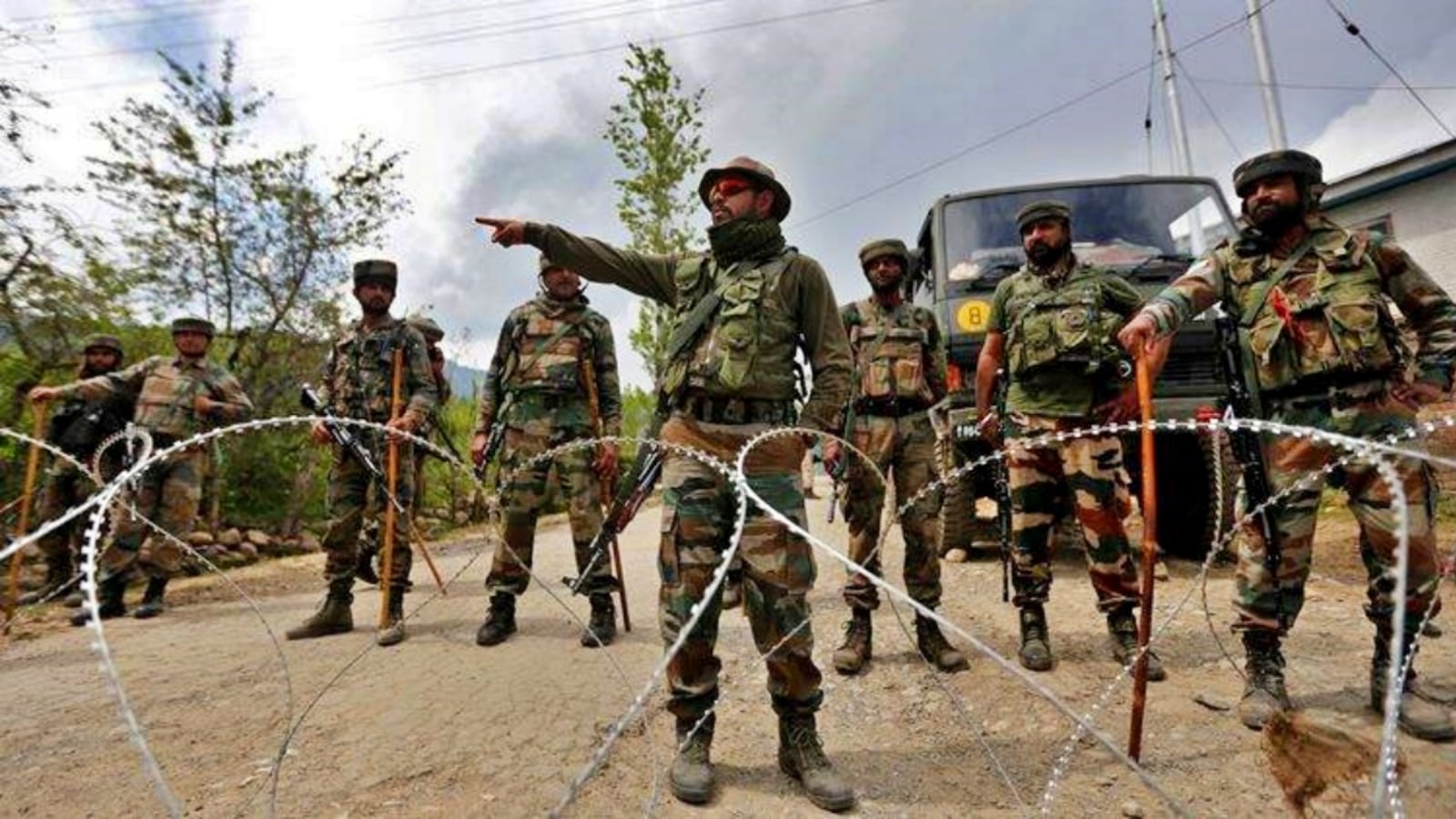
Marking the one-year anniversary of Operation Sindoor, the Indian armed forces have undergone a fundamental transformation in their strategic and operational posture. This milestone represents more than a single military victory; it signifies India's formal transition from "strategic restraint" to a proactive doctrine of "Defensive Offense."
Understanding Operation Sindoor (May 2025)
Operation Sindoor was a multi-dimensional military offensive launched on the night of May 7–8, 2025. It was a direct response to a heinous terror attack in Pahalgam, Jammu & Kashmir, where the Pakistan-backed group 'The Resistance Front' (TRF) killed 26 tourists.
- The Kinetic Strike: Utilizing Rafale jets armed with SCALP missiles and HAMMER bombs, the Indian Air Force (IAF) decimated nine major terror launchpads across Pakistan and Pakistan-occupied Jammu & Kashmir (PoJK). The operation resulted in the elimination of over 100 terrorists, including top handlers from LeT and JeM.
- Neutralizing the "Nuclear Bluff": By striking deep into mainland Pakistan (including radar hubs in Lahore and airbases like Sargodha) without triggering a nuclear response, India successfully operated within the "grey zone," debunking the adversary's nuclear blackmail.
- Non-Military Leverage: In a historic move, India held the 1960 Indus Waters Treaty (IWT) in abeyance, using upstream control as a strategic lever. This was coupled with total economic isolation, the closure of the Attari-Wagah border, and a global diplomatic offensive to present forensic evidence of state-sponsored terror.
Post-Operation Strengthenings: Resilience and High-Tech Posture
A year later, the lessons of Operation Sindoor have been institutionalized through massive infrastructure and technological upgrades.
- Subterranean Warfare Infrastructure: The military has prioritized the construction of large-scale underground command and control centers at the Command and Corps levels. These hardened facilities are equipped with C4I2SR systems, ensuring operational continuity even during saturation strikes.
- Hardened Logistics: To safeguard vital assets, the armed forces are deploying 3D-printed bunkers for rapid troop protection, alongside hardened subterranean storage for fuel, ammunition, and medical supplies along the Western borders.
- Evolution of Integrated Air Defense: Under Mission Sudarshan Chakra, India is building an impenetrable "iron dome." This includes the Army’s Akashteer, the Air Force’s IACCS, and the Navy’s TRIGUN networks.
- Offensive Air Defense: Following the IAF’s record surface-to-air kill of a Pakistani platform from 300 km during the conflict, India is fast-tracking the long-range S-400 Triumf and the indigenous Project Kusha.
- Strategic Dual-Use Infrastructure: National highways (like the Purvanchal Expressway) have been fitted with Emergency Landing Fields (ELFs), and border airfields have been converted for seamless civil-military dual use.
The Strategic Doctrine: The Doval Doctrine & PRAHAAR
Operation Sindoor crystallized the "Doval Doctrine," which treats non-state actors and their state sponsors as a single accountable entity. This is supported by the Ministry of Home Affairs' new national counter-terrorism strategy, PRAHAAR:
- P – Prevention: Intelligence-led approach via the Multi Agency Centre (MAC).
- R – Responses: Rapid neutralization of threats by the NSG and state forces.
- A – Aggregating Capacities: Modernization of weaponry and training standardization.
- H – Human Rights: Balancing security with the Protection of Human Rights Act (1993).
- A – Attenuating Conditions: De-radicalization frameworks involving community leaders.
- A – Aligning International Efforts: Using Extradition Treaties and MLATs to deny safe havens.
- R – Recovery and Resilience: A "whole-of-society" approach to ensure swift normalcy post-incident.
Conclusion
Operation Sindoor has fundamentally altered the South Asian security calculus. By calling the nuclear bluff and integrating hard power with economic and water diplomacy, India has established a new benchmark for counter-terrorism. The focus now rests on Atmanirbharta (Self-Reliance), with indigenous systems like Project Kusha and Akash forming the backbone of a sovereign, resilient defense framework that prioritizes punitive retaliation over passive defense.