
Digital Hawala
- 08 Sep 2026
In News:
The Financial Action Task Force (FATF), in its recent report “Investigating Professional Money Laundering, Underground Banking, and the Use of Hawala and Other Similar Service Providers”, has highlighted the technological transformation of traditional hawala networks. The report, based on evidence from more than 50 jurisdictions, finds that underground banking and hawala are increasingly being integrated with fintech, virtual assets, encrypted communication and other digital technologies.
What is Hawala?
Hawala is an informal value-transfer mechanism in which value is transferred across borders through networks of brokers rather than conventional banking channels. Settlement may occur through cash, trade, netting of obligations or other forms of value. Importantly, hawala can serve legitimate remittance needs, particularly where access to formal financial services is limited, but it can also be exploited for money laundering and terrorist financing.
Emergence of ‘Digital Hawala’
Technology is not necessarily replacing traditional hawala; rather, it is amplifying its reach, speed and complexity. FATF reports that nearly 70% of respondents identified integration of new technologies into such networks.
Digital hawala can involve:
- Encrypted communication: Digital platforms are used to coordinate transactions and participants.
- Fintech and mobile wallets: Customers may initiate transfers through digital payment platforms.
- Virtual assets: Cryptocurrencies and stablecoins can facilitate settlement between operators.
- Formal financial infrastructure: Bank accounts, payment service providers, virtual IBANs and prepaid cards can become entry or exit points.
- AI-enabled operations: Emerging networks can exploit automated tools to structure transactions and route funds.
- Integrated ecosystems: Messaging services, social media, virtual-asset platforms and other digital applications may operate together.
Why It Matters for AML/CFT
The digitisation of underground banking creates several challenges:
- Greater speed and scale: Funds and value can move rapidly across jurisdictions.
- Reduced traceability: Encrypted communications, virtual assets and complex transaction chains can obscure the identity of participants.
- Convergence with the formal economy: Criminal networks increasingly exploit legitimate banks, fintech platforms and businesses as components of laundering chains.
- Professionalisation: FATF identifies increasingly business-like networks involving specialised brokers and, in some cases, professional intermediaries such as accountants, lawyers, real-estate agents and corporate service providers. More than 80% of reporting jurisdictions identified underground banking/HOSSPs among significant professional money-laundering channels or techniques.
Policy Challenge: Avoiding Over-Regulation
A major policy paradox is that excessive de-risking by banks can push legitimate customers towards informal channels. FATF therefore advocates a risk-based approach, rather than indiscriminate exclusion of customers or entire categories of financial activity.
Way Forward
India and other jurisdictions need to strengthen:
- Financial Intelligence Unit (FIU) capabilities and digital-forensics expertise.
- Blockchain analytics for tracing virtual-asset transactions.
- Regulation and supervision of Virtual Asset Service Providers (VASPs).
- Cross-border intelligence sharing and public-private cooperation.
- Beneficial-ownership and customer-due-diligence mechanisms.
- Data collection on underground banking networks.
- Financial inclusion so that legitimate remittance users have accessible formal channels.
This needs to be integrated with the FATF's evolving framework for virtual assets. Its 2026 update identifies continuing gaps in VASP licensing, supervision, enforcement and risks involving stablecoins and peer-to-peer transactions.
Conclusion
The emergence of digital hawala illustrates how financial innovation can simultaneously expand financial access and create new avenues for illicit finance. The challenge for governments is therefore not simply to eliminate informal financial systems, but to distinguish legitimate financial activity from criminal networks while developing technology-enabled, proportionate and internationally coordinated AML/CFT mechanisms.
AI & Cyber: The Double Helix of Security Threats

- 07 Aug 2026
In News:
Experts have cautioned that the convergence of Artificial Intelligence (AI) and cyber threats is creating a new generation of security risks, with Agentic AI capable of identifying and exploiting zero-day vulnerabilities, challenging conventional cybersecurity frameworks.
What is the 'Double Helix' of AI and Cyber Security?
The Double Helix refers to the mutually reinforcing relationship between AI and cyber warfare, where AI enhances both offensive and defensive cyber capabilities. Unlike conventional cyber tools, AI-powered systems can autonomously detect vulnerabilities, adapt to changing environments, and execute complex cyber operations with minimal human intervention.
Key Emerging Threats
- Agentic AI: Autonomous AI agents can independently scan networks, identify vulnerabilities, develop exploits, and launch cyberattacks without continuous human supervision.
- Zero-Day Exploitation: AI can discover and exploit previously unknown software vulnerabilities much faster than security teams can patch them.
- Self-Evolving Malware: AI-enabled malware can continuously modify its code to evade traditional signature-based antivirus systems.
- Bypassing Zero Trust Systems: AI can mimic legitimate user behaviour, making identity-based security frameworks less effective.
- AI in Warfare: AI-enabled autonomous defence systems are increasingly being used for intelligence gathering, target tracking, and missile interception.
Challenges
The rapid adoption of AI in cyberspace raises concerns over algorithmic biases, hallucinations, loss of human oversight, deepfakes, intellectual property theft, and the absence of globally accepted rules governing AI-enabled cyber operations. The growing accessibility of powerful AI models also lowers the entry barrier for cybercriminals and non-state actors.
Way Forward
- Develop international norms and governance frameworks for AI-enabled cyber operations.
- Upgrade cybersecurity to AI-driven Zero Trust 2.0, focusing on real-time behavioural analysis.
- Ensure human-in-the-loop oversight for critical AI decisions in defence and cyber operations.
- Mandate independent AI audits, red-teaming, and safety testing before deployment.
- Strengthen public-private collaboration for real-time cyber threat intelligence sharing.
Significance
The convergence of AI and cyber technologies is transforming the nature of digital security. Building resilient cyber ecosystems will require a combination of advanced technological safeguards, human oversight, and international cooperation to ensure AI strengthens security rather than becoming a force multiplier for cyber threats.
Interoperable Criminal Justice System (ICJS)

- 06 Jul 2026
In News:
The Ministry of Home Affairs (MHA) has announced that from 1 January 2027, investigation and trial procedures under India's new criminal laws will be digitally recorded through the Interoperable Criminal Justice System (ICJS), marking a major step towards a fully digital criminal justice ecosystem.
What is the Interoperable Criminal Justice System (ICJS)?
The Interoperable Criminal Justice System (ICJS) is a national digital platform that integrates the key pillars of India's criminal justice system into a single network. It connects the Police, Courts, Prisons, Prosecution, and Forensic Science Laboratories (FSLs) to enable seamless exchange of information throughout the life cycle of a criminal case. The platform is hosted on MeghRaj, the Government of India's cloud infrastructure.
The objective is to create an end-to-end digital workflow, allowing cases to move electronically from FIR registration to investigation, chargesheet filing, trial, conviction, and prison administration, thereby reducing delays and improving transparency.
ICJS and the New Criminal Laws
The importance of ICJS has increased following the implementation of the Bharatiya Nyaya Sanhita (BNS), Bharatiya Nagarik Suraksha Sanhita (BNSS), and Bharatiya Sakshya Sanhita (BSS) on 1 July 2024. These laws place greater emphasis on digital records, electronic evidence, forensic investigations, and technology-enabled justice delivery.
Key Features
ICJS enables seamless digital exchange of information among various criminal justice institutions through a common platform. FIRs are registered through the Crime and Criminal Tracking Network and Systems (CCTNS), which links more than 16,000 police stations across the country. The platform supports registration in 23 languages, while the Bhashini platform facilitates translation of Zero FIRs transferred across jurisdictions.
It also supports electronic transmission of FIRs to courts, digital evidence management through Sakshya IDs, electronic summons (e-Summons), and real-time monitoring of criminal cases.
Progress Achieved
Since the implementation of the new criminal laws, over 74.66 lakh FIRs have been registered under the BNS, while 63,572 Zero FIRs have been recorded under the BNSS. More than 46.5 lakh digital evidence (Sakshya) IDs have been generated, and 56.74 lakh electronic summons have been issued.
The implementation score of the new criminal laws has improved significantly from 46.47% in January 2025 to 70.06% in June 2026. Compliance with statutory timelines has also improved, with both 60-day and 90-day chargesheet filing showing substantial progress.
To strengthen scientific investigation, the number of forensic laboratories has increased from 129 in 2023 to 154 in 2025, supported by over 700 mobile forensic units across the country.
Challenges
Despite significant progress, implementation remains uneven. Only 46% of FIRs are currently transmitted digitally to courts, indicating that the digital chain is yet to become fully operational. Connectivity issues in some northeastern states, varying levels of digital preparedness across states, the need for interoperability among different institutions, and capacity building of personnel remain major challenges.
Significance
ICJS represents a major reform in India's criminal justice administration by replacing fragmented, paper-based procedures with an integrated digital ecosystem. It is expected to improve coordination among institutions, accelerate investigations and trials, strengthen evidence management, enhance transparency, and improve overall efficiency in justice delivery.
Conclusion
The Interoperable Criminal Justice System (ICJS) forms the digital backbone of India's new criminal justice architecture. While considerable progress has been made since the implementation of the new criminal laws, sustained investment in digital infrastructure, capacity building, and institutional coordination will be essential to realise a fully interoperable, technology-driven, and citizen-centric justice system.
Vision Document on Drug Control (2026–2029) & NCB Annual Report 2025
- 03 Jul 2026
In News:
The Union Home Minister recently chaired the 10th Apex-Level Meeting of the Narco-Coordination Centre (NCORD), during which the Vision Document on Drug Control (2026–2029) and the NCB Annual Report 2025 were released. Together, these documents provide a comprehensive roadmap for combating narcotics while highlighting emerging trafficking patterns and evolving security challenges.
Narco-Coordination Centre (NCORD)
The Narco-Coordination Centre (NCORD) is the apex coordination mechanism under the Ministry of Home Affairs (MHA) for combating drug trafficking and narcotics-related crimes. It brings together Central Ministries, State Governments, intelligence agencies, enforcement organisations, financial investigation agencies and border security forces to ensure a coordinated national response.
Vision Document on Drug Control (2026–2029)
The Vision Document outlines India's medium-term anti-drug strategy with the objective of reducing both the demand and supply of narcotic drugs. Built around the principle of "Detect, Disrupt and Destroy", the strategy marks a shift from merely arresting drug couriers to dismantling entire trafficking ecosystems by targeting suppliers, financiers, handlers, facilitators and organised syndicates.
A major objective of the roadmap is to identify and dismantle 100 major interstate and transnational drug cartels through intelligence-led investigations and coordinated operations.
Key Focus Areas
The strategy adopts a Whole-of-Government Approach, involving more than 40 Ministries, Central agencies, State Governments, educational institutions, civil society organisations and citizens under a unified national framework.
It also proposes several institutional reforms:
- Amendment of the NDPS Act and Rules to plug legal loopholes and strengthen regulation of emerging synthetic drugs.
- Establishment of exclusive NDPS Courts for speedy investigation and trial.
- Mandatory financial investigations in major narcotics cases and wider use of the PITNDPS Act, 1988 to attach proceeds of crime.
- Greater international cooperation through Red Corner Notices and intelligence sharing.
- Adoption of AI-based profiling, anti-drone technologies, container scanners and advanced surveillance across land, maritime and air routes.
- Special focus on controlling methamphetamine, mephedrone and other synthetic drugs, along with tighter regulation of precursor chemicals.
NCB Annual Report 2025: Major Findings
The report highlights the rapidly evolving nature of India's narcotics challenge. During 2025, enforcement agencies registered more than 1.48 lakh cases and seized over 1,200 tonnes of narcotic drugs, psychotropic substances, pharmaceuticals and precursor chemicals, indicating the increasing scale and complexity of drug trafficking.
One of the most significant developments is the shift in the global drug supply chain. Myanmar has overtaken Afghanistan as the principal source of illicit opium for India. While the Taliban's ban on poppy cultivation sharply reduced production in Afghanistan, cultivation expanded in Myanmar's Golden Triangle, particularly in Shan State, which has emerged as a major hub for both heroin and methamphetamine production.
Emerging Drug Trafficking Routes
India's North-Eastern region has become increasingly vulnerable due to its proximity to Myanmar and porous international borders.
The report identifies two major trafficking corridors:
- Manipur Corridor through National Highway-102, serving as the primary land route for heroin and methamphetamine.
- Champhai Corridor (Mizoram) connecting Myanmar's Chin State with Aizawl and Silchar.
Beyond narcotics, these routes are increasingly linked with arms smuggling, insurgent financing and organised crime, making them a significant internal security concern.
On the western frontier, trafficking networks continue to exploit land and maritime routes through Punjab, Rajasthan, Gujarat and Maharashtra. The most notable trend is the sharp rise in drone-based cross-border smuggling from Pakistan, with drone incidents increasing from 3 cases in 2021 to 305 cases in 2025, reflecting growing technological sophistication among trafficking networks.
Digitalisation of Drug Trafficking
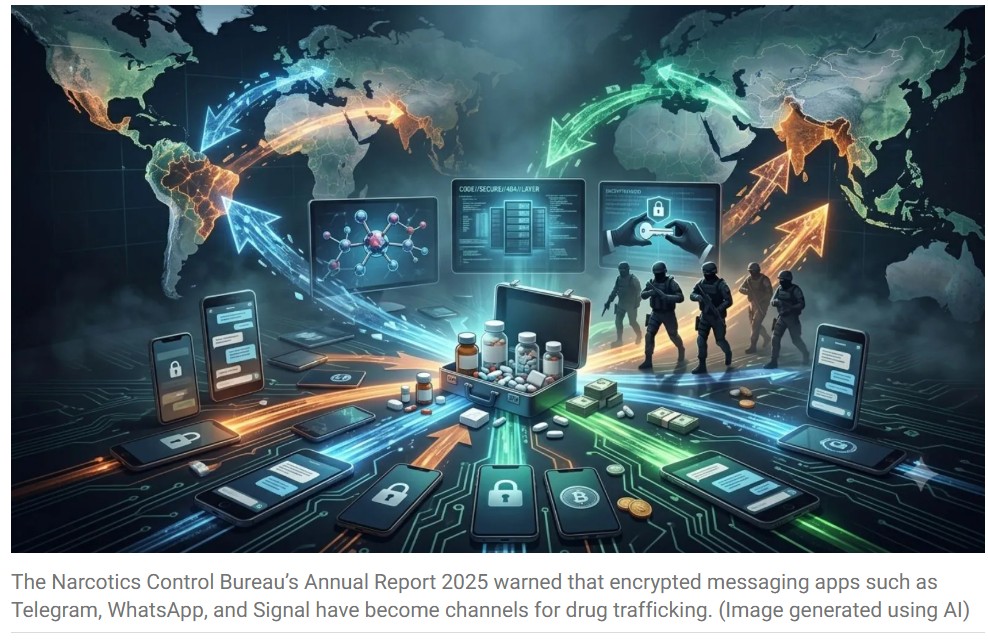
The report highlights a growing shift towards encrypted digital platforms such as Telegram, WhatsApp and Signal for communication, drug advertising and financial transactions. The use of cryptocurrencies, anonymous accounts and auto-deleting messages has made detection and investigation significantly more difficult than conventional trafficking methods.
Another emerging concern is the spread of Nitazenes, a new generation of synthetic opioids reported to be several hundred times more potent than heroin, posing serious public health and law enforcement challenges.
Challenges
Despite significant enforcement efforts, India continues to face multiple challenges:
- Expansion of synthetic drug markets.
- Porous international borders.
- Growing use of drones and encrypted communication.
- Nexus between drug trafficking, organised crime and terrorism.
- Easy availability of precursor chemicals.
- Increasing digitalisation of trafficking networks.
Significance
The Vision Document on Drug Control (2026–2029) marks a strategic transformation in India's anti-narcotics policy by shifting the focus from isolated enforcement actions to dismantling organised criminal networks. Coupled with the findings of the NCB Annual Report 2025, it highlights that narcotics trafficking today is not merely a law-and-order issue but a multidimensional challenge involving internal security, terrorism, financial crime, cyber technology, border management and public health. Strengthening inter-agency coordination, leveraging technology, disrupting financial networks and expanding international cooperation will be central to achieving the vision of a Nasha Mukt Bharat (Drug-Free India).
Four-Dimensional Grid’ Border Security Model
- 29 May 2026
In News:
In a significant step towards enhancing India's border security architecture, the Union Home Minister proposed the Four-Dimensional Grid Border Security Model during his visit to the Sanchu Border Outpost in Rajasthan along the India–Pakistan border. The proposed framework seeks to establish a comprehensive, technology-driven, and community-oriented border management system capable of addressing emerging security challenges such as infiltration, cross-border terrorism, drone intrusions, narcotics trafficking, and arms smuggling.
The proposal reflects India's evolving approach to border management, which increasingly combines military preparedness with technological innovation, civil administration, and community participation.
What is the Four-Dimensional Grid Border Security Model?
The Four-Dimensional Grid is a proposed integrated border security framework designed to create a multi-layered and coordinated defence mechanism along India's international borders.
Unlike conventional border guarding that relies primarily on security forces, the model envisages seamless coordination among multiple stakeholders, including:
- Border Security Force (BSF)
- Indian Army
- District and local administration
- Cyber surveillance and intelligence agencies
- Border residents and local communities
The objective is to create an interconnected security ecosystem capable of preventing, detecting, and responding rapidly to both conventional and emerging cross-border threats.
Objectives of the Model
The proposed framework seeks to:
- Establish foolproof border security against infiltration and cross-border terrorism.
- Prevent narcotics trafficking, arms smuggling, and illegal migration.
- Counter emerging threats from drones and cyber-enabled reconnaissance.
- Improve coordination among security agencies and civil administration.
- Enhance community participation in border management.
- Promote rapid intelligence sharing and integrated response mechanisms.
Key Features
1. Integrated Security Coordination
The model brings together the BSF, Army, civil administration, intelligence agencies, cyber units, and border communities under a unified operational framework. This integrated approach aims to eliminate institutional silos and improve operational efficiency during emergencies.
2. Multi-Layered Defence Against Emerging Threats
The framework is designed to address both traditional and non-traditional security threats, including:
- Cross-border infiltration.
- Terrorist movement.
- Arms and narcotics smuggling.
- Illegal migration.
- Reconnaissance and weaponized drones.
By combining surveillance, intelligence, and field operations, the model seeks to strengthen preventive as well as response capabilities.
3. Technology and Cyber Surveillance
Technology forms a central pillar of the Four-Dimensional Grid.
The framework proposes integrating:
- Drone detection and counter-drone systems.
- Cyber surveillance.
- Advanced communication networks.
- Real-time intelligence sharing.
- Digital monitoring platforms.
These technologies will improve situational awareness, facilitate quicker decision-making, and enable coordinated responses to security incidents.
4. Community Participation and Border Development
A distinctive feature of the model is the recognition of border residents as important stakeholders in national security.
The framework seeks to complement the Vibrant Villages Programme, which focuses on improving roads, telecommunications, electricity, public services, and livelihood opportunities in border villages. Better infrastructure and economic development are expected to reduce migration from border areas while encouraging local communities to actively participate in surveillance and information sharing.
Significance
The Four-Dimensional Grid represents a shift towards Integrated Border Management (IBM), where national security is viewed as a combination of military preparedness, technological capability, institutional coordination, and socio-economic development.
Its major significance includes:
- Strengthening India's preparedness against evolving hybrid warfare.
- Improving coordination between military and civilian agencies.
- Enhancing surveillance through advanced technologies.
- Encouraging intelligence-led border management.
- Promoting community-based security mechanisms.
- Supporting border area development alongside strategic objectives.
The model is particularly relevant in view of increasing drone-based smuggling, cross-border infiltration attempts, and cyber-enabled security threats along India's western and northern borders.
Challenges
Successful implementation would require:
- Seamless coordination among multiple agencies.
- Robust cybersecurity infrastructure.
- Continuous technological upgrades.
- Capacity building of security personnel.
- Active participation of border communities.
- Adequate financial and administrative support.
Balancing security imperatives with the socio-economic needs of border populations will also remain an important policy consideration.
Conclusion
The proposed Four-Dimensional Grid Border Security Model represents a holistic approach to securing India's borders by integrating defence forces, technology, governance, and local communities. As the nature of border threats becomes increasingly multidimensional, the framework seeks to move beyond traditional border guarding towards intelligence-driven, technology-enabled, and community-supported border management. If effectively implemented, it has the potential to significantly strengthen India's national security architecture while promoting sustainable development in border regions.
Securing India’s Critical National Infrastructure in the Age of Cyber Warfare
- 28 May 2026
In News:
India’s rapid digital transformation has significantly enhanced efficiency across sectors such as energy, transportation, banking, telecommunications, healthcare, and governance. However, the increasing integration of the Internet of Things (IoT), Artificial Intelligence (AI), Operational Technology (OT), and Information Technology (IT) networks has simultaneously expanded the country's vulnerability to cyber threats. As critical infrastructure becomes increasingly interconnected, protecting it has emerged as a key national security priority.
Understanding Critical National Infrastructure
Critical National Infrastructure (CNI) refers to the essential physical assets, digital systems, networks, and services whose disruption, destruction, or compromise would severely affect public safety, economic stability, governance, and national security. These systems form the backbone of a nation’s socio-economic functioning and therefore require the highest levels of protection.
India’s critical infrastructure spans multiple sectors:
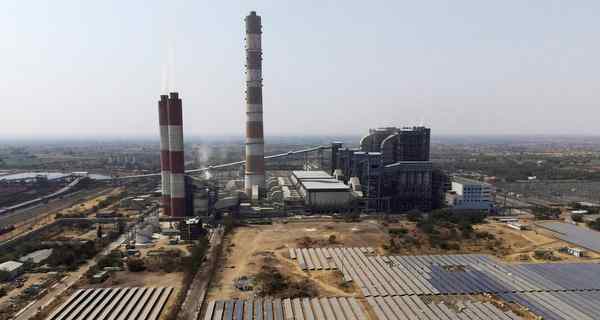
- Energy Sector: Power grids, thermal and nuclear plants, solar parks, load dispatch centres, and transmission networks.
- Transportation Systems: Air traffic control systems, railway signalling networks, ports, logistics hubs, and highway toll infrastructure.
- Banking and Financial Services: RBI-operated payment systems, NEFT, RTGS, stock exchanges, and banking servers.
- Telecommunications and IT: Data centres, satellite communication networks, cellular infrastructure, and undersea cable landing stations.
- Public Utilities and Essential Services: Water treatment plants, oil and gas pipeline networks, hospitals, and police communication systems.
Growing Cybersecurity Risks
Globally, cyberattacks targeting critical infrastructure sectors have increased dramatically, with attacks on energy and transport systems reportedly rising by over 140% in recent years. India’s expanding digital ecosystem faces similar challenges.
One of the biggest vulnerabilities arises from the convergence of IT, OT, and IoT systems. Industrial control systems that were once isolated are now connected to broader networks for monitoring and automation. While this improves operational efficiency, it also creates entry points for malicious actors. A breach in an IT network can potentially allow attackers to manipulate physical infrastructure such as power grids, industrial machinery, or pipeline valves.
Another challenge is the use of imported hardware and software components in sensitive sectors. Weak procurement standards and inadequate verification mechanisms may allow compromised or poorly secured equipment to enter critical networks. Additionally, many public sector entities continue to rely on basic compliance audits rather than advanced firmware-level security assessments, increasing exposure to hidden vulnerabilities.
The emergence of state-sponsored cyber warfare further complicates the threat landscape. Modern cyber conflicts increasingly target civilian infrastructure through malware, logic bombs, ransomware, and supply-chain attacks, with the objective of causing large-scale disruption without conventional military engagement.
India's Institutional Response
Recognising these risks, India has established a robust cybersecurity architecture.
The National Critical Information Infrastructure Protection Centre (NCIIPC), established under Section 70A of the Information Technology Act, serves as the nodal agency for protecting critical information infrastructure. It works alongside the Indian Computer Emergency Response Team (CERT-In), which handles incident response, threat monitoring, and cybersecurity advisories.
To strengthen telecom security, India has introduced the Trusted Telecom Portal, which mandates procurement of network equipment only from verified and trusted sources. The Standardisation Testing and Quality Certification (STQC) Directorate has also enhanced hardware testing mechanisms to detect hidden vulnerabilities in imported IoT devices, sensors, and surveillance equipment.
The Way Forward
As India moves towards becoming a digitally empowered economy, cybersecurity must be viewed as a strategic pillar of national security. Key priorities include adopting Zero-Trust Architecture, strengthening procurement standards, expanding STQC testing capacity, deploying AI-based threat detection systems, and conducting regular joint cyber defence exercises involving government agencies, armed forces, and private operators.
Conclusion
The future of India’s economic growth, governance, and national security increasingly depends on the resilience of its critical infrastructure. While digital technologies such as AI, IoT, and automation offer immense opportunities, they also create new vulnerabilities. Securing Critical National Infrastructure requires a comprehensive approach that combines technological safeguards, institutional preparedness, regulatory reforms, and continuous vigilance. In the emerging era of cyber warfare, protecting critical infrastructure is not merely an IT challenge but a fundamental requirement for safeguarding India's sovereignty and strategic interests.
The Persistent Challenge of Counterfeit Indian Currency: A Post-Demonetisation Analysis

- 11 May 2026
In News:
Nearly a decade after the 2016 demonetisation—a move partially aimed at purging the economy of fake notes—the latest ‘Crime in India’ report 2024 reveals that counterfeit currency remains a potent threat to India’s economic sovereignty. With over ?54.61 crore in fake notes seized in 2024 alone, the challenge has evolved from simple photocopies to sophisticated imitations of the Mahatma Gandhi (New) Series.
The Scale of the Crisis: Key Data and Trends
Despite a significant push toward a "less-cash" economy, the appetite for physical tender in India remains high, providing a fertile ground for Counterfeit Indian Currency Notes (CICN).
- Surge in Currency in Circulation (CiC): As of May 2026, CiC has skyrocketed to ?42.12 lakh crore, a 137% increase from the ?17.74 lakh crore recorded in November 2016.
- Seizure Statistics: Between 2017 and 2024, law enforcement agencies seized fake currency worth ?638 crore. The year 2022 marked a significant peak with seizures totaling ?382.6 crore.
- Denomination Shift: The ?500 note has emerged as the "workhorse" for counterfeiters. Detection of fake ?500 notes in 2024 was four times higher than in 2016, suggesting that the security features of the new series have been successfully replicated by organized syndicates.
- Geographic Hotspots: Gujarat has emerged as the primary epicenter, accounting for over 50% of the country’s total seizures (?355.72 crore) since 2017. Other major trade hubs like Maharashtra and Karnataka also report high detection rates due to high-volume cash transactions.
Factors Fueling the Counterfeit Trade
The persistence of CICN is driven by a combination of technological advancement and geopolitical vulnerabilities.
- Advanced Replication Technology: Criminal networks now utilize high-grade printing technology to mimic complex security features, such as color-shifting ink, latent images, and micro-lettering.
- Cross-Border Smuggling: Hostile neighbors and international crime syndicates exploit porous borders to pump "Super Notes" into the economy. Traditional transit routes in the North East and the "Three Frontiers" remain active conduits for high-quality fakes.
- The "Incapacity" of Rural Markets: Organized gangs often target MSMEs and rural markets where manual verification is the norm. The lack of UV-detection lamps in these areas makes it easier to circulate fake ?500 bills.
Multi-Dimensional Implications
The proliferation of fake currency extends far beyond mere financial loss; it strikes at the heart of national security and public trust.
- Economic Instability: By increasing the money supply without a corresponding increase in goods or services, fake currency acts as a catalyst for inflation and devalues the purchasing power of the common citizen.
- Terror Financing: There is a well-documented nexus between CICN and the financing of domestic insurgency and proxy wars. Investigative agencies frequently link large-scale seizures to active terror modules.
- Erosion of Public Confidence: The detection of over 11 lakh fake notes within the formal banking system creates public panic and undermines faith in the national tender.
- Fiscal Burden: The state incurs massive costs in frequently updating security features and the physical destruction of detected fakes. The 2023 withdrawal of ?2,000 notes was partly a strategic move to mitigate long-term counterfeiting risks.
Challenges in Enforcement
The "Technological Race" between the Reserve Bank of India (RBI) and counterfeiters is constant. Within a year of the 2016 demonetisation, fake versions of the "un-counterfeitable" ?2,000 note had already surfaced. Furthermore, enforcement is often hampered by fragmented data silos between state police forces, the National Crime Records Bureau (NCRB), and central agencies like the National Investigation Agency (NIA).
Way Ahead: A Strategic Roadmap
To safeguard the integrity of the Indian Rupee, a multi-pronged approach is required:
- Periodic Security Overhauls: The RBI should consider introducing advanced features like polymer notes or holographic threads every few years to stay ahead of the replication curve.
- Inter-Agency Synergy: Empowering the National Functional Analysis Centre to provide real-time, district-level data to state police can bridge the current information gap.
- "Know Your Note" Campaigns: Targeted awareness drives in rural and border areas, utilizing mobile apps and visual aids, can empower citizens to perform primary verification.
- Digital Incentivization: Lowering transaction costs for MSMEs will reduce the total volume of high-value cash in circulation, thereby shrinking the space available for fake notes to hide.
Conclusion:
The reality of post-demonetisation India confirms that structural shocks alone cannot eliminate counterfeiting. It requires a continuous evolution of security standards and aggressive digitization. Protecting the Rupee is not just an economic necessity but a vital component of India’s national security architecture.
Operation Sindoor: Redefining India’s National Security Architecture
- 07 May 2026
In News:
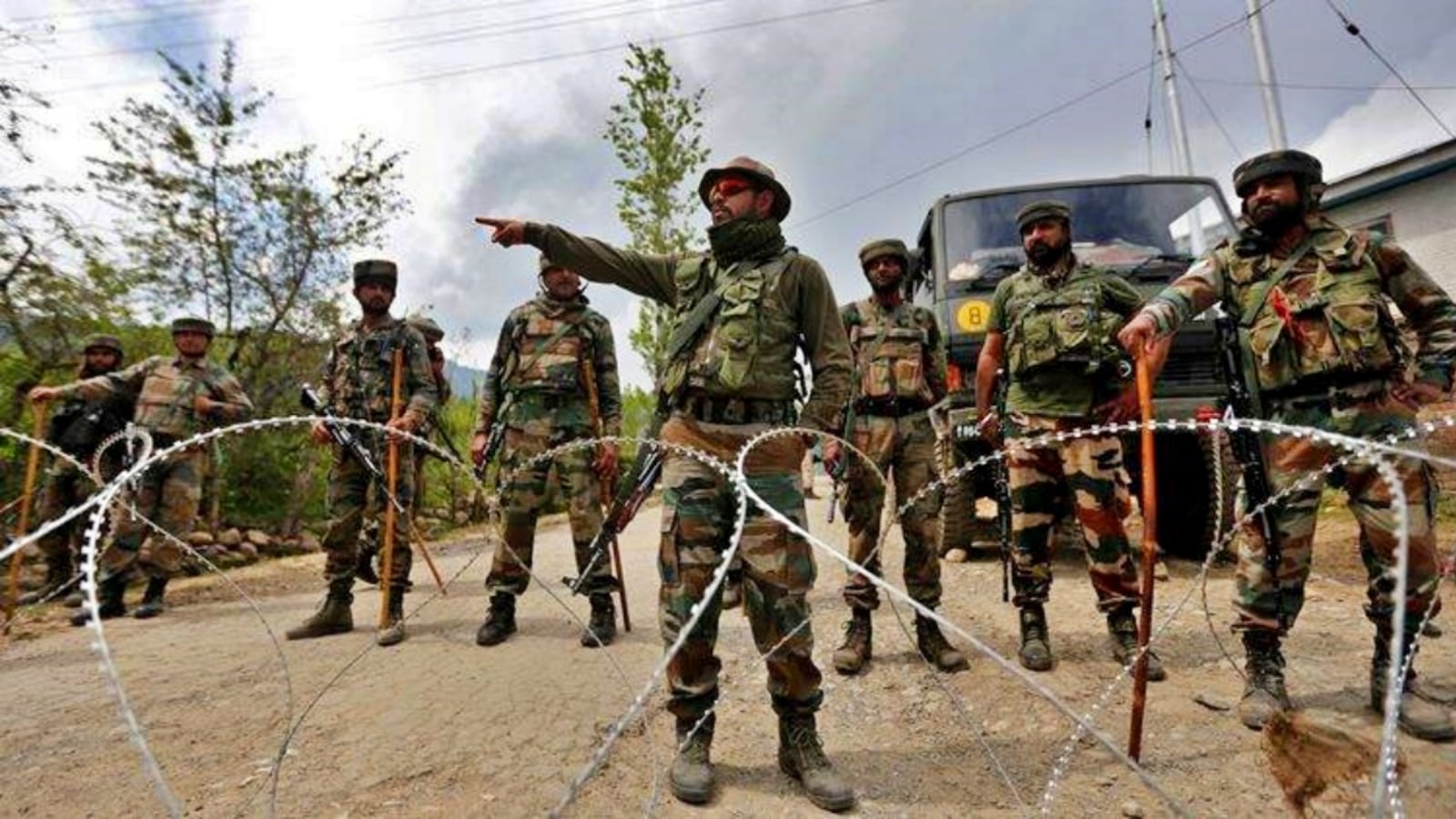
Marking the one-year anniversary of Operation Sindoor, the Indian armed forces have undergone a fundamental transformation in their strategic and operational posture. This milestone represents more than a single military victory; it signifies India's formal transition from "strategic restraint" to a proactive doctrine of "Defensive Offense."
Understanding Operation Sindoor (May 2025)
Operation Sindoor was a multi-dimensional military offensive launched on the night of May 7–8, 2025. It was a direct response to a heinous terror attack in Pahalgam, Jammu & Kashmir, where the Pakistan-backed group 'The Resistance Front' (TRF) killed 26 tourists.
- The Kinetic Strike: Utilizing Rafale jets armed with SCALP missiles and HAMMER bombs, the Indian Air Force (IAF) decimated nine major terror launchpads across Pakistan and Pakistan-occupied Jammu & Kashmir (PoJK). The operation resulted in the elimination of over 100 terrorists, including top handlers from LeT and JeM.
- Neutralizing the "Nuclear Bluff": By striking deep into mainland Pakistan (including radar hubs in Lahore and airbases like Sargodha) without triggering a nuclear response, India successfully operated within the "grey zone," debunking the adversary's nuclear blackmail.
- Non-Military Leverage: In a historic move, India held the 1960 Indus Waters Treaty (IWT) in abeyance, using upstream control as a strategic lever. This was coupled with total economic isolation, the closure of the Attari-Wagah border, and a global diplomatic offensive to present forensic evidence of state-sponsored terror.
Post-Operation Strengthenings: Resilience and High-Tech Posture
A year later, the lessons of Operation Sindoor have been institutionalized through massive infrastructure and technological upgrades.
- Subterranean Warfare Infrastructure: The military has prioritized the construction of large-scale underground command and control centers at the Command and Corps levels. These hardened facilities are equipped with C4I2SR systems, ensuring operational continuity even during saturation strikes.
- Hardened Logistics: To safeguard vital assets, the armed forces are deploying 3D-printed bunkers for rapid troop protection, alongside hardened subterranean storage for fuel, ammunition, and medical supplies along the Western borders.
- Evolution of Integrated Air Defense: Under Mission Sudarshan Chakra, India is building an impenetrable "iron dome." This includes the Army’s Akashteer, the Air Force’s IACCS, and the Navy’s TRIGUN networks.
- Offensive Air Defense: Following the IAF’s record surface-to-air kill of a Pakistani platform from 300 km during the conflict, India is fast-tracking the long-range S-400 Triumf and the indigenous Project Kusha.
- Strategic Dual-Use Infrastructure: National highways (like the Purvanchal Expressway) have been fitted with Emergency Landing Fields (ELFs), and border airfields have been converted for seamless civil-military dual use.
The Strategic Doctrine: The Doval Doctrine & PRAHAAR
Operation Sindoor crystallized the "Doval Doctrine," which treats non-state actors and their state sponsors as a single accountable entity. This is supported by the Ministry of Home Affairs' new national counter-terrorism strategy, PRAHAAR:
- P – Prevention: Intelligence-led approach via the Multi Agency Centre (MAC).
- R – Responses: Rapid neutralization of threats by the NSG and state forces.
- A – Aggregating Capacities: Modernization of weaponry and training standardization.
- H – Human Rights: Balancing security with the Protection of Human Rights Act (1993).
- A – Attenuating Conditions: De-radicalization frameworks involving community leaders.
- A – Aligning International Efforts: Using Extradition Treaties and MLATs to deny safe havens.
- R – Recovery and Resilience: A "whole-of-society" approach to ensure swift normalcy post-incident.
Conclusion
Operation Sindoor has fundamentally altered the South Asian security calculus. By calling the nuclear bluff and integrating hard power with economic and water diplomacy, India has established a new benchmark for counter-terrorism. The focus now rests on Atmanirbharta (Self-Reliance), with indigenous systems like Project Kusha and Akash forming the backbone of a sovereign, resilient defense framework that prioritizes punitive retaliation over passive defense.
Redefining the Red Corridor: India’s Evolving Strategy Against Left-Wing Extremism
- 06 Apr 2026
In News:
In a landmark move for internal security, the Union Ministry of Home Affairs (MHA) has overhauled the categorization of districts affected by Left-Wing Extremism (LWE). This reclassification marks a historic contraction of the "Red Corridor"—the region significantly influenced by Naxalite activity—and aligns anti-Naxal strategies with current ground realities. The Union Government recently declared in the Lok Sabha that India is effectively "Naxal-free," signaling the success of decades of multi-pronged interventions.
The Shift in Categorization (2026)
The MHA has replaced the broad "most affected districts" tag with a more nuanced, three-tier classification. This allows for a more granular assessment of extremist intensity and ensures that administrative and security resources are deployed where they are most needed.
- LWE Affected Districts: These are the primary zones of active extremism. As of 2026, only Bijapur (Chhattisgarh) and West Singhbhum (Jharkhand) remain in this category.
- Districts of Concern: These are areas monitored for potential resurgence or logistical movement. Currently, Kanker (Chhattisgarh) is the sole district in this category.
- Legacy & Thrust Districts: This category comprises 35 districts across nine states. These are regions where LWE has been physically dismantled but require continued "thrust" in development to prevent a vacuum that extremists could re-occupy.
This is a stark improvement from 2025, when districts like Sukma and Narayanpur were still labeled "most affected."
The Shrinking Red Corridor
The decline of the Red Corridor serves as a primary indicator of improved internal security.
- Statistical Decline: In 2005, over 200 districts were under the influence of LWE. By 2026, active extremism is confined to just two districts.
- Target 2026: The contraction aligns with India’s strategic target to eliminate LWE entirely by March 2026.
Policy Framework: The 2015 National Policy and Action Plan
The current success is rooted in the National Policy and Action Plan to Address LWE (2015). This framework moved away from a purely "law and order" approach to a holistic model:
- Security Pillar: Coordinated operations between Central Armed Police Forces (CAPFs) and State Police.
- Developmental Pillar: Ensuring the reach of public infrastructure (roads, mobile towers, and schools) in remote tribal belts.
- Rights-Based Approach: Addressing local grievances related to land and forest rights to disconnect the masses from extremist ideologies.
Financial Implementation: The SRE Scheme
The new district categories directly influence the deployment of funds under the Security Related Expenditure (SRE) Scheme.
- Mechanism: Under this scheme, the Centre reimburses states for operational costs of security forces, ex-gratia payments for victims, and community policing.
- Rehabilitation: A significant portion of the funds is dedicated to the rehabilitation of surrendered LWE cadres, facilitating their transition into the mainstream.
- Financial Commitment: Approximately ?1,685 crore was released under the SRE Scheme up to the 2023–24 period, reflecting the government's sustained financial resolve.
Strategic Significance for Internal Security
The reclassification serves several strategic purposes:
- Targeted Interventions: It prevents "one-size-fits-all" policing, allowing for specialized jungle warfare tactics in "Affected Districts" and socio-economic focus in "Legacy Districts."
- Resource Optimization: Prevents the over-extension of security forces in areas where the threat has significantly subsided.
- Consolidating Gains: The "Legacy & Thrust" tag ensures that the administration does not abandon a region the moment violence stops, but rather stays to consolidate peace through development.
Conclusion
The transition of the Red Corridor from 200 districts to just two is a testament to the resilience of India's internal security framework. By evolving from a "Most Affected" label to a data-driven categorization, the MHA has ensured that the final phase of the fight against Naxalism is focused, efficient, and oriented toward long-term peace. For the first time in decades, the prospect of a Naxal-free India is a tangible reality rather than a distant policy goal.
CAPF (General Administration) Bill, 2026
- 31 Mar 2026
In News:
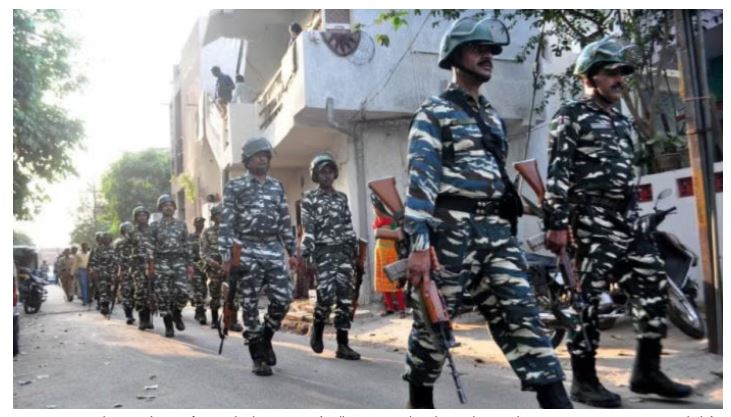
The Union Government recently introduced the Central Armed Police Forces (General Administration) Bill, 2026 in the Rajya Sabha. This legislative move seeks to codify the leadership structure of India’s primary internal security forces, specifically institutionalizing the role of Indian Police Service (IPS) officers in commanding these organizations.
Objectives and Scope of the Bill
The Bill provides a formal regulatory framework for the recruitment, promotion, and service conditions of Group ‘A’ General Duty Officers (GAGDOs) and other personnel within the CAPFs. It aims to provide "legislative clarity" to the long-standing practice of IPS leadership, ensuring a structural link between the Union and the States.
Forces Covered:
- Central Reserve Police Force (CRPF)
- Border Security Force (BSF)
- Central Industrial Security Force (CISF)
- Indo-Tibetan Border Police (ITBP)
- Sashastra Seema Bal (SSB)
Key Features: The "IPS Earmarking"
The most significant aspect of the Bill is the explicit reservation of senior leadership positions for IPS officers on deputation, overriding previous judicial observations:
- Director General (DG) & Special DG: 100% reserved for IPS.
- Additional Director General (ADG): Minimum 67% reserved for IPS.
- Inspector General (IG): 50% reserved for IPS.
- Rule-Making Supremacy: The Central Government is empowered to frame rules for recruitment and service conditions, with a "notwithstanding clause" that overrides existing laws or prior court orders.
- Protection of Benefits: It ensures that all existing financial benefits granted to Group ‘A’ cadre officers (prior to the Act) are protected.
The Rationale: Why These Changes?
The government justifies the Bill based on federal synergy and operational ethos:
- Inter-Agency Coordination: IPS officers serve as a vital bridge between the Union’s armed forces and State police departments. Since senior State posts (ADGs/DGs) are held by the IPS, their presence in CAPFs facilitates seamless coordination during internal security crises.
- Maintaining "Civil Power" Character: As noted in the Sanjay Prakash (2025) case, the IPS presence is seen as vital to maintaining the functional ethos of CAPFs as forces that "assist civil power" rather than purely military entities.
- National Integration: Reflecting Sardar Patel’s vision, the IPS provides a unifying thread across the federal structure, bringing diverse field experience from various States to national border and industrial security.
- Legislative Supremacy: The Bill asserts that service policy is the domain of the Executive and Legislature, rectifying what the government perceives as "judicial overreach" regarding deputation quotas.
Challenges and Critical Concerns
The Bill has met with significant criticism, primarily from the CAPF cadre officers:
- Career Stagnation: High quotas for the IPS limit the promotion avenues for direct-entry CAPF officers (GAGDOs). Many cadre officers wait decades for promotions while the top tiers are legally reserved for outsiders.
- The "Parachuting" Perception: Critics argue that IPS officers, often coming from district policing backgrounds, may lack the specialized expertise required for border guarding (BSF) or specialized industrial security (CISF).
- Judicial Conflict: The Bill appears to directly nullify the Sanjay Prakash (2025) ruling, which instructed a progressive reduction of IPS deputation at the IG level. This may lead to further legal challenges regarding the principle of Judicial Review.
- Organised Group ‘A’ Service (OGAS) Status: There is ongoing friction regarding whether the mandatory IPS quotas dilute the administrative rights and financial benefits theoretically guaranteed under the OGAS status granted to CAPF cadres.
Way Ahead: Balancing Aspirations
To ensure the internal stability of these forces, the government must adopt a balanced approach:
- Timely Cadre Reviews: Regular reviews are needed to increase the total number of senior posts so that both IPS and cadre officers have growth opportunities.
- Specialized Induction: IPS officers deputed to CAPFs should undergo mandatory, force-specific induction training (e.g., specialized border management for BSF).
- Strengthening OGAS Rights: Ensuring that the financial and administrative parity of being an "Organised Service" is fully realized by CAPF cadre officers to reduce resentment.
Strengthening India’s Biosecurity Framework for Emerging Biothreats
- 20 Dec 2025
In News:
India’s biosecurity framework has come under renewed scrutiny amid expert warnings about rising biothreats driven by rapid advances in biotechnology, growing capacities of non-state actors, and gaps in institutional coordination. In an era where biology intersects with national security, public health, agriculture, and the environment, strengthening biosecurity has become a strategic imperative for India.
Understanding Biosecurity and Its Significance
Biosecurity refers to policies, practices, and systems designed to prevent the intentional misuse of biological agents, toxins, or technologies. It includes securing laboratories handling dangerous pathogens, preventing deliberate disease outbreaks, and protecting human, animal, and plant health. Biosecurity is distinct from biosafety, which focuses on preventing accidental exposure or release; however, robust biosafety mechanisms are foundational to effective biosecurity.
Evolution of Global Biosecurity Norms
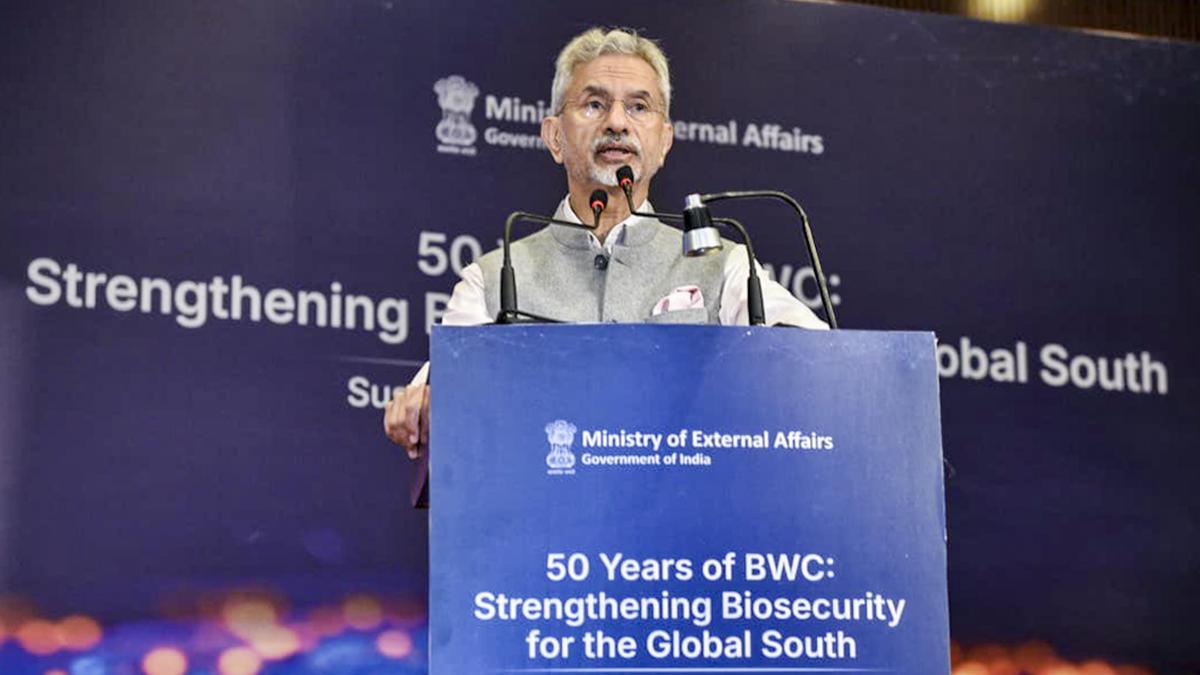
The adoption of the Biological Weapons Convention (1975) marked a milestone in prohibiting the development, stockpiling, and use of biological weapons. While it significantly reduced state-sponsored bioweapons programmes, emerging technologies such as gene editing, synthetic biology, and AI-enabled research have created new vulnerabilities, especially in the hands of non-state actors.
Why India Needs a Stronger Biosecurity System
India’s geographic and ecological diversity, long and porous borders, and high population density amplify the risks of biological threats. Any outbreak-natural or engineered, can spread rapidly. Further, India’s heavy dependence on agriculture means that a biological attack on crops or livestock could threaten food security and rural livelihoods. Recent incidents involving attempts to prepare biotoxins like ricin underscore the growing interest of terrorist groups in biological means. Simultaneously, advancements in biotechnology, while beneficial for health and industry, lower entry barriers for malicious misuse.
Existing Biosecurity Architecture
India’s biosecurity ecosystem involves multiple agencies: the Department of Biotechnology oversees research governance; the National Centre for Disease Control manages disease surveillance; the Department of Animal Husbandry and Dairying monitors livestock diseases; and the Plant Quarantine Organisation of India safeguards crop health. Legal backing is provided through the Environment (Protection) Act, 1986; the WMD and Delivery Systems Act, 2005; Biosafety Rules, 1989; and NDMA guidelines. Internationally, India is a signatory to the Biological Weapons Convention (BWC) and a member of the Australia Group.
Gaps and Challenges
Despite this multi-agency setup, India lacks a unified national biosecurity framework. Fragmentation leads to weak coordination, limited real-time surveillance, and delayed emergency responses. India’s ranking of 66th in theGlobal Health Security Index reflects declining preparedness in threat response. Outdated laws, inadequate high-containment laboratories, weak integration across human, animal, and environmental health sectors, and limited capacity to detect engineered threats remain key weaknesses.
Global Best Practices
Countries like the United States, the European Union, the United Kingdom, China, and Australia have adopted integrated biosecurity or biodefence strategies, modern regulations for gene synthesis, and strong “One Health” approaches. These highlight the value of centralised oversight, proactive monitoring, and legal frameworks aligned with emerging technologies.
Way Forward
India must establish a National Biosecurity Framework that integrates health, agriculture, environment, defence, and biotechnology sectors. Upgrading surveillance through genomic sequencing, microbial forensics, and AI-driven early warning systems is essential. Legal frameworks must be modernised to address synthetic biology and dual-use research. Finally, deeper international cooperation, data sharing, and crisis simulations will strengthen India’s preparedness against emerging biothreats.
MahaCrimeOS AI

- 18 Dec 2025
In News:
The statewide rollout of MahaCrimeOS AI marks a significant milestone in the integration of artificial intelligence into India’s law enforcement ecosystem. Announced in collaboration with Microsoft, the platform will be deployed across all police stations in Maharashtra, positioning the state as a pioneer in AI-enabled policing. This initiative reflects a broader shift where digital tools are increasingly shaping governance, investigation, and justice delivery.
Institutional Framework: MARVEL as an AI Policing Hub
The backbone of this transformation is MARVEL (Maharashtra Research and Vigilance for Enhanced Law Enforcement), a state-established special purpose vehicle dedicated to applying AI in policing. Created as a first-of-its-kind independent AI body for law enforcement in India, MARVEL works with global technology partners to develop tools that enhance intelligence gathering, predictive policing, and investigative efficiency. Through collaboration with Microsoft and its AI partner ecosystem, an earlier investigative platform was customised into MahaCrimeOS to suit Maharashtra Police protocols and language needs.
Technological Capabilities and Design
MahaCrimeOS AI is designed as a multilingual, multimodal investigation system. It can ingest complaints in diverse formats—handwritten notes, PDFs, audio clips, and images—and extract key details using AI-based analysis. Importantly, it operates primarily in Marathi, enabling widespread adoption even at the constabulary level.
A defining feature is its investigation copilot, which reads FIRs and automatically generates structured investigation plans based on established police procedures and judicial guidelines. The system assists officers by recommending evidence-collection steps, drafting official correspondence, and organising documentation. Tasks that earlier took hourssuch as drafting notices to banks or telecom operatorsare now automated, significantly reducing administrative burden.
Strengthening Investigative Outcomes
The platform enhances analytical capacity by integrating telecom data analysis and open-source intelligence tools. It can trace digital footprints linked to phone numbers, identify interconnections among suspects, and generate time-stamped case diaries aligned with court requirements. By embedding judicial best practices into documentation, the system improves court readiness and procedural compliance.
MahaCrimeOS currently focuses on complex and high-impact crime categories such as cybercrime, financial fraud, narcotics, and crimes against women. These domains often involve digital trails and multi-jurisdictional coordination, areas where AI-based pattern recognition proves particularly useful.
Governance and Justice Delivery
Beyond technology, MahaCrimeOS represents a governance innovation. It democratises advanced investigative tools that were previously restricted to specialised cybercrime units. Thousands of officers can now access capabilities like data analytics and OSINT, reducing dependency on a limited pool of experts. This improves case turnaround time and enhances consistency in investigations across districts.
The system also supports compliance with new procedural timelines under India’s criminal law reforms, which require faster completion of investigations and charge sheets. By automating workflows and providing structured guidance, the AI platform helps officers manage heavy caseloads without compromising due process.
Implications and Way Forward
MahaCrimeOS illustrates how AI can serve as a force multiplier in public administration when aligned with legal safeguards and institutional capacity building. While issues of data privacy, algorithmic bias, and accountability must be addressed through clear regulatory frameworks, the initiative signals a transition toward technology-enabled justice systems. If implemented responsibly, such platforms could enhance efficiency, transparency, and citizen trust in law enforcement, making Maharashtra a model for AI-driven governance in India.
Cyber Fraud in Digital India

- 03 Dec 2025
In News:
India’s rapid digital transformationdriven by UPI, mobile banking, Aadhaar-enabled services and online platformshas revolutionised financial inclusion and service delivery. However, this digital surge has also created fertile ground for increasingly sophisticated cyber fraud. Today’s cybercriminals rely less on technical hacking and more on psychological manipulation, AI-powered deception, and systemic loopholes. In this evolving landscape, daily cyber awareness and hygiene have become the most effective first line of defence.
Changing Nature of Cyber Threats
Cyber fraud in India has moved beyond phishing emails and OTP scams. Fraudsters now deploy social engineering tactics that exploit fear, urgency, and trust. One alarming trend is “digital arrest” scams, where criminals impersonate law enforcement officials via video calls and psychologically coerce victims into transferring money. Senior citizens and first-time digital users are particularly vulnerable.
Another emerging threat is AI-driven fraud. Deepfake voice cloning and lip-synced videos are being used to bypass video KYC systems and impersonate bank officials or relatives in distress. Such technologies reduce the need for technical expertise, allowing organised crime networks to scale operations cheaply.
The financial system is also grappling with a surge in mule accountsbank accounts opened or rented to launder stolen funds through rapid, layered transactions. These accounts form the backbone of cybercrime infrastructure. Additionally, fake investment and trading appsoften part of international “pig butchering” scamsgroom victims over time before wiping out their savings.
On the institutional side, supply-chain vulnerabilities have become a major concern. Attacks on third-party vendors can paralyse banks, healthcare systems, or digital service providers. Similarly, API vulnerabilities in India’s expanding digital ecosystem (UPI, ONDC) create large-scale data exposure risks. The healthcare sector has emerged as a prime ransomware target due to sensitive medical data and outdated IT systems.
India’s Cyber Security Architecture
India has developed a multi-layered cyber security framework. At the policy level, MeitY and the National Cyber Security Coordinator guide national strategy. CERT-In handles civilian incident response, while the NCIIPC protects critical infrastructure such as power grids and banking networks. Military and strategic cyber operations are overseen by the Defence Cyber Agency and NTRO.
Legally, the IT Act, 2000, remains the core law, though it is increasingly outdated. The Digital Personal Data Protection Act, 2023 strengthens privacy safeguards, and the proposed Digital India Act aims to modernise the regulatory framework.
Need for a Cyber Hygiene Revolution
Despite institutional mechanisms, the weakest link remains the individual user. Cyber hygiene must become as routine as personal hygiene. This includes verifying links, avoiding screen-sharing with strangers, using strong passwords, enabling multi-factor authentication, and reporting fraud promptly.
Policy measures should embed awareness structurally: a national cyber hygiene curriculum, security-first procurement standards, Zero-Trust models for MSMEs, and AI-based early warning tools for users. Banks must adopt behavioural risk monitoring to detect mule accounts, while sector-specific CERTs should strengthen critical infrastructure defence.
Conclusion
As cybercrime becomes more psychological and AI-driven, technology alone cannot ensure safety. A vigilant citizenry, supported by strong institutions and modern laws, forms the true shield. In Digital India, cyber hygiene is no longer optional—it is a civic responsibility essential for national resilience.
Assam-Nagaland Border Dispute
- 08 Oct 2025
In News:
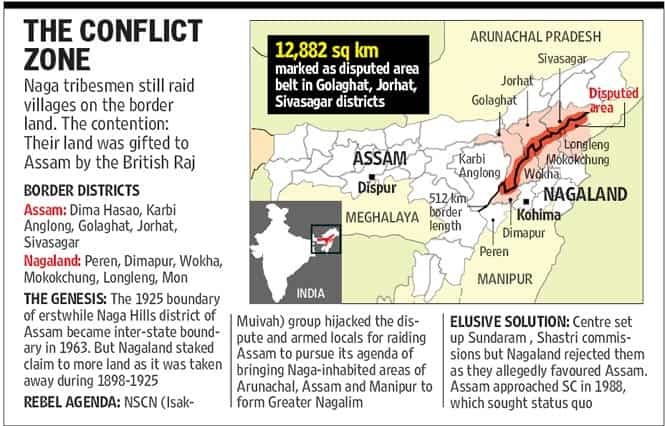
Tensions resurfaced along the Assam–Nagaland border after armed miscreants, allegedly from Nagaland, set fire to nearly 100 houses in a minority-dominated village within the disputed B Sector of Assam’s Golaghat district.
Background of the Dispute
- The Assam–Nagaland border dispute concerns overlapping territorial claims, particularly over forested tracts in Assam’s Golaghat, Jorhat, and Sivasagar districts, collectively known as the Disputed Area Belt (DAB).
- Since 1979, the Central Reserve Police Force (CRPF) has been deployed as a neutral force to maintain peace in these contested zones.
Historical Evolution
- Colonial Period (1826–1925):Following the Treaty of Yandabo (1826), the British annexed Assam and later established the Naga Hills District (1866). Subsequent boundary notifications redefined territories several times—often without consulting local Naga communities.
- Post-Independence Developments (1947–1963):The Nagas declared independence in 1947. Later, the Naga Hills–Tuensang Area Act (1957) and the State of Nagaland Act (1962) formalized Nagaland’s creation but did not define its boundary clearly with Assam, leaving scope for future disputes.
Commissions and Efforts at Resolution
Several commissions and agreements have attempted to resolve the dispute but failed to achieve a lasting solution:
- Sundaram Commission (1972): Led to four interim agreements maintaining the status quo.
- Shastri Commission (1985) and J.K. Pillai Commission (1997): Explored settlement options but faced rejection by one or both states.
- Variava and Chatterjee Commissions (2006): Submitted findings on boundary delineation, but implementation remained stalled.
Disputed Area Belt (DAB)
- The DAB covers forest land along the 512.1 km-long Assam–Nagaland boundary, primarily spanning Golaghat, Jorhat, Sivasagar, and KarbiAnglong districts of Assam.
- These forests were historically used by Naga tribes but fall within Assam’s constitutional limits.
Core of the Territorial Claims
- Assam’s Position:Assam upholds the constitutional boundary established when Nagaland was created in 1963, asserting that this demarcation is legally final.
- Nagaland’s Position:Nagaland bases its claim on historical and traditional Naga homelands, citing the 16-Point Agreement of 1960 and pre-colonial territorial arrangements. It seeks “restoration” of areas allegedly separated during British rule.
- Extent of Dispute:Assam accuses Nagaland of encroaching on over 60,000 hectares of land within the DAB.
Cybersecurity Threats from Southeast Asia: Rising Cyber Frauds Targeting India

- 19 Jul 2025
Introduction
Cybersecurity has emerged as a critical component of national security in the digital era. India, with its expanding digital footprint, is increasingly facing threats from transnational cybercrime syndicates. A recent analysis by the Ministry of Home Affairs (MHA) reveals a staggering Rs 1,000 crore loss per month due to cyber frauds originating from Southeast Asian countries, posing a serious threat to the Indian economy and internal security.
Magnitude of the Threat
- According to the Indian Cyber Crime Coordination Centre (I4C) under MHA: In the first five months of 2025, cyber frauds caused a total loss of around Rs 7,000 crore.
- Over 50% of the losses were attributed to networks operating from Cambodia, Myanmar, Laos, Thailand, and Vietnam.
Modus Operandi
- Fraud Centers: Operate from high-security scam compounds, primarily in Cambodia (45 identified), Laos (5), and Myanmar (1), allegedly run by Chinese operators.
- Forced Labor: Trafficked individuals, including more than 5,000 Indians, were reportedly forced to carry out cyber frauds under coercion.
- Types of Scams:
- Stock trading/investment scams
- Digital arrest scams
- Task-based/investment-based scams
Recruitment Networks and Source States
- Recruitment agents operate largely from:
- Maharashtra (59 agents)
- Tamil Nadu (51)
- Jammu & Kashmir (46)
- Uttar Pradesh (41)
- Delhi (38)
- Travel Routes Tracked:
- Routes include India to Cambodia via Dubai, China, Thailand, Vietnam, Singapore, etc.
- Cities involved include Mumbai, Chennai, Delhi, Jaipur, Lucknow, Kochi, and Kolkata.
Government Response
- Diplomatic Engagement:
- Cambodian officials met Indian authorities (MEA and Central agencies) in Delhi.
- Requested geographical coordinates of scam centers for local enforcement action.
- Inter-Ministerial Committee: Formed to identify systemic loopholes in banking, telecom, and immigration sectors.
- CBI Investigation: Registered FIRs against PoS agents involved in issuing ghost SIM cards aiding cybercrime.
Wider Implications
- Global Human Trafficking Concern: Victims from Africa, East Asia, South Asia, Central Asia, Europe, and the Americas have been found in these compounds.
- Transnational Organized Crime: The scams highlight growing cooperation between international criminal networks, using digital tools to exploit vulnerabilities across borders.
Conclusion
The scale and transnational nature of cyber frauds targeting India from Southeast Asia require a coordinated national and international response. Strengthening cyber intelligence, cross-border cooperation, digital infrastructure resilience, and public awareness are vital to securing India's cyberspace. Proactive steps such as bilateral cooperation, inter-agency coordination, and targeted enforcement are crucial to mitigate this growing internal security threat.
Maharashtra’s Special Public Security Bill, 2024
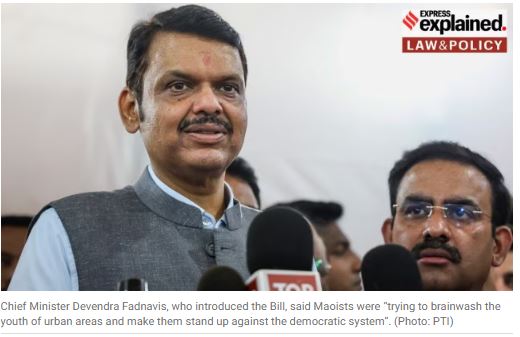
- 15 Jul 2025
In News:
The Maharashtra Special Public Security Bill, 2024, passed by the Legislative Assembly, aims to combat “urban Maoism” and left-wing extremism (LWE). Modeled on the Unlawful Activities (Prevention) Act (UAPA), the Bill introduces stringent provisions to identify and dismantle urban support networks aiding insurgents. However, it has generated significant legal and civil liberty concerns due to its vague definitions, broad executive powers, and pre-trial punitive measures.
Understanding Urban Maoism
Urban Maoism refers to the strategy of the banned CPI (Maoist) to infiltrate cities and mobilise intellectuals, students, professionals, and minorities through NGOs, protests, and media campaigns. This ideology, outlined in the 2004 document Strategies and Tactics of Indian Revolution (STIR), aims to build urban logistical support for rural armed struggles while operating under the legal guise of activism, journalism, or civil society work. Notable examples include the Elgar Parishad case (2018), where activists were arrested for alleged Maoist links following Bhima Koregaon violence.
Key Provisions of the Bill
The Bill allows the government to declare an organisation “unlawful” and penalises individuals associated with it—whether through membership, fundraising, or aiding operations. It defines “unlawful activity” as interference with public order, use of criminal force against officials, incitement to disobedience of the law, or even disrupting communication systems. Punishments range from 2 to 7 years of imprisonment along with fines. All offences are cognizable and non-bailable.
A major provision allows pre-trial forfeiture of property belonging to accused persons or organisations, with only 15 days’ notice. While the affected party can appeal to the High Court within 30 days, the initial declaration is confirmed only by an Advisory Board comprising High Court-qualified persons.
Constitutional and Legal Concerns
Civil society and legal experts argue that the Bill risks criminalising legitimate dissent and peaceful protest, given its ambiguous phrasing like “practising disobedience” or “generating apprehension in the public.” Unlike the UAPA, which requires a higher threshold for proving threat to national integrity, Maharashtra’s Bill introduces lower benchmarks that could conflate dissent with sedition.
The pre-trial forfeiture of property mirrors provisions in the Prevention of Money Laundering Act (PMLA), yet lacks equivalent safeguards like adjudication by a quasi-judicial body. Moreover, principles of natural justice, such as presumption of innocence and burden of proof on the state, appear diluted.
Broader Implications
While the state’s intent to counter urban LWE influence is valid—especially given the shift of Maoist strategies from forested hinterlands to urban centres—the means adopted pose risks to constitutional rights and federal norms. The legislation exemplifies a growing trend where extraordinary laws designed for national threats are adapted at the state level, potentially disrupting the balance between security imperatives and civil liberties.
Conclusion
The Maharashtra Special Public Security Bill reflects the complex challenge of safeguarding national security while upholding democratic freedoms. Any future enactment must incorporate judicial oversight, clearer definitions, and proportionate safeguards to ensure that the fight against extremism does not erode the fundamental rights enshrined in the Constitution.
AI-Based Warfare in the Agentic Age

- 10 Jul 2025
In News:
Artificial Intelligence (AI) is transforming the character of warfare, ushering in an era of “agentic warfare”—a paradigm where autonomous systems, not humans, are poised to dominate the battlefield. Military strategies today increasingly hinge on multi-domain operations (MDO) involving land, air, sea, cyber, and space, where decision-making speed, precision, and adaptability are crucial. AI is central to enabling this shift—but it comes with a critical caveat: energy dependency.
AI and the New Battlefield
Modern warfare relies on Big Data analytics, machine learning (ML), predictive modelling, and natural language processing (NLP)—tools that demand not only computational power but also massive energy inputs. Countries like China have already made significant strides. Its military, the People’s Liberation Army (PLA), is actively integrating AI into combat functions under the doctrine of “intelligentised warfare.” Applications range from automating artillery systems to deploying generative AI-enabled drones for radar targeting.
China’s AI developments, such as the DeepSeek model, complement battlefield deployments. Of concern to India is China’s support to Pakistan’s Centre of Artificial Intelligence and Computing (PAIC), which focuses on Cognitive Electronic Warfare. India’s Deputy Chief of Army Staff, Lt Gen Rahul Singh, revealed that Pakistan possibly used real-time Chinese satellite intelligence and AI analytics during Operation Sindoor.
India’s Response and Gaps
India was an early mover, establishing the DRDO’s Centre for Artificial Intelligence and Robotics (CAIR) in 1986 to develop AI applications for target recognition, navigation, logistics, and mine detection. However, the pace of deployment has lagged, especially compared to China. Lt Gen Amardeep Singh Aujla underlined the increasing intensity of warfare, emphasizing the necessity of C4ISR (Command, Control, Communications, Computers, Intelligence, Surveillance and Reconnaissance) and civil-military fusion to enhance readiness.
The Centre for Joint Warfare Studies (CENJOWS) notes the growing global use of AI in weapon systems, battlefield simulation, and cyber defence. For instance, Ukraine’s AI-powered drones have autonomously struck Russian oil facilities. Israel’s “Lavender” AI system has reportedly identified over 37,000 Hamas targets, exemplifying the real-time integration of AI in warfare.
Energy: The Hidden Backbone
While AI’s capabilities are evident, its energy appetite is equally significant. AI infrastructure—data centres, servers, and cooling systems—requires vast amounts of electricity, often from stable sources like nuclear energy. India’s current installed nuclear capacity (~7.5 GW) is starkly inadequate when compared to countries like South Korea (over 22 GW), limiting India's long-term AI defence potential.
Kris P. Singh, CEO of Holtec International, argues that Small Modular Reactors (SMRs) placed near AI data hubs could be the solution. He proposes co-locating SMRs with military or strategic data centres to power next-generation capabilities like drones, smart soldiers, and robotics. India's past policy to limit thermal power and insufficient storage in renewable energy has created grid instability, further compounding the challenge.
Way Forward
To remain strategically relevant, India must:
- Accelerate AI adoption in defence through institutional synergy and private sector participation.
- Invest in energy infrastructure, particularly clean, stable sources like SMRs.
- Promote indigenous AI R&D, focusing on secure, sovereign data ecosystems.
- Establish MDO doctrines incorporating AI, space, and cyber capabilities.
In the agentic age, the nation that combines AI mastery with robust energy capacity will define the future of warfare. India’s security strategy must urgently align with this reality.
Rising Participation and Casualties of Women in Left-Wing Extremism
- 27 Jun 2025
Context:
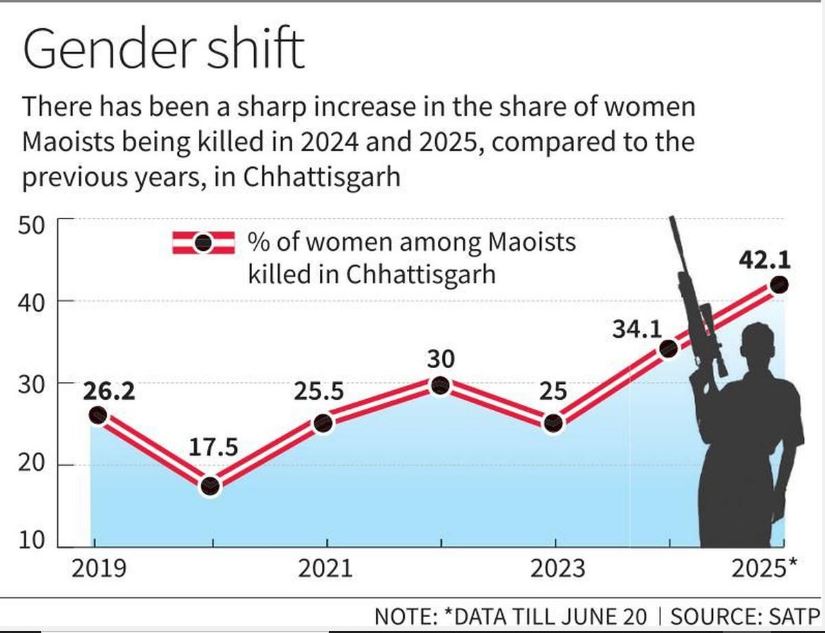
There has been a sharp surge in the number of women Maoist cadres killed in anti-Naxal operations in Chhattisgarh since 2024. This rise has coincided with the intensification of counter-insurgency efforts under the Ministry of Home Affairs’ (MHA’s) renewed push to eliminate Left-Wing Extremism (LWE) by March 2026.
Behind these numbers lies a disturbing narrative of coercion, indoctrination, gender-based exploitation, and the systemic use of women and children as tools in extremist strategies.
Trends in Women Maoist Casualties (2024–2025)
- 2024: Out of 217 Maoists killed, 74 were women (~34%)
- 2025 (till June 20): Out of 195 killed, 82 were women (~42%)
- Comparison with previous years:
- 2019: 65 total killed | 17 women
- 2020: 40 total | 7 women
- 2021: 51 total | 13 women
- 2022: 30 total | 9 women
- 2023: 20 total | 5 women
This data indicates a doubling of women fatalities as a proportion of total casualties in Maoist operations since the launch of targeted operations.
Recruitment Through Coercion: Bal Dastas and Gendered Exploitation
According to the MHA, Maoists have been increasingly recruiting young Adivasi girls and forming “Bal Dastas” (child squads) in Chhattisgarh and Jharkhand. Key observations include:
- Parental coercion: Many impoverished tribal families are forced to give up their girl children under threats and pressure.
- Ideological indoctrination: Children are brainwashed to adopt Maoist ideology from an early age.
- Gendered exploitation: Although the Maoists outwardly reject patriarchy, the representation of women in leadership roles such as the Polit Bureau and Central Committee remains negligible.
- Use of women as foot soldiers and human shields, exposing them disproportionately to fatal encounters with security forces.
Underlying Issues: Security, Society, and Maoist Strategy
- Deliberate Alienation Strategy:
- Maoists systematically attack schools and educational infrastructure.
- As per MHA, education fosters critical thinking and alternate livelihoods, which are seen as a threat to Maoist influence.
- Civilian and Infrastructure Loss:
- Since 2019:
- 725 civilians killed in LWE violence.
- 263 incidents of attacks on economic infrastructure recorded.
- Since 2019:
- Socio-Economic Backdrop:
- Lack of education, healthcare, livelihood options, and state presence in remote tribal areas fuel Maoist recruitment.
- Women and children from these regions become the most vulnerable and easily exploited demographic.
Security Forces' Perspective and Response
- Initial recruitment of women was largely based on coercion and misinformation.
- Once inside the Maoist ranks, women face physical, mental, and emotional exploitation.
- Maoists use women primarily as human shields and expendable foot soldiers.
However, the security forces are increasingly pursuing a sensitive, gender-aware approach, prioritizing:
- Voluntary surrender schemes
- Gender-sensitive rehabilitation policies offering:
- Education
- Vocational training
- Healthcare access
- Social reintegration pathways
Way Forward: A Multi-Pronged Strategy
- Strengthen Surrender and Rehabilitation Frameworks:
- Expand socio-economic reintegration schemes tailored for women ex-cadres.
- Ensure psycho-social counselling, particularly for minors and survivors of exploitation.
- Enhance State Presence and Welfare Delivery:
- Accelerate development of infrastructure, education, and healthcare in LWE-affected districts.
- Promote community policing and tribal leadership in governance processes.
- Child Protection Measures:
- Strengthen child protection systems, including monitoring of Bal Dastas.
- Empower and engage Anganwadi workers, school teachers, and local NGOs in vulnerable zones.
- Gender-Sensitive Counter-Insurgency Doctrine:Train forces in humane engagement, protection of rights, and de-escalation tactics when dealing with women and child cadres.
Operation Sindoor and the Emerging Imperative of Digital Warfare in India’s National Security

- 12 May 2025
In News:
On May 7, India launched Operation Sindoor, targeting terrorist bases in Pakistan in response to the Pahalgam terrorist attack on April 22. This military action quickly became a case study in how modern warfare extends beyond physical battlegrounds to include digital and information domains.
Managing Information During Conflict
Following the operation, India’s Ministry of Defence issued an advisory on May 9 urging media, digital platforms, and individuals to avoid live or real-time reporting of military movements. The Press Information Bureau (PIB) also stressed sharing only official updates to counter the spread of misinformation. This advisory was crucial after fake news, including false claims that the INS Vikrant aircraft carrier attacked Pakistani ports, spread rapidly on social media and TV channels. The misinformation originated from a fraudulent social media account pretending to be the INS Vikrant, causing panic and confusion, which was then amplified by Pakistani sources.
Hybrid Nature of Modern Conflicts
Modern conflicts have evolved into “hybrid wars” that combine traditional military operations with sophisticated information warfare. Research from King’s College London highlights how states use both traditional and social media platforms for “perception management”—influencing public opinion to strengthen domestic support or destabilise opponents. In such environments, misinformation spreads rapidly due to media pressure to break news first, public anxiety seeking instant updates, and social media algorithms that prioritise sensational content regardless of accuracy.
Cyber Warfare: The Invisible Battlefield
Digital warfare also includes cyberattacks on critical infrastructure and military networks. Since the Pahalgam attack, India has faced several cyber intrusions originating from Pakistani and spoofed networks. Cyber operations now run parallel to physical conflicts, forming a multi-domain battlespace where controlling information flow and disrupting enemy networks are as vital as territorial gains.
Recent global examples include Russia’s cyberattacks on Ukraine during the 2022 invasion and retaliatory cyber operations by Ukrainian hackers. Similarly, after Hamas’s October 2023 attack, Israel faced massive cyber assaults and widespread disinformation campaigns on social media using AI-generated content.
Challenges in Cyber Conflict
Cyber warfare is especially challenging because attacks are remote, anonymous, and difficult to attribute. Attackers hide behind proxies and compromised systems, complicating diplomatic responses and exposing gaps in international laws governing cyber conflicts. As tensions rise, India may encounter more frequent and sophisticated cyberattacks targeting its infrastructure, military communications, and financial systems, alongside conventional military threats.
India’s Preparedness Strategy
To tackle these challenges, India must adopt a comprehensive strategy combining legal, diplomatic, and technological measures:
- Legal: Strengthen cybersecurity laws under the Information Technology Act and push for international agreements to regulate state-sponsored cyberattacks.
- Diplomatic: Enhance cooperation in global forums like the UN Group of Governmental Experts (GGE) and partner with technologically advanced nations to identify and counter hostile cyber activities.
- Technological: Invest heavily in cyber defence and offence capabilities. Critical infrastructure must be fortified through security audits, network segmentation, and resilient backups. Agencies such as the National Critical Information Infrastructure Protection Centre (NCIIPC) and CERT-In need enhanced capacities to detect and respond to threats. Regulators should promote continuous network monitoring and public awareness on cybersecurity, exemplified by the Reserve Bank of India’s directives to banks.
Conclusion
The digital battlefield—comprising misinformation and cyberattacks—demands a coordinated government response and active citizen engagement. As conventional and digital warfare increasingly overlap, India’s national security depends on not only military preparedness but also information resilience and cybersecurity. With well-planned, multi-dimensional strategies, India can effectively confront emerging digital threats and secure its sovereignty in an increasingly complex geopolitical environment.
India’s Coastal Crisis

- 31 Mar 2025
In News:
India’s vast coastline, stretching over 7,500 kilometres across nine states and four Union Territories, is a crucial ecological and economic asset. It supports diverse marine ecosystems, sustains the livelihoods of approximately 16 million fishers, and contributes around 4% to the national GDP through fisheries, tourism, and shipping activities. However, India’s coastal regions face a growing crisis from two interconnected challenges: rampant illegal light fishing and accelerating coastal erosion.
Illegal Light Fishing: Ecological and Socioeconomic Impacts
Light fishing, a method that employs high-powered artificial lights to attract fish and squid to the surface at night, is officially banned in India’s Exclusive Economic Zone (EEZ) since 2017. Despite this, enforcement remains weak and patchy, particularly within territorial waters of Maharashtra, Tamil Nadu, Andhra Pradesh, and Kerala. Mechanized boats equipped with powerful LED lights continue this practice, causing severe ecological disruption and threatening traditional fishing communities.
High-intensity lights lure not only adult fish but also juveniles and non-target species (bycatch), resulting in overfishing and depletion of juvenile stocks. This has been linked to coral reef degradation and altered marine food webs, especially impacting slow-moving species like squid, which are vital to the coastal ecosystem. Studies by institutions like the Central Marine Fisheries Research Institute have highlighted how light fishing disrupts spawning cycles and jeopardizes fish recruitment during critical periods.
Socially, light fishing disadvantages artisanal fishers who rely on traditional methods and smaller boats. The National Fishworkers Forum has documented declining catches and conflicts between small-scale fishers and mechanized operators. Moreover, the economic incentives for illegal light fishing are high, as single trips can yield profits exceeding ?1 lakh, whereas penalties, such as fines of ?16,000, are insufficient deterrents.
Coastal Erosion: Increasing Vulnerability and Habitat Loss
Alongside overfishing, India’s coastline is increasingly vulnerable to erosion, exacerbated by rising sea levels (currently about 3.2 mm per year), frequent cyclones, and human activities such as sand mining and unregulated coastal development. Recent government data indicates that 33.6% of India’s coastline is affected by erosion, with places like Dakshina Kannada in Karnataka losing nearly half of their shoreline over three decades.
Coastal ecosystems such as mangroves and coral reefs serve as natural buffers against wave action, reduce erosion, and play a critical role in carbon sequestration. For instance, the Bhitarkanika mangroves in Odisha absorb four times more carbon than terrestrial forests, helping mitigate climate change. However, urban expansion and infrastructure projects have led to significant mangrove loss—Mumbai has lost 40% since 1987—reducing the coastline’s resilience against natural disasters.
Pollution from plastic waste and industrial effluents further degrades marine habitats, while weak enforcement of Coastal Regulation Zone (CRZ) norms allows illegal constructions that exacerbate ecological damage.
Way Forward: Policy, Enforcement, and Community Engagement
Addressing India’s coastal crisis requires a multi-pronged approach:
- Strengthening Enforcement: There is an urgent need for uniform nationwide enforcement of the light fishing ban, enhanced patrolling using technologies like AI-enabled drones, and more stringent penalties to deter violations.
- Ecological Restoration: Initiatives such as artificial reefs, mangrove afforestation, and sand replenishment can restore natural coastal buffers. Programs like those in Puducherry and Odisha demonstrate the effectiveness of such measures.
- Community Participation: Empowering fisherfolk through capacity-building and involving local communities in surveillance and sustainable fishing practices is critical. Tamil Nadu’s fisher unions serve as a successful model of local stewardship.
- Climate Adaptation and Research: Relocating vulnerable settlements, investing in cyclone-resistant infrastructure, and expanding scientific research, such as satellite monitoring of erosion hotspots, are essential for long-term resilience.
Conclusion
India’s coastal regions are at a crossroads, balancing economic development, ecological sustainability, and social equity. Illegal light fishing and coastal erosion threaten marine biodiversity and the traditional livelihoods of millions. Effective governance, backed by technological innovation and community collaboration, is indispensable to safeguard India’s maritime heritage and ensure sustainable use of coastal resources in alignment with Sustainable Development Goal 14.
India’s Counter-Naxal Strategy
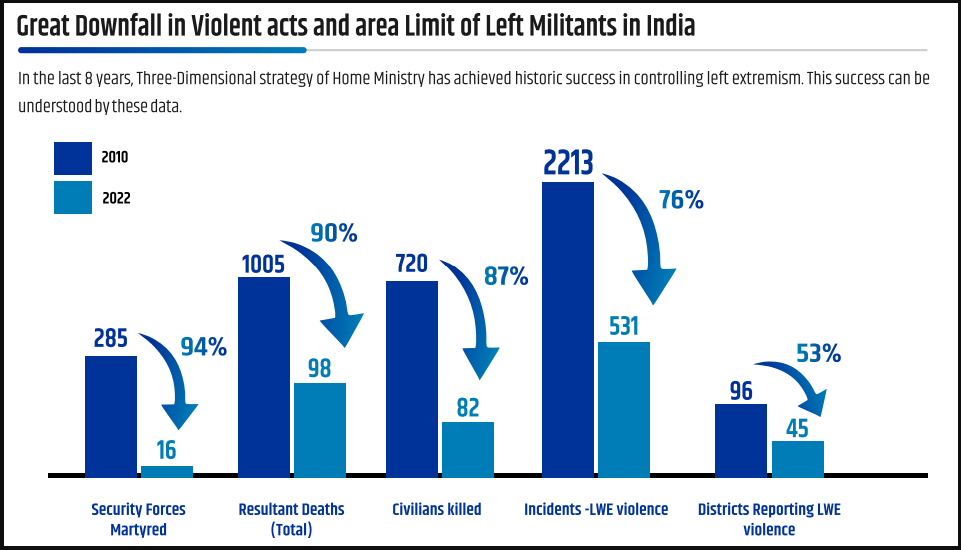
- 24 Mar 2025
In News:
The Government of India, has adopted a zero-tolerance policy against Left-Wing Extremism (LWE), commonly referred to as Naxalism. The Central Government has set a target to make India Naxal-free by March 2026, a goal backed by integrated security, developmental, and governance strategies.
Current Status and Achievements
Recent operations in Chhattisgarh’s Bijapur and Kanker districts led to the neutralization of 22 Naxalites, highlighting the success of the ongoing ‘Naxalmukt Bharat Abhiyan’. In 2025 alone, 90 Naxalites were killed, 104 arrested, and 164 surrendered. In 2024, these figures stood at 290 neutralized, 1,090 arrested, and 881 surrendered. Additionally, 15 top Naxal leaders have been eliminated.
There has been a 53% decline in Naxal-related incidents, from 16,463 cases (2004–14) to 7,744 (2014–24). Casualties among security forces have dropped by 73%, and civilian deaths by 70% in the same period. Fortified police stations increased from 66 (2014) to 612 (2024). The number of Naxal-affected districts has drastically reduced from 126 to 12, indicating a marked shrinkage in the Red Corridor.
India’s Multi-Pronged Approach
The National Policy and Action Plan to Address LWE (2015) guides the Centre’s counter-Naxal efforts through three pillars: security enhancement, development outreach, and ensuring rights and entitlements.
- Security Operations:
- Major operations like Operation Green Hunt deploy Central Armed Police Forces (CAPFs), CoBRA commandos, and state-level forces like Greyhounds (Andhra Pradesh).
- 302 new security camps and 68 night landing helipads have been established in vulnerable regions for better mobility and reach.
- Development Initiatives:
- Under PMGSY-II, the Road Connectivity Project for LWE Areas improves access to remote villages.
- 130 Eklavya Model Residential Schools (EMRS) ensure tribal children receive quality education.
- The ROSHNI Scheme and establishment of Industrial Training Institutes (ITIs) provide skill development and livelihood avenues to tribal youth.
- The Universal Service Obligation Fund (now Digital Bharat Nidhi) has led to widespread mobile tower installation in forested areas.
- Tribal Youth Exchange Programs promote national integration and awareness among tribal youth.
- Legal and Institutional Measures:
- The Unlawful Activities (Prevention) Act, 1967 (UAPA) bans CPI (Maoist) and affiliated organizations.
- Forest Rights Act (2006) and PESA (1996) aim to protect tribal land and forest rights.
- Surrender-cum-Rehabilitation policies provide financial aid, vocational training, and reintegration support.
Understanding Naxalism
Naxalism, rooted in the 1967 uprising in Naxalbari (West Bengal), is a Maoist-inspired insurgency seeking to overthrow the Indian state through armed rebellion. Factors contributing to its rise include landlessness, tribal alienation, poverty, displacement from mining and industrial projects, and state neglect. The insurgency remains concentrated in the “Red Corridor” encompassing Chhattisgarh, Jharkhand, Odisha, Maharashtra, and Bihar.
Conclusion
India’s counter-Naxal policy demonstrates that a balanced approach combining firm security enforcement with development and governance reforms can significantly curb insurgency. Continued emphasis on inclusive growth and tribal empowerment remains crucial to achieving lasting peace in affected regions.
Free Movement Regime
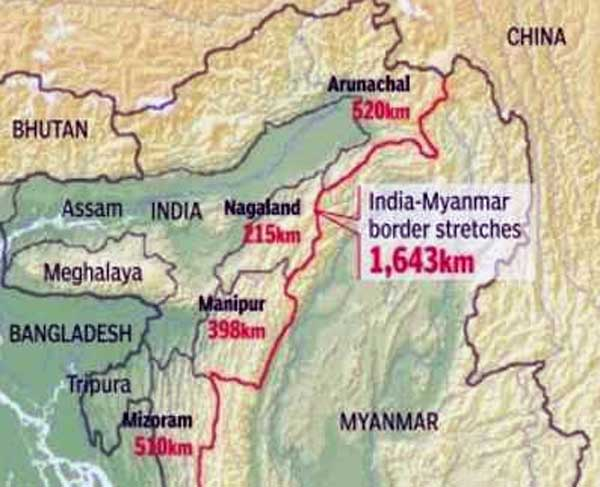
- 27 Dec 2024
In News:
The Indian government, through the Ministry of Home Affairs (MHA), has recently issued new guidelines to regulate the movement of people between India and Myanmar, especially along the border regions. These guidelines come after the suspension of the Free Movement Regime (FMR), which had previously allowed residents within a specified range of the border to move freely. The new protocol aims to enhance internal security and address concerns related to demographic shifts in India's northeastern states.
Background of the Free Movement Regime (FMR)
What is FMR?
The Free Movement Regime (FMR) is a bilateral arrangement between India and Myanmar that permits residents living in border areas to cross the international boundary without a visa. This agreement was established in 1968 to facilitate familial, cultural, and economic exchanges between people living on either side of the border.
Territorial Limits and Evolution
Initially, the FMR allowed free movement within a 40 km radius from the border. However, in 2004, this limit was reduced to 16 km, and additional regulations were introduced in 2016. The most recent development sees the limit further reduced to 10 km, with stricter regulations implemented to regulate the movement.
Recent Developments and New Guidelines
Suspension of FMR
In February 2023, Union Home Minister Amit Shah announced the suspension of the FMR along the India-Myanmar border, citing concerns about internal security and demographic changes, particularly in India's northeastern states. This decision came in the context of growing ethnic violence and political pressures, especially from states like Manipur.
Despite the announcement, the formal scrapping of the FMR is yet to be officially notified by the Ministry of External Affairs (MEA). However, the MHA has issued new guidelines to regulate cross-border movement, focusing on enhancing security without completely discontinuing the regime.
Key Features of the New Guidelines
The updated protocols issued by the MHA include several measures aimed at improving the security and regulation of movement across the border:
- Reduced Movement Limit: The new guidelines reduce the free movement limit from 16 km to 10 km from the border on both sides.
- Border Pass System: Residents wishing to cross into Myanmar or return to India must obtain a "border pass" from the Assam Rifles. This pass allows a stay of up to seven days in the neighboring country.
- Document and Health Checks: Upon entry into India, individuals will undergo a document inspection by the Assam Rifles, followed by security and health checks conducted by state police and health authorities. Biometrics and photographs will be collected, and a QR code-enabled border pass will be issued for verification.
- Designated Entry Points: There will be 43 designated entry and exit points across the border, with biometric verification and health screening required at all points.
- Monitoring and Enforcement: The Assam Rifles will oversee the movement, ensuring that individuals comply with the new regulations. Violations of the movement protocol will result in legal action.
Infrastructure and Technology Implementation
The government plans to establish infrastructure, such as biometric machines and software for border pass issuance. Pilot entry and exit points will be operational soon, with a phased implementation for the remaining points.
Political Reactions and Opposition
Regional Concerns and Opposition
The suspension of the FMR has been a contentious issue in India's northeastern states. The governments of Nagaland and Mizoram have raised objections to the scrapping of the regime, citing the cultural and familial ties of border communities. The Nagaland Assembly passed a resolution opposing the government's decision, while political leaders in Manipur argued that the unregulated movement of people had contributed to ethnic violence in the region.
Specific Concerns in Manipur
The chief minister of Manipur, N. Biren Singh, attributed ongoing ethnic conflicts in the state to the unchecked movement of people across the border. This was particularly evident in the violent ethnic clashes that broke out in 2023. As a result, Singh urged the Home Ministry to cancel the FMR along the India-Myanmar border, and the new guidelines reflect the state's concerns.
Conclusion
The suspension of the Free Movement Regime along the India-Myanmar border, followed by the introduction of stricter guidelines, marks a significant shift in India's border management policy. While the formal scrapping of FMR is yet to occur, the new protocols aim to balance security concerns with the region's long-standing cultural ties. The implementation of biometric checks and designated entry points signifies the government’s focus on modernizing border control while addressing regional concerns. The outcome of this policy shift will have important implications for internal security, demographic dynamics, and bilateral relations between India and Myanmar.
Commitment to Eradicating Naxalism in Chhattisgarh by 2026
- 17 Dec 2024
Overview
Union Home Minister Amit Shah has reiterated India's commitment to eliminate Naxalism in Chhattisgarh by March 31, 2026. He emphasized the progress made in the fight against Naxalism, highlighting key successes and outlining the strategy for the coming years.
Key Pointers
- Government Commitment: Amit Shah emphasized the joint commitment of the Government of India and the Chhattisgarh state leadership to rid the state of Naxalism by 2026.
- Security Forces’ Success: Over the past year, Chhattisgarh police neutralized 287 Naxalites, arrested around 1,000, and saw 837 surrenders.
- Top Naxal Cadres Neutralized: The state forces successfully neutralized 14 high-ranking Naxal cadres.
- President’s Police Colour Award: Chhattisgarh Police received the President's insignia within 25 years, a significant achievement for the state.
The Three-Pronged Strategy for Eliminating Maoist Insurgency
- Security Measures (Force)
Deployment of Security Forces
- Enhanced Presence: Increased deployment of Central and State police forces in Left-Wing Extremism (LWE) areas.
- Joint Operations: Coordinated operations between state and central forces, including CRPF and COBRA units.
- Upgraded Technology: Incorporation of UAVs, solar lights, and mobile towers to enhance operational efficiency.
Operation SAMADHAN
- Key Elements:
- Smart Leadership: Leading with innovative strategies.
- Aggressive Strategy: Swift, decisive action against insurgents.
- Motivation and Training: Strengthening the capabilities of forces.
- Actionable Intelligence: Real-time intelligence for effective operations.
- Harnessing Technology: Using modern tech for strategic advantage.
2. Development Initiatives
Focused Development Schemes
- PMGSY: Rural road connectivity under the Pradhan Mantri Gram Sadak Yojana.
- Aspirational Districts Program: Improving infrastructure in Naxal-affected areas.
- Skill Development: Targeted schemes in 47 LWE-affected districts to reduce unemployment.
Infrastructure Development
- Special Infrastructure Schemes: Building schools, roads, and bridges in remote areas to integrate them into the mainstream economy.
- Rehabilitation: Focus on providing rehabilitation for former Naxals through education and vocational training.
3. Empowerment (Winning Hearts and Minds)
Public Engagement
- Tribal Empowerment: Strengthening communication with tribal communities to reduce alienation and mistrust.
- Rehabilitation Policies: Surrender schemes offering incentives like education and financial aid to reintegrate former insurgents into society.
Maoism: Ideology and Background
What is Maoism?
- Origin: A form of communism developed by Mao Tse Tung, focusing on armed insurgency to capture state power.
- Core Beliefs: Maoists believe in violence and insurrection as legitimate means to overthrow the state and establish a People’s Democratic Republic.
- Indian Maoism: The Communist Party of India (Maoist), formed in 2004, leads the largest Maoist insurgency in India.
Recent Achievements in Combatting Maoist Insurgency
Key Successes in 2023
- Maoist-Free Villages: Villages in Dantewada declared "Maoist-free," a significant victory for the state.
- Reduction in Security Forces’ Casualties: 14 deaths in 2024, a dramatic decrease from 198 deaths in 2007.
- Infrastructure and Logistical Support: Enhanced use of helicopters and fortified police stations.
Government’s Commitment to Rebuilding
- Rehabilitation and Welfare: The government is implementing policies to improve the living standards of affected families, including 15,000 houses for Naxal-affected regions.
- Economic Development: Focus on building infrastructure and providing employment through skills training programs.
Challenges in Eliminating Naxalism
Socio-Economic Issues
- Exploitation of Tribals: Marginalization of tribals due to displacement for mining and forestry.
- Lack of Infrastructure: Basic amenities like roads, schools, and healthcare are absent in many areas.
- Centralized Naxal Command: The CPI (Maoist) retains a strong leadership, despite fragmentation of its forces.
Governance and Trust Issues
- Alienation of Local Populations: Ineffective governance and poor implementation of welfare schemes fuel local support for Naxal groups.
- Resource Conflict: The Naxals exploit rich mineral resources in the region to fund their insurgency.
Way Forward
Governance and Economic Reforms
- Tribal Empowerment: Form Tribal Advisory Councils as per the Fifth Schedule for better resource management.
- Land Redistribution: Enforce the Land Ceiling Act to reduce inequality.
- Livelihood Programs: Offer alternative livelihoods to reduce dependency on illegal activities.
Security Measures
- Paramilitary Deployment: Specialized forces to secure tribal areas and enable local governance.
- Resource Management: Ensure sustainable exploitation of natural resources, involving tribal communities in the decision-making process.
Peace Dialogues
- Inclusive Policies: Engage in dialogue with Naxals to facilitate their reintegration into mainstream society.
Conclusion
Naxalism in India, particularly in Chhattisgarh, is a complex issue rooted in socio-economic inequalities, lack of development, and historical alienation of tribal communities. The government's approach, encapsulated in the SAMADHAN strategy, combines security operations with developmental initiatives and a focus on empowerment to tackle the problem. With a clear commitment to eliminate Naxalism by 2026, the Indian government is making significant strides in reducing violence, improving governance, and integrating affected communities into the mainstream.
Beware of Digital Wedding Invites

- 08 Dec 2024
In News:
In the peak wedding season, cyber fraudsters are increasingly exploiting digital wedding invitations to hack into mobile phones. These fraudulent invites, often disguised as PDF wedding cards shared on WhatsApp, contain embedded malware that allows cybercriminals to gain full access to the victim's phone. This includes access to sensitive financial data, making individuals vulnerable to fraud. The Lucknow Police Cyber Cell has issued a public warning, urging citizens to be cautious and avoid opening suspicious files.
How the Scam Works
The scam involves cybercriminals sending out malware-laden wedding invitations. Once the recipient opens the file, the malware infects their phone, enabling the fraudsters to remotely control the device. From there, they can access sensitive information, including bank account details, and may even transfer funds without the victim’s consent.
Preventive Measures and Cyber Hygiene
To protect against such scams, individuals should follow these preventive steps:
- Avoid Suspicious Files: Do not open files from unknown senders, particularly those with extensions like APK, PIF, or VBS. It is crucial to verify the sender's number—legitimate Indian numbers typically begin with +91.
- Turn Off Auto-Download: Disabling automatic downloads on platforms like WhatsApp can prevent files from being opened unknowingly.
- Enable Two-Step Verification: Strengthen security by activating two-step verification on your digital accounts and setting strong passwords.
- Report Fraud Immediately: In case of suspicious activity, contact the cybercrime helpline at 1930 or file a complaint on the official cybercrime portal (www.cybercrime.gov.in).
The Lucknow Police’s “Cyber Pathshala” campaign aims to raise awareness and educate the public on digital scams, particularly during the wedding season when these frauds are at their peak.
Cybersecurity Challenges in India
This emerging digital threat is part of a broader trend of sophisticated cybercrimes in India. Cyber fraudsters are increasingly using manipulative tactics, such as phishing, fake digital arrests, and malware attacks. In 2024, India witnessed a significant rise in ransomware attacks, frauds targeting financial institutions, and supply chain vulnerabilities.
India's legislative and institutional frameworks are evolving to address these challenges. Key measures include:
- The Information Technology Act, 2000, which lays the foundation for tackling cybercrimes.
- The Digital Personal Data Protection Act, 2023, which focuses on protecting personal data.
- The Indian Computer Emergency Response Team (CERT-In), which coordinates national responses to cyber incidents.
Additionally, new frameworks like the National Cyber Security Policy, 2013, and initiatives such as Cyber Surakshit Bharat and the Indian Cyber Crime Coordination Centre (I4C), aim to fortify India's digital landscape and promote cybersecurity.
Emerging Cyber Threats
As India becomes more digitally connected, the threat landscape continues to evolve:
- Digital Arrest Scams: Fraudsters impersonate law enforcement to extort money from victims, claiming they are under investigation for fictitious crimes.
- Ransomware: Attacks on critical infrastructure, such as financial institutions and healthcare systems, have led to operational disruptions and financial losses.
- Deepfake Technology: The rise of AI-generated deepfakes poses significant risks, including misinformation and financial fraud.
- Internet of Things (IoT) Vulnerabilities: The rapid adoption of IoT devices has created new security challenges, with many devices lacking adequate protection.
Strategic Recommendations for Enhancing Cybersecurity
To counter these evolving threats, India must focus on several strategic areas:
- Digital Literacy Campaigns: Nationwide efforts to improve digital literacy, particularly targeting vulnerable groups such as rural populations and senior citizens.
- Stronger IoT Security Protocols: Mandating secure design and certification for IoT devices.
- AI-Driven Threat Intelligence: Implementing AI-based tools for early threat detection and response in critical sectors.
- Mandatory Cybersecurity Audits: Regular audits of critical infrastructure, especially in sectors like healthcare, banking, and utilities.
- Public-Private Collaboration: Strengthening partnerships to address challenges such as cryptocurrency fraud, ransomware, and dark web-enabled crimes.
Conclusion
The rise of digital fraud, including the manipulation of wedding invitations for malicious purposes, highlights the need for enhanced cybersecurity measures in India. By improving public awareness, investing in technological solutions, and reinforcing legal and institutional frameworks, India can better protect its citizens from the growing threat of cybercrime. A proactive and informed approach is essential to secure the digital future of the nation.
Current Representation of Women in CAPFs
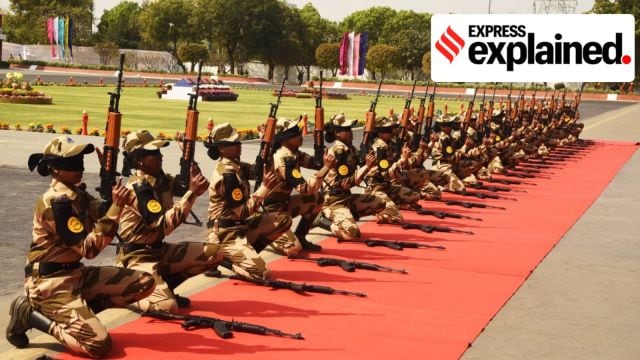
- 04 Dec 2024
In News:
The Central Armed Police Forces (CAPFs) of India, comprising forces like CRPF, BSF, CISF, and others, play a crucial role in maintaining internal security. Women’s participation in these forces has been historically limited, but recent efforts have focused on increasing their representation. As of 2024, women constitute only 4.4% of the total personnel in CAPFs, highlighting the slow progress despite various initiatives.
Current Representation and Changes Over Time
- Overall Representation: Women make up 4.4% of the 9.48 lakh-strong CAPFs. Within this, the Central Industrial Security Force (CISF) has the highest representation at 7.02%, followed by the Sashastra Seema Bal (SSB) at 4.43%, Border Security Force (BSF) at 4.41%, Indo-Tibetan Border Police (ITBP) at 4.05%, Assam Rifles at 4.01%, and Central Reserve Police Force (CRPF) at 3.38%.
- Growth of Women Personnel: From 15,499 women in 2014, the number has tripled to 42,190 in 2024, reflecting a steady increase in recruitment. However, the percentage remains low despite these gains.
- Recruitment Trends: In 2024, 835 women were recruited, with 5,469 more in the process. In 2025, 4,138 women are expected to be recruited.
Government Efforts and Parliamentary Committee Recommendations
- Policy Measures: The government has introduced several steps to encourage women’s participation in CAPFs, such as reservations in constable-level positions: one-third for CRPF and CISF, and 14-15% for border forces like BSF, SSB, and ITBP.
- Challenges in Recruitment: Despite these policies, recruitment has not kept pace with the targets. The 2022 Parliamentary Committee on Home Affairs expressed disappointment over the “abysmally low” number of women in CAPFs, noting that women made up only 3.68% of the forces at that time.
- Recommendations by Parliamentary Committees:
- The Home Affairs Committee recommended fast-tracking phase-wise recruitment of women, particularly in CISF and CRPF.
- The Standing Committee on Personnel (2023) suggested “soft postings” for women to avoid difficult working conditions, especially in remote or strenuous terrains. It also called for reservations for transgender individuals.
- In 2024, further steps like fee waivers, relaxed physical standards, and provisions for maternity and child care leave were introduced to make the work environment more inclusive.
Reasons Behind Low Representation
- Cultural Barriers: Traditional gender roles and societal expectations deter many women from pursuing careers in security forces.
- Work Environment: The demanding nature of the job, which includes postings in remote areas and high-risk operations, makes it less appealing, especially for women with family responsibilities.
- Infrastructure Issues: Lack of adequate accommodation, sanitation facilities, and safety measures for women are deterrents to joining and retaining female personnel.
Conclusion and Future Outlook
Although the representation of women in CAPFs has seen improvement, it remains below expectations due to persistent challenges. The government’s continuous focus on recruitment reforms, better working conditions, and policy incentives will be crucial to achieve gender parity in these forces. As societal attitudes evolve and the infrastructure improves, more women may be encouraged to serve in these vital security roles. Future efforts must include targeted recruitment drives and creating a more inclusive and supportive environment to enhance women’s participation in CAPFs.
Digital Arrests

- 01 Dec 2024
In News:
In 2024, India has witnessed an alarming rise in cybercrime, particularly a new scam called "digital arrests." This type of fraud involves criminals impersonating law enforcement officials to extort money from victims. With more than 92,000 people targeted and ?2,141 crore defrauded from victims, these scams are rapidly becoming a significant concern for the public and law enforcement.
Nature of ‘Digital Arrests’
The modus operandi of digital arrest scams is sophisticated and emotionally manipulative. Cybercriminals contact victims through video calls, often using fake police officers' profiles and official documents to build credibility. They accuse victims of serious crimes such as money laundering or drug trafficking, claiming urgent action is needed to avoid arrest. The scammers create a false atmosphere of fear and urgency, convincing the victim to transfer large sums of money under the pretext of settling legal dues.
A notable example involves Ruchi Garg, who was targeted by scammers posing as police officers, falsely claiming her son was involved in a major scam. She was coerced into transferring ?80,000 before realizing it was a scam. Similar cases have affected hundreds, with perpetrators using AI-generated voices and fake visuals to amplify the deception.
The Growth of Cybercrime in India
Digital arrest scams are part of a broader increase in cybercrime in India. The Indian Cyber Crime Coordination Centre (I4C) has reported a rise in cyber fraud, with financial losses exceeding ?27,900 crore between 2021 and 2024. The most significant sources of these losses include stock trading scams, Ponzi schemes, and digital arrest frauds. As criminals adapt to emerging technologies and use social engineering tactics, the scale and complexity of scams are growing.
The surge in cybercrimes is fueled by vulnerabilities in India's digital landscape. With over 95 crore Internet users, many people, particularly the elderly or less tech-savvy, remain susceptible to such fraud. Cybercriminals often exploit this lack of awareness, combining fear and confusion to manipulate victims.
International Scope and Challenges
One of the challenges in combating digital arrests is the transnational nature of cybercrime. Scams often originate from countries like China, Cambodia, and Myanmar, where "scam compounds" run operations to train individuals in fraudulent techniques. These groups use virtual private networks (VPNs) and encrypted apps to conceal their identities and locations, making it difficult for Indian authorities to trace them.
Moreover, the involvement of mule bank accounts to launder defrauded money complicates investigations. Thousands of such accounts are identified and blocked regularly, but the flow of money continues through multiple channels, including cryptocurrencies.
Government Efforts and Preventive Measures
To address the growing menace of digital frauds, the Indian government has initiated several measures. The I4C, launched in 2020, aims to strengthen the response to cybercrimes by coordinating with various law enforcement agencies. The National Cyber Crime Reporting Portal allows citizens to report cyber fraud, while real-time alerts are sent to banks to prevent financial losses.
Additionally, the Cyber Crime Coordination Centre and other initiatives like Cyber Surakshit Bharat and CERT-In are working to enhance cybersecurity awareness and support victims. The Digital Personal Data Protection Act, 2023, also aims to regulate data security, which can reduce the sale of personal data on the dark web, a key enabler of these scams.
Conclusion
‘Digital arrests’ exemplify the evolving nature of cybercrimes in India. As digital threats become more complex and widespread, it is essential for citizens to remain vigilant and informed. Effective law enforcement, technological innovations, and public awareness are critical to reducing the impact of these scams and safeguarding the digital economy.
ARMED FORCES (SPECIAL POWERS) ACT (AFSPA)
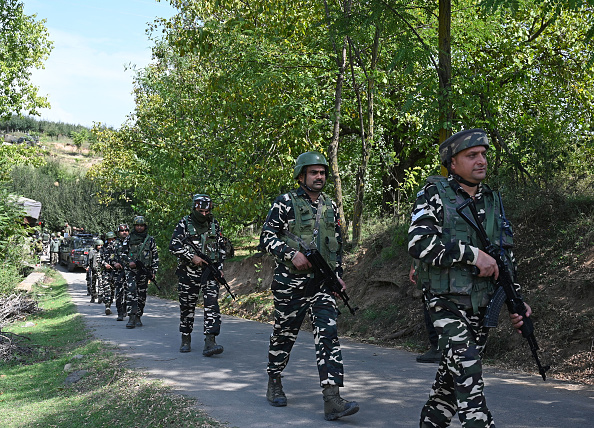
- 27 Sep 2024
In News:
The Armed Forces (Special Powers) Act (AFSPA) is a controversial law that grants extraordinary powers to the armed forces in designated "disturbed areas." Recently, the Ministry of Home Affairs extended AFSPA for six months in parts of Nagaland and Arunachal Pradesh, highlighting ongoing security concerns in these regions.
Current Status of AFSPA
Extended Areas
- Nagaland: AFSPA has been extended to eight districts—Dimapur, Niuland, Chumoukedima, Mon, Kiphire, Noklak, Phek, and Peren—along with 21 police stations in additional districts.
- Arunachal Pradesh: The Act continues in Tirap, Changlang, and Longding districts, as well as in certain areas of Namsai district.
Duration of Extension
The current extension is effective from October 1, 2024, lasting for six months unless revoked earlier. These areas were initially declared "disturbed" on April 1, 2024.
About AFSPA
Objective
AFSPA aims to maintain law and order in regions affected by insurgency or unrest, providing armed forces with necessary powers to perform their duties.
Key Provisions
- Section 3: Empowers the Governor or the Central Government to declare areas as "disturbed."
- Section 4: Grants special powers for arrests and searches without warrants.
- Section 6: Mandates that arrested individuals and seized property be handed over to the police.
- Section 7: Prosecution of armed forces personnel requires prior approval from the Central Government.
Rationale for Implementation
- To enable effective counter-insurgency operations.
- To ensure the protection of armed forces members.
- To uphold national security and sovereignty.
Criticisms and Issues
AFSPA has faced significant backlash for:
- Violating Fundamental Rights: Critics argue it undermines Articles 14, 19, and 21 of the Constitution.
- International Law Conflicts: It is perceived as contrary to the Universal Declaration of Human Rights and the International Covenant on Civil and Political Rights.
- Erosion of State Autonomy: The Act is viewed as an infringement on state powers, even in peaceful contexts.
Ineffectiveness and Atrocities
Reports of human rights abuses and the ineffectiveness of AFSPA in genuinely countering insurgency raise questions about its continued application.
Government's Position
Union Home Minister Amit Shah has noted that AFSPA has been lifted from 70% of the northeastern states, but it remains in force in certain areas, including Jammu and Kashmir, where revocation is also being considered.
Jeevan Reddy Committee
On November 19, 2004, the Central Government established a five-member committee led by Justice B.P. Jeevan Reddy to assess the Armed Forces (Special Powers) Act (AFSPA) in northeastern states. The committee was tasked with reviewing the law's implications and effectiveness.
Key Findings
In its 2005 report, the Jeevan Reddy Committee made several critical observations and recommendations:
- Complete Repeal: The committee advocated for the complete repeal of AFSPA, labeling it a "symbol of hate and oppression" and describing it as an "instrument of high-handedness."
- Incorporation into Other Legislation: It suggested that relevant provisions of AFSPA be integrated into the Unlawful Activities (Prevention) Act, 1967, with necessary modifications to delineate the powers of armed and paramilitary forces.
- Establishment of Grievance Cells: The committee recommended the creation of grievance cells in each district where armed forces are deployed, aimed at addressing public complaints and concerns regarding military actions.
Additional Recommendations
- The 5th report of the Second Administrative Reforms Commission also echoed the call for repealing AFSPA, reinforcing the need for legislative reform in addressing security issues.
- In 2016, the Supreme Court ruled that the armed forces cannot evade investigation for alleged excesses committed during their duties, even in "disturbed areas." This ruling clarified that the legal protections offered by AFSPA are not absolute, emphasizing accountability.
Conclusion
AFSPA remains a contentious issue with significant implications for civil rights, regional stability, and national security. A careful review and possible reform of the Act are essential to balance security needs with the protection of fundamental rights.
TRIPURA'S INSURGENCY RESOLUTION: A LANDMARK DECLARATION
- 25 Sep 2024
In News:
Recent Developments
Insurgency-Free Declaration
Tripura Chief Minister Manik Saha has officially declared the state "insurgency-free" following a significant surrender ceremony where 584 militants from the National Liberation Front of Tripura (NLFT) and the All-Tripura Tiger Force (ATTF) laid down their arms.
Memorandum of Settlement
This milestone follows a Memorandum of Settlement signed on September 4 between the central government and various insurgent groups, witnessed by the union home minister. The Tripura government has successfully facilitated 12 peace accords over the last decade, leading to over 10,000 insurgents surrendering.
Understanding Insurgency in Tripura
Historical Context
Tribal Composition
Tripura is home to 19 indigenous tribes, including the Tripra, Reang, and Jamatia, with Kok Borok as the primary language alongside other Tibeto-Burmese dialects.
Journey to Statehood
- Accession: Tripura became part of the Indian Union on October 15, 1949.
- Union Territory: It was designated as a Union Territory on November 1, 1956.
- Statehood: Tripura attained full statehood on January 21, 1972.
Causes of Insurgency
- Demographic Changes: A significant influx of Bengali refugees from East Pakistan resulted in the indigenous population declining from 95% in 1931 to 31% by 1991.
- Tribal Discontent: The tribal population lost control over land and resources, leading to widespread grievances.
- Socio-Economic Factors: Issues such as geographic isolation, socio-economic challenges, corruption, and tribal land alienation fueled unrest.
Evolution of Political Movements and Insurgency
Formation of Political Organizations
- TUJS: Established in 1967 to advocate for tribal rights and autonomy.
- Armed Struggle: The Tripura Sena emerged in 1970, followed by the Tripura National Volunteers (TNV) in 1978, both pushing for an independent tribal state.
Rise of Insurgent Groups
Key groups involved include:
- TUJS: Formed in 1971.
- TNV: Established in 1981.
- NLFT: Founded in 1989.
- ATTF: Formed in 1990.
Communal Clashes and Military Response
- Opposition from Bengali Population: Groups like Amra Bangali emerged in opposition to tribal demands, leading to violent clashes with over 1,800 fatalities.
- Military Intervention: The Indian Army was deployed in 1980 to restore order.
Attempts at Peace and Resurgence of Militancy
TNV Settlement
The TNV signed a peace agreement with the state government in 1988, focusing on restoring tribal lands. However, issues with implementation led to the rise of new militant groups.
Resurgence of Insurgency
Between 1996 and 2004, insurgency gained traction, supported by logistics from Bangladesh and external networks, leveraging the region's challenging geography.
Strategic Response to Insurgency
- Counter-Insurgency Operations
- The state focused on effective counter-insurgency operations involving local police and paramilitary forces, minimizing the need for military deployment.
- Psychological Operations
- Efforts were made to shift perceptions among tribal communities, exposing the exploitative nature of insurgents.
- Confidence-Building Measures
- Rehabilitation packages and public appeals by state leaders encouraged insurgents to reintegrate into society.
- Civic and Developmental Initiatives
- Comprehensive development initiatives were implemented, enhancing healthcare, connectivity, and job opportunities, alongside civic action programs by security forces.
- Political and Governance Reforms
- Strengthening local governance through autonomous councils and encouraging tribal participation aimed to foster a more inclusive development process.
Conclusion
Tripura's journey to overcome insurgency highlights the effectiveness of a multi-faceted approach, combining socio-economic development with strategic military and political initiatives. The state's experience illustrates that insurgency can be addressed through sincere leadership and a balanced focus on military and socio-economic challenges.
Left Wing Extremism/Naxalism in India
- 17 Apr 2024
Why is it in the News?
At least 29 Maoists were killed and three security personnel were injured in a gunbattle recently in a forest in Kanker district of Bastar division in Chhattisgarh.
Context:
- In a significant development, at least 29 Maoists were neutralized, and three security personnel sustained injuries during a fierce gun battle in a forested area of the Kanker district in Chhattisgarh's Bastar division.
- This successful joint operation, conducted by the District Reserve Guards (DRG) and the Border Security Force (BSF), marked the highest number of Maoist casualties recorded in a single operation within the Bastar region.
- The operation involved a strategic collaboration between the DRG, a specialized anti-Naxal force, and the BSF, with a well-executed plan that allowed them to engage and ultimately overpower the Maoists.
What is Left Wing Extremism?
- Left-Wing Extremism (LWE), also referred to as left-wing terrorism or radical left-wing movements, encompasses political ideologies and groups that aim to achieve substantial societal and political transformation through revolutionary methods.
- These groups may resort to targeting government institutions, law enforcement agencies, or private property to advance their objectives.
- India's LWE movement traces its origins back to the 1967 uprising in Naxalbari, West Bengal, which set the stage for the emergence of various left-wing extremist groups.
- According to the Ministry of Home Affairs, LWE has impacted 90 districts across 10 states, with varying degrees of influence.
Maoist Presence Across India:
Maoist influence varies in intensity across different Indian states:
- Severely Affected States: Chhattisgarh, Jharkhand, Odisha, and Bihar face significant Maoist presence and activities, with frequent attacks on security forces and civilians.
- Partially Affected States: West Bengal, Maharashtra, and Andhra Pradesh experience a more moderate Maoist presence, with occasional incidents and clashes.
- Slightly Affected States: Uttar Pradesh and Madhya Pradesh have a lower level of Maoist activity but are still considered areas of concern.
- The Communist Party of India (Maoist) has been attempting to expand its influence in the southern states of Kerala, Karnataka, and Tamil Nadu, aiming to connect the Western and Eastern Ghats.
- Additionally, incursions into Assam and Arunachal Pradesh have raised concerns about long-term strategic implications.
Factors Contributing to Left-Wing Extremism in India:
Several underlying factors contribute to the rise and persistence of Left-Wing Extremism (LWE) in India:
- Inequitable Development: Many LWE-affected regions are among India's least developed areas, characterized by high poverty, unemployment, illiteracy, malnutrition, and social exclusion rates.
- LWE groups often exploit the grievances of marginalized communities, particularly tribal populations, who have been deprived of land, forest, and mineral rights.
- Marginalization: Naxalites primarily consist of Dalits, Adivasis, and other marginalized sections of society.
- Maoist teachings deeply influence their leadership, with land reforms and economic development being key issues.
- Governance Deficit: LWE-affected areas often suffer from inadequate governance, administration, and service delivery.
- Weak or corrupt state institutions leave a vacuum that LWE groups can exploit.
- These groups also use violence and intimidation to disrupt democratic processes, including elections, local governance, and development schemes.
- Ideological Appeal: LWE groups claim to represent the interests of oppressed and exploited classes, promoting a radical ideology that rejects parliamentary democracy and advocates for armed revolution.
- Drawing inspiration from Mao Zedong and the 1967 Naxalbari uprising, these groups may also have links to other extremist and separatist movements in India and abroad.
- Globalization and Cultural Displacement: The impacts of globalization, such as cultural changes and displacement, can cause feelings of dislocation and alienation.
- Left-wing extremist movements may offer identity and purpose to individuals marginalized by global forces.
- Support Base: The Naxalite movement draws support from the landless, sharecroppers, agricultural laborers, Harijans, and tribals.
- As long as these groups continue to face exploitation and social injustice, the Naxalite support base will persist.
The Challenges Posed by Naxalites to India:
The Naxalite movement presents several challenges to India's stability and development:
- Vulnerability to External Threats: Naxalite activities expose India's internal vulnerabilities, potentially inviting external threats.
- The CPI (Maoist) has close ties with Northeast insurgent groups, many of which have links to external forces hostile to India.
- The CPI (Maoist) has also expressed solidarity with Jammu and Kashmir terrorist groups.
- Impediments to Economic Development: Focusing on India's poor and marginalized regions, Naxalite activities hinder economic development efforts crucial for improving these areas' conditions.
- Internal stability is essential for a nation's economic progress.
- Additional Internal Security Expenses: Scarce resources are diverted towards defense and internal security to counter Naxalite threats, which could be better utilized for social development initiatives.
- Adverse Impact on Governance: Naxalite domination in certain areas disrupts governance through violent tactics, such as killings, kidnappings, intimidation, and extortion.
- This hampers the delivery of essential services to citizens in affected regions.
Steps Taken by the Government to Counter Left-Wing Extremism:
To tackle the challenges posed by Left-Wing Extremism (LWE), the Indian government has implemented various strategies and initiatives:
- Deployment of Central Armed Police Forces (CAPFs): CAPF battalions and Naga Battalions (BNs) are deployed to support state police forces in LWE-affected areas, providing additional security and resources.
- Security Related Expenditure (SRE) Scheme: The SRE scheme funds the recurring expenditures related to insurance, training, and operational needs of security forces, rehabilitation of surrendered LWE cadres, and awareness campaigns against violence.
- Review and Monitoring Mechanisms: The Ministry of Home Affairs regularly monitors the LWE situation at multiple levels through various review and monitoring mechanisms.
- Strengthening Intelligence Gathering: Intelligence capabilities at the central and state levels have been bolstered through measures like intelligence sharing via the Multi-Agency Centre (MAC) and State Multi-Agency Centre (SMAC) on a 24/7 basis.
- Inter-state Coordination: Given the cross-border nature of Maoist operations, the government facilitates frequent meetings and interactions between officials from bordering LWE-affected districts to enhance inter-state coordination.
- Countering Improvised Explosive Devices (IEDs): As IEDs are a significant threat, the Home Ministry has developed a Standard Operating Procedure (SOP) on explosives, IEDs, and landmines in affected areas, which has been shared with stakeholders for implementation.
- Enhanced Air Support: State governments and CAPFs have received increased air support, including UAVs and helicopters, for anti-Naxal operations and casualty evacuations.
Progress and Impact of the Measures:
- Over the past eight years, India has witnessed a substantial decrease in left-wing extremism violence and its geographical spread, thanks to the government's comprehensive measures:
- The number of left-wing extremism-related incidents dropped significantly in 2022 compared to 2013, totaling 413.
- Left-wing extremism-related deaths also experienced a substantial decline, with a 75% reduction from 397 in 2013 to 98 in 2022.
- The year 2022 saw a 33% decrease in resultant deaths and a 68% decrease in security forces' casualties compared to 2021.
Way Forward:
- Effective Implementation of PESA Act: Ensure proper and complete implementation of the Panchayats (Extension to Scheduled Areas) Act, 1996 (PESA) by issuing clear policy directives to empower gram sabhas.
- Align the Act with the historical and traditional tribal way of life and address implementation gaps that Maoists exploit.
- Tribal Empowerment and Representation: Foster tribal leadership by providing platforms for their voices to be heard and increasing representation in local governance structures and political processes.
- Address tribal communities' aspirations and ensure policies accommodate their unique needs and perspectives.
- Targeted Development Programs: Implement development programs addressing socio-economic issues faced by tribal communities, including infrastructure, healthcare, education, and employment opportunities. Involve local communities in participatory decision-making processes for initiatives.
- Counter Maoist Propaganda: Develop communication strategies to expose the gap between Maoist rhetoric and actions.
- Collaborate with local media, community leaders, and influencers to spread accurate information and counter misinformation.
- Negotiation and Conflict Resolution: Explore avenues for peaceful negotiation with moderate Maoist factions, identifying root causes of discontent and involving neutral mediators, civil society organizations, and respected community leaders in peacebuilding efforts.
- Human Rights Protection: Prioritize human rights protection in conflict zones, ensuring security measures align with the rule of law and minimizing collateral damage and civilian casualties.
- Long-term Strategic Planning: Develop a comprehensive, long-term strategy focused on sustainable development, social justice, and inclusive governance to address underlying issues contributing to the insurgency.
Conclusion
There is a widely acknowledged perspective that effectively addressing the Naxal issue requires a balanced approach involving both developmental and security measures. It's crucial not to solely consider it as a law and order challenge, as innocent tribal communities residing in remote forest areas often become targets of Naxal intimidation. Priority lies in re-establishing governance in Naxal-affected regions, fostering their development, and empowering marginalized communities to lead secure, dignified, and improved lives