
Rare Sighting of Striped Hyena in Kali Tiger Reserve
- 06 Feb 2026
In News:
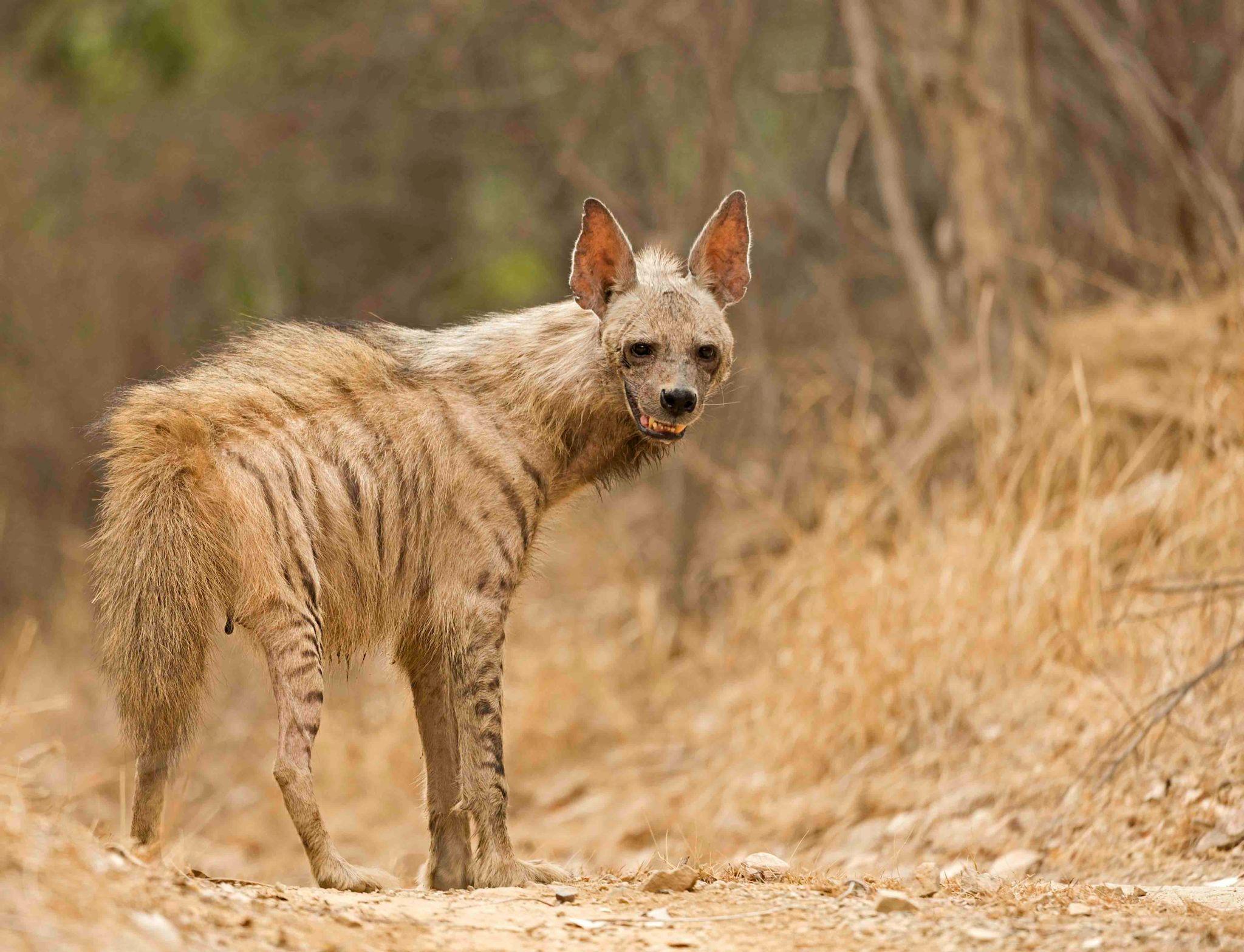
A rare sighting of the striped hyena (Hyaena hyaena) has been reported from the Kali Tiger Reserve, located in the Uttara Kannada district of Karnataka. The sighting is ecologically significant as it highlights the presence of elusive carnivores beyond core forest habitats and reflects improving habitat connectivity within protected landscapes of the Western Ghats region.
About the Striped Hyena
The striped hyena is a medium-sized carnivorous mammal belonging to the Hyaenidae family, which comprises four extant species—striped hyena, spotted hyena, brown hyena, and aardwolf (the latter is insectivorous and not a true wolf).
Key characteristics:
- Appearance: Smaller than the spotted hyena, with a sloping back, erect mane, and distinctive dark vertical stripes along the body and legs.
- Distribution: Found across South Asia (India, Nepal, Afghanistan), North Africa, Sub-Saharan Africa, West Asia, and Central Asia.
- Habitat: Prefers open savannas, grasslands, scrub forests, and semi-arid landscapes, often living close to human settlements.
Behaviour and Ecology
- Feeding habit: Primarily a scavenger, feeding on carrion, animal remains, and occasionally human refuse, thereby playing a crucial role in ecosystem sanitation.
- Social structure: Generally solitary, though it exhibits limited social organisation.
- Territoriality: Uses scent marking to demarcate territories and deter rivals.
- Sexual hierarchy: Adult females dominate males and may display aggression toward other females.
Conservation Status
- IUCN Red List: Near Threatened
- Wildlife (Protection) Act, 1972: Schedule I, providing the highest level of legal protection in India
Despite its wide range, the species faces population decline due to habitat loss, persecution driven by myths, road mortality, and depletion of natural carrion.
Striped Hyena
- 08 Nov 2025
In News:
The recent sighting of a rare striped hyena (Hyaena hyaena) in the Kali Tiger Reserve near the Ganeshgudi bridge in Uttara Kannada district of Karnataka has drawn attention to changing wildlife movement patterns and the ecological importance of lesser-known carnivores. The observation, recorded on video by a local resident in early November 2025, marks the first documented presence of the species in this part of the Western Ghats, where it was previously unrecorded, particularly in the dense forests of the Dandeli region.
About the Striped Hyena
The striped hyena is a mammal belonging to the family Hyaenidae, which comprises four members: striped hyena, spotted hyena, brown hyena, and the aardwolf (the latter not being a true wolf). Compared to the spotted hyena, the striped hyena is smaller in size, with a distinctive coat marked by dark vertical stripes, giving it its name.
The species has a wide but fragmented distribution, extending across South Asia (India, Nepal, Afghanistan), North and Sub-Saharan Africa, West Asia, and parts of Central Asia. In India, it is typically associated with arid and semi-arid landscapes, inhabiting open savannas, grasslands, scrublands, and dry woodlands, rather than dense tropical forests.
Behaviour and Ecological Role
Striped hyenas are primarily nocturnal and solitary, though they display a limited social structure. They are territorial animals, marking boundaries through scent to deter rivals. An important behavioural trait is female dominance, with adult females generally more aggressive and dominant than males.
Ecologically, striped hyenas function mainly as scavengers, feeding on carrion and human refuse. By consuming animal remains, they play a critical role in ecosystem health, helping to prevent the spread of diseases and recycle nutrients. Forest officials have emphasised that the species poses no threat to humans, countering common misconceptions associated with hyenas.
Significance of the Kali Tiger Reserve Sighting
The appearance of a striped hyena in the lush, forested landscape of the Western Ghats is unusual and has generated scientific interest. Experts suggest that the animal may have dispersed from drier regions of northern Karnataka, such as Dharwad, possibly due to food scarcity, seasonal movement, climate-related habitat stress, or improved connectivity through wildlife corridors.
The sighting highlights the importance of landscape-level conservation, as wildlife movement increasingly transcends traditional habitat boundaries. In response, forest authorities have initiated non-invasive monitoring using camera traps to track the animal’s movement, ensure its safety, and assess the possibility of range expansion or previously undetected populations.
Conservation Status and Legal Protection
Despite its ecological importance, the striped hyena faces multiple threats, including habitat loss, road kills, persecution, and declining prey availability. Reflecting these pressures, the species is classified as Near Threatened on the IUCN Red List.
In India, it enjoys the highest level of legal protection under Schedule I of the Wildlife (Protection) Act, 1972, underscoring its conservation priority and the need for stringent safeguards.