
Removal of the Lok Sabha Speaker
- 16 Feb 2026
In News:
The Lok Sabha Speaker can be removed only by a resolution passed by an Effective Majority (majority of all the then members of the House) under Article 94(c) of the Constitution.
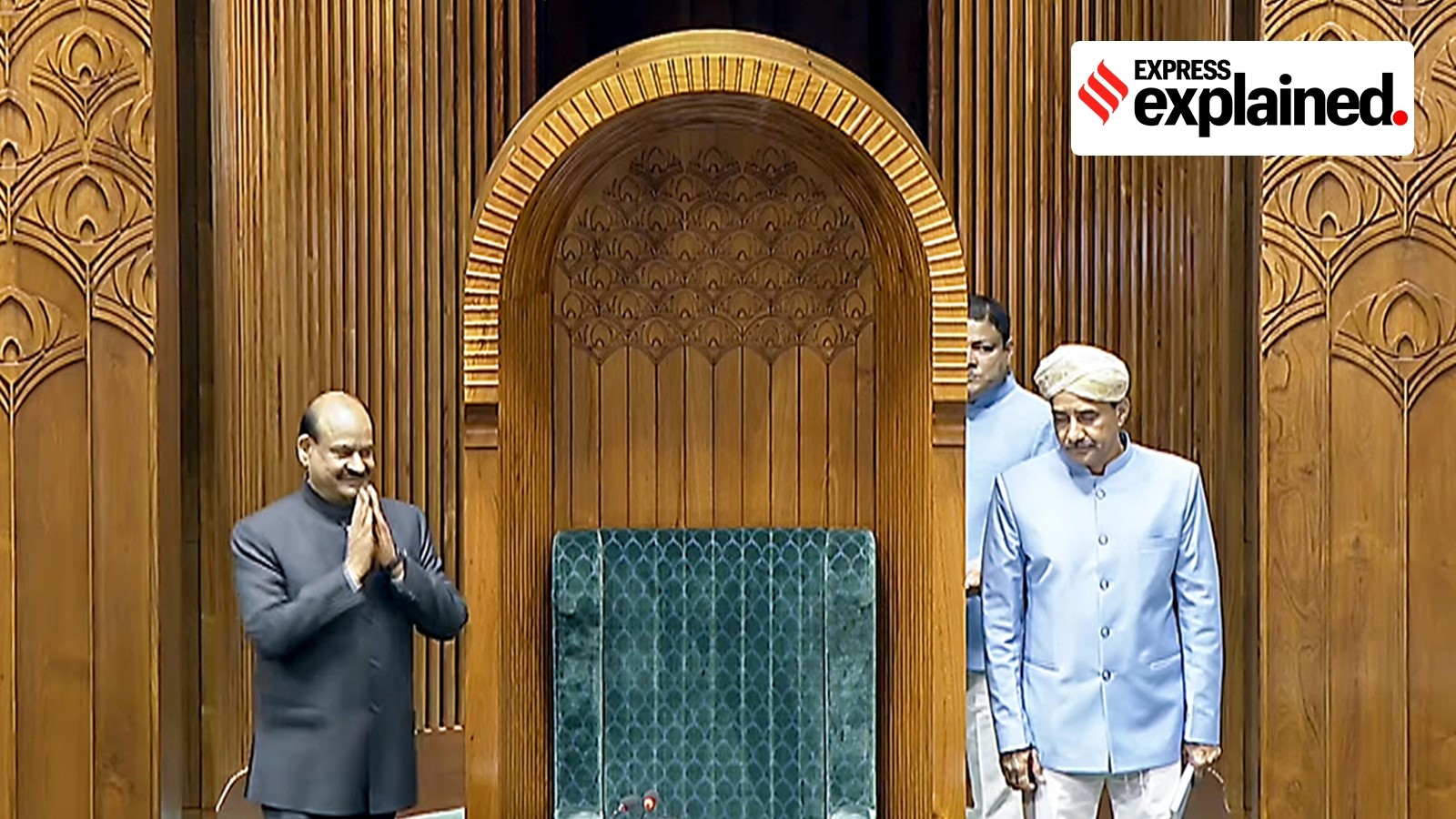
The recent notice seeking the removal of Lok Sabha Speaker Om Birla has revived attention on the constitutional and procedural safeguards governing the office of the Speaker.
Constitutional Basis
The removal of the Speaker is governed primarily by:
Article 94 of the Constitution of India
It lays down the circumstances under which the Speaker or Deputy Speaker vacates office:
- Article 94(a) – If they cease to be a member of the Lok Sabha.
- Article 94(b) – They may resign by writing addressed to the Deputy Speaker (or Speaker, in case of Deputy Speaker).
- Article 94(c) – They may be removed by a resolution of the House passed by a majority of all the then members of the House (Effective Majority).
This provision applies only to the Lok Sabha and not to the Rajya Sabha.
Effective Majority
An Effective Majority means: Majority of all the then members of the House (excluding vacant seats).
It is different from:
- Simple Majority – Majority of members present and voting.
- Absolute Majority – Majority of total membership of the House.
- Special Majority – Required in constitutional amendment cases (Article 368).
Procedural Framework
The detailed procedure is laid down under Rules 200–203 of the Rules of Procedure and Conduct of Business in Lok Sabha.
Notice Requirement
- A written notice must be submitted to the Secretary-General of the Lok Sabha.
- At least 14 days’ prior notice is mandatory.
- It may be signed by one or more members.
Admission of Motion
- The motion is listed in the List of Business.
- The presiding officer reads it to the House.
- At least 50 Members must rise in support.
- If fewer than 50 members stand → Motion fails (no “leave of the House”).
Conditions on the Motion (Rule 200A)
The resolution must:
- Be specific and precise
- Clearly state charges
- Not contain arguments, inferences, defamatory or ironic expressions
Discussion must remain strictly confined to the charges mentioned.
Role of the Speaker During Removal Proceedings
Under Article 96:
- The Speaker cannot preside while the resolution is under consideration.
- They have the right to:
- Speak
- Participate in debate
- Vote in the first instance (as an ordinary member)
- They cannot exercise a casting vote in case of a tie.
Timeline After Admission
If 50 or more members support:
- Leave is granted.
- The resolution must be taken up within 10 days.
- Discussion follows.
- The member moving the motion may speak (maximum 15 minutes, if allowed).
If passed by Effective Majority → The Speaker is removed immediately.
Continuity of Office
- Even after dissolution of the Lok Sabha, the Speaker continues in office until immediately before the first meeting of the new Lok Sabha.
- However, removal by resolution results in immediate vacation of office.
Historical Precedents
No Speaker has ever been removed through this process.
Three motions have been moved:
- 1954 – Against G. V. Mavalankar (First Speaker of Lok Sabha)
- 1966 – Against Hukam Singh
- 1987 – Against Balram Jakhar
All three motions failed.