
Natyashastra
- 20 Dec 2025
In News:
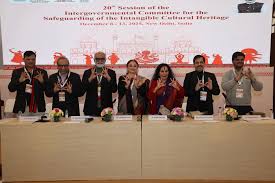
The Indira Gandhi National Centre for the Arts (IGNCA)organised an academic programme titled “Natyashastra – Synthesis of Theory and Praxis” during the 20th Session of the Intergovernmental Committee for the Safeguarding of Intangible Cultural Heritage of UNESCO, held at the Red Fort, New Delhi.
The event highlighted the continued global relevance of India’s classical knowledge systems in the domain of performing arts.
Natyashastra: An Overview
The Natyashastra is an ancient Sanskrit treatise that lays the foundational framework of Indian performing arts.
- Authorship: Composed by sage Bharata Muni
- Period: Dated between 2nd century BCE and 2nd century CE
- Nature: Earliest comprehensive treatise on drama, dance and music in South Asia
- Etymology:
- Natya – dance and drama
- Shastra – systematic science or discipline
The text legitimiseddrama as a means of moral, social and spiritual instruction, making performance a medium of religious and philosophical enlightenment.
Core Concepts in the Natyashastra
The Natyashastra consists of nearly 36,000 verses, dealing with both theoretical principles and practical aspects of performance:
- Natya: Dramatic composition
- Abhinaya: Modes of expression (body, speech, emotion and costume)
- Sangita: Music and rhythm
- Bhava: Emotional states expressed by the performer
- Rasa: Aesthetic experience felt by the audience
Doctrine of Rasa – A Key Contribution
One of the most enduring contributions of the Natyashastra is the theory of Rasa, which explains how art evokes emotional responses.
Bharata Muni identified eight primary Rasas:
- Shringara – Love
- Hasya – Humour
- Karuna – Compassion
- Raudra – Anger
- Veera – Heroism
- Bhayanaka – Fear
- Bibhatsa – Disgust
- Adbhuta – Wonder
Through skilful use of bhava, the performer evokes these rasas, resulting in aesthetic transcendence for the audience. This framework continues to guide Indian classical dance, theatre and music traditions.
Global Recognition
The Natyashastra has been included in UNESCO’s Memory of the World Register, recognising its universal cultural value and its influence on global theories of aesthetics, dramaturgy and performance studies.
Indira Gandhi National Centre for the Arts (IGNCA)
The IGNCA functions as a premier national institution for cultural research and preservation.
- Status: Autonomous body under the Ministry of Culture
- Mandate:
- Documentation, preservation and dissemination of Indian arts and cultural heritage
- Training of professionals in specialised cultural disciplines
Functional Units of IGNCA
- Kalanidhi – Multi-form reference library
- Kalakosa – Study and publication of fundamental texts (largely Sanskrit)
- Janapada Sampada – Lifestyle and folk culture studies
- Kaladarsana – Exhibitions and visual interpretation of research
- Cultural Informatics Lab – Digital tools for cultural preservation
- Sutradhara – Administrative and coordination unit