
Project Suncatcher
- 16 Dec 2025
In News:
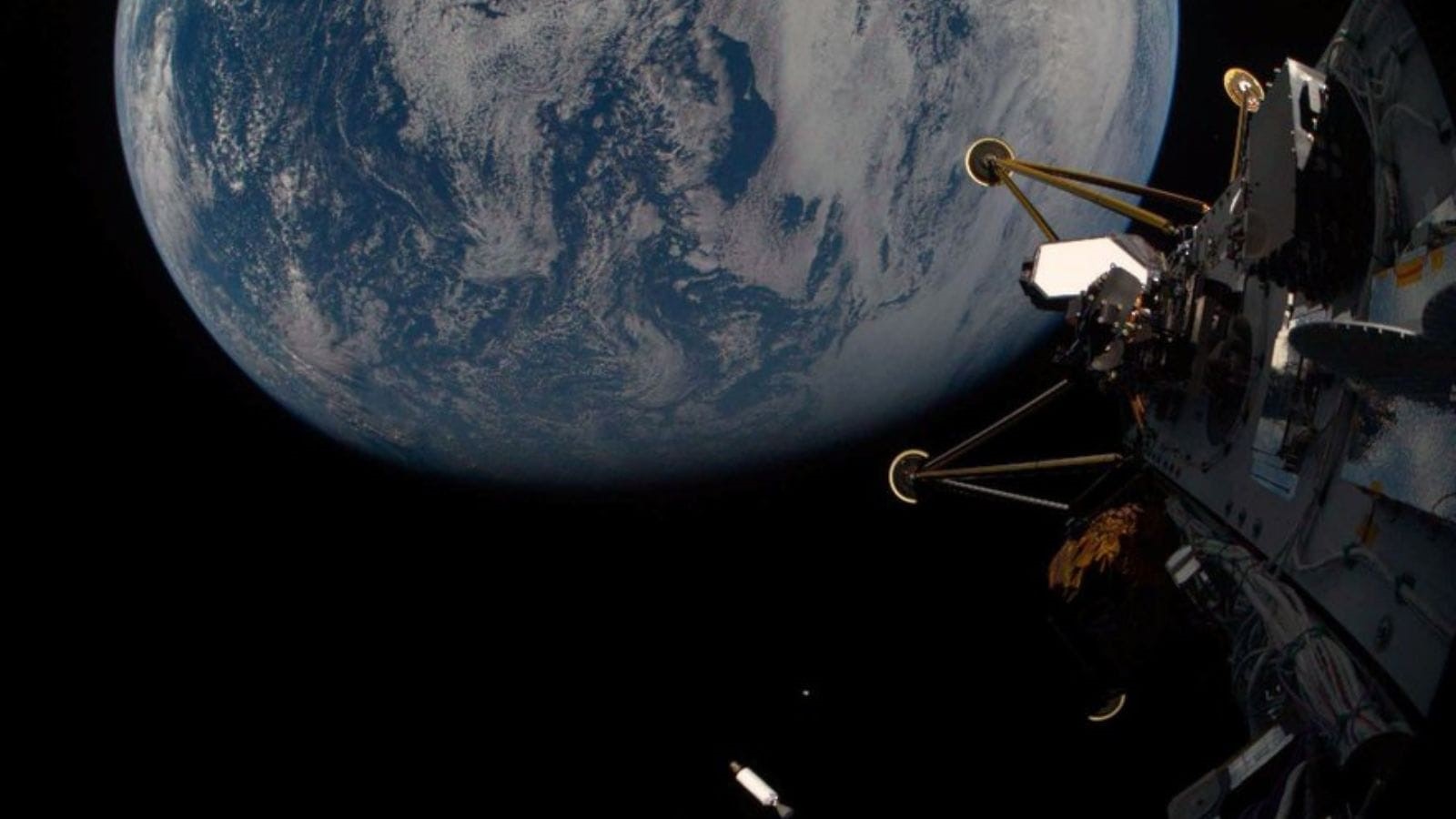
Google has unveiled Project Suncatcher, a long-term research initiative to explore solar-powered AI data centres in space. The plan envisions orbiting satellites equipped with high-performance AI hardware, potentially launching early prototypes by 2027.
Background: Rising Demand for AI Infrastructure
Artificial Intelligence tools such as ChatGPT and Gemini require enormous computing power, which depends on large data centres. These facilities consume vast quantities of:
- Electricity for processing
- Water for cooling systems
- Land and infrastructure for expansion
Global demand for AI data centres is projected to grow rapidly, raising concerns about energy security, water stress, and carbon emissions.
What is Project Suncatcher?
Project Suncatcher is a “moonshot” research effort to develop constellations of satellites that function as orbiting AI data centres. Instead of storing and processing data on Earth, Google proposes to deploy Tensor Processing Units (TPUs) in space.
These space-based nodes would be connected through free-space optical (laser) communication links, forming a distributed computing network similar in structure to internet satellite constellations, but dedicated to AI processing rather than broadband delivery.
Why put Data Centres in Space?
1. Abundant Solar Energy
In orbit, solar panels can be up to 8 times more productive than on Earth and receive near-continuous sunlight. This could provide a steady, renewable power supply without the intermittency issues of terrestrial solar farms.
2. Reduced Environmental Stress on Earth
Shifting computing loads to space could lower:
- Land use conflicts
- Freshwater consumption for cooling
- Local pollution and noise from massive server farms
3. Infrastructure and Regulatory Flexibility
On Earth, building new data centres often faces delays due to land acquisition, environmental clearances, and local opposition. Space offers fewer regulatory constraints, though governance frameworks are still evolving.
How Would It Work?
Satellites in close formation would host AI accelerators and exchange data using high-speed optical interconnects capable of terabit-per-second transmission. Google suggests satellites may need to remain within hundreds of meters to a kilometre of each other to maintain efficient energy sharing and communication.
The company has also tested the radiation tolerance of its latest TPU chips, reporting encouraging resilience under simulated space radiation conditions.
Major Technical Challenges
1. High-Speed Communication: Maintaining ultra-fast, stable links between rapidly moving satellites is difficult. Current wireless optical technologies are still far from matching fibre-optic speeds used in terrestrial data centres.
2. Cooling in Microgravity: Traditional cooling methods rely on gravity-driven convection. In space, heat dissipation is far more complex and requires advanced thermal management systems.
3. Radiation and Space Weather: Electronics in orbit face constant exposure to cosmic radiation and solar storms, which can damage circuits and reduce hardware lifespan.
4. Orbital Mechanics and Formation Control: Satellites must maintain very tight formations, demanding precise station-keeping and increased fuel consumption.
5. Space Debris Risk: Growing congestion in Earth’s orbit increases the likelihood of collisions, posing a threat to delicate computing infrastructure.
Economic Feasibility
Currently, launch costs make space data centres extremely expensive. However, future reductions in launch prices could improve viability. Google is targeting the mid-2030s as a period when costs may become competitive with Earth-based facilities.
Several private firms are also experimenting with space data storage and processing, indicating growing commercial interest in orbital computing.
Strategic Significance
If successful, space-based AI infrastructure could:
- Transform global computing architecture
- Reduce environmental strain from terrestrial data centres
- Provide resilient, disaster-proof computing networks
However, the concept remains experimental, with major engineering, economic, and regulatory hurdles to overcome.
Project Suncatcher

- 07 Nov 2025
In News:
In a significant technological development, Google has announced a new research initiative called Project Suncatcher, aimed at exploring the feasibility of hosting AI data centres in space using solar-powered satellite constellations. The project reflects an emerging intersection of artificial intelligence, space technology, and sustainable energy, with potential long-term implications for global computing infrastructure.
What is Project Suncatcher?
Project Suncatcher is a “moonshot” research initiative by Google that seeks to examine whether space can serve as a scalable and sustainable platform for AI compute systems. The core idea is to deploy high-performance AI accelerators on satellites powered directly by solar energy, thereby creating a space-based data centre ecosystem.
The initiative has been driven by the rapidly growing energy and water footprint of terrestrial AI data centres, which are increasingly straining environmental resources. According to Google, space offers access to virtually uninterrupted solar power, making it an attractive alternative for energy-intensive AI workloads.
Key Features and Technical Architecture
- Solar-Powered Satellite Constellation
- The proposed system consists of a constellation of modular satellites, likely placed in dawn–dusk sun-synchronous low Earth orbit (LEO), ensuring near-continuous exposure to sunlight.
- Solar panels in space could generate significantly more power than those on Earth due to the absence of atmospheric losses.
- AI Compute in Space
- Each satellite would host Google’s Tensor Processing Units (TPUs), which are specialised chips designed for machine learning and AI tasks.
- Google claims that space-based solar generation could make these systems several times more powerful than Earth-based equivalents.
- High-Speed Optical Communication
- Satellites would be interconnected using free-space optical communication (laser-based links), enabling data transfer at tens of terabits per second.
- Early terrestrial tests have demonstrated bidirectional speeds of over 1.6 Tbps, which Google believes can be scaled further in space.
- Prototype Testing and Partnerships
- Google plans to launch two prototype satellites by early 2027, in partnership with Planet Labs, to test durability, performance, and reliability in orbit.
- Initial experiments indicate that Google’s Trillium-generation TPUs can withstand radiation levels equivalent to a five-year space mission without permanent failure.
Engineering and Operational Challenges
Despite its promise, Project Suncatcher faces several complex challenges:
- Thermal management of high-performance chips in the vacuum of space.
- Ensuring long-term on-orbit reliability of AI hardware.
- Maintaining ultra-high-speed inter-satellite communication at close orbital distances.
- High launch and maintenance costs, along with space debris and regulatory concerns.
These challenges imply that Project Suncatcher remains a long-term research effort rather than a near-term commercial deployment.