
Maharashtra Becomes First State to Partner with Starlink
- 09 Nov 2025
In News:
Maharashtra has become the first Indian state to sign a Letter of Intent (LoI) with Starlink Satellite Communications Pvt. Ltd., a subsidiary of SpaceX (USA), to deliver satellite-based broadband internet across government institutions and remote rural areas.
What is Starlink?
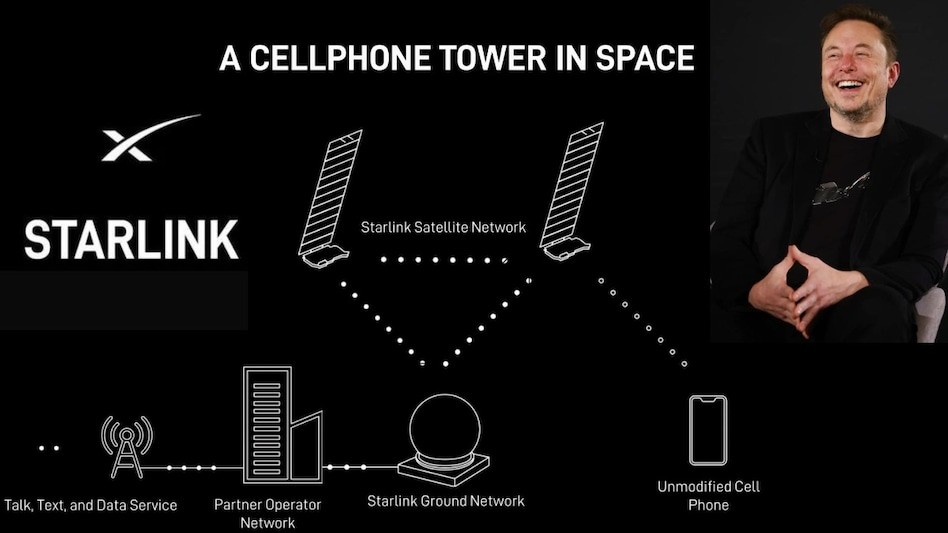
Starlink is a satellite-based broadband internet service operated by SpaceX, founded by Elon Musk. It provides high-speed, low-latency internet using a large constellation of Low Earth Orbit (LEO) satellites.
How Starlink Technology Works
- Orbit Type: Low Earth Orbit (LEO) at ~550 km, unlike traditional geostationary satellites at 35,786 km
- Latency: As low as 25 milliseconds, enabling real-time applications
- Inter-Satellite Links (ISLs): Satellites communicate via optical laser links, reducing dependence on ground stations
- Autonomous Collision Avoidance: AI-driven maneuvering systems to avoid space debris
- Compact Flat-Panel Satellites: Optimised for dense launches using Falcon 9 rockets
This architecture ensures stable, fast, and reliable connectivity even in geographically challenging regions.
Objectives of Maharashtra - Starlink Partnership
- Connect remote and underserved areas
- Provide reliable internet to:
- Rural schools (online education)
- Primary health centres (telemedicine)
- Government offices (e-governance)
- Promote digital inclusion and equitable access to public services
- Support Digital India and Good Governance initiatives
Key Features and Advantages
- True global coverage: Network of thousands of LEO satellites
- Low latency & high speed: Suitable for video conferencing, telemedicine, e-learning
- Rural-first approach: Ideal for regions where fibre optics and mobile towers are impractical
- Rapid deployment: Minimal ground infrastructure required
Significance for India
- First-of-its-kind state-level collaboration with a global satellite internet provider
- Sets a policy and implementation precedent for other Indian states
- Strengthens India’s push towards:
- Digital governance
- Inclusive growth
- Technology-driven public service delivery
- Relevant in the context of emergency connectivity, disaster management, and border/tribal areas.