
Manasbal Lake
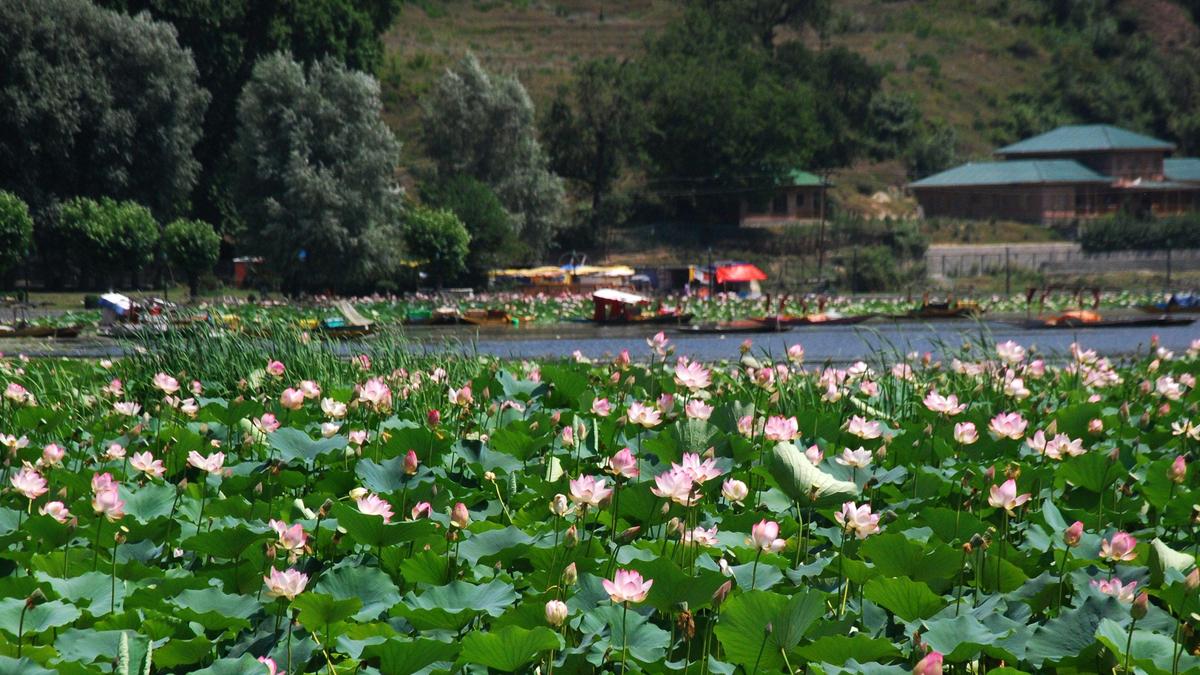
- 20 Jul 2026
In News:
Following large-scale de-weeding and channel dredging over 70,000 sq. ft., Manasbal Lake in Jammu & Kashmir has shown significant ecological recovery, with the return of several migratory bird species after years of decline.
About Manasbal Lake
- Manasbal Lake is a natural freshwater lake located in the Ganderbal district of Jammu & Kashmir, about 30 km north of Srinagar.
- Named after the sacred Lake Manasarovar, it is regarded as one of Kashmir's most picturesque lakes.
- It is the deepest natural freshwater lake in India, with a maximum depth of about 13 metres (43 feet).
- The lake lies in the Jhelum River basin at an elevation of around 1,585–1,600 metres and is surrounded by the villages of Jarokbal, Kondabal, Nesbal and Gratbal. It is bounded by the Baladar Hills, Karewa plateau, and Ahtung Hills.
Key Features
- Manasbal is believed to have originated during the Himalayan glaciation period and is primarily fed by over 1,200 underground springs and local precipitation, rather than major surface rivers. Excess water drains into the Jhelum River through an outlet channel.
- The lake is renowned for its extensive lotus (Nelumbo nucifera) beds, particularly during July and August, and supports the cultivation of lotus stems (Nadru), an important local food and livelihood source.
- Its northern shore is home to the historic Jharokha Bagh, a Mughal-era terraced garden associated with Empress Nur Jahan.
Ecological Significance
Manasbal Lake is an important wetland supporting rich aquatic biodiversity and serves as a major breeding and wintering habitat for numerous resident and migratory birds along the Central Asian Flyway.
The recent ecological restoration has led to the return of migratory bird species, highlighting the success of habitat restoration efforts and the importance of wetland conservation.
Besides supporting biodiversity, the lake sustains local livelihoods through fisheries, lotus cultivation, and tourism.