
Param Vir Chakra (PVC)
- 20 Dec 2025
In News:
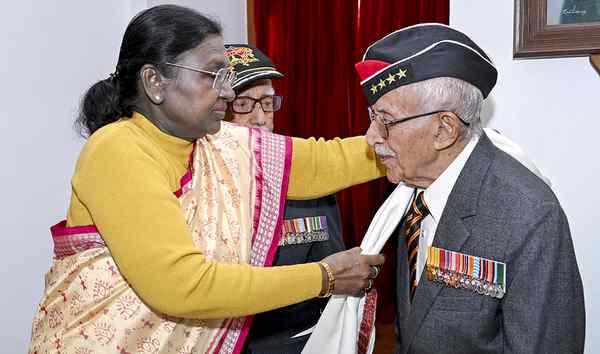
On Vijay Diwas 2025, the President of India, Droupadi Murmu, inaugurated the ‘Param Vir Dirgha’ at the Rashtrapati Bhavan, New Delhi.
The gallery showcases portraits of all 21 recipients of the Param Vir Chakra (PVC), India’s highest military gallantry award.
Notably, this display replaced portraits of 96 British Aide-de-Camps (ADCs) from the colonial era, symbolising India’s continued effort to decolonise public memory and national symbols.
Param Vir Chakra (PVC): India’s Highest Gallantry Award
The Param Vir Chakra is the highest military decoration for valour in India, awarded for the most conspicuous bravery, indomitable courage and supreme sacrifice in the presence of the enemy during wartime.
- Instituted: 26 January 1950, coinciding with the enforcement of the Constitution
- Eligibility: Personnel of all ranks from the Army, Navy, Air Force, Territorial Army and other lawfully constituted armed forces
- Nature: Can be awarded posthumously
Key Features
- Awarded only during wartime
- Recognises acts of extraordinary courage against the enemy
- Includes a monthly honorarium of ?3,000, with an additional ?3,000 for every bar
Recipients
- Total awardees: 21
- Posthumous awards: 14
- Conflicts covered: Four major wars fought by India
The high proportion of posthumous awards underlines the supreme sacrifice associated with the honour.
Param Vir Dirgha: Symbolism and National Memory
The establishment of the Param Vir Dirgha serves multiple purposes:
- Institutionalising remembrance of India’s war heroes
- Educating citizens and visitors about acts of exceptional military valour
- Reinforcing national pride and military ethos
According to the Rashtrapati Bhavan, the initiative helps visitors understand the “dauntless resolve and unconquerable spirit” of India’s soldiers and represents a conscious move to replace colonial symbolism with Indian national heroes.
Who are Aide-de-Camps (ADCs)?
An Aide-de-Camp is a personal military officer attached to high constitutional authorities such as the President or Governors.
Key Characteristics
- Typical Rank:
- Major (Army)
- Lieutenant Commander (Navy)
- Squadron Leader (Air Force)
Functions
- Managing official schedules and engagements
- Coordinating ceremonial and protocol duties
- Acting as liaison between the dignitary and civil/military authorities
- Assisting in security and coordination
While ADCs continue to serve an important functional role today, the earlier display of British ADC portraits reflected colonial legacy rather than independent India’s military ethos.