
India’s Central Asia Outreach
- 31 Aug 2026
In News:
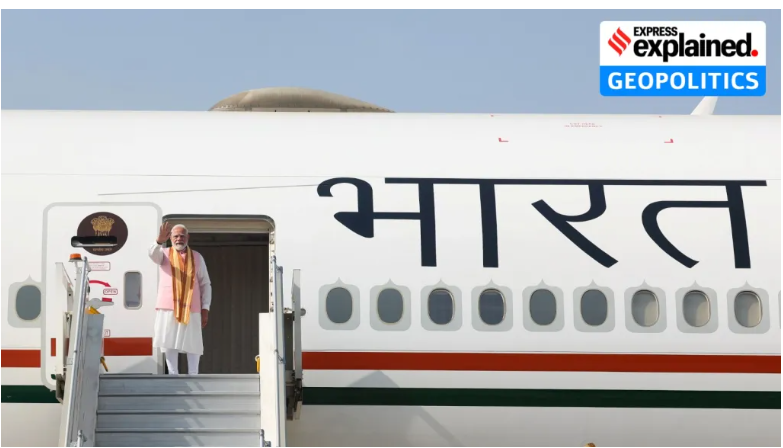
Prime Minister Narendra Modi’s visit to Uzbekistan (August 29–30), followed by participation in the 26th Shanghai Cooperation Organisation (SCO) Summit in the Kyrgyz Republic (August 31–September 1), underscores India’s sustained engagement with Central Asia. India’s focused regional outreach began with the “Connect Central Asia” policy in 2012, gaining further momentum with PM Modi’s 2015 visit to all five Central Asian republics—Kazakhstan, Kyrgyzstan, Uzbekistan, Tajikistan and Turkmenistan.
Why Central Asia Matters to India
Central Asia is strategically important because of its geographical location, natural resources and evolving geopolitical significance. Historically regarded as Russia’s strategic backyard, the region has increasingly attracted China and other major powers.
Its substantial resource base offers opportunities for India’s energy and mineral security. Kazakhstan possesses significant uranium, coal and metallic mineral reserves; Turkmenistan has major natural-gas reserves; while Uzbekistan combines substantial gold, uranium and gas resources. Kyrgyzstan and Tajikistan offer considerable hydropower potential.
For India, the region is therefore important for diversifying energy and critical-mineral supplies and expanding economic partnerships.
Strategic and Security Significance
The Taliban’s return to power in Afghanistan has increased the importance of Central Asia in India’s counter-terrorism and regional-security calculations. Concerns over terrorism, extremism and the possible spread of instability from Afghanistan make security cooperation with Central Asian states increasingly significant.
At the same time, China’s expanding economic and strategic footprint, particularly through the Belt and Road Initiative, has intensified the geopolitical competition for influence in the region. India’s engagement seeks to preserve strategic space and strengthen its position in this important part of its extended neighbourhood.
Connectivity: India’s Major Challenge
The biggest structural constraint is lack of direct land access to Central Asia because India does not have transit through Pakistan. Consequently, connectivity has become a central pillar of India’s regional strategy.
India seeks to use Iran’s Chabahar Port and integrate it with the International North-South Transport Corridor (INSTC) to create an alternative route connecting India with Iran, Central Asia and beyond. Better connectivity can facilitate trade, access to resources and greater Indian economic presence.
Uzbekistan and Civilisational Links
Uzbekistan occupies a particularly important place in India’s outreach. Historical connections date back to the Kushana period, while the Buddhist monastery at Kara Tepa in Termez reflects the spread of Buddhism into Central Asia. Linguistic and culinary similarities further demonstrate long-standing cultural exchanges.
Economic engagement is also expanding, with bilateral trade approaching $1 billion in 2025–26, placing India among Uzbekistan’s major trading partners.
Way Forward
India needs to move beyond diplomatic engagement towards institutionalised economic partnerships, critical-mineral cooperation, connectivity projects, defence and counter-terrorism coordination, digital and pharmaceutical cooperation, and greater private-sector participation. At the same time, engagement should remain sensitive to the strategic interests of Central Asian states and avoid reducing the relationship merely to competition with China.
Conclusion
Central Asia is increasingly important to India as a bridge between South Asia, Eurasia and Europe. Its resources, security significance, connectivity potential and civilisational links make it a critical component of India’s extended-neighbourhood policy. Sustained engagement through bilateral mechanisms and the SCO, supported by practical connectivity and economic projects, can help India convert its longstanding diplomatic goodwill into durable strategic influence.