
Discovery of Lyriothemis keralensis in Kerala
- 12 Feb 2026
In News:
Researchers have identified a new dragonfly species named Lyriothemis keralensis in Kerala, extending the known geographical range of the genus beyond northeast India. The discovery underscores the rich biodiversity of the Western Ghats and the importance of careful taxonomic studies.
Taxonomic Clarification
Although the species has been present in Kerala since 2013, it was misidentified for over a decade as Lyriothemis acigastra. Detailed morphological examination, including microscopic analysis and comparison with museum specimens, confirmed its distinct identity.
This highlights:
- The importance of systematic taxonomy
- The role of reference collections in biodiversity research
- Potential underestimation of species diversity in India
Key Features
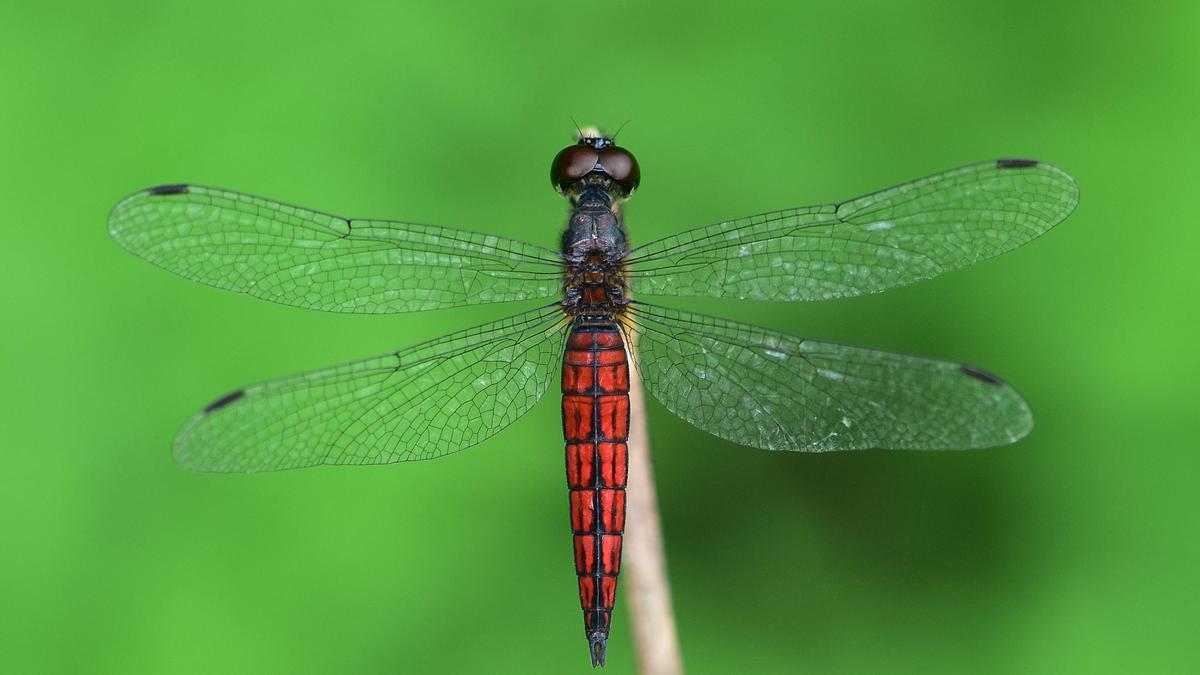
The species exhibits pronounced sexual dimorphism:
- Males: Bright blood-red body with black markings
- Females: Yellow body with black markings
Such colour variation aids in species identification and reproductive behaviour studies.
Habitat and Ecology
Unlike many dragonflies associated with pristine forest ecosystems, Lyriothemis keralensis thrives in human-modified irrigation landscapes, including:
- Pineapple plantations
- Rubber plantations
- Shaded irrigation canals
Most recorded populations occur outside protected areas, indicating that biodiversity conservation must extend beyond national parks and wildlife sanctuaries.
Seasonality and Life Cycle
The species is:
- Seasonally visible during the Southwest Monsoon (late May to August)
- Present as aquatic larvae in water bodies for the remainder of the year
This seasonal emergence aligns with monsoon-driven ecological cycles in Kerala.
Conservation Concerns
The discovery raises important conservation issues:
- Plantation-dominated landscapes may act as secondary habitats
- Changes in irrigation patterns, pesticide use, and land conversion could threaten populations
- Lack of protection outside designated conservation zones may expose species to habitat loss
The finding reinforces the need for biodiversity-sensitive land-use planning, especially in agriculturally modified ecosystems.