
RudraM-II Missile
- 07 Jun 2026
In News:
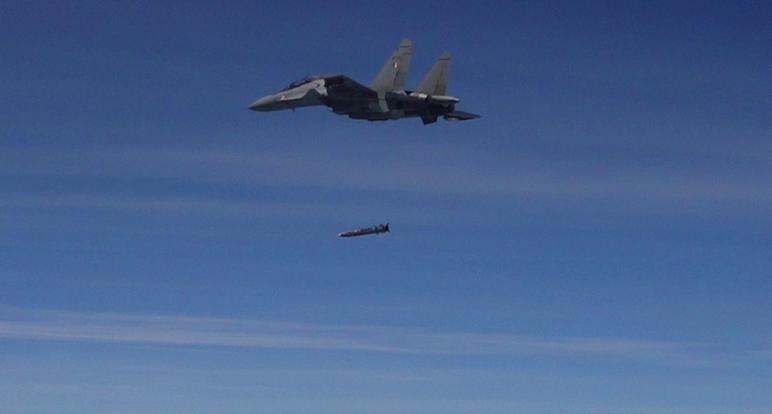
Recently, DRDO and the Indian Air Force (IAF) successfully conducted flight-tests of the RudraM-II Air-to-Surface Missile from an airborne platform. The tests were conducted under extreme release conditions, with critical trajectory data establishing the capability of all subsystems. The missiles were guided to a predefined target with pin-point accuracy, with all test objectives confirmed through flight data captured by the Integrated Test Range (ITR), Chandipur.
About RudraM-II
- RudraM-II is an indigenously developed solid-propelled, air-launched anti-radiation missile designed for the Air-to-Surface role, intended to detect, track, and neutralise enemy radar installations, communication assets, and other radio frequency-emitting components of adversary air defence systems.
- It has been developed by Research Centre Imarat (RCI), Hyderabad, as the nodal DRDO laboratory, in collaboration with sister labs including the Defence Research and Development Laboratory, High Energy Materials Research Laboratory, Armament Research & Development Establishment, and ITR.
- Development cum Production Partners include Hindustan Aeronautics Limited (HAL), Regional Centre for Military Airworthiness, and Missile System Quality Assurance Agency.
Key Technical Specifications
- RudraM-II reaches a peak speed of Mach 5.5, classifying it as a hypersonic-class weapon.
- It can strike targets at a range of approximately 300 km and carries a warhead of up to 200 kg.
- It can be deployed from Sukhoi fighter aircraft operating at altitudes between 3 and 15 km.
- The missile employs a hybrid navigation system combining an inertial navigation system (INS), GPS, and a sophisticated passive homing head that detects and classifies radio frequency emissions across a wide frequency band — enabling it to autonomously home in on active radar and communication targets.
What is an Anti-Radiation Missile?
Anti-radiation missiles (ARMs) are a specialised class of precision-guided munitions designed to home in on electromagnetic emissions — primarily radar and communication signals — used by enemy air defence networks. By targeting these emission sources, ARMs can blind or degrade an adversary's air defence umbrella before or during an air campaign, significantly enhancing the survivability of friendly aircraft. RudraM-II is intended to eventually replace the older Russian-origin Kh-31 anti-radiation missiles currently in IAF service.