
India’s First Flex-Fuel Passenger Vehicle
- 08 Jun 2026
In News:
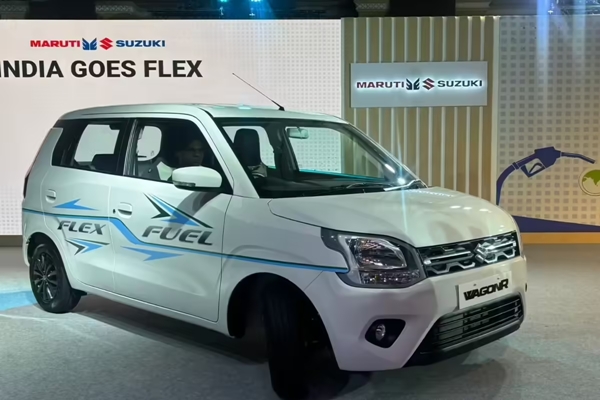
India recently marked a significant milestone in its clean mobility journey with the launch of its first flex-fuel passenger vehicle, developed by Maruti Suzuki. The initiative supports India's broader objectives of enhancing energy security, reducing crude oil imports, promoting ethanol use, and advancing sustainable transportation.
What is a Flex-Fuel Vehicle (FFV)?
A Flex-Fuel Vehicle (FFV) is equipped with an internal combustion engine capable of operating on varying blends of petrol and ethanol. Unlike conventional vehicles, FFVs can seamlessly run on fuels ranging from E20 (20% ethanol) to E100 (100% ethanol).
The vehicle uses a fuel composition sensor that continuously detects the ethanol-petrol ratio and sends this information to the Engine Control Unit (ECU). The ECU automatically adjusts fuel injection and ignition timing to ensure efficient combustion and optimal engine performance regardless of the fuel blend.
Key Features
- Compatible with ethanol-petrol blends from E20 to E100.
- E85 has been identified by NITI Aayog and Bureau of Indian Standards as the standard mono-fuel specification for FFVs.
- Ethanol-based FFVs are viewed as a cleaner alternative to conventional fossil-fuel vehicles due to lower lifecycle emissions.
- Ethanol can be produced domestically from feedstocks such as broken grains, agricultural residues, bamboo, and seaweed, reducing dependence on imported crude oil.
Supporting Ecosystem
To promote adoption, the government plans a phased rollout of FFV-compatible fuel infrastructure, beginning with key corridors such as Delhi-NCR and Mumbai–Pune–Nagpur. The network is expected to expand significantly over the next few years through dedicated ethanol dispensing facilities and supportive policy measures.
Significance
The launch of India's first flex-fuel passenger vehicle represents an important step in the country's energy transition strategy. It complements the Ethanol Blending Programme, supports rural income generation through biofuel production, reduces greenhouse gas emissions, and contributes to the vision of an Atmanirbhar Bharat by promoting domestically produced alternative fuels.