
Gandak River
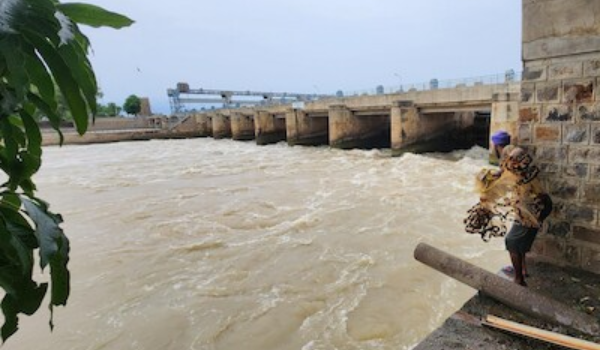
- 18 Jul 2026
In News:
Heavy rainfall in the catchment areas of Nepal has caused the Gandak River to rise above the danger level in parts of Bihar, increasing the risk of floods in several districts.
About the Gandak River
- The Gandak River is one of the major rivers of northern India and an important left-bank tributary of the Ganga. It finds mention in the Mahabharata and is known by different names along its course.
- The river originates at an altitude of about 7,620 metres north of Dhaulagiri Mountain in Tibet near the Nepal border. It is formed by the confluence of the Kali and Trisuli rivers, which rise in the Great Himalayas of Nepal. In Nepal, it is known as the Kali Gandaki and later as the Narayani.
- The river enters India at Triveni (Valmikinagar), Bihar, near the Indo–Nepal border. After briefly touching Uttar Pradesh, it flows mainly through West Champaran, East Champaran, Gopalganj and Saran districts of Bihar before joining the Ganga near Hajipur (Vaishali district), opposite Patna.
- The river is approximately 630 km long, of which about 185 km flows through Nepal and 445 km through India.
Basin Characteristics
The Gandak basin is bounded by the Himalayas in the north and the Ganga in the south. It lies between the Kosi basin in the east and the Karnali (Ghaghara) basin in the west.
The upper catchment contains around 1,710 glaciers and over 300 lakes, including three Himalayan peaks above 8,000 metres—Dhaulagiri, Manaslu and the Annapurna Massif.
Due to its steep Himalayan gradient and fragile geology, the river carries a heavy sediment load, resulting in frequent channel shifting and flooding in the plains of Bihar.
While flowing through Nepal, the river forms the Kali Gandaki Gorge, regarded as one of the deepest river gorges in the world.
Ecological Significance
The Gandak basin supports rich biodiversity and includes two important protected areas:
- Chitwan National Park (Nepal)
- Valmiki Tiger Reserve (Bihar, India)
Major Tributaries
The important tributaries of the Gandak River include:
- Daraudi
- Seti
- Madi
- Marsyandi
- Budhi Gandaki