
Titanidiops Kolhapurensis
- 08 Feb 2026
In News:
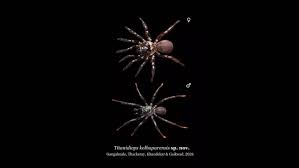
A new species of trapdoor spider, Titanidiops kolhapurensis, has been discovered in the grasslands of Kolhapur district.
About Titanidiops kolhapurensis
- Habitat: Flat or gently sloping grassy meadows.
- Burrow structure: Constructs vertical or slanted burrows with entrances expertly camouflaged to blend with surrounding soil, making them nearly invisible.
- Distribution pattern: Found in native grasslands and natural forests, but absent in areas dominated by exotic plantations such as Gliricidia sepium (Undirmari).
- Conservation concern: On the verge of local extinction due to rapid habitat degradation and land-use change.
What are Trapdoor Spiders?
- A group of large-bodied, burrowing spiders found across several taxonomic families.
- Burrowing behaviour: Dig burrows up to 15 cm (6 inches) deep, sealed with a silken-hinged trapdoor.
- Feeding strategy: Ambush predators—rapidly open the door to seize passing insects or arthropods.
- Behaviour: Reclusive and timid; retreat quickly into burrows when disturbed.
- Human impact: Bite not medically significant to humans.
- Climate preference: Tropical, subtropical and warm regions.
- Size: Typically ~2.5 cm (1 inch) long; some species up to 4 cm (1.5 inches).
- Threats: Predation by spider-hunting wasps; low dispersal ability (juveniles remain close to maternal burrows), making populations highly vulnerable to habitat loss.
Why this discovery matters
- Highlights the ecological importance of native grasslands, often overlooked in conservation.
- Demonstrates the negative impact of exotic tree plantations on indigenous fauna.
- Strengthens the case for habitat-specific conservation planning in the Western India landscape.