
Peregrine Falcon
- 08 Feb 2026
In News:
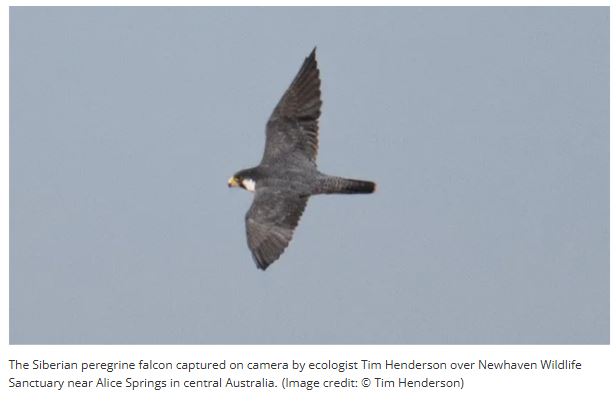
A wildlife researcher has recorded the first-ever sighting of the Siberian peregrine falcon in central Australia, a region where this subspecies had never been documented earlier. The observation expands the known range and movement patterns of this migratory raptor.
About the Peregrine Falcon
- A large cosmopolitan bird of prey belonging to the Falconidae family.
- Global distribution: Present on all continents except Antarctica, including several oceanic islands.
- Known for exceptional adaptability, occurring from Arctic tundra to temperate coastal regions.
Habitat & Nesting
- Preferred habitats: Open landscapes such as grasslands, tundra and meadows.
- Most abundant in tundra and coastal regions; relatively rare in tropical and sub-tropical zones.
- Nesting sites: Typically nests on cliff faces, rock ledges and crevices; in urban areas, may use tall buildings.
Key Characteristics
- Fastest bird in the world and the fastest animal during its hunting dive (stoop), reaching speeds over 300 km/h.
- Diurnal (active during the day).
- Behaviour: Solitary outside the breeding season; strongly territorial.
- Highly efficient aerial hunter, preying mainly on medium-sized birds.
Ecological Significance
- A top-level predator in avian food chains.
- Helps regulate populations of prey species such as pigeons and doves, contributing to ecological balance.
- Considered an important indicator species for ecosystem health due to its sensitivity to environmental changes.
Conservation Status
- IUCN Red List: Least Concern
- Earlier population declines due to pesticide use (notably DDT) were reversed through conservation measures, making it a global conservation success story.