
Japan–India Maritime Exercise (JAIMEX) 2025
- 26 Oct 2025
In News:
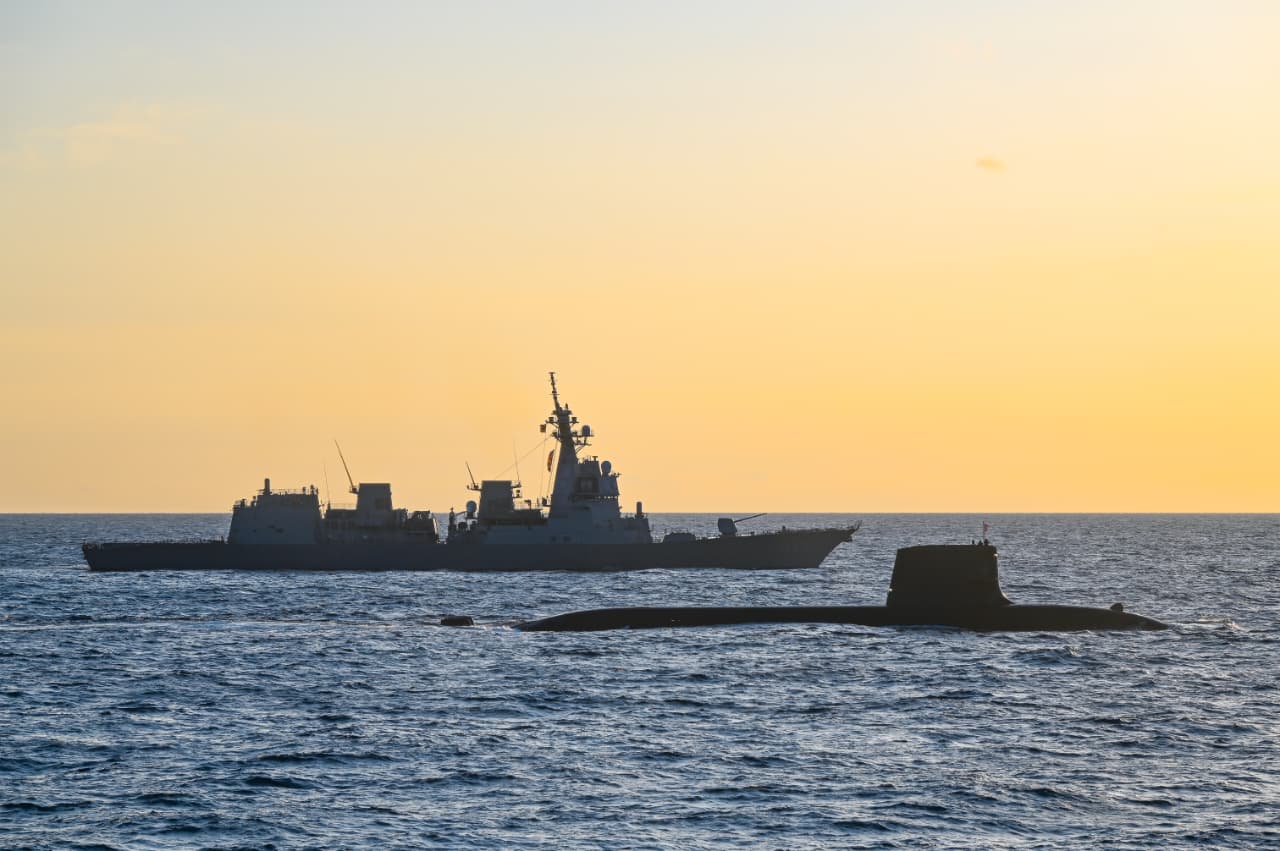
The Indian Naval Ship (INS) Sahyadri, an indigenously built Shivalik-class guided missile stealth frigate, participated in the Japan–India Maritime Exercise (JAIMEX-25).
About JAIMEX 2025
- Nature of Exercise: JAIMEX is a bilateral maritime exercise conducted between the Indian Navy (IN) and the Japan Maritime Self-Defense Force (JMSDF).
- Objective: It aims to enhance operational interoperability, mutual understanding, and maritime cooperation, reflecting the robust ‘Special Strategic and Global Partnership’ established between India and Japan in 2014.
- Theme: Upholding a free, open, and inclusive Indo-Pacific based on the principles of rules-based order, freedom of navigation, and shared maritime security.
Exercise Structure
JAIMEX 2025 was conducted in two distinct phases — the Sea Phase and the Harbour Phase, each designed to deepen operational synergy and people-to-people interaction between the two navies.
1. Sea Phase:
- Participating vessels included INS Sahyadri, and JMSDF ships Asahi, Oumi, and Submarine Jinryu.
- The drills focused on:
- Advanced Anti-Submarine Warfare (ASW)andmissile defence operations.
- Flying operationsandunderway replenishmentexercises.
- Maritime domain awareness and communication interoperability.
- These activities aimed to enhance tactical coordination, build mutual trust, and improve joint operational readiness between the two navies.
2. Harbour Phase (Yokosuka, Japan)
- Featured professional and cultural exchanges, including:
- Cross-deck visits,
- Collaborative operational planning,
- Sharing of best practices, and
- A combined Yoga session to promote cultural camaraderie.
- The harbour engagement served as a part of INS Sahyadri’s Long Range Deployment (LRD) to the Indo-Pacific, reflecting India’s increasing maritime outreach and strategic presence in the region.
Significance of JAIMEX
- Strengthens Maritime Cooperation: Enhances India–Japan naval interoperability, crucial for coordinated responses to maritime security challenges such as piracy, illegal fishing, and humanitarian assistance.
- Supports the Indo-Pacific Vision: Reinforces the shared commitment to a rules-based maritime order and an inclusive Indo-Pacific, aligning with initiatives like QUAD and Indo-Pacific Oceans Initiative (IPOI).
- Boosts Defence Diplomacy: Builds mutual trust and operational understanding through regular bilateral and multilateral engagements.
- Showcases India’s Indigenous Naval Capability: INS Sahyadri’s participation underscores India’s progress under ‘Aatmanirbhar Bharat’ and its ability to deploy advanced indigenous platforms for extended missions.
INS Sahyadri: Key Facts
|
Feature |
Description |
|
Class & Type |
Shivalik-class Guided Missile Stealth Frigate |
|
Commissioned |
2012 |
|
Built by |
Mazagon Dock Shipbuilders Ltd, Mumbai |
|
Missile Systems |
Barak-1, Shtil-1 (3S90M) SAMs, BrahMos anti-ship missiles |
|
Other Armaments |
Anti-submarine rocket launchers and torpedoes |
|
Capabilities |
Multi-role stealth platform for surface, anti-air, and anti-submarine warfare |
|
Previous Deployments |
Multiple bilateral and multilateral exercises across the Indo-Pacific |
India–Japan Defence and Strategic Cooperation
The India–Japan defence partnership has become a key component of their broader Special Strategic and Global Partnership (2014), rooted in shared democratic values and converging strategic interests in the Indo-Pacific.
Major Bilateral and Multilateral Defence Engagements:
- Malabar Exercise – Multilateral naval exercise (India, Japan, USA, Australia).
- Dharma Guardian – Bilateral Army exercise.
- Veer Guardian – Bilateral Air Force exercise.
- 2+2 Ministerial Dialogue – Institutional mechanism for strategic coordination.
These engagements collectively strengthen maritime domain awareness, supply chain resilience, and defence technology cooperation between the two nations.
Strategic Context
- The JAIMEX exercise aligns with India’s Act East Policy and Japan’s Free and Open Indo-Pacific (FOIP) vision.
- It demonstrates a collective response to maritime challenges such as increasing militarization, territorial disputes, and climate-driven risks in the Indo-Pacific.
- The partnership complements India’s engagement in regional groupings such as the QUAD, ASEAN-led mechanisms, and IORA (Indian Ocean Rim Association).