
UPI Transaction Levy: Balancing Digital Payments &Trade Interests
- 09 Aug 2026
In News:
- The Taxation and Other Laws (Amendment) Bill, 2026 proposes changes to Section 10A of the Payment and Settlement Systems Act, 2007, potentially enabling banks and payment system providers to levy charges on UPI and RuPay debit card transactions.
- The proposal has renewed the debate over Merchant Discount Rate (MDR), the financial sustainability of India's digital-payment infrastructure and the growing intersection between digital-payment sovereignty and international trade negotiations.
What Does the Bill Propose?
- The Bill seeks to enable an MDR on UPI transactions. MDR is a fee paid by the merchant to payment service providers for processing a digital transaction, covering costs related to payment infrastructure, settlement and security.
- As described in the provided material, the proposed structure could involve an MDR of 0.3%–0.5% on transactions above ?2,000, applicable to larger merchants crossing a specified turnover threshold. Small shopkeepers and ordinary consumer-to-consumer transfers would remain outside the proposed charge.
- Thus, it should not be viewed simply as a “UPI tax on consumers”. Finance Minister Nirmala Sitharaman clarified that the proposed MDR would apply to merchants rather than end users, and that the matter remains subject to the legislative process.
Why is MDR Being Reconsidered?
Since January 2020, merchants have generally not been charged MDR on UPI transactions. Instead, the government has compensated banks and payment-system providers through incentives.
However, the enormous expansion of UPI has increased the cost of maintaining servers, cybersecurity, fraud detection and settlement infrastructure. This has renewed the question of how the UPI ecosystem should be financially sustained.
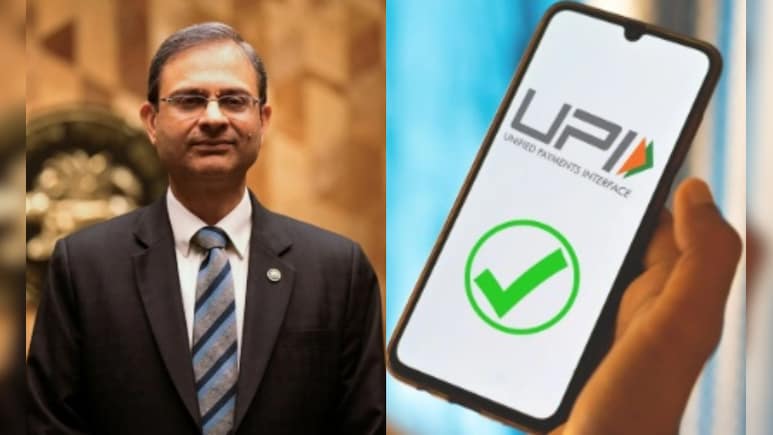
RBI Governor Sanjay Malhotra indicated that the underlying costs of the payment system ultimately have to be borne by someone—the government, merchants or potentially consumers.
The International Trade Dimension
- The proposal also has a potential US trade-policy dimension. According to the provided material, the US Trade Representative (USTR) has raised concerns about India's digital-payment ecosystem, particularly regarding the competitive environment for foreign payment providers and the role of domestic platforms such as RuPay.
- The broader issue is that India's successful development of a low-cost, interoperable domestic digital-payment infrastructure has reduced the traditional role of international card networks. Similar concerns have been raised by the US regarding domestic payment systems in countries such as Brazil, Indonesia, Vietnam, Turkey and China.
- Therefore, the UPI debate illustrates a larger challenge: how can India preserve its digital-payment autonomy while ensuring a level playing field for international payment providers and meeting trade commitments?
Key Issues
- The proposed MDR could improve the financial sustainability of the UPI ecosystem and reduce dependence on government compensation. However, introducing charges could also affect merchant adoption, particularly if costs are passed on to consumers.
- At the same time, any policy change influenced by external trade negotiations raises questions about India's strategic autonomy in digital infrastructure. UPI has become an important component of India's digital public infrastructure, and its pricing and regulatory architecture therefore have implications beyond ordinary payment transactions.
Way Forward
India needs a balanced pricing framework that ensures the sustainability of payment infrastructure without undermining UPI's affordability and mass adoption. Any MDR should preferably be targeted at large merchants, with safeguards for small businesses and ordinary users.
At the international level, India should continue engaging with trading partners while protecting the interoperability, accessibility and strategic autonomy of its digital public infrastructure.