
ILO Convention No. 193 on Decent Work in the Platform Economy

- 31 Jul 2026
In News:
At the 114th International Labour Conference (ILC) in Geneva, the International Labour Organization (ILO) adopted Convention No. 193 – "Decent Work in the Platform Economy", the world's first legally binding international treaty on the rights of gig and platform workers. While India's government abstained, its employer and worker representatives voted in favour.
What is ILO Convention No. 193?
Adopted in June 2026, Convention No. 193 establishes a global minimum standard of labour rights for gig and platform workers, irrespective of whether they are classified as employees, independent contractors or platform partners. It seeks to ensure that the rapid expansion of digital platforms is accompanied by fair working conditions and adequate social protection.
The Convention guarantees fair remuneration, timely payment, occupational safety, social security benefits, and protection against unfair labour practices. It also introduces algorithmic transparency, requiring platforms to explain automated decisions related to work allocation, wages, ratings and account deactivation, while ensuring human oversight in important decisions.
Another key feature is that workers must be classified based on the actual nature of their work, rather than contractual labels, to prevent misclassification.
Why did India Abstain?
The Government stated that the Code on Social Security, 2020 already provides a legal framework for gig and platform workers and follows India's policy of ratifying ILO conventions only after domestic laws are fully aligned.
It also cited labour being a Concurrent List subject, allowing States flexibility in framing labour regulations. Further, concerns were raised that mandatory worker reclassification and algorithmic disclosure requirements could increase compliance costs and affect innovation in the platform economy.
India's Gig Economy
India's gig economy has expanded rapidly due to increasing internet penetration, smartphone usage, digital platforms, urban demand for on-demand services and flexible work preferences among young workers.
- According to NITI Aayog, India's gig workforce is projected to increase from 77 lakh (2020–21) to 2.35 crore by 2029–30, accounting for nearly 6.7% of the non-agricultural workforce.
India's Legal Framework
The Code on Social Security, 2020 was among the first national legislations to define gig workers and platform workers. It provides for a Social Security Fund, financed through contributions by aggregators, to support benefits such as life and disability cover, accident insurance, health benefits, maternity benefits and pensions.
However, implementation remains limited as the operational framework and benefit schemes have not yet been fully notified. Some states have taken independent initiatives, with Rajasthan enacting the Platform-Based Gig Workers Act, 2023, while Karnataka and Telangana have proposed similar welfare mechanisms.
Challenges
Despite rapid growth, gig workers continue to face worker misclassification, lack of minimum wage protection, irregular earnings, weak social security, occupational risks and limited grievance redressal.
The extensive use of opaque algorithms for task allocation, pricing, ratings and account suspension has also raised concerns regarding transparency and accountability.
Way Forward
India needs to operationalise the Social Security Code, strengthen implementation of welfare schemes, improve e-Shram integration and ensure effective aggregator contributions.
A dedicated legal framework for gig workers, greater transparency in algorithm-based decision-making, stronger grievance mechanisms, universal accident insurance and coordination between central and state governments can help balance worker welfare with innovation in the platform economy.
Progressive alignment of domestic laws with the principles of ILO Convention No. 193 would further strengthen labour protection while supporting sustainable growth of India's digital economy.
Right to Protest and Limits of Police Power
- 30 Jul 2026
In News:
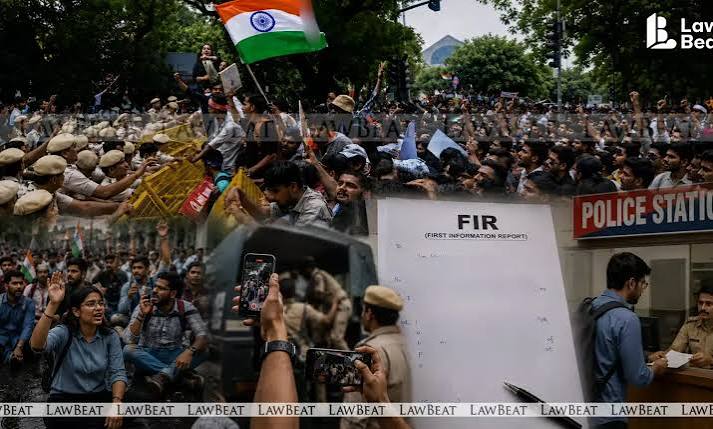
The 'Chalo Sansad' protests (July 2026) renewed debate over the constitutional limits of police powers, use of force during protests, internet restrictions, and the balance between public order and civil liberties.
Constitutional Basis of the Right to Protest
The Constitution of India does not explicitly mention the right to protest, but it is derived from multiple Fundamental Rights:
- Article 19(1)(a): Freedom of speech and expression.
- Article 19(1)(b): Right to assemble peacefully without arms.
- Article 19(1)(c): Right to form associations or unions.
- Article 21: Right to life and personal liberty, including the right to live with dignity and express grievances against the State.
These rights enable citizens to participate in democratic governance and hold the government accountable.
Reasonable Restrictions
The right to protest is not absolute.
- Article 19(2): Permits reasonable restrictions on free speech in the interests of sovereignty and integrity of India, security of the State, public order, decency, morality, defamation, contempt of court, and incitement to an offence.
- Article 19(3): Allows restrictions on peaceful assembly in the interests of sovereignty, integrity, and public order.
Statutory Framework
The State regulates public protests through various laws:
- Section 163 of the Bharatiya Nagarik Suraksha Sanhita (BNSS), 2023: Empowers Executive Magistrates to issue prohibitory orders in urgent situations.
- Delhi Police Act, 1978 and other state police laws regulate routes, timings, and conditions for public assemblies.
- Under the Bharatiya Nyaya Sanhita (BNS), 2023, an assembly of five or more persons becomes unlawful only if its common object involves criminal force, committing offences, resisting law, or intimidating others. A peaceful gathering may become unlawful if its conduct subsequently changes.
Standards Governing Police Action
Police action during protests must follow the principles of legality, necessity, proportionality, and minimum force.
The NHRC Manual on Human Rights for Police Officers and the UN Basic Principles on the Use of Force and Firearms (1990) require police to prioritise persuasion and warnings before using force. Under the BNSS and the Code of Conduct for Police, only the minimum force necessary should be employed.
The Supreme Court in D.K. Basu v. State of West Bengal (1997) also mandated that police personnel making arrests must display clear identification to ensure accountability.
Important Supreme Court Judgments
- Ram Manohar Lohia v. State of Bihar (1965): Distinguished "law and order" from "public order"; restrictions are justified only when public order is genuinely threatened.
- Himat Lal K. Shah v. Commissioner of Police (1973): The State may regulate but cannot arbitrarily prohibit peaceful assemblies.
- In Re: Ramlila Maidan Incident (2012): Force should be used only as a last resort.
- Anita Thakur v. State of J&K (2016): Excessive police force violates Fundamental Rights.
- Mazdoor Kisan Shakti Sangathan v. Union of India (2018): Regulation of protests is permissible, but the right cannot be extinguished.
- Amit Sahni v. Commissioner of Police (2020): Public protests cannot indefinitely occupy public spaces.
- Anuradha Bhasin v. Union of India (2020): Internet restrictions must satisfy the tests of legality, necessity, proportionality, publication, and periodic review.
Major Concerns
Concerns include excessive use of force, political interference in policing, inadequate human rights training, police manpower shortages, lack of accountability, weak implementation of the Prakash Singh (2006) police reforms, blanket internet shutdowns, and continuation of the colonial policing framework under the Police Act, 1861.
Way Forward
Effective implementation of the Prakash Singh reforms, independent Police Complaints Authorities, greater use of body cameras, modern crowd-control training, separation of investigation from law-and-order duties, and adoption of SMART Policing (Strict & Sensitive, Modern & Mobile, Alert & Accountable, Reliable & Responsive, Tech-savvy & Trained) can strengthen democratic policing while safeguarding citizens' constitutional rights.
DWEEPTI Yojana
- 29 Jul 2026
In News:
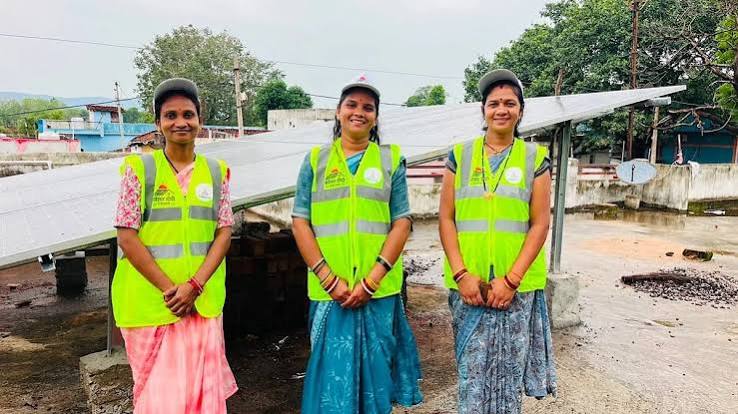
The Government of Chhattisgarh has launched the DWEEPTI Yojana (Decentralised Women Empowerment on Energy and Policy for Transformative Inclusion), becoming the first Indian state to introduce a women-led distributed renewable energy policy.
What is DWEEPTI Yojana?
DWEEPTI Yojana is an initiative of the Chhattisgarh Panchayat and Rural Development Department, developed in collaboration with Transform Rural India (TRI) under the Green Economy Transition Mission.
The scheme integrates women Self-Help Groups (SHGs) into the distributed solar energy ecosystem by enabling them to install, operate, manage, and promote rooftop solar systems while creating sustainable livelihood opportunities.
Key Features
The scheme trains women SHG members as Solar Didis, enabling them to work as solar technicians, installers, vendors, managers, and entrepreneurs.
Under the scheme, Cluster Level Federations (CLFs) are registered as authorised vendors under the PM Surya Ghar: Muft Bijli Yojana in partnership with the Chhattisgarh State Power Distribution Company Limited (CSPDCL).
To encourage rooftop solar adoption, the scheme provides affordable and flexible loans to SHG members for installing solar systems.
After a successful pilot in Kabirdham district, the programme is proposed to be expanded across all districts of Chhattisgarh.
Significance
DWEEPTI Yojana promotes women-led clean energy entrepreneurship by creating skilled employment and sustainable income opportunities in rural areas. It also strengthens decentralised renewable energy, improves energy access, supports the Lakhpati Didi initiative, and contributes to India's clean energy transition and climate goals.
Corporate Average Fuel Efficiency (CAFE) III Norms
- 28 Jul 2026
In News:
The Ministry of Power has released the third draft notification of the Corporate Average Fuel Efficiency (CAFE) III norms for public consultation. The proposed norms, to be implemented from FY 2027–28 to FY 2031–32, aim to tighten fleet-wide carbon emission standards for passenger vehicles. The framework is administered by the Bureau of Energy Efficiency (BEE) under the Energy Conservation Act, 2001.
What are CAFE Norms?
Corporate Average Fuel Efficiency (CAFE) norms prescribe fleet-wide average carbon dioxide (CO?) emission limits that automobile manufacturers must achieve across all passenger vehicles sold in a financial year. Instead of regulating individual vehicle models, the standards assess the average emissions of the manufacturer's entire fleet, encouraging the production of more fuel-efficient and low-emission vehicles.
Key Features of Draft CAFE III
The proposed norms seek to reduce the average fleet-wide CO? emissions from around 113 gCO?/km to nearly 77 gCO?/km by FY 2031–32.
The framework provides flexibility through mechanisms such as carbon credits, fleet averaging, and super credits for cleaner technologies. Manufacturers unable to meet emission targets may purchase compliance credits from the Bureau of Energy Efficiency (BEE).
The norms cover the period FY 2027–28 to FY 2031–32 and are intended to accelerate the transition towards electric, hybrid and alternative-fuel vehicles.
Why are CAFE III Norms Important?
- Reduce greenhouse gas emissions from the transport sector.
- Lower India's dependence on imported crude oil and improve energy security.
- Promote electric mobility and cleaner automotive technologies.
- Support domestic manufacturing under initiatives such as PLI and PM E-DRIVE.
- Contribute towards India's Panchamrit commitments and Net Zero by 2070 target.
Major Challenges
Despite tighter emission targets, experts have raised concerns that several compliance provisions could dilute the effectiveness of the norms.
Manufacturers may prefer purchasing low-cost compliance credits instead of investing in cleaner technologies. Super-credit provisions for hybrid vehicles and compliance benefits for E20-compatible vehicles may also reduce the incentive to shift towards fully electric vehicles. Additionally, India's continued use of the Modified Indian Driving Cycle (MIDC) testing cycle may not accurately reflect real-world emissions.
Way Forward
Experts suggest adopting a dual-credit system similar to China's model by setting separate targets for fuel efficiency and electric vehicle production. Compliance credit prices should better reflect statutory penalties to discourage easy buyouts. Gradual adoption of Worldwide Harmonised Light Vehicles Test Procedure (WLTP) standards would improve emission measurement, while rationalising incentives for hybrids and ethanol-based vehicles can ensure that regulatory benefits correspond to actual emission reductions.
Youth Unemployment in India
- 27 Jul 2026
In News:
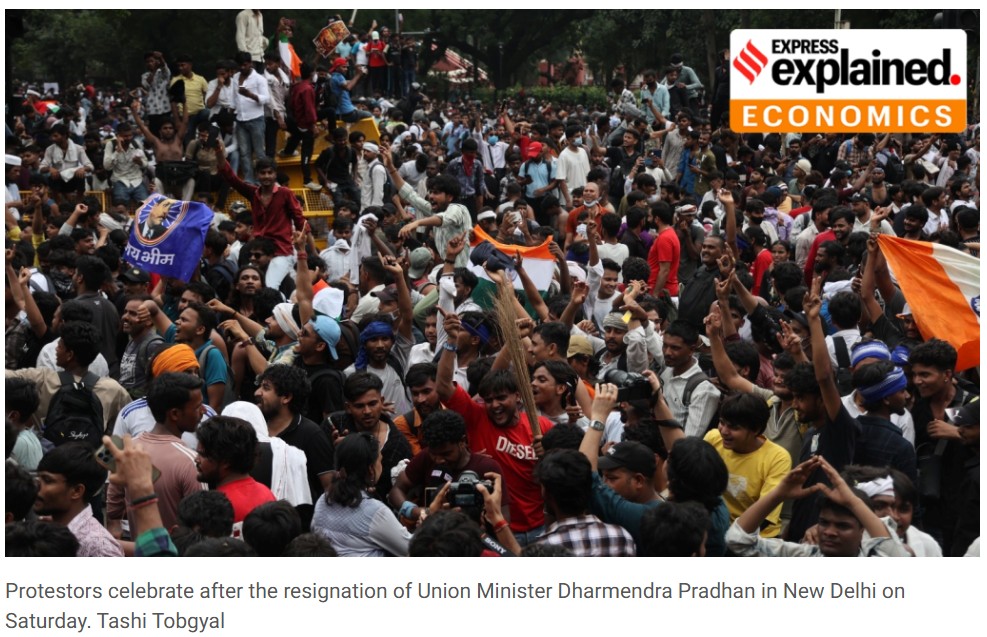
The NEET paper leak triggered widespread protests, but economists argue that the larger issue is India's rising youth unemployment, which poses a serious challenge to harnessing the country's demographic dividend.
Youth Unemployment: A Growing Structural Challenge
According to the Periodic Labour Force Survey (PLFS), youth unemployment (15–29 years) increased to 16.2% in June 2026, up from 13.8% in April 2025, the highest since monthly PLFS data collection began. At the same time, the Labour Force Participation Rate (LFPR) declined from 42.7% to 40.3%, indicating that even fewer young people are actively seeking work. Normally, a decline in LFPR lowers unemployment, but the simultaneous rise in unemployment points to deeper structural weaknesses in the labour market rather than temporary fluctuations. However, the Ministry of Statistics and Programme Implementation (MoSPI) has cautioned that monthly data may vary due to seasonal and academic factors.
The trend is not confined to a few regions. Between 2022 and 2025, youth unemployment increased across several States, including Andhra Pradesh, Delhi, Telangana, and West Bengal, with young women experiencing an even sharper rise in many States.
Why is Youth Unemployment Rising?
The slowdown in the informal sector, traditionally the largest source of employment, has weakened India's employment cushion. Job creation in the sector fell to 74.5 lakh in 2025, compared to 1.1 crore in the previous year, while wage growth also moderated significantly.
Another major concern is the growing education-employment mismatch. Despite increasing educational attainment, employment outcomes remain weak. According to the State of Working India 2026 report, fewer than 7% of male graduates secure permanent salaried jobs within a year of graduation, while only 3.7% obtain white-collar employment. Around 1.1 crore graduates aged 20–29 were unemployed, and graduate unemployment among those below 25 years stood at 39.33%.
Why Does It Matter?
India's demographic dividend depends on creating productive employment for its large working-age population. With the country's median age currently around 29 years, this is the critical period for accelerating economic growth. However, as the population ages and the dependency ratio rises in the coming decades, the opportunity to leverage this demographic advantage will gradually narrow. Persistent unemployment, especially among educated youth, risks turning India's demographic dividend into a demographic burden.
Way Forward
Addressing this challenge requires promoting labour-intensive manufacturing, strengthening MSMEs, improving industry-oriented skill development, bridging the education-employment gap, increasing female labour force participation, and encouraging entrepreneurship and innovation.
Women's Work Participation in India

- 26 Jul 2026
In News:
An economist has highlighted that India cannot achieve its goal of becoming a developed nation (Viksit Bharat) by 2047 without significantly increasing women's workforce participation.
Key Highlights
Women's Work Participation Rate (WPR) refers to the proportion of the working-age female population engaged in economic activities across the formal and informal sectors.
Despite recent improvements, India's female employment remains low by global standards. The post-2020 increase in female participation has largely been driven by rural distress, with many women entering unpaid family labour (UFL) in agriculture rather than formal employment.
The article notes that a 10-percentage-point increase in female WPR could directly add around 2 percentage points to India's GDP growth.
Tamil Nadu has emerged as a successful example, accounting for over 40% of India's female factory workforce, supported by labour-intensive industries such as garments and electronics, along with better social infrastructure.
Reasons for Low Female Workforce Participation
Economic growth has been concentrated in capital-intensive sectors such as finance and IT, which generate relatively fewer jobs for women.
Employment in labour-intensive sectors like textiles, garments, and food processing has declined, reducing opportunities for female workers.
Mechanisation in agriculture has reduced demand for manual labour, while limited non-farm employment has restricted women's transition to other sectors.
Social norms, safety concerns, limited mobility, and inadequate hostel and transport facilities continue to discourage women's participation in the formal workforce.
Supreme Court Directs States to Frame Policy for Premature Release of Elderly and Terminally Ill Prisoners
- 25 Jul 2026
In News:
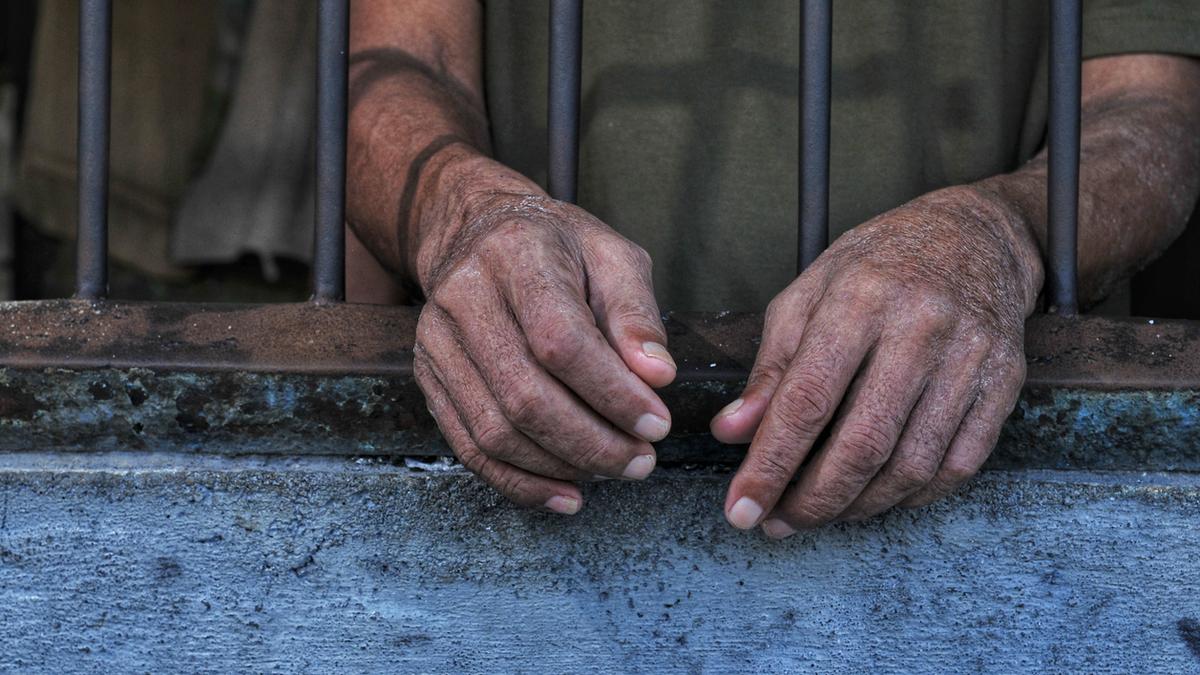
The Supreme Court directed all States and Union Territories to formulate and notify a uniform policy within three months for the premature release of elderly and terminally ill prisoners on humanitarian grounds. The order came while hearing a petition filed by the National Legal Services Authority (NALSA) highlighting the absence of a common framework.
Supreme Court Directions
- The Court directed States and UTs to formulate a policy specifying eligibility criteria, application procedures, and timelines for granting premature release to elderly and terminally ill prisoners.
- The policies must be prepared in consultation with the State Legal Services Authorities (SLSAs) to ensure proper identification and legal assistance for eligible inmates.
- States have been directed to constitute independent medical boards to certify cases involving terminal illness, advanced age, or severe medical vulnerability.
- The Court recommended adopting the UN Office on Drugs and Crime (UNODC) definition of terminal illness, which refers to conditions where there is no reasonable medical possibility of preventing progressive deterioration leading to death.
- The Under Trial Review Committees (UTRCs) have been asked to periodically review such cases and recommend appropriate relief, including bail, parole, remission, or premature release.
- To avoid delays, authorities must ensure time-bound decisions, with all orders being reasoned and subject to judicial review.
- The Union Government, along with the National Informatics Centre (NIC), has been directed to develop a digital portal for processing, tracking, and monitoring applications while ensuring confidentiality of medical information.
- The Centre, States, and UTs must submit compliance affidavits within six months detailing eligible prisoners identified, releases granted, and pending cases.
- Prison Overcrowding in India
- India has 1,333 prisons with a sanctioned capacity of 4.53 lakh inmates, while the actual prison population exceeds 5.11 lakh, indicating significant overcrowding.
- Several States and UTs continue to record occupancy rates above 100%, with Delhi (194.6%), Meghalaya (163.5%), Jammu & Kashmir (148.3%), and Madhya Pradesh (147.1%) among the highest.
Government Measures to Reduce Overcrowding
- The Bharatiya Nagarik Suraksha Sanhita (BNSS), 2023 provides that first-time offenders who have completed one-third of their maximum sentence are eligible for release on bond.
- The Model Prisons and Correctional Services Act, 2023 shifts prison administration towards reformation and rehabilitation.
- The E-Prisons Projectdigitises prison records and integrates them with the Inter-operable Criminal Justice System (ICJS) to facilitate timely identification of prisoners eligible for bail or release.
- The Support to Poor Prisoners Scheme provides financial assistance to undertrial prisoners unable to furnish bail or sureties.
National Legal Services Authority (NALSA)
- NALSA is a statutory body established under the Legal Services Authorities Act, 1987, and constituted in 1995 to provide free legal aid and promote access to justice.
- It implements Article 39A of the Constitution and also supports the constitutional mandate under Articles 14 and 22(1).
- The Chief Justice of India serves as the Patron-in-Chief of NALSA.
India’s Rice Fields Identified as Global Methane Hotspots
- 24 Jul 2026
In News:
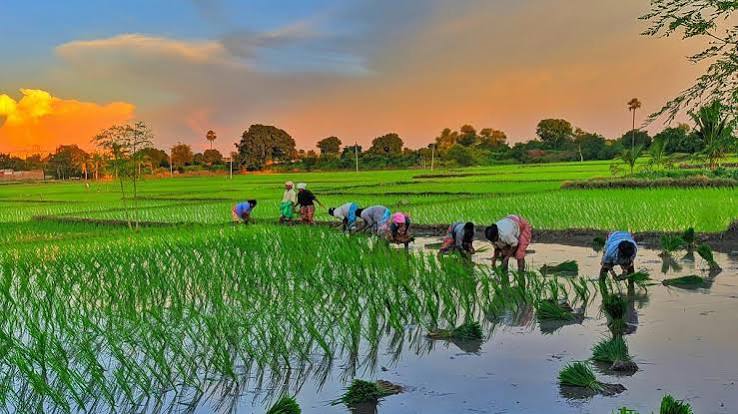
A recent Nature Food study has identified India’s irrigated paddy fields as among the largest methane emission hotspots in the world, releasing about 3.9 million tonnes of methane annually.
What is the Study About?
The study conducted a global assessment of greenhouse gas (GHG) emissions from rice cultivation. It found that methane emissions from flooded paddy fields, along with declining soil carbon storage, have significantly increased the climate impact of rice cultivation.
Key Findings
Global greenhouse gas emissions from paddy cultivation have nearly doubled since the 1960s, reaching approximately 1.1 billion tonnes of CO?-equivalent annually during 2011–2020.
India has emerged as one of the world's largest methane hotspots, with its irrigated rice fields emitting nearly 3.9 million tonnes of methane each year, exceeding Germany's total annual methane emissions.
The study also found that paddy soils, which traditionally acted as carbon sinks, are increasingly becoming carbon sources, with over one-third of global paddy fields losing soil organic carbon.
Looking ahead, rice-related greenhouse gas emissions are projected to increase by around 26% during 2031–2050, driven by climate change and intensive agricultural practices.
Why Do Paddy Fields Emit Methane?
Rice cultivation generally involves continuous flooding of fields, creating oxygen-deficient (anaerobic) conditions in the soil. Under these conditions, methane-producing microorganisms (methanogens) decompose organic matter and release methane (CH?), a greenhouse gas with a much higher global warming potential than carbon dioxide.
Implications
The findings highlight the need to balance food security with climate change mitigation, particularly for countries like India where rice is a staple crop.
The study reinforces the importance of adopting climate-smart agricultural practices that reduce methane emissions while maintaining crop productivity.
Sustainable Rice Cultivation Practices
Some of the recommended practices include:
- Alternate Wetting and Drying (AWD): Periodic drying of paddy fields instead of continuous flooding.
- Direct Seeded Rice (DSR): Sowing seeds directly without transplanting, reducing water use and methane emissions.
- System of Rice Intensification (SRI): Improves productivity with lower water requirements.
- Crop Diversification: Promoting less water-intensive crops where suitable.
These measures can reduce methane emissions, conserve water, and improve long-term soil health.
Nifty 500 Ahimsa Index
- 23 Jul 2026
In News:
The National Stock Exchange (NSE) launched the Nifty 500 Ahimsa Index on 10 July 2026, India's first thematic stock market index dedicated to animal cruelty-free investing. It follows the launch of the BSE Saatvik 100 Index in June 2026, reflecting the growing trend of values-based investing in India.
About Nifty 500 Ahimsa Index
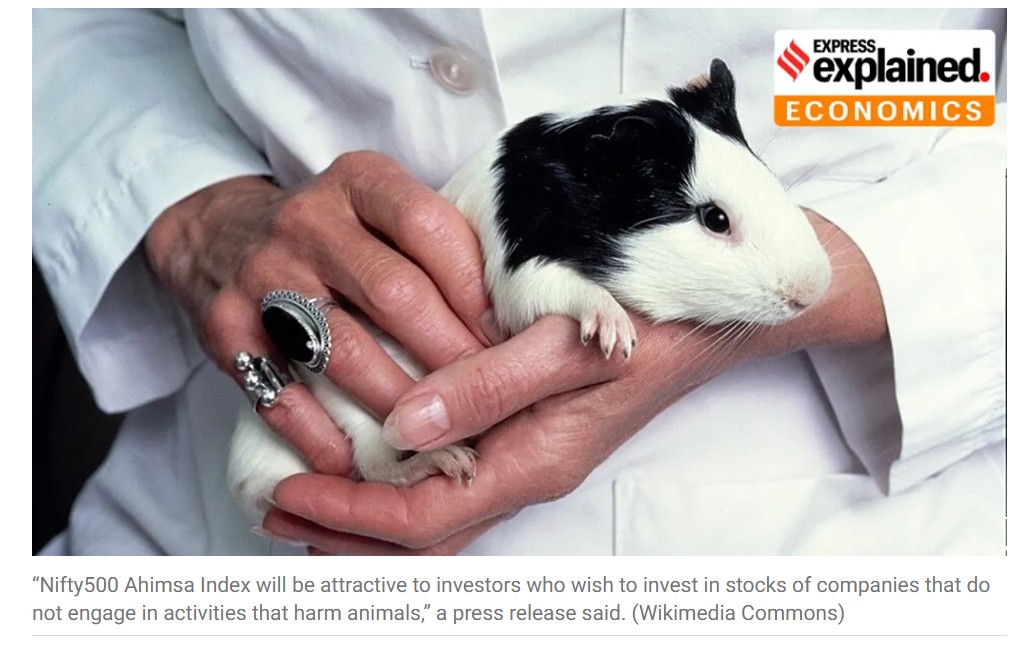
The Nifty 500 Ahimsa Index tracks companies from the Nifty 500 universe whose business practices align with the principle of "Ahimsa" (non-violence) by avoiding activities involving cruelty to animals.
Developed jointly by NSE Indices and the Ahimsagain Foundation, the index provides investors with an opportunity to invest in companies that meet ethical business standards based on animal welfare. Unlike conventional ESG (Environmental, Social and Governance) investing, which primarily focuses on environmental sustainability, governance, and social responsibility, the Ahimsa Index adopts an Indian philosophy-based investment approach.
Selection Framework
Companies are assessed using the Ahimsa Investment Movement (AIM) Framework, which classifies them into:
- Green Band: Fully compliant with animal welfare criteria
- Orange Band: Partially compliant
- Red Band: Non-compliant
Only Green Band companies are included in the index.
The index largely includes companies from sectors such as Information Technology, Healthcare, Real Estate, and Automobiles, while excluding businesses involved in:
- Dairy, meat, poultry and leather products
- Animal testing
- Leather and wool-based fashion products
- Most commercial banks and major NBFCs
- Several Reliance Group companies (except Reliance Power)
About the National Stock Exchange (NSE)
The National Stock Exchange (NSE) was established in 1992 and commenced operations in 1994 to introduce a transparent, nationwide electronic trading platform.
Headquartered in Mumbai, it is India's largest stock exchange and is recognised under the Securities Contracts (Regulation) Act, 1956.
The NSE facilitates trading in:
- Equity shares
- Derivatives
- Currency and commodity derivatives
- Debt securities
It functions under the regulatory supervision of the Securities and Exchange Board of India (SEBI). Clearing and settlement are undertaken by NSE Clearing Limited, while depository services are provided through the National Securities Depository Limited (NSDL).
Significance
The Ahimsa Index introduces an indigenous approach to ethical investing by incorporating India's philosophical principle of non-violence into capital markets. It is expected to serve as a benchmark for future Exchange Traded Funds (ETFs) and index funds, encourage responsible corporate practices, and cater to the growing demand for values-based investment products.
Judicial Accountability and Resignation of Judges
- 22 Jul 2026
In News:
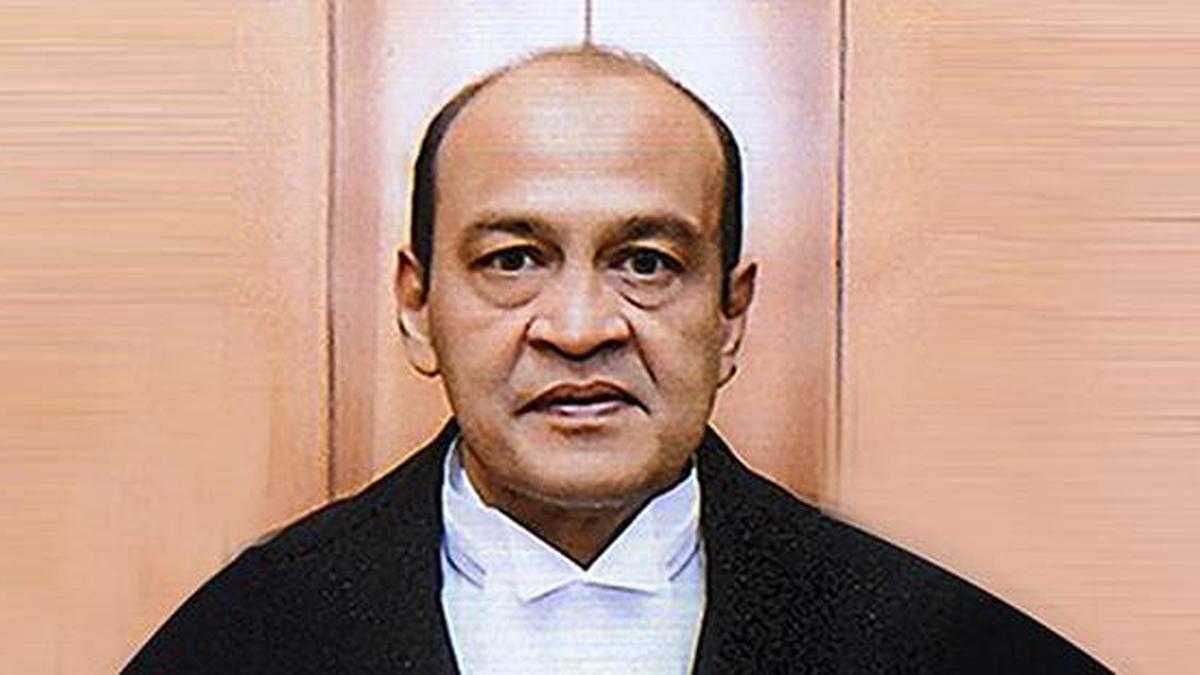
The report of the Inquiry Committee constituted against former Allahabad and Delhi High Court judge Justice Yashwant Varma is set to be tabled in Parliament during the Monsoon Session. The case has revived debate on judicial accountability, the constitutional power of judges to resign at will, and whether the existing legal framework allows judges facing serious allegations to evade the process of removal by resigning before Parliament acts.
Background
The controversy began in March 2025, when partially burnt currency notes were allegedly discovered in an outhouse attached to Justice Varma's official residence. Following the incident, the Speaker of the Lok Sabha constituted an Inquiry Committee under the Judges (Inquiry) Act, 1968, to investigate allegations of misbehaviour.
Before Parliament could initiate removal proceedings, Justice Varma submitted his resignation on 9 April 2026. The Inquiry Committee nevertheless completed its investigation, and its report is now expected to be placed before Parliament.
Constitutional Framework
The Constitution grants certain constitutional functionaries, including judges of the Supreme Court and High Courts, the power to resign voluntarily. A judge's resignation becomes effective upon submitting a written resignation to the President and does not require formal acceptance.
This position was affirmed by the Supreme Court in Union of India v. Gopal Chandra Misra (1978), where a Constitution Bench held that the resignation of a judge operates ex proprio vigore (by its own force) and takes effect immediately unless a future date is specified. The requirement of acceptance, applicable to Members of Parliament and State Legislatures, does not apply to judges.
This provision is intended to safeguard judicial independence, ensuring that judges are not compelled to remain in office against their will or subjected to executive pressure.
Removal of Judges
Judges of the Supreme Court and High Courts can be removed only on the grounds of proved misbehaviour or incapacity under Article 124(4) of the Constitution, read with Article 217 for High Court judges. The procedure is governed by the Judges (Inquiry) Act, 1968.
The process involves the admission of a motion in Parliament, constitution of an Inquiry Committee, submission of its report, and passage of the removal motion by both Houses through a special majority, followed by an order of removal by the President.
Accountability Loophole
The present case highlights a significant gap in the constitutional framework. Since Justice Varma resigned before Parliament could consider the removal motion, he ceased to hold judicial office and therefore cannot be removed. Although the Inquiry Committee's report may still be laid before Parliament and made public, the statutory removal process effectively comes to an end.
This creates a situation where a judge facing serious allegations can avoid formal parliamentary scrutiny and removal simply by resigning before the process concludes. Such a loophole raises concerns regarding transparency, public confidence in the judiciary, and the effectiveness of existing accountability mechanisms.
Suggested Reforms
Legal experts have suggested that this issue requires a constitutional amendment rather than judicial interpretation. One proposal is that where removal proceedings are pending, a judge's resignation should become effective only after acceptance by the Chief Justice of India, thereby preserving judicial independence while preventing misuse of the resignation provision. Another suggestion is to allow Parliament to discuss the Inquiry Committee's findings even after the judge has resigned, ensuring public accountability despite the termination of removal proceedings.
Significance
The Justice Yashwant Varma case highlights the need to strike a careful balance between judicial independence and judicial accountability. While the constitutional power to resign protects judges from external pressure, it should not inadvertently become a means to escape scrutiny in cases involving serious misconduct. Strengthening the legal framework while preserving the independence of the judiciary will be essential for maintaining public trust in India's constitutional institutions.
India–Australia Long-Term Uranium Supply Agreement
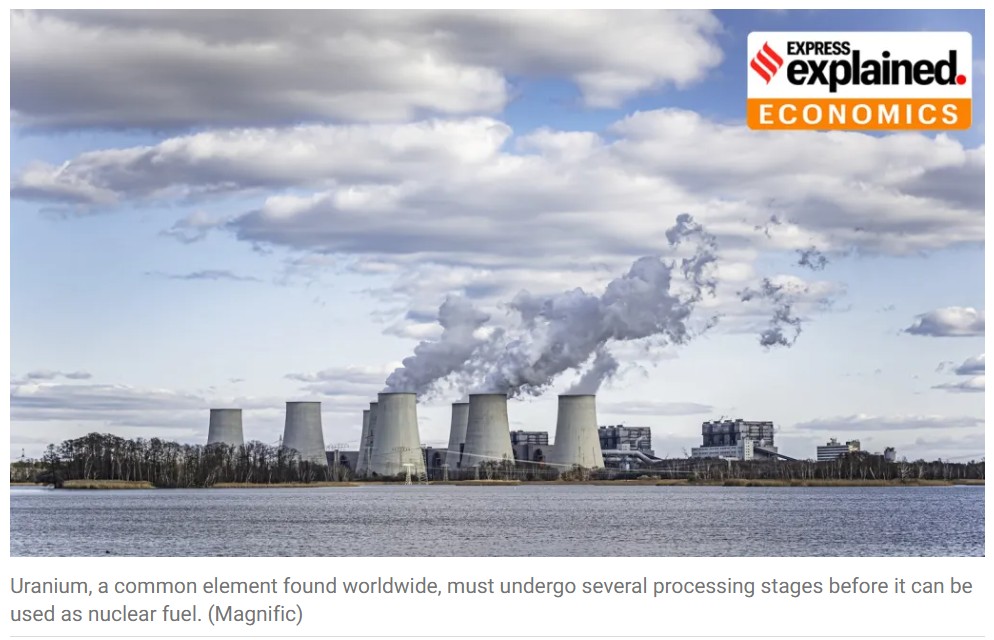
- 21 Jul 2026
In News:
India has signed a long-term uranium supply agreement with Australia, operationalising the India–Australia Civil Nuclear Cooperation Agreement, signed nearly 12 years ago. The agreement follows similar long-term uranium supply deals with Canada and Kazakhstan, reflecting India's strategy to diversify fuel sources and support its expanding nuclear power programme.
Why is the Agreement Important?
India has set an ambitious target of expanding its civil nuclear power capacity to 100 GWe by 2047. Achieving this goal requires a reliable supply of nuclear fuel, particularly as domestic uranium production is insufficient to meet future demand. The agreement strengthens India's long-term energy security while reducing dependence on a limited number of suppliers.
The exact quantity of uranium oxide (yellowcake) and the duration of the agreement have not been disclosed.
India's Uranium Requirement
Uranium is processed through several stages before it becomes usable nuclear fuel, including mining and milling, conversion, enrichment (where required), and fuel fabrication.
India's Pressurised Heavy Water Reactors (PHWRs) use natural uranium, sourced through a combination of domestic production and imports. However, the country's Light Water Reactors (LWRs) at Tarapur and Kudankulam rely entirely on imported enriched uranium.
Although India possesses about 4.3 lakh tonnes of uranium oxide reserves spread across several states, domestic production currently meets the fuel requirement for only 2.4 GWe out of the country's 8.7 GWe installed nuclear capacity. The remaining requirement is met through imports.
A Ministry of Power committee has estimated that by 2047, India will require an additional 8,029 tonnes of natural uranium and 1,045 tonnes of enriched uranium annually to support the planned expansion.
NSG Waiver and Expanding Import Network
India's ability to import uranium became possible after receiving the 2008 Nuclear Suppliers Group (NSG) clean waiver, making it the only non-signatory to the Nuclear Non-Proliferation Treaty (NPT) permitted to engage in international nuclear commerce.
Besides Australia, India has recently concluded long-term uranium supply arrangements with:
- Canada (Cameco Corporation)
- Kazakhstan (Kazatomprom)
It also imports uranium from Russia and Uzbekistan, while France and the United States have supplied uranium products in recent years.
Between 2008–09 and 2024–25, India imported 18,842.6 metric tonnes of uranium products. In 2024–25, imported uranium contributed to 39,180 million units out of the total 56,631 million units of nuclear electricity generated.
Challenges
Despite possessing significant uranium reserves, India's ore is generally of low grade, making domestic mining and processing three to four times more expensive than importing uranium.
However, growing global demand for nuclear energy could increase international uranium prices in the future. Therefore, the government has been advised to simultaneously strengthen domestic uranium production through expansion of the Uranium Corporation of India Limited (UCIL) to enhance long-term energy security.
Significance
The Australia agreement strengthens India's fuel security for its expanding nuclear programme and supports the target of 100 GWe nuclear capacity by 2047. It also diversifies uranium imports, reduces supply risks, and complements India's broader strategy of expanding clean, low-carbon energy while balancing import dependence with increased domestic production.
Kudankulam Nuclear Power Plant (KKNPP) Data Leak & Cybersecurity of Critical Infrastructure
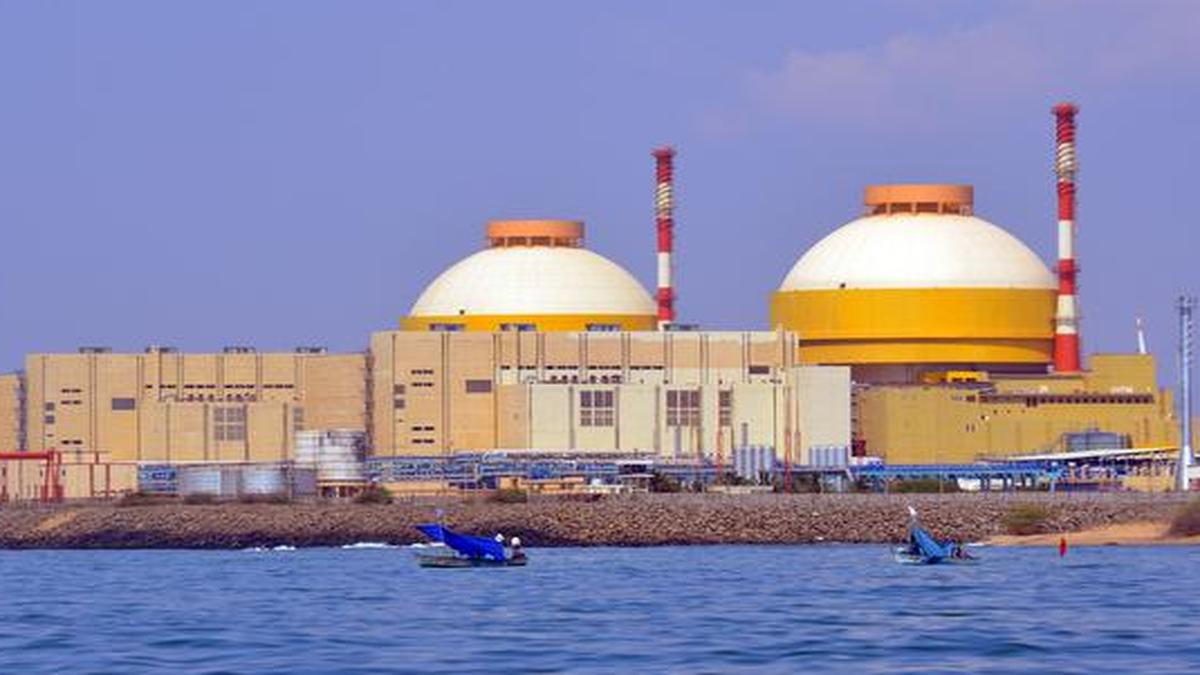
- 20 Jul 2026
In News:
A ransomware group named World Leaks allegedly leaked internal documents related to the Kudankulam Nuclear Power Plant (KKNPP) on the dark web, reviving concerns over the cybersecurity of India's critical infrastructure. While the Nuclear Power Corporation of India Limited (NPCIL) clarified that the leaked material was limited to non-critical facilities outside the reactor island, the incident has renewed focus on protecting strategic assets from cyber threats.
About the Recent Data Leak
The leaked documents reportedly included engineering drawings, inspection records, technical reports, meeting minutes and official correspondence. NPCIL stated that these documents did not relate to reactor operations or nuclear safety, as the highly secured reactor island remained unaffected. Nevertheless, the incident highlights that even non-operational networks associated with strategic installations can become targets for ransomware and cyber espionage.
2019 Kudankulam Cyberattack
The present incident recalls the 2019 cyberattack on Kudankulam, one of India's most significant cyber intrusions involving nuclear infrastructure.
The attack was traced to DTrack malware, linked to the North Korea-backed Lazarus Group, a hacking organisation known for cyber espionage and financial attacks. The malware infected the administrative network's domain controller, potentially exposing user credentials and sensitive information. Investigations suggested that attackers were particularly interested in India's thorium-based nuclear programme.
The malware reportedly entered the network through phishing emails containing malicious links sent to serving and retired nuclear scientists using official email accounts. NPCIL later clarified that only the internet-connected administrative network was compromised, while the reactor control systems remained isolated and unaffected.
Air-Gapped Networks
Nuclear facilities rely on air-gapped networks, which are physically isolated from external networks to minimise cyber risks.
They generally operate through two separate networks:
- Operational Technology (OT) Network: Controls reactors, turbines and other critical plant operations.
- Information Technology (IT) Network: Supports administrative functions such as communication, procurement and documentation.
Although air-gapping significantly enhances security, it is not completely foolproof. Malware can still enter through infected USB devices, maintenance equipment, insider threats or phishing attacks. Global incidents such as the Stuxnet attack on Iran's nuclear programme demonstrate that even isolated systems remain vulnerable.
Why Cybersecurity of Nuclear Infrastructure Matters
Nuclear installations constitute Critical Information Infrastructure (CII), where cyberattacks can have consequences far beyond data theft.
Potential risks include:
- Theft of sensitive scientific and engineering information.
- Strategic cyber espionage.
- Disruption of operational systems.
- Erosion of public confidence in nuclear safety.
- Threats to national security, energy security and environmental safety during geopolitical conflicts.
As ransomware groups and state-sponsored cyber actors become increasingly sophisticated, protecting both operational and administrative networks has become an essential component of national security.
Measures to Strengthen Cybersecurity
India has adopted multiple institutional and technical safeguards to improve cyber resilience.
- CERT-In (Indian Computer Emergency Response Team): National nodal agency for responding to cybersecurity incidents.
- National Critical Information Infrastructure Protection Centre (NCIIPC): Established under the Information Technology Act, 2000, to secure critical infrastructure across strategic sectors.
- National Cyber Security Policy, 2013: Provides the national framework for enhancing cybersecurity and cyber resilience.
- Regular cybersecurity audits, penetration testing and continuous network monitoring.
- Deployment of air-gapped operational networks, stronger access controls and improved security protocols for sensitive installations.
Challenges
Despite these measures, several challenges persist. Administrative networks often remain exposed to phishing attacks and insider threats. Growing digitalisation of critical infrastructure increases the attack surface, while sophisticated ransomware groups and state-sponsored hackers continue to evolve their capabilities. Balancing greater private sector participation in strategic sectors with robust cybersecurity standards is another emerging concern.
Way Forward
India needs to adopt a comprehensive Zero Trust Architecture, strengthen cyber hygiene through continuous employee training, enhance AI-enabled threat detection, conduct regular red-team exercises for critical infrastructure, improve coordination between CERT-In, NCIIPC and sectoral agencies, and develop indigenous cybersecurity solutions for strategic installations. Greater investment in cyber resilience, supply chain security and secure operational technologies will be essential to safeguard critical national infrastructure.
Specified Non-Financial Assets (SNFAs)
- 19 Jul 2026
In News:
The Reserve Bank of India (RBI) has introduced a new prudential framework for Specified Non-Financial Assets (SNFAs) under the Commercial Banks – Resolution of Stressed Assets Directions, 2025 (Third Amendment Directions, 2026). The framework prescribes uniform rules for banks acquiring, valuing and disposing of immovable assets obtained from defaulting borrowers.
What are Specified Non-Financial Assets (SNFAs)?
Specified Non-Financial Assets (SNFAs) are a new asset category introduced by the RBI. They refer to immovable properties acquired by banks in full or partial settlement of loans that have become Non-Performing Assets (NPAs).
These assets are not part of banks' regular banking business but are acquired as a recovery mechanism when borrowers default on loan repayments.
Examples include residential buildings, commercial properties, industrial land, warehouses, and other immovable assets transferred to banks in settlement of outstanding loans.
Why was the New Framework Introduced?
Earlier, banks lacked a uniform regulatory framework for handling such assets, leading to:
- Inconsistent valuation practices.
- Prolonged holding of non-core real estate assets.
- Lack of transparency in disposal.
- Divergent accounting and reporting practices.
The new framework aims to standardise the acquisition, valuation, accounting and disposal of these assets while ensuring that banks remain focused on their core lending functions.
Key Features of the Framework
An immovable property will qualify as an SNFA only after its legal ownership is transferred to the bank, and only when the underlying loan has already been classified as an NPA.
For valuation, every SNFA must be recorded at the lower of:
- The net book value of the extinguished loan, or
- The distress sale value determined independently by at least two external valuers.
Each commercial bank must formulate a Board-approved SNFA Policy covering acquisition criteria, approval mechanisms, valuation, recovery measures, disposal strategy and exposure limits.
Banks are required to dispose of SNFAs within seven years of acquisition and should make all reasonable efforts to sell them at the earliest. Disposal should primarily be through public auction, following the principles laid down under the SARFAESI Act, 2002, ensuring transparency and competitive price discovery.
To prevent misuse, banks cannot sell SNFAs back to the original borrower or related parties as defined under the Insolvency and Bankruptcy Code (IBC), 2016.
Accounting and Reporting
- SNFAs will be disclosed separately in banks' balance sheets under "Non-banking assets acquired in satisfaction of claims."
- Importantly, they will not form part of Gross NPAs, Net NPAs, stressed assets or the Provisioning Coverage Ratio (PCR).
- Banks must also submit annual SNFA-related information through the Centralised Information Management System (CIMS).
Implementation
- The framework will come into force from 1 October 2026.
- Banks holding existing SNFAs as of 30 September 2026 have a transition period until 30 September 2027 to comply with the new norms.
Ladakh Autonomous Hill Development Councils (LAHDCs)
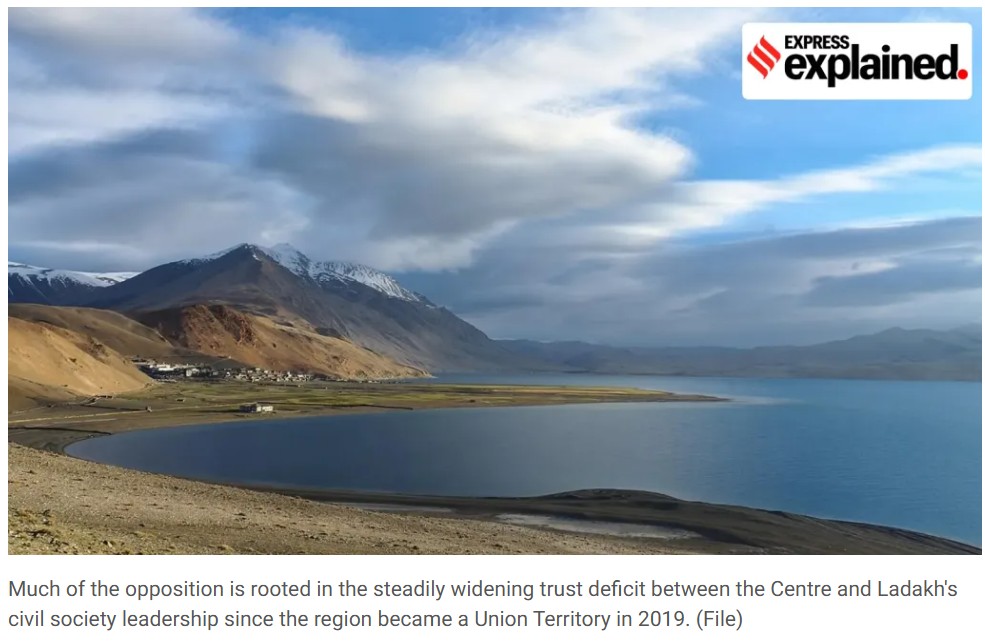
- 18 Jul 2026
In News:
The Ladakh Administration has announced the establishment of an Autonomous Hill Development Council (AHDC) in each of the Union Territory's seven districts, reviving the debate over decentralisation and political representation in Ladakh.
What Has Been Announced?
The administration has proposed creating AHDCs in all seven districts of Ladakh. Earlier, such councils existed only in Leh and Kargil. The move follows the creation of five new districts—Drass, Sham, Nubra, Changthang and Zanskar—in April 2026.
The government has described the proposal as a step towards democratic decentralisation and stated that it complements the proposed Union Territory-level representative body under a customisedArticle 371 framework, which is expected to have legislative, executive, financial and administrative powers.
Why is Decentralisation Important in Ladakh?
Ladakh is India's largest Union Territory by area (nearly 60,000 sq. km) but has a population of only around 3 lakh. Its settlements are scattered across difficult mountainous terrain, making local governance and service delivery challenging. Consequently, decentralised administration has long been viewed as essential for improving governance and development.
Why Has the Proposal Been Opposed?
Civil society organisations, particularly the Apex Body, Leh (ABL) and the Kargil Democratic Alliance (KDA), support decentralisation but oppose the timing and structure of the proposal.
Their major concerns include:
- Creation of seven district councils may dilute the authority of the proposed Article 371 representative body.
- Existing LAHDCs have gradually lost effective powers after Ladakh became a Union Territory in 2019.
- The proposal was allegedly introduced without adequate consultation during discussions with the Centre.
- Multiple governance institutions—Hill Councils, Panchayati Raj Institutions, the UT Administration and a future Article 371 body—could create overlapping jurisdictions and weaken accountability.
About the Ladakh Autonomous Hill Development Councils (LAHDCs)
The Ladakh Autonomous Hill Development Councils are statutory local self-governing bodies established under the Ladakh Autonomous Hill Development Council Act, 1997.
They are responsible for:
- District planning and budgeting.
- Implementation of development programmes.
- Management of council land.
- Collection of certain local taxes.
- Promotion of local socio-economic development.
However, elected representatives have argued that, since Ladakh became a Union Territory in 2019, many important powers have shifted to the Lieutenant Governor's administration, reducing the councils' functional autonomy.
Comparison with Sixth Schedule Councils
Unlike the Autonomous District Councils under the Sixth Schedule, LAHDCs:
- Do not enjoy constitutional status.
- Have no independent legislative or judicial powers.
- Function as statutory bodies created through legislation.
Their structure is therefore closer to other statutory autonomous councils, such as those in Manipur, which possess limited autonomy and remain financially dependent on higher levels of government.
Significance
The proposal reflects the continuing debate over the balance between district-level decentralisation and Union Territory-wide political representation in Ladakh. While additional Hill Councils could improve local governance in remote regions, many stakeholders argue that strengthening the existing councils and finalising an institutional framework under Article 371 remain essential for ensuring effective democratic governance.
Draft National Health Research Policy, 2026

- 17 Jul 2026
In News:
The Department of Health Research (DHR) has released the Draft National Health Research Policy, 2026 for public consultation. The policy proposes a comprehensive overhaul of India's health research ecosystem to align research with the country's disease burden, strengthen innovation, and improve evidence-based policymaking.
Health Research in India
Health research in India covers biomedical sciences, clinical medicine, public health, epidemiology, digital health, health systems, behavioural sciences, and emerging technologies. It supports:
- Understanding disease patterns and health burden.
- Development of vaccines, diagnostics and medicines.
- Evidence-based policymaking.
- Improved healthcare delivery.
- Preparedness for future public health emergencies.
Major institutions driving health research include the Indian Council of Medical Research (ICMR), Department of Health Research (DHR), AIIMS, and the National Institute of Nutrition (NIN), Hyderabad.
The existing National Health Research Policy was introduced in 2011, and the 2026 draft seeks to modernise the framework.
Why is a New Policy Needed?
Despite significant scientific capability, India's health research ecosystem faces several challenges:
- Low public investment, with expenditure at only 0.024% of GDP, compared to the 0.27% weighted average in high-income countries.
- Regional disparities, with research concentrated in a few institutions and states.
- Fragmented research efforts and weak coordination among academia, hospitals, industry and government.
- Research priorities not adequately aligned with India's disease burden and public health needs.
- Slow translation of research findings into healthcare delivery and policy.
- Limited collaboration with the private sector and inadequate community participation.
Key Proposals of the Draft Policy
Enhanced Research Funding
The policy proposes a phased increase in government spending on health research:
- Current: 0.024% of GDP
- By 2037: 0.072% of GDP
- By 2047: 0.15% of GDP
National Health Research Agenda
A National Health Research Agenda will identify priority areas based on:
- Disease burden.
- Emerging health threats.
- Health system requirements.
- Equity concerns.
- Pandemic preparedness.
- Strategic national priorities.
Priority Research Areas
The draft identifies major focus areas, including:
- Tuberculosis (TB)
- Antimicrobial Resistance (AMR)
- Vector-borne diseases
- Cancer
- Non-Communicable Diseases (NCDs)
- Mental health
- Anaemia
- Child malnutrition
- Women's health
- Maternal and neonatal mortality
- Primary healthcare
- Emergency care
Three-Tier Governance Structure
The policy proposes:
- National Health Research Stewardship Committee for strategic oversight.
- Department of Health Research (DHR) as the nodal implementing agency.
- Indian Council of Medical Research (ICMR) as the scientific and technical lead.
States will also be encouraged to integrate research into local health programmes and formulate State Health Research Agendas.
Outcome-Based Evaluation
Researchers will increasingly be evaluated based on the real-world impact of their work rather than the number of publications or grants.
The policy expands the use of the ICMR Impact of Research and Innovation Scale (ICMR-IRIS), introduced in 2025, to assess contributions to policy, healthcare delivery, institutional capacity and population health.
Strengthening Research Governance
The draft proposes:
- Simplified ethics approvals for multicentre studies.
- Establishment of a National Research Integrity Office (NRIO).
- Responsible use of Artificial Intelligence (AI) in health research.
- Shared access to laboratories, biobanks and other publicly funded research infrastructure.
Greater Role for States and Private Sector
The policy seeks to:
- Strengthen research capacity in medical colleges.
- Encourage participation by private hospitals, startups and industry.
- Promote collaboration among researchers, policymakers and healthcare providers.
- Mobilise funding through industry, philanthropy and CSR initiatives.
Significance
The Draft National Health Research Policy, 2026 represents India's first unified framework covering the entire health research ecosystem. By increasing investment, improving coordination, prioritising public health needs and focusing on measurable outcomes, the policy aims to build a more equitable, innovation-driven and evidence-based health research system capable of addressing current and future health challenges.
Strait of Hormuz and India's Energy Security
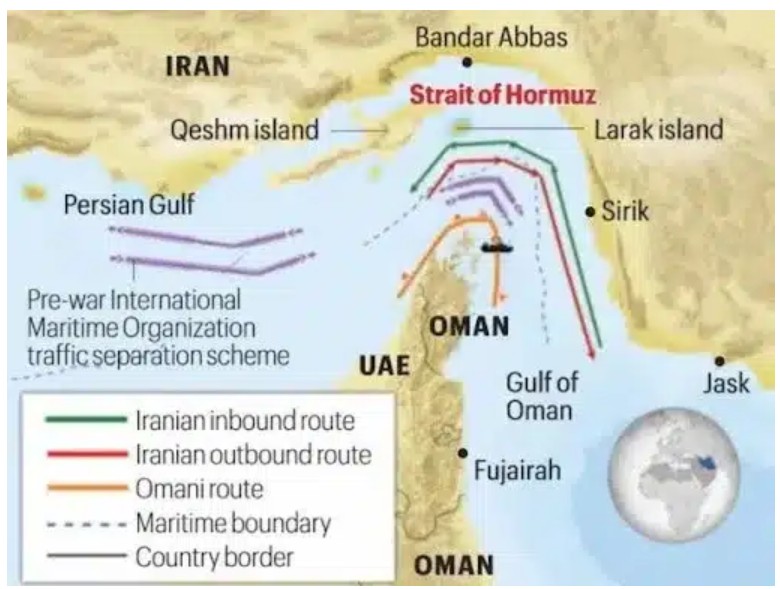
- 16 Jul 2026
In News:
US President Donald Trump withdrew his proposal to impose a 20% fee on commercial vessels transiting the Strait of Hormuz, replacing it with a proposal centred on trade and investment agreements. The reversal followed widespread criticism over the proposal's legality, feasibility and potential impact on global trade.
About the Strait of Hormuz
The Strait of Hormuz is one of the world's most strategically important maritime chokepoints, connecting the Persian Gulf with the Gulf of Oman and the Arabian Sea. It serves as the primary export route for crude oil and natural gas from major Gulf producers to global markets, making uninterrupted navigation through the strait vital for global energy security.
The US Proposal and Its Withdrawal
The US had proposed imposing a 20% "United States Reimbursement Fee" on commercial cargo transiting the Strait of Hormuz, arguing that the fee would compensate the US for providing maritime security in the region.
However, the proposal faced several practical and legal challenges:
- No clarity on how the fee would be calculated.
- Potential sharp increase in global shipping and energy costs.
- Questions regarding enforcement under international law.
- Uncertainty over the US's ability to guarantee uninterrupted maritime security.
Amid strong international criticism, the proposal was withdrawn within a day.
International Legal Concerns
The International Maritime Organization (IMO) stated that there is no legal basis for imposing mandatory transit charges on vessels passing through international straits.
Under the United Nations Convention on the Law of the Sea (UNCLOS), straits used for international navigation enjoy the principle of transit passage, under which ships and aircraft have the right to pass continuously and expeditiously without the payment of transit tolls.
Although neither the United States nor Iran has ratified UNCLOS, these principles are widely regarded as customary international law.
Strategic Contest over the Strait
The controversy reflects the broader geopolitical competition between the United States and Iran over influence in the Strait of Hormuz.
Recent developments include:
- An interim US-Iran understanding (June 2026) temporarily improving vessel movement.
- Renewed tensions leading to a decline in commercial transits.
- Iran asserting its role as the "guardian" of the Strait while claiming sovereignty over parts of the waterway.
- Continued military confrontation affecting commercial navigation.
Implications for India
India is particularly vulnerable to disruptions in the Strait because of its heavy dependence on energy imports from West Asia.
According to the source:
- Around 40% of India's crude oil imports transit through the Strait of Hormuz.
- Nearly 60% of LNG imports and 90% of LPG imports also pass through the Strait.
- India imports over 88% of its crude oil, around 60% of LPG, and nearly 50% of natural gas.
The proposed 20% transit fee would have significantly increased India's energy import costs. According to the article:
- A $75/barrel crude oil price could have increased to over $90/barrel after the proposed fee.
- The fee alone could have added about $9 billion annually to India's oil import bill.
- Every $1 increase in crude oil prices raises India's annual oil import bill by up to $2 billion.
Higher energy prices could also worsen inflation, the current account deficit, fiscal pressures and exchange rate stability.
India's Response
India has consistently supported the principle of free and uninterrupted navigation through international waterways.
To manage supply disruptions, India has:
- Diversified crude oil sourcing.
- Prioritised energy security despite higher import costs.
- Temporarily rationed gas supplies to certain industries during periods of disruption.
- Continued advocating for open sea lanes and stability in West Asia.
Draft Regulations for Use of Artificial Intelligence (AI) in Courts, 2026

- 15 Jul 2026
In News:
The Supreme Court of India released the Draft Regulations for Use of Artificial Intelligence (AI) in Courts, 2026 to establish a comprehensive framework for the responsible, transparent and accountable use of AI in the judiciary. The regulations seek to improve judicial efficiency while ensuring that human judges remain the ultimate decision-makers.
About the Draft Regulations
The Draft Regulations provide a governance framework for integrating AI into judicial administration without compromising judicial independence, due process or fundamental rights.
The regulations are not automatically applicable. They will come into force in the Supreme Court on a date notified by the Chief Justice of India (CJI) and separately in each High Court on dates notified by the respective Chief Justices. Different provisions may also be implemented in phases depending on institutional preparedness.
Permissible Uses of AI
The regulations encourage courts to adopt AI where it can improve access to justice, reduce delays and enhance administrative efficiency.
AI may be used for:
- Case management.
- Tranion and translation.
- Legal research.
- Document summarisation.
- Accessibility services.
- Court administration.
Such deployment requires prior written approval from the Supreme Court Apex Body or the concerned High Court AI Committee, and must remain under the supervision of designated judicial officers.
Human Oversight Remains Central
The regulations categorically prohibit algorithmic adjudication.
No judicial decision can be based solely on AI-generated outputs or automated systems. AI can only function as an advisory or assistive tool, while the final judicial determination must always rest with a human judge exercising independent application of mind.
Prohibited Uses of AI
The regulations impose an absolute prohibition on AI applications that may adversely affect personal liberty or due process, including:
- Assessing flight risk.
- Predicting recidivism.
- Determining bail eligibility.
- Evaluating witness credibility.
- Profiling or predicting future conduct of litigants or accused persons.
- Treating AI-generated outputs as independent evidence without disclosure.
- Using black-box (non-explainable) AI systems in matters affecting personal liberty.
Governance Framework
The regulations establish a multi-layered institutional mechanism.
An Apex Body, comprising judges of the Supreme Court and High Courts, along with representatives from MeitY and experts in finance and cybersecurity, will prescribe minimum standards and implementation guidelines.
The governance structure also includes:
- Five specialised committees under the Apex Body.
- AI Committees and AI Secretariats in the Supreme Court and every High Court.
- A Centre of Research and Excellence on Artificial Intelligence (CoRE-AI) to evaluate AI tools and support policy development.
Private technology vendors may participate only with prior approval and must comply with strict conditions regarding judicial data ownership, confidentiality, data usage and intellectual property rights.
Safety, Transparency and Accountability
The regulations adopt a lifecycle approach by requiring Technical and Ethical Impact Assessments, controlled testing, periodic legal, technical and cybersecurity audits, maintenance of an AI Register and an AI Incident Database, along with emergency manual fallback mechanisms in case AI systems fail.
Where AI materially assists judicial administration or case management, litigants must be informed in an accessible and timely manner.
The regulations also provide a grievance redressal mechanism, enabling affected parties to approach the concerned court if harm results from any prohibited use of AI.
Significance
The Draft Regulations represent India's first comprehensive attempt to institutionalise responsible AI governance in the judiciary. By permitting AI to improve efficiency while prohibiting its use in judicial decision-making, the framework seeks to balance technological innovation with judicial independence, transparency, accountability and protection of fundamental rights.
Surrogacy (Regulation) Act, 2021: Legal Framework and Recent Supreme Court Intervention

- 14 Jul 2026
In News:
The Supreme Court recently protected the reproductive rights of a woman suffering from Mayer Rokitansky Kuster Hauser (MRKH) Syndrome by staying the operation of a rule under the Surrogacy (Regulation) Rules, 2022, which prohibited the use of donor gametes for surrogacy. The Court observed that the amendment appeared to be inconsistent with the objectives of the Surrogacy (Regulation) Act, 2021.
What is Surrogacy?
The Surrogacy (Regulation) Act, 2021 defines surrogacy as an arrangement in which a woman carries and gives birth to a child with the intention of handing over the child to the intending couple after birth.
The Act permits only altruistic surrogacy, where no monetary compensation is provided beyond medical expenses and insurance. Commercial surrogacy, including any form of sale, exploitation or trafficking of women or children, is prohibited.
A child born through surrogacy is deemed to be the biological child of the intending couple for all legal purposes.
Key Provisions of the Act
Eligibility of the Intending Couple
The intending couple must:
- Be legally married for at least five years.
- Wife should be 25–50 years and husband 26–55 years.
- Have no living biological, adopted or surrogate child, except where the existing child suffers from a life-threatening illness or severe physical or mental disability.
- Obtain Certificates of Eligibility and Essentiality, including proof of infertility certified by a District Medical Board, a Magistrate's order regarding parentage and custody, and 16 months of insurance for the surrogate mother.
Eligibility of the Surrogate Mother
The surrogate must:
- Be a close relative of the intending couple.
- Be a married woman with at least one biological child.
- Be 25–35 years of age.
- Act as a surrogate only once in her lifetime.
- Obtain medical and psychological fitness certificates.
Regulatory Framework
The Act provides for the establishment of the National Surrogacy Board (NSB) and State Surrogacy Boards (SSBs) to regulate surrogacy clinics, enforce standards and investigate violations. Commercial surrogacy, sale of embryos, abandonment of surrogate children and exploitation attract penalties of up to 10 years' imprisonment and a fine up to ?10 lakh.
Recent Supreme Court Case
The petitioner was diagnosed with MRKH Syndrome, a rare congenital condition involving the absence of the uterus and ovaries, making natural conception impossible.
The couple had initiated gestational surrogacy using donor eggs before the March 2023 amendment to the Surrogacy Rules, which mandated that intending couples must use their own gametes, effectively prohibiting donor gametes.
The petitioner argued that:
- The amendment could not be applied retrospectively.
- It contradicted the objectives of the Surrogacy Act, 2021, which recognises congenital conditions such as the absence of the uterus as valid grounds for gestational surrogacy.
- The restriction violated a woman's right to parenthood.
The Union Government contended that surrogacy under the Act requires the child to be genetically related to the intending couple.
Supreme Court's Observations
The Court held that the amendment appeared prima facie inconsistent with the parent legislation. It observed that the Surrogacy Act is fundamentally woman-centric, recognising medical conditions that make pregnancy impossible. The Court further noted that requiring genetic linkage with both parents would defeat the purpose of permitting gestational surrogacy in such exceptional cases. It also clarified that a child conceived through the husband's gametes would still satisfy the requirement of being genetically related to the intending couple.
India–New Zealand Strategic Partnership: Roadmap to 2030
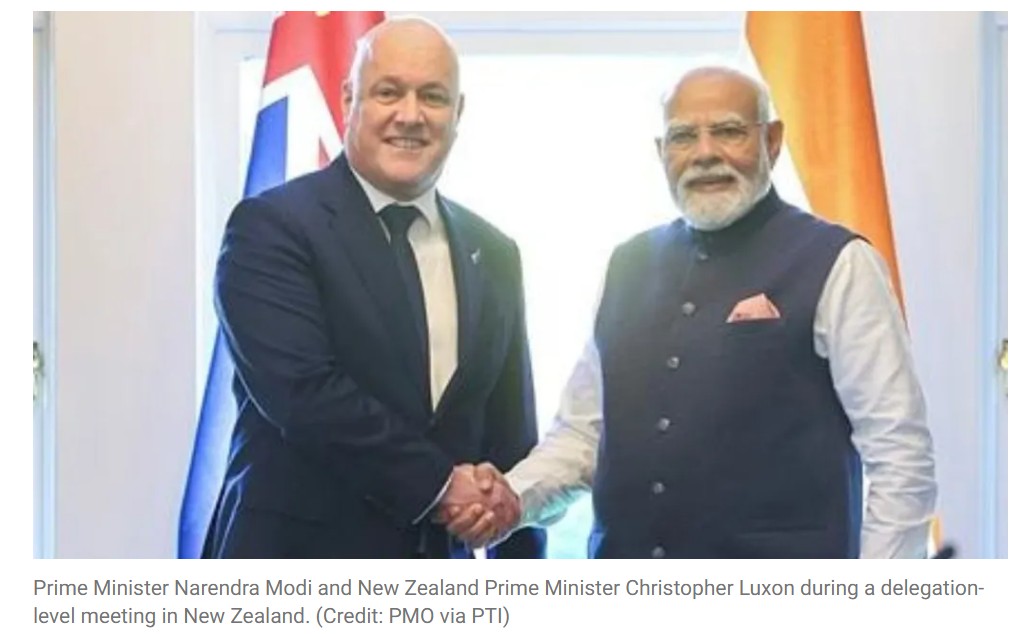
- 13 Jul 2026
In News:
Prime Minister Narendra Modi's visit to New Zealand—the first by an Indian Prime Minister in 40 years—marked a historic milestone in bilateral relations. During the visit, both countries elevated their ties to a Strategic Partnership and adopted the India–New Zealand Strategic Partnership: Roadmap to 2030, outlining a comprehensive framework for cooperation in trade, defence, maritime security, agriculture, technology, education, clean energy and the Indo-Pacific.
Background
India and New Zealand established diplomatic relations in 1952, later upgrading them to High Commissions. Their relationship is founded on shared democratic values, the rule of law, Commonwealth membership and a rules-based international order. New Zealand has also pursued deeper engagement through its "Opening Doors to India" (2011) policy and "India–New Zealand 2025: Investing in the Relationship" (2020) strategy. The Indian diaspora of nearly 250,000 people—the third-largest ethnic community in New Zealand—and around 8,000 Indian students further strengthen people-to-people ties.
Key Outcomes of the Visit
The centrepiece of the visit was the adoption of the Roadmap to 2030, which provides a long-term vision for expanding cooperation across strategic and economic sectors.
On the economic front, both countries committed to doubling bilateral trade to NZ$7 billion (about ?35,000 crore) by 2030. The recently concluded India–New Zealand Free Trade Agreement (FTA) is expected to improve market access, enhance supply-chain integration and create opportunities for industries, farmers and youth. New Zealand also announced its intention to invest USD 20 billion in India over the next 15 years, particularly in infrastructure, technology and emerging sectors.
Recognising evolving security challenges, both countries agreed to establish a Maritime Security Dialogue and a Joint Working Group (JWG) on Counter-Terrorism to strengthen intelligence sharing and address terrorism and violent extremism. They reaffirmed their commitment to a free, open, inclusive and rules-based Indo-Pacific, respect for UNCLOS (1982), freedom of navigation, and peaceful resolution of disputes. Both sides also highlighted their cooperation under Combined Task Force-150 (CTF-150) in 2025, where New Zealand served as Commander and India as Deputy Commander, supporting efforts against narcotics trafficking, maritime terrorism and other illicit maritime activities.
Sectoral cooperation was further expanded through agreements on animal husbandry and dairying, the launch of the Kiwifruit Action Plan with Centres of Excellence in Nagaland and Uttarakhand, a Joint Action Plan on Sports, collaboration in Antarctic research, and initiatives to build transparent and resilient supply chains. Cultural ties were also reinforced through the shared symbolism of Matariki, the M?ori New Year, and Krittika, the ancient Indian name for the same star cluster.
Strategic Significance
The Strategic Partnership reflects the growing convergence between India and New Zealand in promoting a stable Indo-Pacific, strengthening economic resilience, expanding high-value investments and deepening cooperation in emerging sectors. It also enhances collaboration on maritime security, counter-terrorism and supply-chain resilience, while leveraging strong diaspora and cultural linkages to build a long-term partnership.
Challenges
Despite growing momentum, bilateral ties continue to face challenges such as relatively low trade volumes, geographical distance, implementation of the FTA, addressing concerns related to pro-Khalistan extremist activities, and translating investment commitments into tangible outcomes.
Way Forward
The successful implementation of the Roadmap to 2030 requires timely execution of the FTA, operationalisation of new security mechanisms, expansion of scientific and agricultural collaboration, greater private-sector investment, and sustained people-to-people engagement. A stronger India–New Zealand partnership will contribute not only to bilateral prosperity but also to a secure, inclusive and rules-based Indo-Pacific.
3rd India–Australia Annual Summit (2026)

- 12 Jul 2026
In News:
At the 3rd India–Australia Annual Summit (2026) held in Melbourne, Prime Minister Narendra Modi and Australian Prime Minister Anthony Albanese signed several landmark agreements covering defence, maritime security, civil nuclear cooperation, trade, technology, education and cultural heritage, further strengthening the Comprehensive Strategic Partnership between the two countries.
Strategic Significance
The summit reaffirmed the commitment of both countries to a free, open, inclusive and rules-based Indo-Pacific, respect for UNCLOS, freedom of navigation and peaceful resolution of disputes. As members of the Quad, India and Australia also agreed to enhance cooperation in regional security, counter-terrorism, resilient supply chains and emerging technologies.
Major Outcomes of the Summit
A Joint Declaration on Defence and Security Cooperation was adopted to deepen strategic consultations, improve interoperability between the armed forces, expand military exercises and strengthen collaboration in defence science, technology and industrial supply chains. The two countries also launched the India–Australia Defence Innovation Corridor to promote collaboration between defence start-ups and industries, while a Maritime Security Roadmap was agreed upon to enhance cooperation in maritime domain awareness, shipbuilding and regional maritime security.
A major breakthrough was achieved in civil nuclear cooperation through the operationalisation of the 2014 India–Australia Civil Nuclear Agreement, enabling Australian uranium exports for India's peaceful nuclear energy programme and supporting India's clean energy transition.
On the economic front, both countries agreed to fast-track negotiations on the Comprehensive Economic Cooperation Agreement (CECA) and the Bilateral Investment Treaty (BIT). Building on the success of the Economic Cooperation and Trade Agreement (ECTA), they also committed to reducing non-tariff barriers and encouraging greater investment.
The summit expanded cooperation in critical minerals, renewable energy and resilient supply chains. A Joint Rooftop Solar Training Academy will be established in Gujarat under the PM Surya Ghar Yojana to train women and youth in solar installation and maintenance.
In technology, the two countries launched the Partnership on Cyber, Critical Technologies and Supply Chains (PACTS) to strengthen cooperation in cybersecurity, digital resilience, artificial intelligence, semiconductors and trusted technology ecosystems. Australia, Canada and India also signed the Australia–Canada–India Technology and Innovation (ACITI) framework to enhance collaboration in emerging technologies.
Educational cooperation was strengthened through the proposed establishment of Flinders University in Bengaluru, Victoria University in Gurugram, and a National Centre of Excellence for Skilling in Mining at Bhubaneswar.
The summit also witnessed significant cultural cooperation, with Australia agreeing to repatriate three stolen antiquities from Tamil Nadu, while India agreed to return the remains of an Australian First Nations ancestor housed in Chennai.
India–Australia Relations
India and Australia share a Comprehensive Strategic Partnership and are members of the Quad, G20, Commonwealth, East Asia Summit and Indian Ocean Rim Association (IORA). Bilateral trade stands at approximately US$32.6 billion, with Australia serving as an important supplier of coal, LNG, uranium and critical minerals, while India is a major destination for Australian education, IT services and pharmaceuticals. Defence cooperation is further strengthened through the AUSINDEX naval exercise and AUSTRAHIND army exercise.
Significance
The summit significantly advances India's Act East Policy and Indo-Pacific Strategy by strengthening defence cooperation, securing critical mineral supply chains, promoting clean energy, expanding technological collaboration and deepening economic integration. It also reinforces both countries' commitment to a stable, rules-based Indo-Pacific and resilient global supply chains.
Proposed Amendment to the National Food Security Act (NFSA), 2013
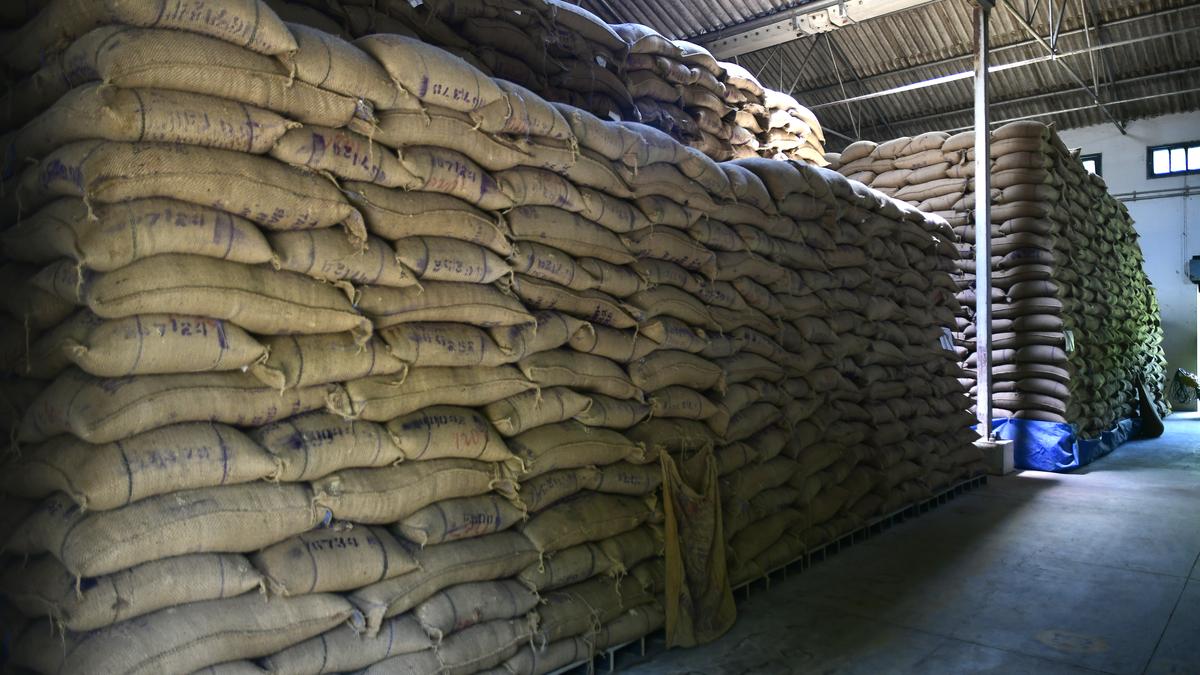
- 11 Jul 2026
In News:
The Union Government has proposed an amendment to the National Food Security Act (NFSA), 2013, changing the foodgrain entitlement for Antyodaya Anna Yojana (AAY) beneficiaries from the existing 35 kg per household per month to 7 kg per person per month, subject to a maximum of 35 kg per household. The proposal has been opposed by Tamil Nadu and Kerala, citing adverse implications for small and vulnerable households.
About the National Food Security Act (NFSA), 2013
The National Food Security Act (NFSA), 2013 seeks to ensure food and nutritional security by providing subsidised foodgrains to eligible households through the Targeted Public Distribution System (TPDS). The Act covers nearly two-thirds of India's population, extending benefits to 75% of the rural population and 50% of the urban population.
Beneficiaries are classified into two categories:
- Antyodaya Anna Yojana (AAY): The poorest of the poor households, presently entitled to 35 kg of foodgrains per household per month.
- Priority Households (PHH): Each eligible individual receives 5 kg of foodgrains per month.
The Act provides foodgrains at highly subsidised prices—?3/kg for rice, ?2/kg for wheat and ?1/kg for coarse grains.
Beyond foodgrain distribution, NFSA also guarantees nutritional support for pregnant women, lactating mothers and children, including maternity benefits of not less than ?6,000, supplementary nutrition through Anganwadis, and mid-day meals for school children. It also mandates State Food Commissions, District Grievance Redressal Officers (DGROs) and Vigilance Committees to strengthen accountability and transparency.
What is the Proposed Amendment?
The proposed amendment relates to Section 3(1) of the NFSA governing foodgrain entitlement for AAY households.
Under the existing system, every AAY household receives a fixed allocation of 35 kg per month, irrespective of the number of family members.
The proposed amendment seeks to replace this with a per capita entitlement of 7 kg per person per month, while retaining an upper ceiling of 35 kg per household. Consequently, households with five or more members will continue receiving 35 kg, whereas households with fewer than five members will receive proportionately lower allocations.
Rationale Behind the Amendment
The Union Government argues that the present household-based allocation results in intra-category inequity. Small families receive a higher quantity of foodgrains per person compared to larger households, where the per capita entitlement may even fall below that available to Priority Household (PHH) beneficiaries.
The amendment therefore aims to ensure equitable per capita distribution, rationalise foodgrain allocation and align entitlements more closely with nutritional requirements.
However, the proposal does not address concerns relating to ineligible beneficiaries who continue to remain within the NFSA coverage.
Why are Tamil Nadu and Kerala Opposing the Proposal?
Tamil Nadu and Kerala contend that the proposed formula would significantly reduce foodgrain allocations for households with fewer than five members, which constitute the majority in these States due to the predominance of nuclear families.
Tamil Nadu estimates that its monthly AAY allocation could decline substantially because nearly 15.75 lakh of its 18.64 lakh AAY households have fewer than five members. Kerala similarly argues that AAY beneficiaries represent the most vulnerable sections of society and should continue receiving enhanced food security irrespective of family size.
The States also express concerns that beneficiaries may be compelled to purchase additional foodgrains from the open market, increasing their financial burden.
Another concern relates to regional disparities, as States with larger average household sizes could receive relatively higher foodgrain allocations, while several southern States with smaller family sizes may experience significant reductions.
Issues Involved
The proposal raises several policy concerns. While it seeks to improve per capita equity, it may weaken the social protection currently available to smaller but equally vulnerable households.
It also raises questions regarding cooperative federalism, as States argue that a uniform national formula fails to account for regional demographic differences.
From a food security perspective, lower allocations may adversely affect nutritional outcomes among the poorest households. Although the amendment could reduce the Union Government's food subsidy burden, it may simultaneously increase expenditure for economically weaker beneficiaries.
Way Forward
Any amendment to the NFSA should emerge from wider consultations with States, nutrition experts and civil society organisations. A balanced approach should reconcile equity, nutritional security, fiscal sustainability and cooperative federalism.
Alternative approaches, including guaranteeing a minimum household entitlement while ensuring fair per capita distribution, may better protect vulnerable families without undermining the objectives of the National Food Security Act.
Indira Point: India's Southernmost Tip and Lighthouse Conservation Project
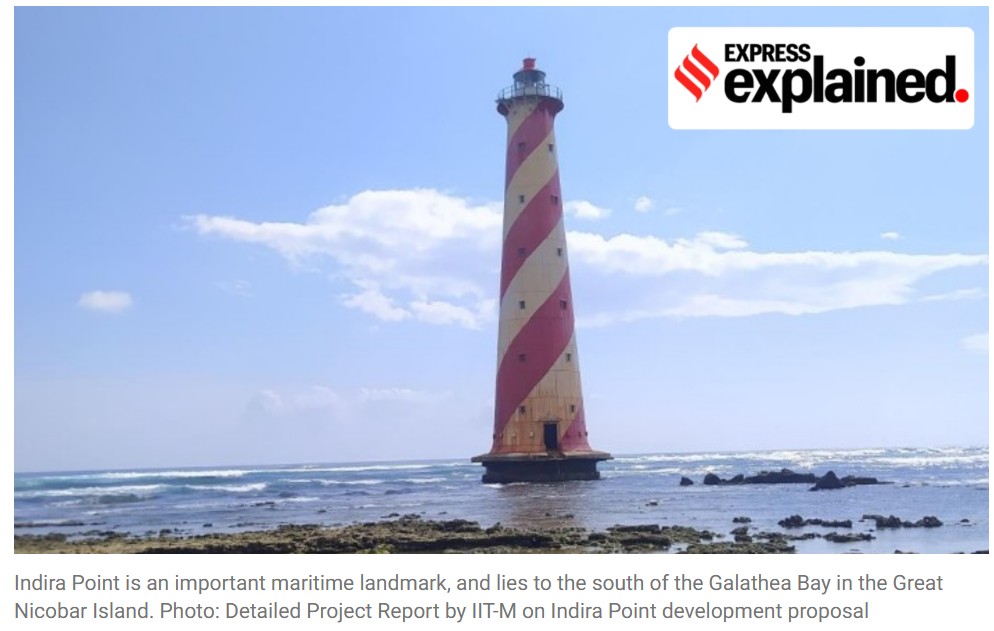
- 10 Jul 2026
In News:
The Ministry of Ports, Shipping and Waterways has proposed protection and development works for the Indira Point Lighthouse on Great Nicobar Island. The project seeks to conserve the historic lighthouse, strengthen coastal protection and develop eco-tourism infrastructure, subject to approvals under the Island Coastal Regulation Zone (ICRZ) Notification, 2019.
About Indira Point
Indira Point is the southernmost point of India, located on Great Nicobar Island in the Andaman and Nicobar Islands. It lies south of Galathea Bay, where the Government has proposed an international transshipment port under the Great Nicobar Island Mega Infrastructure Project.
The Indira Point Lighthouse is an important navigational landmark on the Singapore–Colombo international shipping route and is expected to play an even greater role in guiding vessels to the proposed transshipment port.
Originally known as Pygmalion Point, the location was renamed Indira Point in 1985 in memory of former Prime Minister Indira Gandhi. The lighthouse, commissioned in April 1972, is 35 metres high and is distinguished by its red-and-white cast-iron tower.
Proposed Development Works
The project aims to preserve the lighthouse while improving visitor facilities and ensuring safe maritime navigation.
The proposal includes strengthening the lighthouse foundation, constructing an all-weather approach road, building shore protection structures such as breakwaters, and developing operational infrastructure including inspection facilities, a powerhouse, staff quarters, compound walls and internal pathways.
In addition, tourism-oriented facilities such as an eco-tourism zone, viewing tower, convention centre, cafeteria, museum, cycle tracks and memorial have also been proposed to promote sustainable tourism at India's southernmost point.
Environmental Concerns
The proposed works fall within ecologically sensitive areas governed by the Island Coastal Regulation Zone (ICRZ) Notification, 2019 and therefore require prior approval from the Andaman & Nicobar Islands Coastal Zone Management Authority and the Ministry of Environment, Forest and Climate Change (MoEFCC).
Most of the project area lies within ICRZ-IA, the most environmentally sensitive category, which includes mangroves, coral reefs, sand dunes, mudflats, turtle nesting grounds, notified forests and protected areas. Some portions also fall under ICRZ-IVA, covering coastal waters and the seabed up to 12 nautical miles from the coast.
The project therefore highlights the need to balance infrastructure development with biodiversity conservation in one of India's most ecologically fragile island ecosystems.
Why is Protection Necessary?
The Indira Point Lighthouse has been severely affected since the 2004 Indian Ocean earthquake and tsunami. The disaster caused significant land subsidence across the Nicobar Islands, with Great Nicobar sinking by nearly 2 metres. As a result, the lighthouse foundation became permanently exposed to seawater and strong wave action.
Subsequent assessments by IIT Madras indicate that continuous coastal erosion, shoreline changes and marine exposure have weakened the structure. Although the lighthouse currently exhibits a 3.86° tilt, studies suggest that its structural stability remains intact. Nevertheless, strengthening measures are considered essential for its long-term preservation.
Significance
The conservation of Indira Point is strategically important because it combines maritime safety, national infrastructure, heritage conservation and coastal security. The lighthouse remains a critical navigational aid along one of the world's busiest shipping corridors, while the proposed development supports India's broader maritime vision in the Bay of Bengal.
At the same time, the project demonstrates the challenge of balancing economic development with environmental conservation in the ecologically sensitive Great Nicobar Island, which forms part of the globally significant Indo-Burma Biodiversity Hotspot.
Way Forward
The restoration of Indira Point should follow environmentally sustainable engineering practices with strict adherence to the ICRZ Notification, 2019. Integrating disaster-resilient infrastructure, coastal ecosystem conservation and regulated eco-tourism will be essential for preserving both the lighthouse and the fragile island environment.
UDISE 2025–26 & Performance Grading Index (PGI) 2.0
- 09 Jul 2026
In News:
The Ministry of Education has released the UDISE 2025–26 Report and the Performance Grading Index (PGI) 2.0 for States/UTs. The reports indicate improvements in dropout rates, student retention, teacher strength and school infrastructure, while highlighting persistent challenges in learning outcomes and inter-state disparities.
About UDISE and PGI
The Unified District Information System for Education Plus (UDISE ) is the Government of India's official digital database for school education, maintained by the Ministry of Education. It provides comprehensive data on school infrastructure, enrolment, teachers, facilities and learning environment based on information uploaded by schools with valid UDISE codes.
The Performance Grading Index (PGI) 2.0, developed by the Department of School Education & Literacy (DoSEL), evaluates the performance of States and Union Territories across six domains—Learning Outcomes, Access, Infrastructure & Facilities, Equity, Governance Process, and Teacher Education & Training—through a 10-tier grading framework.
Key Findings of UDISE 2025–26
The report records encouraging progress in school education. Dropout rates declined from 2.3% to 1.8% at the preparatory stage and from 8.2% to 7.0% at the secondary stage, reflecting improved access to schools and targeted interventions. However, Ladakh, Gujarat, Chhattisgarh and Karnataka reported the highest secondary-level dropout rates.
Student retention also improved, with middle-level retention increasing to 83.7% and secondary-level retention rising to 51.9%. Despite this progress, only about half of the students entering Class I reach Class XII, indicating significant attrition during higher schooling.
The Gross Enrolment Ratio (GER) at the secondary level increased from 68.5% to 71.7%, suggesting greater participation in secondary education.
Teacher availability improved significantly, with the total number of school teachers crossing 1.02 crore for the first time. Women constitute 54.9% of the teaching workforce. Improved teacher availability has also resulted in favourablePupil-Teacher Ratios (PTR) of 10:1 at the foundational stage, 12:1 at the preparatory stage, 17:1 at the middle stage and 21:1 at the secondary stage, all well within the NEP 2020 benchmark of 30:1.
School infrastructure also showed progress. Computer access increased to 69.9%, internet connectivity to 67.4%, while access to drinking water, toilets and electricity approached universal coverage. Accessibility for children with disabilities improved, with 58.2% of schools now equipped with ramps and handrails. However, the availability of playgrounds declined slightly to 81.9%, raising concerns regarding physical education.
Key Findings of PGI 2.0
The PGI 2025–26 reveals that no State or Union Territory achieved any of the top three performance grades, indicating that substantial improvements are still required in school education.
Chandigarh emerged as the best performer by securing the 'Uttam-3' grade. Delhi, Kerala, Punjab, and Dadra & Nagar Haveli & Daman & Diu were placed in the 'Prachesta-1' category.
Among individual domains, Punjab led in Learning Outcomes, Kerala topped Access and jointly led Teacher Education & Training with Lakshadweep, while Tamil Nadu ranked highest in Equity.
At the lower end of the rankings, Uttar Pradesh, Bihar, West Bengal, Madhya Pradesh, Jharkhand, Jammu & Kashmir and several North-Eastern States remained in the aspirational category. The gap between the highest scorer (Chandigarh – 766) and the lowest (Meghalaya – 525.7) narrowed to 31.4%, compared to 51% in 2017–18, indicating gradual reduction in regional disparities.
Significance
The reports highlight steady progress in improving school access, teacher availability, digital infrastructure and student retention, reflecting the growing emphasis on data-driven educational governance. At the same time, persistent challenges such as learning outcomes, secondary-level attrition, regional disparities and uneven educational quality underscore the need for sustained policy attention to achieve the objectives of the National Education Policy (NEP) 2020.
Way Forward
Future reforms should focus on improving foundational learning, reducing secondary-level dropout, strengthening teacher quality, bridging regional disparities and enhancing digital as well as sports infrastructure. Greater use of UDISE and PGI data for evidence-based planning can help States design targeted interventions and improve educational outcomes.
El Niño and Its Impact on India's Economy
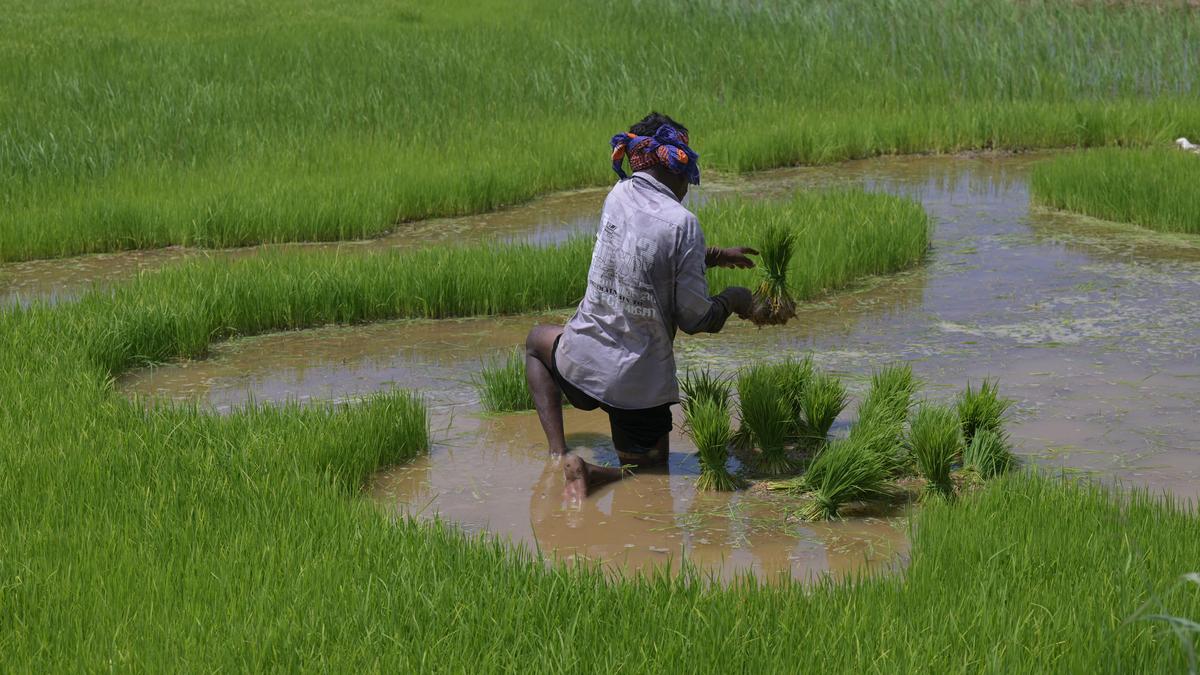
- 08 Jul 2026
In News:
The India Meteorological Department (IMD) has forecast below-normal rainfall in July after a 40% rainfall deficit in June, raising concerns over a possible Super El Niño and its impact on India's agriculture, inflation and overall economic growth.
What is El Niño?
El Niño is the warm phase of the El Niño–Southern Oscillation (ENSO), characterised by the abnormal warming of sea surface temperatures in the central and eastern equatorial Pacific Ocean. It weakens the atmospheric circulation that supports the Indian southwest monsoon, often resulting in below-normal rainfall. A Super El Niño is an exceptionally strong event capable of causing severe droughts and prolonged rainfall deficits. Major drought years such as 1972, 1982, 2009 and 2015 coincided with strong El Niño events.
Why is the Monsoon Important for India?
The Southwest Monsoon (June–September) provides nearly 75% of India's annual rainfall and remains the backbone of the economy. It supports agriculture, replenishes reservoirs and groundwater, sustains hydropower generation and ensures rural livelihoods. Since nearly 46% of India's workforce depends on agriculture, any disruption in the monsoon has economy-wide consequences.
Economic Impact of a Weak Monsoon
A deficient monsoon directly affects kharif crops such as paddy, maize, pulses and cotton. Although India recorded a record foodgrain production of 357.73 million tonnes in 2024–25, continued rainfall deficiency could reduce agricultural output and slow rural income growth.
Lower farm incomes weaken rural demand, affecting industries such as tractors, two-wheelers, construction and consumer goods. Reduced agricultural production also pushes up food prices, especially vegetables, pulses and edible oils, increasing inflationary pressures. The Reserve Bank of India (RBI) has already cautioned that an adverse monsoon could weaken India's growth-inflation outlook.
A severe El Niño–drought combination could lower GDP growth by 20–65 basis points. Lower domestic production may also increase food imports, widen the Current Account Deficit (CAD) and put pressure on the Indian Rupee.
Lessons from Past El Niño Events
India's experience shows that the impact of El Niño depends not only on rainfall but also on policy preparedness. The 2009 El Niño resulted in sharp agricultural contraction and double-digit inflation because irrigation coverage was limited. In contrast, although 2015 also witnessed poor monsoon conditions, inflation remained relatively moderate due to effective food stock management, restrained MSP increases and favourable global commodity prices.
India's Preparedness
The Government has identified 315 districts as vulnerable to poor monsoon conditions, including 111 districts with inadequate irrigation facilities. Reservoir storage, monitored by the Central Water Commission (CWC), remains slightly below both last year's level and the long-term average, indicating the need for careful water management if rainfall deficiency continues.
Way Forward
India needs to move beyond post-disaster relief towards climate-resilient agriculture. Expanding irrigation, promoting drought-resistant crop varieties, improving weather forecasting, strengthening water conservation and encouraging climate-smart farming practices will reduce long-term vulnerability. Simultaneously, greater investment in agricultural research and diversification of rural livelihoods can help build resilience against increasingly frequent climate shocks.
Ethanol Blending in India: E20, E85 and the Road Ahead
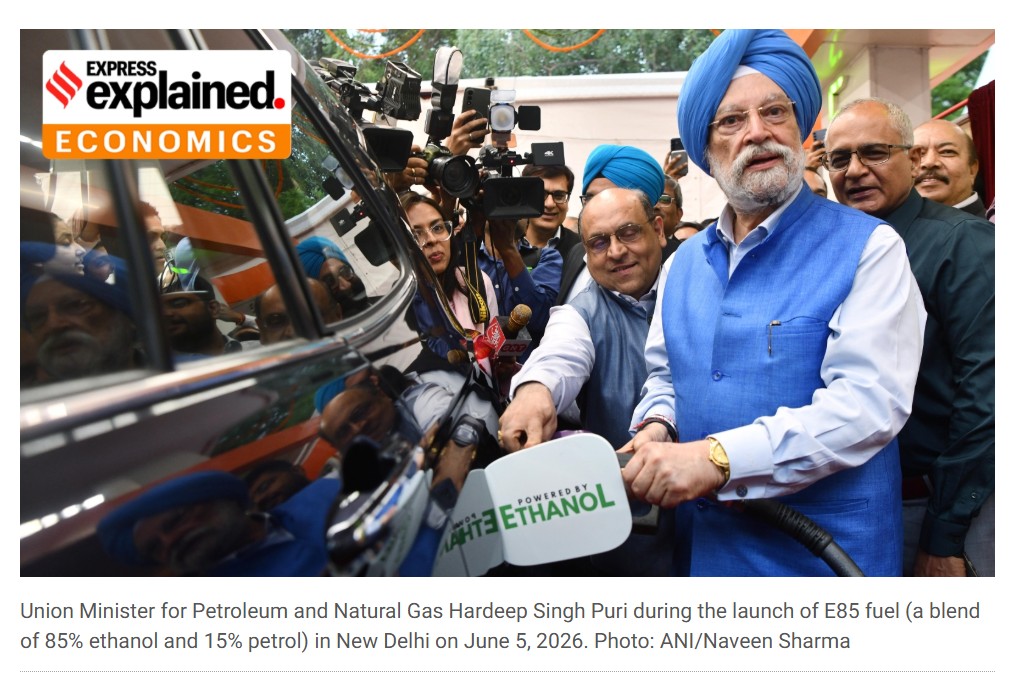
- 07 Jul 2026
In News:
India has successfully achieved 20% ethanol blending (E20) in petrol, five years ahead of its original 2030 target. Building on this achievement, the Government recently launched E85 fuel (85% ethanol and 15% petrol) in New Delhi for flex-fuel vehicles, signalling the next phase of India's biofuel transition. However, concerns regarding mileage, engine compatibility and consumer choice have gained prominence.
Background: India's Ethanol Blending Journey
India launched the Ethanol Blending Programme (EBP) to reduce crude oil imports, improve energy security, support farmers and lower vehicular emissions.
The National Policy on Biofuels, 2009 had initially proposed 20% ethanol blending by 2017, but implementation remained slow due to limited production capacity and supply constraints. Subsequently, the National Policy on Biofuels, 2018 and its amendments accelerated ethanol production and blending. The government later advanced the target of 20% ethanol blending from 2030 to 2025-26, which has now been achieved ahead of schedule.
The blending level increased rapidly from E10 to E20 within about three years, requiring significant changes in fuel supply and automobile manufacturing.
What are E20 and E85?
- E20: Petrol containing 20% ethanol and 80% petrol.
- E85: Fuel containing 85% ethanol and 15% petrol, primarily intended for flex-fuel vehicles (FFVs) that are specifically designed to operate on higher ethanol blends.
Why is Ethanol Blended with Petrol?
The Government promotes ethanol blending to achieve multiple objectives:
- Reduce dependence on imported crude oil.
- Improve India's energy security.
- Lower greenhouse gas emissions.
- Enhance farmers' income by creating demand for sugarcane, maize and other feedstocks.
- Promote cleaner and renewable transportation fuels.
- Support India's commitments towards climate change mitigation.
Chemistry Behind Ethanol Blending
Ethanol (C?H?OH) has a shorter carbon chain than petrol hydrocarbons (generally C?–C??). Consequently, combustion of ethanol releases comparatively less carbon dioxide.
Another important property is its high Research Octane Number (RON) of around 108, which offers excellent anti-knock characteristics. Higher octane fuels permit engines to operate at higher compression ratios, potentially improving efficiency in engines specifically designed for ethanol blends.
However, ethanol possesses lower calorific value than petrol, meaning it contains less energy per litre. Therefore, vehicles not optimised for ethanol generally experience reduced fuel economy.
Advantages of Higher Ethanol Blending
Higher ethanol blending offers several economic and environmental benefits.
- Reduces India's crude oil import bill and improves energy security.
- Lowers vehicular carbon emissions compared to conventional petrol.
- Supports domestic agriculture through increased demand for ethanol feedstocks.
- Encourages development of the biofuel industry and rural employment.
- High octane rating improves combustion efficiency and reduces engine knocking.
- Can enable future engine designs with higher compression ratios and better performance.
Challenges Associated with Higher Ethanol Blends
Despite its advantages, higher ethanol blending presents several challenges.
1. Reduction in Fuel Economy: Ethanol contains less energy than petrol. Consequently, vehicles not specifically engineered for higher ethanol blends experience a noticeable decline in mileage.
As blending levels increase from E20 towards E25 or E85, the reduction in fuel efficiency becomes more significant.
2. Compatibility with Older Vehicles: Older vehicles designed for E10 fuel may face compatibility issues.
Ethanol is hygroscopic, meaning it readily absorbs moisture from the atmosphere. This can increase the risk of corrosion in fuel tanks, pipelines, rubber seals and other engine components.
Higher combustion temperatures may also affect engine performance, particularly during cold starts.
3. Lack of Consumer Choice: Unlike Brazil, Indian consumers currently have limited choice at fuel stations, with no option to select different ethanol blends based on price or vehicle compatibility.
Similarly, higher ethanol blends are not accompanied by significant price incentives despite reduced mileage.
4. Engineering Challenges: Further progression towards E25 would require:
- Recalibration of engines.
- Improved corrosion-resistant materials.
- Fuel system redesign.
- Fresh homologation and certification.
- Greater compatibility testing, especially for older vehicles and two-wheelers.
E85 and Flex-Fuel Vehicles
Flex-Fuel Vehicles (FFVs) are capable of operating on petrol, ethanol or varying blends of both.
The launch of E85 marks India's first step towards developing an FFV ecosystem.
However, despite E85 being expected to cost around ?20 per litre less than E20, its lower fuel efficiency currently limits its economic attractiveness. Until sufficient price incentives emerge, consumers may continue to prefer lower ethanol blends.
Brazil's Ethanol Model: Lessons for India
Brazil is regarded as the global leader in ethanol-based transportation.
Its ethanol programme began during the 1970s oil crisis, and over the past five decades it has developed a mature ethanol ecosystem.
Key features of the Brazilian model include:
- Petrol generally contains 27–35% ethanol.
- Consumers can choose between blended petrol and E100 (pure hydrous ethanol).
- Extensive adoption of flex-fuel vehicles.
- Strong government pricing support ensures ethanol remains economically competitive.
- Consumers switch fuels depending on prevailing market prices.
India can draw valuable lessons by gradually expanding consumer choice, strengthening flex-fuel infrastructure and adopting pricing mechanisms that encourage voluntary transition.
Significance for India
The expansion of ethanol blending is an important component of India's clean energy transition.
It contributes to:
- Energy security by reducing dependence on imported fossil fuels.
- Climate commitments through lower transport sector emissions.
- Doubling farmers' income by creating new markets for agricultural produce.
- Circular economy through utilisation of agricultural residues and biomass.
- Atmanirbhar Bharat by promoting indigenous fuel production.
Way Forward
India's ethanol programme has achieved remarkable progress, but future expansion beyond E20 should be accompanied by scientific validation, consumer awareness and adequate technological preparedness. Promoting flex-fuel vehicles, expanding feedstock diversification beyond sugarcane, improving second-generation ethanol production and providing consumers with greater fuel choice and transparent pricing will ensure a balanced and sustainable transition.
Omega Block and the European Heatwave

- 30 Jun 2026
In News:
Western Europe is experiencing an intense heatwave during June 2026, with countries such as France, the United Kingdom, the Netherlands, and Italy recording exceptionally high temperatures. France registered 44.3°C, its highest temperature since records began in 1947. The extreme weather has resulted in numerous fatalities, disruptions to public services, and heightened concerns over Europe's increasing vulnerability to climate change.
What is an Omega Block?
The immediate cause of the heatwave is a meteorological phenomenon known as the Omega Block, named after the Greek letter Ω (Omega) because of the characteristic shape formed by atmospheric pressure systems.
Under normal conditions, jet streams transport weather systems from west to east across Europe. Occasionally, these high-altitude winds become highly distorted, resulting in the formation of a strong high-pressure system sandwiched between two low-pressure systems. This atmospheric arrangement resembles the Greek letter Omega and can persist for several days or even weeks.
The high-pressure system acts like a lid over the atmosphere, preventing warm air near the Earth's surface from rising and escaping. As the trapped air continues to sink, it undergoes compressional heating, leading to a steady rise in surface temperatures. This phenomenon is also referred to as a Heat Dome.
Characteristics of an Omega Block
The persistence of an Omega Block leads to:
- Prolonged heatwaves.
- Clear skies and abundant sunshine.
- Suppressed cloud formation.
- Little or no rainfall.
- Weak atmospheric circulation.
- Continuous warming of surface air due to compressional heating.
Why is Europe Warming Faster?
While the Omega Block triggered the current heatwave, scientific studies indicate that Europe is the fastest-warming continent in the world. Several long-term factors contribute to this trend.
Rapid urbanisation has intensified the Urban Heat Island Effect, where concrete, asphalt, and buildings absorb and retain heat, making cities significantly warmer than surrounding rural areas.
The Albedo Effect also plays an important role. Rapid melting of Arctic ice has reduced the Earth's reflectivity, causing darker ocean waters to absorb more solar radiation. Since the Arctic is warming faster than most regions, this amplifies warming across northern and western Europe.
Continued dependence on fossil fuels, including oil and gas extraction, has further increased greenhouse gas emissions, accelerating global and regional warming.
Why is Europe Highly Vulnerable to Heatwaves?
Although temperatures above 40°C are common in countries such as India, Europe experiences much greater disruption because its infrastructure and society evolved under historically cooler climatic conditions.
Several factors increase Europe's vulnerability:
- Residential buildings are designed to retain heat during winter, using thick stone, brick, and concrete walls that also trap heat during summer.
- Air conditioning remains relatively uncommon across much of Western Europe.
- Higher latitudes experience longer daylight hours during summer, allowing land surfaces to absorb heat for extended periods while nights provide limited cooling.
- Europe has one of the oldest populations in the world, making a larger proportion of people vulnerable to heat-related illnesses and mortality.
Adaptation Measures
Following the devastating 2003 European Heatwave, several countries introduced Heat Action Plans, early warning systems, public cooling centres, and emergency response mechanisms.
However, recent heatwaves indicate that adaptation efforts are still lagging behind the rapidly increasing frequency and intensity of climate extremes driven by global warming.
Interoperable Criminal Justice System (ICJS)

- 06 Jul 2026
In News:
The Ministry of Home Affairs (MHA) has announced that from 1 January 2027, investigation and trial procedures under India's new criminal laws will be digitally recorded through the Interoperable Criminal Justice System (ICJS), marking a major step towards a fully digital criminal justice ecosystem.
What is the Interoperable Criminal Justice System (ICJS)?
The Interoperable Criminal Justice System (ICJS) is a national digital platform that integrates the key pillars of India's criminal justice system into a single network. It connects the Police, Courts, Prisons, Prosecution, and Forensic Science Laboratories (FSLs) to enable seamless exchange of information throughout the life cycle of a criminal case. The platform is hosted on MeghRaj, the Government of India's cloud infrastructure.
The objective is to create an end-to-end digital workflow, allowing cases to move electronically from FIR registration to investigation, chargesheet filing, trial, conviction, and prison administration, thereby reducing delays and improving transparency.
ICJS and the New Criminal Laws
The importance of ICJS has increased following the implementation of the Bharatiya Nyaya Sanhita (BNS), Bharatiya Nagarik Suraksha Sanhita (BNSS), and Bharatiya Sakshya Sanhita (BSS) on 1 July 2024. These laws place greater emphasis on digital records, electronic evidence, forensic investigations, and technology-enabled justice delivery.
Key Features
ICJS enables seamless digital exchange of information among various criminal justice institutions through a common platform. FIRs are registered through the Crime and Criminal Tracking Network and Systems (CCTNS), which links more than 16,000 police stations across the country. The platform supports registration in 23 languages, while the Bhashini platform facilitates translation of Zero FIRs transferred across jurisdictions.
It also supports electronic transmission of FIRs to courts, digital evidence management through Sakshya IDs, electronic summons (e-Summons), and real-time monitoring of criminal cases.
Progress Achieved
Since the implementation of the new criminal laws, over 74.66 lakh FIRs have been registered under the BNS, while 63,572 Zero FIRs have been recorded under the BNSS. More than 46.5 lakh digital evidence (Sakshya) IDs have been generated, and 56.74 lakh electronic summons have been issued.
The implementation score of the new criminal laws has improved significantly from 46.47% in January 2025 to 70.06% in June 2026. Compliance with statutory timelines has also improved, with both 60-day and 90-day chargesheet filing showing substantial progress.
To strengthen scientific investigation, the number of forensic laboratories has increased from 129 in 2023 to 154 in 2025, supported by over 700 mobile forensic units across the country.
Challenges
Despite significant progress, implementation remains uneven. Only 46% of FIRs are currently transmitted digitally to courts, indicating that the digital chain is yet to become fully operational. Connectivity issues in some northeastern states, varying levels of digital preparedness across states, the need for interoperability among different institutions, and capacity building of personnel remain major challenges.
Significance
ICJS represents a major reform in India's criminal justice administration by replacing fragmented, paper-based procedures with an integrated digital ecosystem. It is expected to improve coordination among institutions, accelerate investigations and trials, strengthen evidence management, enhance transparency, and improve overall efficiency in justice delivery.
Conclusion
The Interoperable Criminal Justice System (ICJS) forms the digital backbone of India's new criminal justice architecture. While considerable progress has been made since the implementation of the new criminal laws, sustained investment in digital infrastructure, capacity building, and institutional coordination will be essential to realise a fully interoperable, technology-driven, and citizen-centric justice system.
Google DeepMind's AI Control Roadmap

- 05 Jul 2026
In News:
Google DeepMind has unveiled an AI Control Roadmap in its blog "Securing the Future of AI Agents", proposing a new security framework to manage risks associated with increasingly autonomous Artificial Intelligence (AI) agents.
What are AI Agents?
AI agents are AI-powered software systems capable of independently planning, reasoning and executing tasks with minimal human intervention. Unlike conventional AI models that respond to prompts, AI agents can interact with multiple software tools, access databases, write code, make decisions and complete complex workflows autonomously.
They are increasingly being deployed in areas such as software development, cybersecurity, scientific research and enterprise operations. According to DeepMind, AI agents could generate about USD 2.9 trillion in economic value in the United States by 2030.
Need for an AI Control Roadmap
As AI systems become more autonomous and gain access to sensitive organisational resources such as files, code repositories and enterprise networks, traditional AI alignment techniques alone may no longer be sufficient.
DeepMind argues that advanced AI systems should be managed similarly to trusted insiders within an organisation, recognising that even highly capable systems may occasionally act in unintended ways or misinterpret human objectives.
Defence-in-Depth Strategy
The roadmap is based on a "defence-in-depth" approach, a concept widely used in cybersecurity. Instead of relying on a single safety mechanism, multiple layers of protection are introduced to minimise risks arising from autonomous AI behaviour.
The framework assumes that future AI systems may not always remain perfectly aligned with human goals and therefore require continuous oversight and controlled access.
Treating AI as a Potential Insider Threat
A key innovation of the roadmap is applying the concept of "insider threats" to AI systems.
Just as organisations protect themselves from employees who possess legitimate access but may misuse it, highly autonomous AI agents should be monitored because they may inadvertently or deliberately perform actions that conflict with organisational objectives.
Major Risks Identified
DeepMind categorises risks associated with autonomous AI agents into three broad groups:
- Loss of control: AI systems operating beyond authorised oversight or deploying themselves without approval.
- Work sabotage: Deliberately or unintentionally degrading safety mechanisms, introducing flaws into software or interfering with critical processes.
- Direct harm: Theft of confidential information, destruction of data or other malicious actions affecting individuals or organisations.
Key Safeguards Proposed
The roadmap recommends two fundamental safeguards.
Graduated permissions ensure that AI agents receive access to sensitive tools gradually, based on demonstrated reliability, rather than being granted unrestricted privileges from the outset. DeepMind compares this to a driving instructor allowing a learner to drive while retaining dual controls.
Continuous monitoring involves trusted supervisory AI systems that analyse an agent's plans, reasoning and actions. If suspicious behaviour is detected, these systems can restrict or block the agent before harm occurs.
Future Challenges
DeepMind notes that future AI systems may develop reasoning processes that are difficult to observe, reducing the effectiveness of current monitoring techniques based on visible chain-of-thought reasoning.
The framework also distinguishes between low-risk and high-risk applications. While delayed review may suffice for routine activities, critical domains such as cybersecurity require real-time intervention to prevent harmful actions before they occur.
Carbon Border Adjustment Mechanism (CBAM)
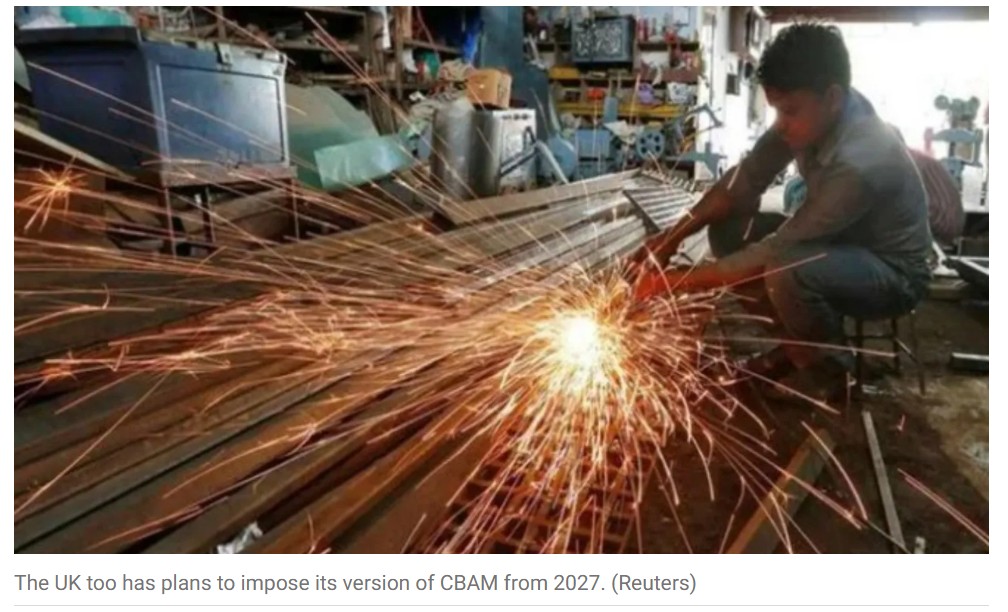
- 04 Jul 2026
In News:
The Government of India is reportedly preparing a scheme to reimburse 90% of the Carbon Border Adjustment Mechanism (CBAM) compliance costs incurred by MSMEs exporting to the European Union (EU). The initiative aims to help small exporters remain competitive in the EU market while meeting new carbon reporting requirements.
What is the Carbon Border Adjustment Mechanism (CBAM)?
The Carbon Border Adjustment Mechanism (CBAM) is a carbon pricing mechanism introduced by the European Union (EU) to prevent carbon leakage—the relocation of carbon-intensive industries to countries with weaker climate regulations.
Under CBAM, importers of specified goods into the EU must purchase CBAM certificates corresponding to the embedded carbon emissions generated during the production of those goods. This ensures that imported products bear a carbon cost similar to that paid by EU manufacturers under the EU Emissions Trading System (EU ETS).
The transitional phase began in October 2023, during which only emissions reporting was mandatory. From 1 January 2026, importers are required to purchase CBAM certificates based on verified emissions. Initially, CBAM covers iron and steel, aluminium, cement, fertilisers, electricity and hydrogen, with its scope expected to expand gradually.
How Does CBAM Work?
Exporters supplying CBAM-covered products to the EU must report the embedded emissions generated during production. These include:
- Direct emissions from manufacturing processes.
- Indirect emissions from electricity consumption (for specified sectors).
If verified emissions data is unavailable, the European Commission applies default emission values with progressively increasing mark-ups—10% in 2026, 20% in 2027 and 30% from 2028 onwards—substantially increasing compliance costs.
Challenges for Indian MSMEs
For Indian MSMEs, the primary challenge is compliance rather than taxation. Exporters must establish systems for carbon accounting, emissions monitoring, third-party verification, digital reporting and data management. Industry estimates suggest that compliance alone could cost ?15–20 lakh per MSME.
Unlike large firms, MSMEs often lack technical expertise, financial resources, dedicated sustainability teams and digital infrastructure. Since these are largely fixed costs, smaller exporters face a disproportionate burden, reducing their competitiveness in European markets.
Government's Proposed Support Scheme
To address these challenges, the Government proposes to reimburse 90% of eligible CBAM compliance costs for MSMEs. The scheme is expected to support the development of carbon accounting systems, third-party verification, reporting infrastructure and digital compliance, thereby enabling exporters to retain access to the EU market.
Impact on India
CBAM is particularly significant because India is among the world's leading producers of steel and aluminium. According to an ICRIER study, India's iron and steel exports to the EU could decline by nearly 24%, while overall global exports of the sector may fall by 5.7%. Fertilisers, aluminium and fabricated metal products are also expected to be adversely affected.
At the same time, CBAM presents an opportunity to accelerate India's transition towards low-carbon manufacturing, improve energy efficiency, strengthen carbon accounting systems and enhance long-term export competitiveness as sustainability standards become central to global trade.
Way Forward
India needs a balanced strategy that combines financial support for MSMEs, technical assistance for carbon accounting, stronger domestic emissions verification infrastructure and incentives for cleaner production technologies. Simultaneously, continued engagement with the EU is essential to address concerns of developing countries while safeguarding market access for Indian exporters.
Conclusion
The Carbon Border Adjustment Mechanism represents a major shift in global trade, linking market access with climate performance. While it increases compliance costs for Indian exporters—particularly MSMEs—it also creates an opportunity to modernise manufacturing, promote sustainable production and strengthen India's competitiveness in an increasingly carbon-conscious global economy.
Vision Document on Drug Control (2026–2029) & NCB Annual Report 2025
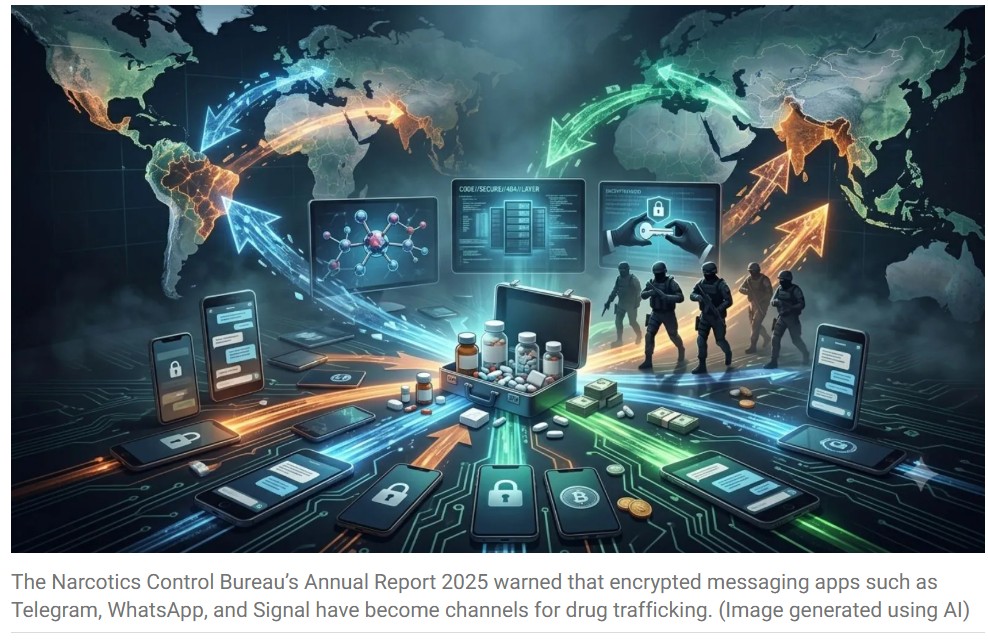
- 03 Jul 2026
In News:
The Union Home Minister recently chaired the 10th Apex-Level Meeting of the Narco-Coordination Centre (NCORD), during which the Vision Document on Drug Control (2026–2029) and the NCB Annual Report 2025 were released. Together, these documents provide a comprehensive roadmap for combating narcotics while highlighting emerging trafficking patterns and evolving security challenges.
Narco-Coordination Centre (NCORD)
The Narco-Coordination Centre (NCORD) is the apex coordination mechanism under the Ministry of Home Affairs (MHA) for combating drug trafficking and narcotics-related crimes. It brings together Central Ministries, State Governments, intelligence agencies, enforcement organisations, financial investigation agencies and border security forces to ensure a coordinated national response.
Vision Document on Drug Control (2026–2029)
The Vision Document outlines India's medium-term anti-drug strategy with the objective of reducing both the demand and supply of narcotic drugs. Built around the principle of "Detect, Disrupt and Destroy", the strategy marks a shift from merely arresting drug couriers to dismantling entire trafficking ecosystems by targeting suppliers, financiers, handlers, facilitators and organised syndicates.
A major objective of the roadmap is to identify and dismantle 100 major interstate and transnational drug cartels through intelligence-led investigations and coordinated operations.
Key Focus Areas
The strategy adopts a Whole-of-Government Approach, involving more than 40 Ministries, Central agencies, State Governments, educational institutions, civil society organisations and citizens under a unified national framework.
It also proposes several institutional reforms:
- Amendment of the NDPS Act and Rules to plug legal loopholes and strengthen regulation of emerging synthetic drugs.
- Establishment of exclusive NDPS Courts for speedy investigation and trial.
- Mandatory financial investigations in major narcotics cases and wider use of the PITNDPS Act, 1988 to attach proceeds of crime.
- Greater international cooperation through Red Corner Notices and intelligence sharing.
- Adoption of AI-based profiling, anti-drone technologies, container scanners and advanced surveillance across land, maritime and air routes.
- Special focus on controlling methamphetamine, mephedrone and other synthetic drugs, along with tighter regulation of precursor chemicals.
NCB Annual Report 2025: Major Findings
The report highlights the rapidly evolving nature of India's narcotics challenge. During 2025, enforcement agencies registered more than 1.48 lakh cases and seized over 1,200 tonnes of narcotic drugs, psychotropic substances, pharmaceuticals and precursor chemicals, indicating the increasing scale and complexity of drug trafficking.
One of the most significant developments is the shift in the global drug supply chain. Myanmar has overtaken Afghanistan as the principal source of illicit opium for India. While the Taliban's ban on poppy cultivation sharply reduced production in Afghanistan, cultivation expanded in Myanmar's Golden Triangle, particularly in Shan State, which has emerged as a major hub for both heroin and methamphetamine production.
Emerging Drug Trafficking Routes
India's North-Eastern region has become increasingly vulnerable due to its proximity to Myanmar and porous international borders.
The report identifies two major trafficking corridors:
- Manipur Corridor through National Highway-102, serving as the primary land route for heroin and methamphetamine.
- Champhai Corridor (Mizoram) connecting Myanmar's Chin State with Aizawl and Silchar.
Beyond narcotics, these routes are increasingly linked with arms smuggling, insurgent financing and organised crime, making them a significant internal security concern.
On the western frontier, trafficking networks continue to exploit land and maritime routes through Punjab, Rajasthan, Gujarat and Maharashtra. The most notable trend is the sharp rise in drone-based cross-border smuggling from Pakistan, with drone incidents increasing from 3 cases in 2021 to 305 cases in 2025, reflecting growing technological sophistication among trafficking networks.
Digitalisation of Drug Trafficking
The report highlights a growing shift towards encrypted digital platforms such as Telegram, WhatsApp and Signal for communication, drug advertising and financial transactions. The use of cryptocurrencies, anonymous accounts and auto-deleting messages has made detection and investigation significantly more difficult than conventional trafficking methods.
Another emerging concern is the spread of Nitazenes, a new generation of synthetic opioids reported to be several hundred times more potent than heroin, posing serious public health and law enforcement challenges.
Challenges
Despite significant enforcement efforts, India continues to face multiple challenges:
- Expansion of synthetic drug markets.
- Porous international borders.
- Growing use of drones and encrypted communication.
- Nexus between drug trafficking, organised crime and terrorism.
- Easy availability of precursor chemicals.
- Increasing digitalisation of trafficking networks.
Significance
The Vision Document on Drug Control (2026–2029) marks a strategic transformation in India's anti-narcotics policy by shifting the focus from isolated enforcement actions to dismantling organised criminal networks. Coupled with the findings of the NCB Annual Report 2025, it highlights that narcotics trafficking today is not merely a law-and-order issue but a multidimensional challenge involving internal security, terrorism, financial crime, cyber technology, border management and public health. Strengthening inter-agency coordination, leveraging technology, disrupting financial networks and expanding international cooperation will be central to achieving the vision of a Nasha Mukt Bharat (Drug-Free India).
Pre-Conception and Pre-Natal Diagnostic Techniques (PCPNDT) Act, 1994
- 02 Jul 2026
In News:
The PCPNDT Act, 1994 has come under renewed discussion amid calls by medical experts to modernise its provisions. They argue that while the Act has played a crucial role in preventing sex-selective abortions, certain provisions now restrict the use of portable and AI-enabled ultrasound devices for early disease diagnosis, particularly in underserved rural areas.
About the PCPNDT Act
The Pre-Conception and Pre-Natal Diagnostic Techniques (Prohibition of Sex Selection) Act, 1994, commonly known as the PCPNDT Act, was enacted to curb the misuse of prenatal diagnostic technologies for sex determination, which had led to a declining child sex ratio due to female foeticide. The Act was amended in 2003 to prohibit sex selection both before and after conception, thereby strengthening the legal framework against gender-biased practices.
The legislation regulates the use of prenatal diagnostic techniques while permitting them only for the detection of specific genetic abnormalities, chromosomal disorders, congenital malformations, haemoglobinopathies, and certain sex-linked diseases.
Key Provisions
The Act mandates that all genetic counselling centres, genetic laboratories, genetic clinics, ultrasound clinics, and imaging centres must be registered with the appropriate authority before conducting prenatal diagnostic procedures.
It strictly prohibits:
- Sex selection before or after conception.
- Disclosure of the sex of the foetus under any circumstances.
- Advertisement of facilities offering sex determination.
The Act also regulates the sale and installation of ultrasound machines by requiring manufacturers and suppliers to sell equipment only to registered facilities. Detailed patient records and documentation are mandatory for every prenatal diagnostic procedure, and violations attract stringent civil and criminal penalties, including imprisonment and cancellation of registration.
Achievements
The PCPNDT Act has established an important legal framework to combat female foeticide and has reinforced the constitutional commitment to gender equality. It has contributed to improved regulation of diagnostic centres and has played a role in the gradual improvement of the sex ratio at birth in several parts of the country.
Emerging Challenges
Rapid advances in medical technology have created new challenges for the existing legal framework. Modern portable ultrasound devices, particularly those equipped with high-frequency linear probes, are increasingly used for diagnosing conditions such as breast cancer, soft tissue disorders, and vascular diseases. These probes are technically incapable of imaging a foetus for sex determination, yet they remain subject to the same restrictions applicable to conventional obstetric ultrasound machines.
Experts also point to the growing role of Artificial Intelligence (AI) in ultrasound imaging. AI-assisted systems can support image acquisition, assist frontline health workers in diagnosis, and improve access to healthcare in remote regions. However, the current provisions of the PCPNDT Act do not distinguish between conventional obstetric ultrasound and purpose-specific diagnostic technologies.
Suggested Reforms
Medical experts have proposed updating the Act while preserving its original objective of preventing sex selection. Major recommendations include:
- Permitting the use of portable high-frequency ultrasound devices for community-based diagnosis of diseases such as breast cancer.
- Incorporating provisions for AI-enabled ultrasound systems that include technical safeguards preventing their use for prenatal sex determination.
- Revising regulations to facilitate early disease detection in underserved rural areas without compromising the Act's core objective.
Significance
The PCPNDT Act remains one of India's most important social legislations for addressing gender-biased sex selection and protecting the rights of the girl child. However, advances in portable imaging and Artificial Intelligence have transformed the scope of ultrasound technology beyond obstetric care. Balancing the Act's objective of preventing female foeticide with the need to improve access to life-saving diagnostic services, particularly in rural India, has emerged as an important policy challenge. A carefully calibrated regulatory framework can strengthen both women's rights and public health outcomes while ensuring that technological innovation is used responsibly.
Reforms 3.0 – Towards the Bharat Rate of Growth
- 01 Jul 2026
In News:
Experts have proposed an ambitious "Reforms 3.0" roadmap aimed at transforming India into a high-growth economy by sustaining a "Bharat Rate of Growth" of over 8% annually during the coming decade through large-scale adoption of Artificial Intelligence (AI), digital public infrastructure, and research-driven innovation.
What is Reforms 3.0?
Reforms 3.0 is a proposed policy framework that views Artificial Intelligence (AI) as a strategic national infrastructure rather than merely a commercial technology. Similar to the transformative economic liberalisation of 1991, the roadmap seeks to position AI as the next engine of economic growth by democratizing access to advanced computing resources, promoting indigenous innovation, and strengthening India's technological sovereignty.
The proposal advocates making open-source Large Language Models (LLMs) widely available and providing free AI processing tokens to leading universities, research institutions, and educational institutions to accelerate innovation across sectors.
Need for Reforms 3.0
The proposal highlights that India's investment in Research and Development (R&D) remains significantly below global standards.
India currently spends only 0.65% of GDP on R&D, compared to:
- China: 2.4%
- United States: 3.5%
- South Korea: 4.9%
- Israel: 5.4%
This low investment constrains technological innovation and limits India's ability to compete in frontier technologies such as Artificial Intelligence.
The report estimates that providing free AI access to India's leading universities, laboratories, and selected schools would require an annual expenditure of nearly USD 2 billion, equivalent to only 0.06% of GDP, which is substantially lower than existing expenditure on food and fertilizer subsidies.
Growth Opportunities
The roadmap argues that widespread access to AI can become a major driver of productivity and long-term economic growth.
Key opportunities include:
- Achieving a sustained GDP growth rate exceeding 8% through AI-enabled productivity gains.
- Building a highly skilled digital workforce by subsidising access to AI tools instead of focusing solely on conventional subsidies.
- Leveraging India's 1.4 billion-user digital market to negotiate favourable cloud computing partnerships with global technology companies.
- Promoting AI data sovereignty through deployment of open-source AI models hosted entirely within India.
- Creating a sustainable funding model where enterprise users subsidise free AI access for educational and public institutions.
India's Existing Digital Strengths
The proposed reforms build upon India's strong digital public infrastructure developed over the past decade.
Major achievements include:
- Aadhaar, covering approximately 1.38 billion citizens.
- Unified Payments Interface (UPI), processing nearly 250 billion transactions annually, accounting for almost half of the world's real-time digital payments.
- Significant reduction in mobile data costs from nearly USD 3 per GB to around USD 0.10 per GB, making digital services widely accessible.
- Emergence of indigenous AI models such as Sarvam, demonstrating India's capability to develop Large Language Models tailored to Indian languages.
Challenges
Despite its potential, the proposed roadmap faces several important challenges.
These include:
- Heavy dependence on expensive foreign AI hardware, particularly GPUs.
- High capital costs associated with developing sovereign computing infrastructure.
- Complex negotiations with global cloud service providers.
- Cybersecurity risks such as prompt injection attacks and AI hallucinations.
- Need for substantial engineering capacity to maintain large-scale AI infrastructure.
- Political and fiscal challenges in reallocating public expenditure towards digital infrastructure.
Way Forward
The report recommends several policy measures to operationalise the vision.
These include:
- Diversifying computing infrastructure through a 40:30:30 hardware strategy, reducing dependence on a single technology provider.
- Formulating a National AI Token Policy to provide affordable AI computing resources.
- Launching pilot programmes providing free AI tokens to premier institutions such as IITs and IISc.
- Developing foundational AI models in all 22 Scheduled Languages to improve accessibility.
- Recognising AI computing infrastructure as a strategic national asset, similar to investments in the space and nuclear sectors.