
Carbon Border Adjustment Mechanism (CBAM)
- 04 Jul 2026
In News:
The Government of India is reportedly preparing a scheme to reimburse 90% of the Carbon Border Adjustment Mechanism (CBAM) compliance costs incurred by MSMEs exporting to the European Union (EU). The initiative aims to help small exporters remain competitive in the EU market while meeting new carbon reporting requirements.
What is the Carbon Border Adjustment Mechanism (CBAM)?
The Carbon Border Adjustment Mechanism (CBAM) is a carbon pricing mechanism introduced by the European Union (EU) to prevent carbon leakage—the relocation of carbon-intensive industries to countries with weaker climate regulations.
Under CBAM, importers of specified goods into the EU must purchase CBAM certificates corresponding to the embedded carbon emissions generated during the production of those goods. This ensures that imported products bear a carbon cost similar to that paid by EU manufacturers under the EU Emissions Trading System (EU ETS).
The transitional phase began in October 2023, during which only emissions reporting was mandatory. From 1 January 2026, importers are required to purchase CBAM certificates based on verified emissions. Initially, CBAM covers iron and steel, aluminium, cement, fertilisers, electricity and hydrogen, with its scope expected to expand gradually.
How Does CBAM Work?
Exporters supplying CBAM-covered products to the EU must report the embedded emissions generated during production. These include:
- Direct emissions from manufacturing processes.
- Indirect emissions from electricity consumption (for specified sectors).
If verified emissions data is unavailable, the European Commission applies default emission values with progressively increasing mark-ups—10% in 2026, 20% in 2027 and 30% from 2028 onwards—substantially increasing compliance costs.
Challenges for Indian MSMEs
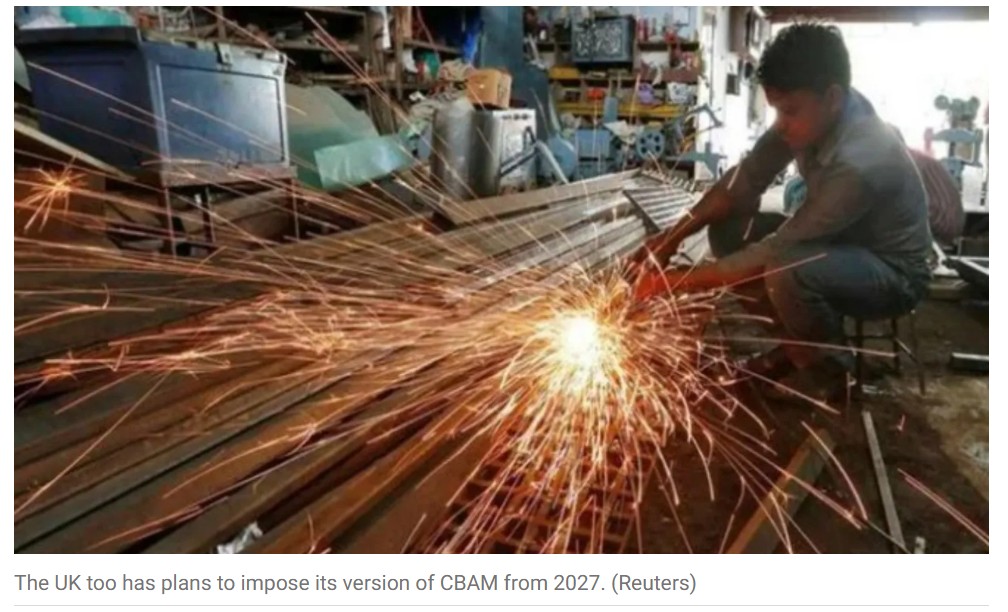
For Indian MSMEs, the primary challenge is compliance rather than taxation. Exporters must establish systems for carbon accounting, emissions monitoring, third-party verification, digital reporting and data management. Industry estimates suggest that compliance alone could cost ?15–20 lakh per MSME.
Unlike large firms, MSMEs often lack technical expertise, financial resources, dedicated sustainability teams and digital infrastructure. Since these are largely fixed costs, smaller exporters face a disproportionate burden, reducing their competitiveness in European markets.
Government's Proposed Support Scheme
To address these challenges, the Government proposes to reimburse 90% of eligible CBAM compliance costs for MSMEs. The scheme is expected to support the development of carbon accounting systems, third-party verification, reporting infrastructure and digital compliance, thereby enabling exporters to retain access to the EU market.
Impact on India
CBAM is particularly significant because India is among the world's leading producers of steel and aluminium. According to an ICRIER study, India's iron and steel exports to the EU could decline by nearly 24%, while overall global exports of the sector may fall by 5.7%. Fertilisers, aluminium and fabricated metal products are also expected to be adversely affected.
At the same time, CBAM presents an opportunity to accelerate India's transition towards low-carbon manufacturing, improve energy efficiency, strengthen carbon accounting systems and enhance long-term export competitiveness as sustainability standards become central to global trade.
Way Forward
India needs a balanced strategy that combines financial support for MSMEs, technical assistance for carbon accounting, stronger domestic emissions verification infrastructure and incentives for cleaner production technologies. Simultaneously, continued engagement with the EU is essential to address concerns of developing countries while safeguarding market access for Indian exporters.
Conclusion
The Carbon Border Adjustment Mechanism represents a major shift in global trade, linking market access with climate performance. While it increases compliance costs for Indian exporters—particularly MSMEs—it also creates an opportunity to modernise manufacturing, promote sustainable production and strengthen India's competitiveness in an increasingly carbon-conscious global economy.