
India’s Central Asia Outreach
- 31 Aug 2026
In News:
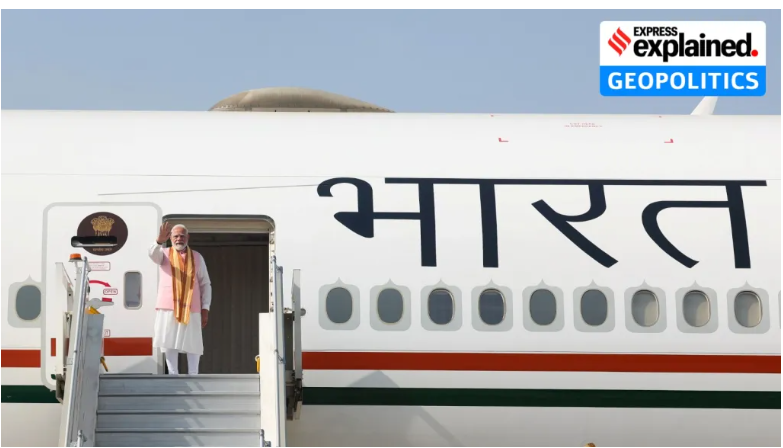
Prime Minister Narendra Modi’s visit to Uzbekistan (August 29–30), followed by participation in the 26th Shanghai Cooperation Organisation (SCO) Summit in the Kyrgyz Republic (August 31–September 1), underscores India’s sustained engagement with Central Asia. India’s focused regional outreach began with the “Connect Central Asia” policy in 2012, gaining further momentum with PM Modi’s 2015 visit to all five Central Asian republics—Kazakhstan, Kyrgyzstan, Uzbekistan, Tajikistan and Turkmenistan.
Why Central Asia Matters to India
Central Asia is strategically important because of its geographical location, natural resources and evolving geopolitical significance. Historically regarded as Russia’s strategic backyard, the region has increasingly attracted China and other major powers.
Its substantial resource base offers opportunities for India’s energy and mineral security. Kazakhstan possesses significant uranium, coal and metallic mineral reserves; Turkmenistan has major natural-gas reserves; while Uzbekistan combines substantial gold, uranium and gas resources. Kyrgyzstan and Tajikistan offer considerable hydropower potential.
For India, the region is therefore important for diversifying energy and critical-mineral supplies and expanding economic partnerships.
Strategic and Security Significance
The Taliban’s return to power in Afghanistan has increased the importance of Central Asia in India’s counter-terrorism and regional-security calculations. Concerns over terrorism, extremism and the possible spread of instability from Afghanistan make security cooperation with Central Asian states increasingly significant.
At the same time, China’s expanding economic and strategic footprint, particularly through the Belt and Road Initiative, has intensified the geopolitical competition for influence in the region. India’s engagement seeks to preserve strategic space and strengthen its position in this important part of its extended neighbourhood.
Connectivity: India’s Major Challenge
The biggest structural constraint is lack of direct land access to Central Asia because India does not have transit through Pakistan. Consequently, connectivity has become a central pillar of India’s regional strategy.
India seeks to use Iran’s Chabahar Port and integrate it with the International North-South Transport Corridor (INSTC) to create an alternative route connecting India with Iran, Central Asia and beyond. Better connectivity can facilitate trade, access to resources and greater Indian economic presence.
Uzbekistan and Civilisational Links
Uzbekistan occupies a particularly important place in India’s outreach. Historical connections date back to the Kushana period, while the Buddhist monastery at Kara Tepa in Termez reflects the spread of Buddhism into Central Asia. Linguistic and culinary similarities further demonstrate long-standing cultural exchanges.
Economic engagement is also expanding, with bilateral trade approaching $1 billion in 2025–26, placing India among Uzbekistan’s major trading partners.
Way Forward
India needs to move beyond diplomatic engagement towards institutionalised economic partnerships, critical-mineral cooperation, connectivity projects, defence and counter-terrorism coordination, digital and pharmaceutical cooperation, and greater private-sector participation. At the same time, engagement should remain sensitive to the strategic interests of Central Asian states and avoid reducing the relationship merely to competition with China.
Conclusion
Central Asia is increasingly important to India as a bridge between South Asia, Eurasia and Europe. Its resources, security significance, connectivity potential and civilisational links make it a critical component of India’s extended-neighbourhood policy. Sustained engagement through bilateral mechanisms and the SCO, supported by practical connectivity and economic projects, can help India convert its longstanding diplomatic goodwill into durable strategic influence.
Reducing Human–Elephant Conflict

- 30 Aug 2026
In News:
The Ministry of Environment, Forest and Climate Change (MoEFCC), during the 23rd Steering Committee Meeting of Project Elephant, released a Regional Action Plan for Comprehensive Understanding and Management of Human–Elephant Conflict (HEC). The plan adopts a landscape-based approach that seeks to address the ecological drivers of conflict alongside human safety and livelihood concerns.
Understanding Human–Elephant Conflict
Human–Elephant Conflict refers to negative interactions between humans and elephants resulting in human deaths or injuries, elephant mortality, crop and property damage and livelihood losses. Increasing pressure on elephant habitats, fragmentation of corridors and changes in vegetation can bring elephants into closer contact with human settlements and agricultural areas.
Key Recommendations
1. Conflict-based landscape zoning:Elephant landscapes should be classified into Elephant Conservation Zones, Human–Elephant Co-existence Zones and Human–Elephant Management Zones, according to land use and conflict intensity. This allows differentiated interventions rather than a uniform approach.
2. Habitat restoration and invasive-species management:Core habitats should be strengthened through fodder enrichment, water augmentation and ecological restoration, thereby improving natural food availability and reducing elephant movement into farmlands. Invasive plant species that replace natural fodder should be controlled through mechanical removal and, where necessary, carefully regulated chemical or biological methods subject to ecological safeguards.
3. Protecting elephant corridors:Elephant movement routes and corridors require stronger protection through ecological assessment and landscape-level planning. Development activities in critical movement pathways should be assessed for their potential to intensify conflict.
4. Spatial risk assessment:Mapping conflict hotspots, elephant movement patterns and surrounding land use can help authorities identify high-risk locations and deploy preventive measures more efficiently.
5. Community-based management:Communities living around elephant habitats should be treated as partners in conservation. Local institutions need greater capacity for early warning, rapid response and conflict mitigation, while livelihood security and timely compensation remain important for building community support.
6. Targeted intervention in chronic conflict zones:In landscapes experiencing persistent conflict, measures such as translocation or rehabilitation of problematic elephants, supported by technology and adaptive management, may be considered where appropriate.
Way Forward
HEC cannot be addressed merely by driving elephants back into forests. A sustainable strategy requires habitat restoration corridor protection scientific risk mapping community participation targeted technology-based interventions. Conflict management must also be integrated into infrastructure and land-use planning.
Conclusion
The emerging approach marks a shift from reactive conflict control to preventive coexistence. Protecting elephant habitats and movement corridors while securing human livelihoods can simultaneously advance biodiversity conservation, ecological security and human welfare. The success of Project Elephant will ultimately depend on implementing such measures at the landscape and community level, rather than treating individual conflict incidents in isolation.
Rural Employment Guarantee in Limbo
- 29 Aug 2026
In News:
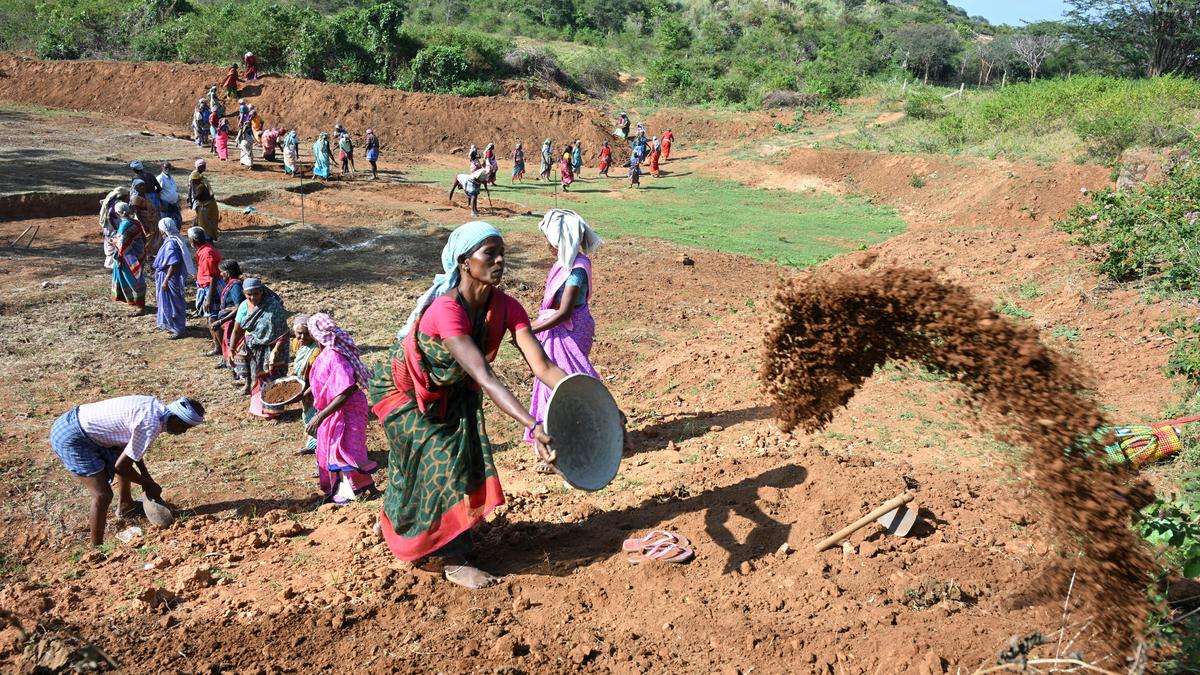
The transition from the Mahatma Gandhi National Rural Employment Guarantee Act (MGNREGA), 2005 to the Viksit Bharat–Guarantee for Rozgar and Ajeevika Mission (Gramin) (VB-G RAM G) Act, 2025 has raised concerns over a sharp contraction in rural employment generation.
The new framework increases the statutory employment guarantee from 100 to 125 days per household, but administrative delays, changes in financing and new compliance requirements have reportedly disrupted work generation during the transition.
The Emerging Employment Gap
During April–July 2026, only around 70 crore person-days of employment were generated, about 43% below the average of 2024–25 (128 crore) and 2025–26 (119 crore).
The contraction has been particularly severe in poorer States. In 10 of 19 major States, including Uttar Pradesh, Madhya Pradesh and Jharkhand, employment generation reportedly fell by 60–85%. July 2026 alone recorded only around 8.3–9 crore person-days, more than 40% lower than July 2025.
This is significant because the pre-monsoon agricultural slack season traditionally generates a large share of annual rural employment, leaving landless labourers and vulnerable households with limited alternatives.
MGNREGA vs VB-G RAM G
The transition represents a substantial change in the architecture of the employment guarantee.
Under MGNREGA, employment was a demand-driven legal entitlement, with the Centre bearing the full cost of unskilled wages. The new VB-G RAM G framework provides 125 days of guaranteed work, but operates as a Centrally Sponsored Scheme, with a 60:40 Centre-State funding ratio for general States and 90:10 for Himalayan and North-Eastern States.
It also introduces normative allocations, effectively creating State-wise expenditure ceilings, integrates rural employment planning with Viksit Gram Panchayat Plans, and permits a work pause of up to 60 days during peak agricultural seasons.
Thus, the reform seeks to link employment generation with durable rural infrastructure and decentralised planning, but simultaneously introduces greater fiscal and administrative constraints.
Why Has Implementation Slowed?
- Delayed rule-making: Although the Act was passed in December 2025, draft rules emerged only in late May 2026 and were finalised at the end of June, creating an operational gap during the initial months of the financial year.
- Fiscal constraints: The 60:40 cost-sharing arrangement places a greater financial burden on States. Cash-strapped States may consequently delay approval of works or release of funds.
- Technology-related exclusion: Mandatory facial recognition, biometric authentication and digital muster rolls can create difficulties in areas with weak connectivity or inadequate digital infrastructure.
- Normative spending ceilings: Unlike the earlier demand-driven framework, predetermined allocations may incentivise local administrations to restrict the opening of works when allocations approach their limits.
Budget–Implementation Disconnect
The Union Budget 2026–27 allocated ?95,692 crore for VB-G RAM G, with the overall projected expenditure reaching around ?1.5 lakh crore after accounting for State contributions. Yet, the reported contraction in actual employment generation illustrates that budgetary allocation alone cannot guarantee employment access.
The key challenge is ensuring that financial resources translate into timely work opportunities at the Gram Panchayat level.
Way Forward
The transition needs to protect the rights-based character of rural employment while improving administrative efficiency. Centre-State fund flows should be streamlined, potentially through revolving mechanisms that prevent wage payments from being held up by reconciliation issues.
Digital verification should have offline and non-biometric alternatives so that technology does not become a barrier to accessing a statutory entitlement. Panchayats also require greater administrative capacity, digital infrastructure and training to prepare and implement Viksit Gram Panchayat Plans.
Most importantly, normative allocations should function as planning benchmarks rather than rigid barriers to employment when genuine demand rises. Regular social audits, effective grievance redressal and enforcement of the unemployment allowance when work is not provided within 15 days of demand are essential safeguards.
Conclusion
The VB-G RAM G Act seeks to modernise rural employment policy by combining a higher employment guarantee with rural infrastructure and decentralised planning. However, the transition demonstrates a crucial lesson: expanding a statutory entitlement on paper is meaningful only when institutional capacity, financing and administrative systems enable citizens to exercise it in practice. Protecting demand-driven access while resolving fiscal, technological and implementation bottlenecks will be central to making the new rural employment guarantee an effective social-security instrument.
UDISE 2025–26: India’s Changing School Education System
- 27 Aug 2026
In News:
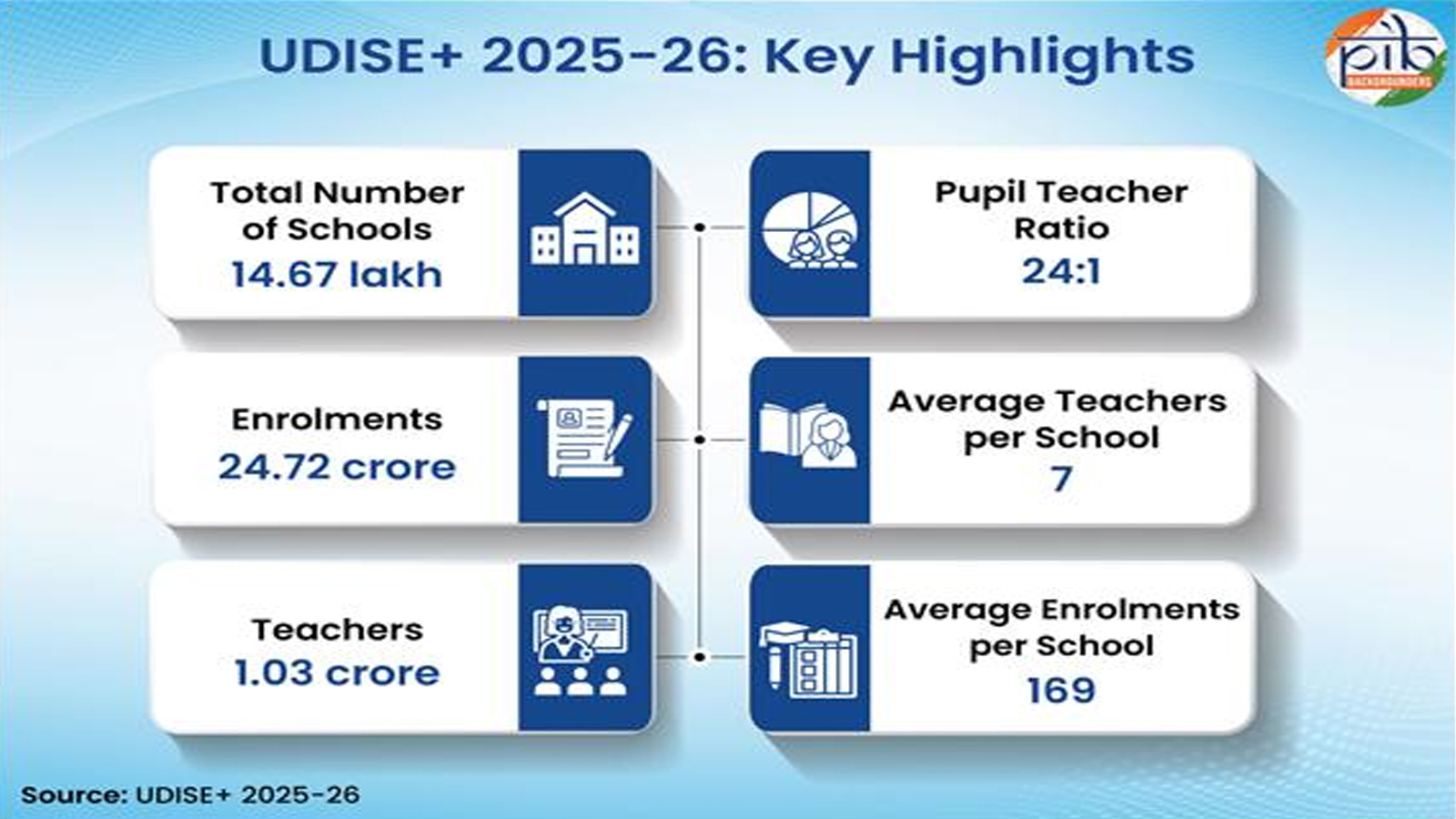
The Department of School Education and Literacy (DoSE&L) released the UDISE 2025–26 Report, providing comprehensive data on India’s school education system. It covers 14.67 lakh schools, 1.03 crore teachers and 24.72 crore students.
UDISE (Unified District Information System for Education Plus) is a major data platform for monitoring school education and supports evidence-based planning, resource allocation and implementation of the National Education Policy (NEP) 2020.
Key Findings
1. Teacher availability has improved:The overall Pupil–Teacher Ratio (PTR) is 24:1, within the NEP 2020 benchmark of 30:1. PTR is 10:1 at the Foundational stage and 21:1 at the Secondary stage.
2. Enrolment and retention:The Gross Enrolment Ratio (GER) is 89.6% at the Middle stage and 71.7% at the Secondary stage, showing wider access but continued scope for improving participation at higher levels.
- Retention rates are 98.5% at Foundational, 91.1% at Preparatory, 83.7% at Middle and 51.9% at Secondary level. The transition rate to Secondary education is 88.3%.
- Dropout rates have declined to 1.8% at Preparatory and 7% at Secondary level, although the Middle-stage dropout rate marginally increased to 3.6%.
3. Better utilisation of school resources:The number of single-teacher schools declined by about 3% to 1,00,843, while zero-enrolment schools fell by 29% to 5,663.
4. Gender and social inclusion:Girls account for 48.4% of total enrolment, while women constitute 54.9% of teachers. SC and ST students together represent 27.7% of enrolment, indicating significant participation of historically disadvantaged groups.
5. Infrastructure and digital connectivity:
- Electricity: 95% schools
- Safe drinking water: 99.5%
- Girls' toilets: 98.5%
- Libraries: 90.5%
- Computer access: 69.9%
- Internet connectivity: 67.4%
Significance
UDISE provides granular, school-level data that can help identify regional and stage-wise gaps, improve resource allocation and monitor educational outcomes. The improvements in teacher availability, retention, gender participation, basic infrastructure and digital connectivity indicate progress towards more accessible, inclusive and technology-enabled school education.
Indian Bond Market: Resilience Amid Global Volatility
- 26 Aug 2026
In News:
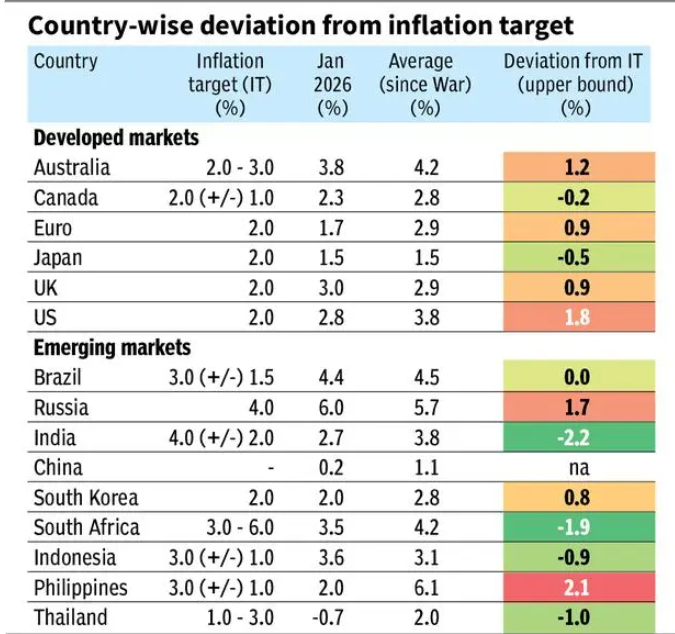
Despite heightened global financial volatility, India’s government bond market has remained relatively stable. During the six months up to August 14, 2026, the 10-year Indian benchmark yield increased by only 8 basis points, compared with substantially larger increases in major economies. This resilience reflects the interplay of benign domestic inflation, stable growth, fiscal credibility and targeted RBI interventions.
Understanding Bonds and Bond Yields
A government bond is a debt instrument through which the government borrows for a specified period, paying interest and returning the principal at maturity. Bond prices and yields move inversely: when demand for bonds falls, prices decline and yields rise.
Government bond yields are important benchmarks for the broader financial system because they influence borrowing costs for banks, companies and households. Rising yields may indicate expectations of higher inflation, tighter monetary policy or fiscal stress, while relatively stable yields can signal investor confidence in macroeconomic stability.
India’s Relative Resilience
Over the six months to August 14, 2026, 10-year yields rose by:
- US: 60 basis points
- Japan: 66 basis points
- UK: 56 basis points
- South Korea: 72 basis points
- Indonesia: 78 basis points
- Philippines: 61 basis points
- India: only 8 basis points
India nevertheless faced significant external pressures, including the West Asia conflict and higher energy prices, alongside concerns surrounding rainfall and El Niño. These were offset by relatively contained inflation, resilient economic growth, a stable fiscal outlook and improvements in the external sector.
Monetary Policy and Inflation
- The RBI’s Monetary Policy Committee (MPC) maintained a neutral stance for three consecutive meetings rather than following the rate-hiking cycle adopted by several emerging economies.
- India's comparatively favourableinflation-growth combination provided this policy space. Supply-side interventions and management of second-round effects helped limit the transmission of energy-price shocks into broader inflation. Particularly moderate core inflation further reduced the immediate need for monetary tightening.
- Thus, the RBI could adopt a wait-and-watch, data-dependent approach rather than responding to external pressures through immediate rate hikes.
RBI’s Targeted Liquidity and Foreign-Exchange Measures
Instead of relying exclusively on the policy rate, the RBI used targeted measures to strengthen dollar inflows through channels such as:
- FCNR(B) deposits
- External commercial borrowings
- Overseas foreign-currency borrowings
These measures attracted approximately $56.8 billion between June 8 and August 13, including around $52.3 billion through FCNR(B).
The resulting foreign-exchange inflows also improved domestic banking liquidity. Average surplus liquidity increased from around ?1.3 lakh crore in July to ?3.2 lakh crore during August 1–13. Easier liquidity pushed overnight rates towards the lower end of the policy corridor.
The stronger deposit base also reduced banks’ dependence on relatively expensive market-based funding such as certificates of deposit.
Foreign Investment in Government Debt
Foreign investor sentiment received a boost from measures such as tax exemptions for foreign debt investors and efforts by the RBI to streamline investment restrictions and broaden eligible securities. Debt inflows reached $5.6 billion in June, the highest monthly inflow since January 2020.
However, the July 31 deferment of India's inclusion in the Bloomberg Global Aggregate Index temporarily weakened sentiment and delayed the anticipated benefits of index-linked foreign inflows.
Significance and Outlook
Stable bond yields have several benefits:
- For the government: lower and more predictable borrowing costs amid substantial fiscal expenditure.
- For businesses and households: greater stability in financing costs.
- For the financial system: stronger liquidity and improved banking-sector funding conditions.
- For monetary policy: greater room for the MPC to respond to actual domestic conditions rather than external market pressure.
Going forward, the interest-rate trajectory will depend particularly on West Asia developments, El Niño/monsoon conditions and US Federal Reserve policy. The policy path is therefore likely to remain calibrated and data-dependent.
Conclusion
India’s relatively stable bond market amid global turbulence reflects the strength of its inflation-growth mix, fiscal credibility and targeted policy interventions. The episode also demonstrates that macroeconomic resilience need not depend solely on conventional interest-rate adjustments. Maintaining credible fiscal management, stable inflation and deepening the domestic bond market will be crucial for sustaining this resilience.
Crop Cutting Experiments and the Credibility of India’s Agricultural Data
- 25 Aug 2026
In News:
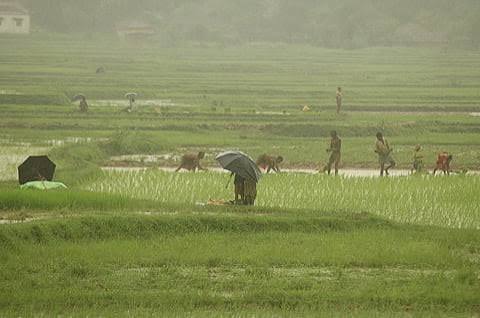
The NSO’s Annual Report on Improvement of Crop Statistics (ICS) Scheme, 2023–24 has raised concerns over procedural deficiencies in Crop Cutting Experiments (CCEs), which form the principal basis for estimating crop yields and, consequently, agricultural production in India.
How Crop Production is Estimated
- India’s crop production estimates are based on:Production = Area under the crop × Average yield per hectare
- Average yield is primarily estimated through CCEs, in which a scientifically selected crop plot is harvested, threshed and weighed. The results are then scaled from the local level to district, State and national estimates.
- The Improvement of Crop Statistics (ICS) Scheme, launched in 1973–74, monitors the quality of CCEs. State Agricultural Statistics Authorities (SASAs) conduct the experiments, while the Field Operations Division of MoSPI provides technical guidance. The NSO uses the results to prepare independent estimates of yield and statistical error for 33 major crops, which also help verify State-level estimates.
- The scale of the exercise has expanded substantially—from 1.73 lakh CCEs in 1973–74 to more than 11.62 lakh in 2023–24. However, Nagaland and Sikkim do not conduct Crop Estimation Surveys.
Key Findings of the 2023–24 Assessment
The report highlights significant weaknesses in field-level implementation:
- Only 72% of CCEs were conducted according to prescribed scientific procedures, while 28% showed procedural lapses, rule violations or other errors.
- Around 10% of CCEs contained serious errors in recording ancillary information such as irrigation, seed variety and fertiliser use. Such information is important for analysing yield differences and agricultural trends.
- Supervision rates ranged between 80% and 88% across seasons, leaving a substantial proportion of experiments without supervision.
- Capacity constraints are particularly evident in some States: 41% of CCEs in Jharkhand and 40% in Uttar Pradesh were conducted by untrained personnel.
These deficiencies raise questions about the reliability and consistency of official agricultural statistics.
Why Reliable CCE Data Matters
- The credibility of crop estimates has consequences far beyond statistical reporting. Inaccurate yield data can distort MSP procurement requirements, foodgrain buffer-stock planning, PDS management and decisions on agricultural imports and exports.
- CCE-based estimates also have implications for crop insurance, as several States use yield estimates for determining insurance claims. Errors can consequently lead to either inadequate compensation or excessive payouts.
- At the broader level, inconsistencies in official production statistics can affect India's credibility in international food-security assessments and agricultural trade negotiations.
- The problem also highlights a dimension of cooperative federalism: since States are responsible for conducting CCEs, variations in training, supervision and implementation capacity can produce uneven data quality across the country.
Way Forward
- India needs to improve both the scientific rigour and technological architecture of agricultural data collection. CCE plans should be updated regularly and field selection completed on time to prevent arbitrary replacement of villages or plots.
- 100% supervision, supported by geo-tagging, mobile-based reporting and real-time monitoring, can improve accountability. Only trained personnel should conduct CCEs, with periodic refresher training and clearly defined responsibility for errors.
- Most importantly, traditional field-based CCEs should increasingly be complemented by remote sensing, satellite imagery and digital agriculture technologies. Such tools can serve as independent cross-validation mechanisms rather than immediately replacing ground-based observations.
Conclusion
CCEs remain indispensable to India's agricultural statistics, but the credibility of the final production estimate is only as strong as the quality of the experiment on the ground. Strengthening State capacity, supervision, training and digital verification is therefore essential for reliable agricultural data—and consequently for better food-security, insurance, procurement and trade policy.
Parliamentary Committees: Do JPCs Really Strengthen Legislative Scrutiny?
- 24 Aug 2026
In News:
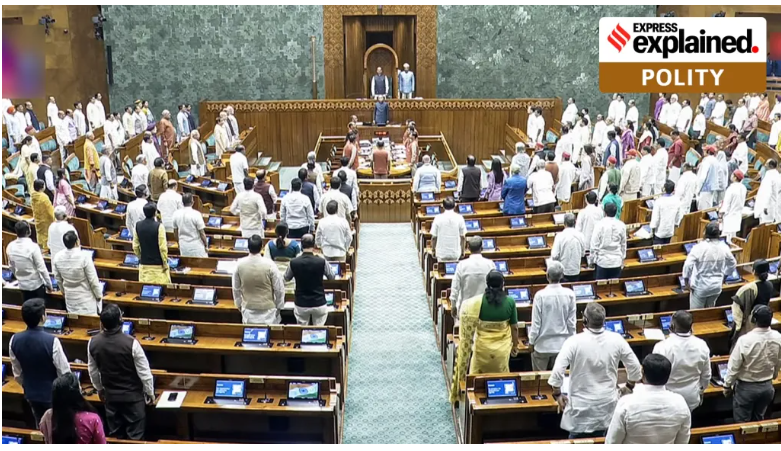
The Lok Sabha has referred the Foreign Contribution (Regulation) Amendment Bill, 2026 to a Joint Parliamentary Committee (JPC) amid objections to provisions such as the retrospective vesting of foreign-funded assets in a government-designated authority. The move has renewed debate over the effectiveness of parliamentary committees when the ruling party enjoys a majority within them.
Why Parliamentary Committees Matter
Parliamentary committees address a fundamental limitation of the legislature: limited parliamentary time amid increasingly complex legislation and public policy. Smaller committees can examine Bills clause by clause, question officials, summon experts and stakeholders, and scrutinise government action in greater depth.
Their philosophy is one of “scrutiny, not initiative” and “accountability, not prior approval.” Committees therefore complement rather than replicate the political contest on the floor of Parliament.
Major forms include:
- Department-related Standing Committees – examine ministries, policies and programmes on an ongoing basis.
- Financial Committees – scrutinise public expenditure and financial accountability.
- Select Committees – examine a specific Bill within one House.
- Joint Parliamentary Committees – comprise members from both Houses and are constituted for a particular Bill or issue.
Although committees can call for persons, papers and records and take evidence, their recommendations are advisory and not binding on the government.
The Problem of Ruling-Party Dominance
JPC composition broadly reflects the numerical strength of political parties in Parliament. Consequently, a ruling party or alliance with a Lok Sabha majority generally has a majority within the committee, while the chairperson is usually from the government benches. Decisions are taken by majority vote, with the chairperson having a casting vote in case of a tie.
Nevertheless, Opposition members retain important procedural tools. They can seek witnesses, question officials, place evidence on record, propose amendments to reports and submit dissent notes.
The limitation arises at the final stage: committee scrutiny can influence legislation, but cannot compel the government to accept its recommendations.
Do JPCs Actually Change Laws?
The record suggests that JPCs can produce meaningful changes, although they rarely overturn the government's central legislative objective.
The Stock Market Scam JPC (2001–02) made recommendations on regulatory surveillance and coordination between SEBI and stock exchanges, with the government reporting action on 236 recommendations. The Pesticide Residues JPC (2004) highlighted unacceptable pesticide levels in soft drinks and contributed to subsequent regulatory action.
More recently, recommendations of the JPC on the Multi-State Co-operative Societies (Amendment) Bill, 2022 were largely incorporated into the final legislation, while the Biological Diversity (Amendment) Bill, 2021 saw certain safeguards and clarifications incorporated.
In the case of the FRDI Bill, 2017, concerns raised during JPC scrutiny over depositor protection and the controversial “bail-in” provisions were followed by the eventual withdrawal of the Bill, although wider political and public opposition also played a role.
However, politically sensitive matters demonstrate the limits of committee influence. The Personal Data Protection Bill JPC, Citizenship (Amendment) Bill, 2016 JPC, and 2G JPC illustrate instances where Opposition dissent did not substantially alter the government's broader position.
Declining Use of Committee Scrutiny
The larger concern is the declining proportion of Bills referred to parliamentary committees. PRS Legislative Research data cited in the source shows referrals falling from approximately 60% in the 14th Lok Sabha (2004–09) and 71% in the 15th (2009–14) to 25% in the 16th (2014–19) and just 16% in the 17th Lok Sabha (2019–24).
Thus, while JPCs continue to be used for particularly contentious legislation, routine committee scrutiny has weakened considerably.
Significance of the FCRA Bill Referral
The FCRA Bill could have been passed through the Lok Sabha using the government's numerical majority. Referral to a JPC nevertheless provides a formal institutional mechanism for stakeholders to present concerns, obtain explanations and place evidence on record.
The larger significance is procedural rather than political: a JPC may not prevent majoritarian legislation, but it can compel greater examination, expose weaknesses and create a documented basis for future legislative or judicial scrutiny.
Way Forward
Parliamentary committees can be strengthened through greater and more predictable referral of Bills, adequate research support, wider stakeholder consultation, transparent recording of government responses, and stronger follow-up mechanisms. Greater space for Opposition dissent can also improve the quality of legislative deliberation.
Conclusion
JPCs are not a veto against parliamentary majorities. Their principal value lies in forcing governments to explain, defend and sometimes modify legislation under sustained scrutiny. The FCRA referral therefore represents a modest but important reaffirmation of deliberative democracy over purely numerical majoritarianism. The deeper institutional challenge is to reverse the broader decline in committee-based legislative scrutiny.
India’s Defence Transformation: From Import Dependence to Strategic Self-Reliance
- 23 Aug 2026
In News:
India’s defence sector is undergoing a structural transformation towards Atmanirbharta, technological capability and greater private-sector participation. The objective is not merely to reduce imports but to build an integrated domestic ecosystem capable of designing, producing and exporting advanced defence systems.
Strengthening the Defence Industrial Base
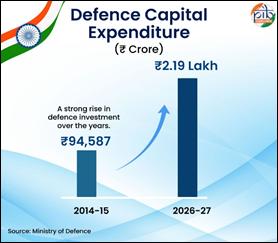
Defence expenditure has increased from ?2.53 lakh crore in 2013–14 to ?7.85 lakh crore in 2026–27, while capital expenditure rose from ?94,588 crore to ?2.19 lakh crore, supporting military modernisation. Indigenous defence production reached a record ?1.78 lakh crore in FY 2025–26, with the private sector contributing 24%.
Defence exports have expanded dramatically, from ?686 crore in 2013–14 to ?38,424 crore in 2025–26, with Indian products reaching 80 countries. The government targets ?3 lakh crore defence production and ?50,000 crore exports by 2029.
Innovation and Indigenisation
India is increasingly opening defence R&D to industry, startups and academia. 25% of the defence R&D budget has been opened to these participants since 2022–23. Schemes such as iDEX, ADITI and the Technology Development Fund (TDF) support indigenous development of critical technologies. As of March 2026, iDEX had facilitated 551 design and development contracts involving 676 innovators, while 80 TDF projects worth ?334 crore were under implementation.
The Positive Indigenisation Lists cover 5,521 items, while Srijan-DEEP provides a digital platform connecting domestic vendors with indigenisation opportunities. Defence Industrial Corridors in Uttar Pradesh and Tamil Nadu are further developing regional manufacturing ecosystems.
Acquisition Reforms and Operational Capability
The Defence Acquisition Council (DAC) has accorded Acceptance of Necessity worth over ?6 lakh crore for DRDO-designed systems to be manufactured by Indian industry. Indigenous procurement of platforms such as Tejas Mk-1A and LCH Prachand reflects the shift towards domestic design and production.
Operational self-reliance is also improving: the Army has achieved about 91% ammunition self-sufficiency, while indigenous missile, air-defence, hypersonic and naval capabilities are expanding. The commissioning of 12 warships and submarines, including platforms with high indigenous content, demonstrates growing naval industrial capacity.
Challenges and Way Forward
India must move beyond production targets towards technology ownership, higher domestic value addition and indigenous critical components. Persistent challenges include dependence on specialised imports, limited R&D-industry linkages, technology gaps and the need for skilled human capital.
The way forward lies in strengthening public-private R&D, MSME integration, defence startups, technology transfer and testing infrastructure, while ensuring predictable procurement and export policies. A deeper domestic defence ecosystem can simultaneously enhance national security, technological sovereignty, high-skilled employment and India’s strategic autonomy, supporting the vision of a technologically advanced defence power by 2047.
PM Jan Dhan Yojana
- 22 Aug 2026
In News:
The Pradhan Mantri Jan Dhan Yojana (PMJDY), launched in 2014 as a national mission for financial inclusion, has evolved from providing basic bank accounts to becoming a foundational pillar of India’s JAM (Jan Dhan–Aadhaar–Mobile) architecture and Digital Public Infrastructure (DPI). Its broader objective is to democratise access to formal finance irrespective of income, social status or geography.
From Account Ownership to Financial Inclusion
PMJDY has brought banking closer to previously excluded sections through zero-balance accounts, RuPay debit cards, overdraft facilities and integration with government welfare programmes. According to the article, more than 58.63 crore accounts hold cumulative deposits exceeding ?3.08 lakh crore, with an average balance of about ?5,200.
Its inclusion has a strong gender and rural dimension: around 55.74% of accounts are held by women, while nearly 77.8% are concentrated in rural and semi-urban areas. Thus, PMJDY has expanded not merely banking access but also women’s financial autonomy and the geographic reach of formal finance.
The scheme also functions as an important delivery mechanism for Direct Benefit Transfers (DBT), reducing intermediary leakages and enabling welfare payments to reach beneficiaries directly. Its integration with PMJJBY, PMSBY and Atal Pension Yojana (APY) has further expanded access to social-security instruments.
Challenges
Despite its scale, financial inclusion cannot be equated with account ownership. A section of accounts remains dormant or functions primarily as a subsidy-receipt channel. The overdraft facility of up to ?10,000 remains underutilised because of limited awareness and bank-level screening.
Last-mile delivery also faces connectivity problems, micro-ATM failures and cash shortages, particularly in remote regions. Growing digital transactions create additional concerns regarding cyber fraud, phishing and inadequate financial literacy. For banks, servicing numerous low-balance accounts also raises questions of operational sustainability.
Way Forward
The next phase should shift from “access to banking” towards “meaningful financial participation.” Transaction histories can be leveraged for responsible micro-credit, savings and small-ticket investments. Strengthening the Business Correspondent (Bank Mitra) network, improving digital and financial literacy, and enhancing consumer protection against cyber fraud are essential.
Greater integration of Jan Dhan accounts with insurance, pensions and emerging digital-credit systems can deepen financial security while maintaining safeguards against over-indebtedness.
Conclusion
PMJDY has transformed the bank account into an instrument of financial citizenship, supporting DBT, women’s empowerment and social-security delivery. The central challenge now is to ensure that inclusion translates into regular savings, affordable credit, insurance, pensions and productive economic participation, making financial democracy a substantive component of inclusive growth and Viksit Bharat@2047.
India’s Manufacturing Transformation
- 21 Aug 2026
In News:
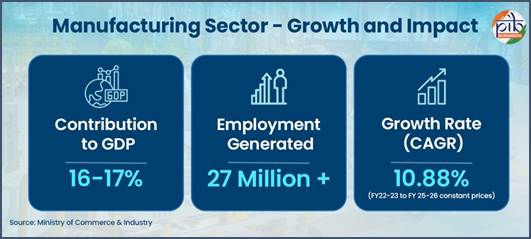
India’s manufacturing sector is increasingly becoming a pillar of Atmanirbhar Bharat and Viksit Bharat, with policy support shifting from import substitution towards globally competitive, technology-intensive and export-oriented production. Manufacturing contributes around 16–17% of GDP and employs over 27 million workers. Manufacturing GVA recorded a 10.88% CAGR during 2022–23 to 2025–26.
Emerging Strengths
The Make in India approach has diversified domestic production across defence, electronics, pharmaceuticals, textiles, automobiles, maritime equipment and renewable-energy technologies.
Defence manufacturing illustrates this transformation. Indigenous defence production reached ?1.78 lakh crore in FY 2025–26, compared with ?46,429 crore in 2014–15, while defence exports rose from ?686 crore in 2013–14 to ?38,424 crore in 2025–26. Positive Indigenisation Lists covering 5,521 items and the Srijan-DEEP platform are strengthening domestic supply chains.
The electronics sector has witnessed particularly rapid expansion. Electronics production increased nearly seven-fold to ?13.11 lakh crore in 2025–26, while exports reached ?4.24 lakh crore. Mobile-phone production rose to ?6.27 lakh crore, and 99.2% of phones used in India are now manufactured domestically.
India is also building strategic technological capabilities. Semicon India Programme has been complemented by Semicon 2.0, approved with an outlay of ?1.275 lakh crore. Twelve semiconductor projects involving over ?1.64 lakh crore have been approved, covering fabrication, packaging and advanced technologies.
In pharmaceuticals, India remains the third-largest producer by volume, supplies about 20% of global generic medicines, and has developed capacity for 218 APIs/KSMs/drug intermediates and 57 medical devices. Biopharma SHAKTI, with ?10,000 crore over five years, seeks to strengthen biopharmaceutical research and manufacturing.
Policy Ecosystem
The manufacturing push is supported by PLI schemes, PM GatiShakti, National Logistics Policy, PM MITRA Parks, ECMS, National Technical Textiles Mission and sector-specific programmes. Maritime manufacturing has also received a ?69,725-crore package, including the Shipbuilding Development Scheme and Maritime Development Fund.
Challenges and Way Forward
Despite significant progress, India must improve domestic value addition, R&D intensity, skilled manpower, MSME integration, logistics efficiency and component ecosystems. Production growth alone cannot ensure industrial competitiveness unless it creates deeper domestic supply chains and quality employment.
The way forward lies in moving from assembly-led manufacturing to innovation-led manufacturing, integrating MSMEs with global value chains, strengthening skilling and R&D, ensuring predictable policy frameworks and improving infrastructure. A competitive manufacturing base can simultaneously promote employment, exports, technological sovereignty, energy security and resilience of global supply chains, making it central to India’s transition towards Viksit Bharat 2047.
India’s Edible Oil Import Dependence: Addressing the Structural Gap

- 20 Aug 2026
In News:
India is among the world’s largest oilseed producers but remains heavily dependent on imports to meet its growing edible-oil demand. During the first six months of the 2025–26 oil year, vegetable-oil imports reached about 7.94 million tonnes, with an import bill of nearly ?87,000 crore. NITI Aayog estimates that India imported around 16.5 million tonnes in 2022–23, meeting only 40–45% of its requirement domestically.
Why Does Import Dependence Persist?
Domestic oilseed production has improved: between 2014–15 and 2024–25, oilseed area increased by over 18%, production by nearly 55%, and productivity by around 31%. Yet this has not matched the faster expansion of edible-oil consumption. Soybean, rapeseed-mustard and groundnut together account for more than 92% of oilseed production, creating concentration risks.
The major structural constraints are:
- Low productivity: Average oilseed yield was about 1,353 kg/ha in 2022–23, against the target of 2,112 kg/ha by 2030–31.
- Rain-fed agriculture: Nearly three-fourths of oilseed area lacks assured irrigation, making production vulnerable to drought and monsoon variability.
- Weak price assurance: Unlike rice and wheat, oilseeds do not enjoy equally predictable procurement, despite MSP.
- Cheap imports: Palm oil from large producers such as Indonesia and Malaysia can undercut domestic oils. Reduction of basic customs duty on crude palm, soybean and sunflower oils from 20% to 10% in 2025 helped consumers but can weaken incentives for domestic farmers.
- Weak value chains: Poor seed replacement, inadequate storage and processing infrastructure, fragmented aggregation and limited extension services constrain farm-level productivity.
Government Response
The National Mission on Edible Oils–Oilseeds (NMEO-Oilseeds) seeks to raise domestic production, while NMEO–Oil Palm promotes oil-palm cultivation. MSP and the Price Support Scheme provide a price-support mechanism for farmers.
However, the NMEO-Oilseeds target of increasing output from 39 million tonnes to 69.7 million tonnes by 2030–31 requires nearly 79% growth, while the targeted expansion in area is only about 14%. Thus, productivity enhancement is central to achieving self-reliance.
Way Forward
India should move from a tonnage-centric approach to an oil-output and income-centric strategy. This requires assured and predictable procurement, rational import-duty policies, better quality seeds, micro-irrigation and watershed development, and region-specific oilseed clusters involving FPOs, storage, testing and processing facilities.
Rice fallows and intercropping can expand acreage without compromising food security, while greater recovery from rice bran, cottonseed and other secondary sources can diversify supply. Oil-palm expansion should remain confined to ecologically suitable, water-secure areas.
Rural & Tribal Development: From Welfare Delivery to Empowerment
- 19 Aug 2026
In News:
India’s rural and tribal development strategy is increasingly moving beyond welfare distribution towards capability enhancement, livelihood security, social inclusion and decentralised governance. The approach combines basic services with infrastructure, digital connectivity, financial inclusion, skilling and targeted interventions for vulnerable communities.
Strengthening the Foundations of Rural Welfare
Fiscal decentralisation has gained importance, with transfers to Panchayats rising from ?2.36 lakh crore under the 15th Finance Commission (2021–26) to ?4.35 lakh crore under the 16th Finance Commission (2026–31). Rural development allocation increased from ?87,765 crore in 2016–17 to ?2.73 lakh crore in 2026–27, while tribal affairs allocation rose to ?15,421.97 crore.
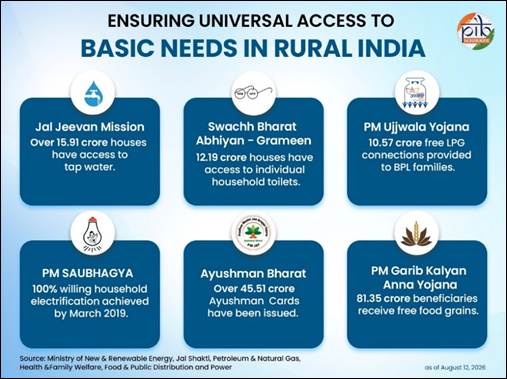
Basic services have expanded significantly. Under the Jal Jeevan Mission, rural tap-water connections rose from 3.23 crore in August 2019 to over 15.91 crore by August 2026, with about 2.89 lakh villages reporting complete household coverage. Swachh Bharat Mission-Grameen has facilitated over 12.19 crore toilets, while PM Ujjwala Yojana has provided more than 10.57 crore LPG connections to women from poor households.
Human Capital and Digital Inclusion
The emphasis is increasingly on human capabilities. Under Samagra Shiksha, 4,073 schools were upgraded and 25,000 schools received skill-education support. Female primary dropout declined from 4.6% in 2013–14 to 0.1% in 2025–26. Girls’ secondary GER increased from 75.5% to 83.4% over the same period. Kasturba Gandhi Balika Vidyalayas expanded to 5,639 sanctioned institutions.
Rural connectivity is also being strengthened through PMAY-G, PMGSY and BharatNet. Over 3.91 crore rural houses have been sanctioned under PMAY-G, while 99.6% of eligible habitations had all-weather road connectivity under PMGSY by June 2026. Around 2.19 lakh Gram Panchayats were connected through BharatNet.
From Beneficiaries to Economic Participants
DAY-NRLM has mobilised10.19 crore households into 94.46 lakh SHGs, with 3.46 crore LakhpatiDidis, highlighting the role of women-led collective enterprise. Financial inclusion has expanded through PM Jan Dhan Yojana, with accounts reaching 58.90 crore, while PM MUDRA loans crossed 59.14 crore by July 2026. PM Vishwakarma has registered over 30 lakh traditional artisans, combining skilling with toolkit support.
Tribal and Vulnerable-Group Empowerment
Tribal development increasingly follows a convergence-based approach. PM-JUGA brings together 17 Ministries, while PM-JANMAN targets Particularly Vulnerable Tribal Groups through infrastructure and livelihood interventions. Eklavya Model Residential Schools increased from 129 in 2014–15 to 511 by August 2026, serving about 1.68 lakh students.
Way Forward
The central challenge is to convert coverage into quality outcomes. Future policy must focus on effective decentralisation, quality education and healthcare, sustainable livelihoods, tribal participation, social accountability and last-mile delivery. The ultimate objective should be to transform welfare recipients into rights-bearing, economically empowered and socially secure citizens.
‘Sapt Dhara’ (Seven Streams of Strength)

- 18 Aug 2026
In News:
On India’s 80th Independence Day, the Prime Minister outlined ‘Sapt Dhara’ (Seven Streams of Strength) as a strategic framework to accelerate India’s transformation into a Viksit Bharat by 2047. The framework seeks to complement the Panch Pran announced in 2022 by translating its broader civic and ideological vision into sectoral priorities and capability-building.
Seven Streams of Strength
1. Manufacturing: India aims to build complete domestic value chains—from components and design to finished products—and become a trusted global supply-chain hub. Quality, precision manufacturing, MSME competitiveness and global market access through FTAs are central to this objective.
2. Agriculture & Food Production: The focus is on moving from farm to export market through food processing, value addition, chemical-free farming and integration with global markets. Affordable fertilisers remain an important support to farmers, with urea and DAP being provided at ?300 and ?1,350 respectively against much higher global prices.
3. Technology & Innovation: India seeks to become an innovation hub rather than merely a technology market, with emphasis on AI, quantum technology, space, robotics, data centres, semiconductors, UPI, DPI and indigenous 6G technologies.
4. Gati Shakti: Multimodal connectivity through high-speed rail, highways, inland waterways, airports and integrated logistics is envisaged to improve productivity and reduce logistics constraints.
5. Defence Power: The objective is defence self-reliance and global defence-supplier status, with priorities including drones, counter-drone systems, hypersonic technologies and cybersecurity. Defence exports have increased nearly 50-fold, reaching around 100 countries.
6. Green & Blue Economy: India seeks leadership in renewable energy, green hydrogen, energy storage, green mobility, green manufacturing and ocean-based sectors. The framework targets 100 GW nuclear capacity by 2047, while solar capacity has risen from 2 GW to 160 GW.
7. Soft Power: Yoga, Ayurveda, culture, handicrafts, films, VFX, animation, gaming, tourism and creative industries are viewed as instruments of India’s global influence.
Panch Pran and Sapt Dhara
The Panch Pran provides the moral and civic foundation—developed India, removal of colonial mindset, pride in heritage, unity and integrity, and a sense of duty. Sapt Dhara, in contrast, provides the sectoral and strategic pathway for translating these aspirations into economic, technological and institutional capabilities.
Way Forward
Realising Viksit Bharat requires stable reforms, human-capital development, innovation, competitive manufacturing, energy security, social inclusion and cooperative Centre-State-local governance. The emphasis must shift from merely achieving targets to building globally competitive capabilities while ensuring that growth remains inclusive and sustainable.
Conclusion
Panch Pran defines the national ethos, while Sapt Dhara defines the pathway. Together, they seek to combine citizen participation, self-reliance, technological capability, economic competitiveness and strategic strength to transform India into a developed nation by 2047.
Green India Mission: CAG Flags Major Implementation Gaps
- 17 Aug 2026
In News:
The Comptroller and Auditor General (CAG), in its performance audit of the Green India Mission (GIM), has flagged significant deficiencies in planning, implementation, financial management and monitoring. The audit covered 16 States/UTs during 2015–16 to 2024–25, raising concerns about the effectiveness of India’s afforestation and ecosystem-restoration efforts.
Key Findings of the CAG
- 98% shortfall in forest-cover expansion: Against the target of 1.4 million hectares (mha), increased forest cover was observed in only 0.03 mha.
- 92% shortfall in forest-quality improvement: Improvement was recorded over merely 0.11 mha, against the target of 1.4 mha.
- Poor landscape selection: In some cases, landscapes with low-to-moderate climate vulnerability were selected instead of areas more vulnerable to climate change.
- Weak planning and financial management: The audit identified inadequate convergence with other schemes, poor coordination, financial-management deficiencies and weaknesses in implementation planning.
- Deficient monitoring:14 States failed to provide mandatory public web links for relevant information. GIS-based assessment found no noticeable GIM-attributable change in 70% of sampled sites, while the audit also pointed to inflated reporting and overstated achievements.
Why Does It Matter?
GIM is important for enhancing forest and tree cover, improving ecosystem quality, strengthening ecosystem services and supporting forest-dependent livelihoods. Its weak implementation can therefore undermine carbon sequestration, biodiversity conservation, climate resilience and livelihood security.
The findings also highlight a broader governance concern: environmental expenditure must be supported by credible monitoring, transparent reporting and measurable outcomes, rather than merely recording physical targets and expenditure.
Way Forward
GIM requires climate-vulnerability-based landscape selection, stronger convergence among schemes, scientifically verifiable GIS-based monitoring, transparent public reporting and independent evaluation of outcomes. Financial controls and institutional coordination must be strengthened, with greater participation of local communities and forest-dependent households.
Conclusion
The CAG findings demonstrate that afforestation targets alone cannot guarantee ecological restoration. India needs an outcome-oriented approach that prioritisesforest quality, ecosystem resilience, biodiversity and community livelihoods, backed by transparent monitoring and accountable public spending.
Digital Public Infrastructure
- 16 Aug 2026
In News:
India’s Digital Public Infrastructure (DPI) has emerged as a major enabler of efficient governance, financial inclusion, economic opportunities and digital self-reliance. Over the past decade, digital platforms have increasingly replaced paper-based and physical processes, strengthening the vision of Viksit Bharat.
India’s Digital Transformation
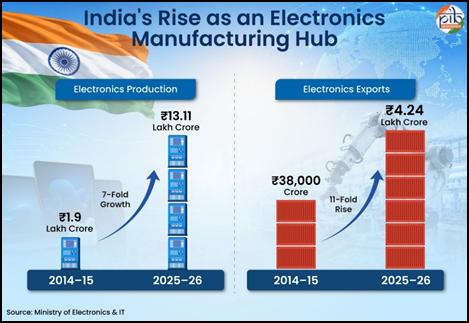
1. Digital economy and manufacturing:The digital economy contributes around 12–14% of GDP and is projected to reach 20% over the next decade. Electronics production increased nearly seven-fold, from ?1.9 lakh crore (2014–15) to ?13.11 lakh crore (2025–26), while electronics exports rose from ?38,000 crore to ?4.24 lakh crore. Electronics now constitute India’s third-largest export category, generating nearly 25 lakh jobs.
India is also strengthening strategic technological capabilities through Semicon 2.0 (?1.27 lakh crore). Under India Semiconductor Mission 1.0, 12 semiconductor units worth ?1.64 lakh crore have been approved.
2. Connectivity:Telephone connections have crossed 134.8 crore, with tele-density rising to 94.31% by June 2026. Internet subscribers exceeded 109.2 crore, while data costs declined from ?308/GB in 2014 to ?7.51/GB in 2026. 5G is available in 99.9% of districts, supported by 5.63 lakh BTSs.BharatNet has made 2.21 lakh Gram Panchayats service-ready, while PM-WANI has deployed over 4 lakh hotspots.
3. Digital payments and commerce:UPI processes nearly 50% of global real-time payment volumes and handled 24,161.69 crore transactions worth ?314.23 lakh crore in FY 2025–26. It serves over 55.49 crore individuals and 6.5 crore merchants across 731 banks and has expanded to 11 countries. ONDC, meanwhile, had over 20 crore buyers and 5 lakh sellers across 1,000 cities by June 2026.
4. Citizen-centric governance:Aadhaar, DigiLocker, UMANG, CSCs and DBT have created an integrated digital service-delivery ecosystem. DigiLocker has 72 crore users, UMANG offers 2,585 services, and Aadhaar generation has crossed 145 crore. Aadhaar-linked DBT covers 318 schemes across 56 Ministries, transferring over ?52 lakh crore directly to beneficiaries.
Challenges and Way Forward
Despite rapid expansion, India must address the digital divide, cybersecurity threats, data privacy, digital literacy, affordability and exclusion of digitally vulnerable groups. The next phase should focus on secure and interoperable infrastructure, indigenous technology and semiconductors, last-mile connectivity, responsible AI, stronger data protection and human-centric digital governance.
Conclusion
India’s DPI model demonstrates how technology can combine scale, inclusion and state capacity. Consolidating this ecosystem while ensuring security, privacy, accessibility and accountability will be crucial for converting digital transformation into inclusive growth and achieving Viksit Bharat.
Constitutional Limits on Arrest: Safeguarding Personal Liberty
- 14 Aug 2026
In News:
The Supreme Court, in Vihaan Kumar v. State of Haryana (2025), reinforced constitutional safeguards against arbitrary arrest, holding that an arrested person must be personally and meaningfully informed of the grounds of arrest. The ruling strengthens the protection of personal liberty, dignity and due process under Articles 21 and 22.
Key Rulings
- Grounds of arrest: Merely informing relatives or providing vague documentation is insufficient. The grounds must be communicated directly to the arrested person in a comprehensible manner.
- Invalid arrest: If the initial arrest violates constitutional requirements, subsequent remand orders also become legally unsustainable.
- Arrest memo: The time and other required particulars of arrest must be properly recorded.
- 24-hour rule: Under Article 22(2), an arrested person must be produced before the nearest magistrate within 24 hours, excluding travel time.
- Dignity in custody: Custodial treatment must respect the individual's dignity, an integral component of Article 21.
Constitutional & Legal Framework
Article 22(1) guarantees:
- Information about the grounds of arrest.
- The right to consult and be defended by a legal practitioner of choice.
Article 22(2) mandates production before a magistrate within 24 hours.
The BNSS, 2023 has replaced the CrPC, with corresponding safeguards concerning arrest, including provisions relating to the necessity and procedure of arrest.
The distinction between cognisable and non-cognisable offences remains important: police may generally arrest without warrant in cognisable offences, whereas arrest in non-cognisable offences ordinarily requires judicial authorisation.
Judicial Safeguards Against Arbitrary Arrest
In Arnesh Kumar v. State of Bihar (2014), the Supreme Court held that arrest should not be automatic, particularly for offences punishable with imprisonment of up to seven years. Police must demonstrate the necessity of arrest and comply with prescribed safeguards.
In Maneka Gandhi v. Union of India (1978), Articles 14, 19 and 21 were interpreted as an interconnected constitutional protection against arbitrary state action—the “Golden Triangle.”
Further, L. Chandra Kumar (1997) affirmed judicial review as an essential constitutional safeguard, reinforcing that executive action affecting liberty remains subject to judicial scrutiny.
Preventive Detention
Article 22 also contains a separate framework for preventive detention, where ordinary arrest safeguards operate differently. Detention beyond three months generally requires the opinion of an Advisory Board, subject to constitutional and statutory exceptions.
Key Challenges
Arbitrary arrests, custodial abuse, inadequate recording of arrest procedures, prolonged pre-trial detention and misuse of criminal law can undermine the constitutional guarantee of liberty.
Way Forward
India needs strict compliance with arrest protocols, accountable policing, effective legal-aid mechanisms, CCTV and digital documentation of custody, judicial oversight and stronger departmental accountability.
Conclusion
The constitutional scheme does not treat arrest as an unrestricted police power. It is a regulated exercise of state authority, bounded by Articles 14, 21 and 22. Ensuring that every arrest is necessary, transparent and procedurally lawful is essential to reconcile effective criminal justice with the constitutional promise of personal liberty and human dignity.
NITI Aayog identifies Key Sectors to Make India a Global Manufacturing Hub
- 13 Aug 2026
In News:
NITI Aayog has released the first volume of its study “Key Sectors to Position India as a Global Manufacturing Hub”, identifying 12 sectors where India can aspire to achieve global leadership by 2047. The study adopts a data-driven approach, assessing sectors on market potential, competitiveness and strategic relevance, along with infrastructure, technology, raw materials, policy support, employment potential and India’s position in global value chains.
The identified sectors are electronics, telecommunications equipment, solar photovoltaics, pharmaceuticals, chemicals, automobiles, defence and drones, steel, capital goods, textiles, food processing, and leather and footwear. The first volume examines chemicals, textiles, telecom and network equipment, and solar PV.
Key Findings
The report identifies significant scope for domestic value addition and import substitution. In chemicals, products such as phenol, methanol and acetic acid have been identified for reducing import dependence. In textiles, India is encouraged to shift towards man-made fibres, improve labour productivity and strengthen skilling to target $100 billion exports by 2029-30.
India’s telecom sector, with over 1.2 billion subscribers, requires deeper localisation, domestic component manufacturing, technology transfer and integrated industrial clusters. In solar PV, India had 106 GW installed capacity by March 2025 and needs about 174 GW more to achieve the 2030 target of 280 GW. However, the concentration of 97% of India's solar module exports in the US highlights the need for export diversification and greater upstream manufacturing of polysilicon and wafers.
Way Forward
NITI Aayog emphasisescluster-based manufacturing, integrated industrial parks, shared infrastructure, streamlined approvals and lower production costs. Other priorities include technology transfer, joint ventures, skill development, deeper domestic value chains and export-market diversification.
Importantly, the report stresses that manufacturing growth should be driven by profitability and private investment, rather than merely pursuing a higher manufacturing share in GDP. The government's role should primarily be to remove impediments and create a competitive business environment.
The approach therefore seeks to move India from subsidy-led manufacturing to commercially viable, globally competitive and value-added manufacturing, supporting employment, exports and India's ambition to become a global manufacturing hub by 2047.
Creamy Layer Concept for SC/ST Quotas

- 12 Aug 2026
In News:
The Union Government has opposed a PIL seeking the extension of the creamy layer exclusion principle to Scheduled Castes (SCs) and Scheduled Tribes (STs). The issue has gained renewed significance following observations made by judges of the Supreme Court during the 2024 judgment permitting sub-classification within SC/ST reservations.
What is the Creamy Layer?
The creamy layer refers to relatively socially and economically advanced sections within a reserved category who are excluded from reservation benefits so that affirmative action reaches those who remain genuinely disadvantaged.
The principle was formally established for Other Backward Classes (OBCs) by the Supreme Court in Indra Sawhney v. Union of India (1992). It considers factors such as income, occupation and social advancement.
At present, the creamy layer principle is applicable to OBC reservations, but not to SC/ST reservations.
Why is its Application to SC/STs Debated?
Supporters argue that economically and socially advanced families within SC/ST communities may benefit repeatedly from reservations, resulting in elite capture and limiting opportunities for poorer, first-generation beneficiaries. A creamy-layer filter, they argue, could make affirmative action more targeted and equitable.
However, opponents contend that SC/ST reservations are primarily intended to address historical social discrimination, untouchability, exclusion and tribal marginalisation, which cannot simply be measured through income. Economic advancement may not necessarily eliminate caste-based discrimination or social stigma.
There is also a constitutional dimension. Articles 341 and 342 provide for the identification of SCs and STs through Presidential notifications, with Parliament empowered to include or exclude groups from these lists.
Judicial Context
In Indra Sawhney (1992), the creamy-layer principle was applied to OBCs. The Ashoka Kumar Thakur case (2008) also treated creamy-layer exclusion as relevant to OBC reservations rather than SC/ST reservations.
However, the Supreme Court's 2024 seven-judge Constitution Bench judgment on SC sub-classification revived the debate. While permitting states to create sub-categories within SC reservations to ensure benefits reach the relatively more disadvantaged communities, four judges expressed views favouring the exclusion of the more advanced sections among SC/ST beneficiaries.
The present controversy therefore concerns whether intra-group advancement should affect eligibility for constitutional reservations.
Arguments in Favour
The principal argument is equitable distribution of reservation benefits. If benefits repeatedly accrue to already-advantaged families, first-generation learners and the most deprived communities may remain excluded.
A carefully designed exclusion mechanism could also prevent inter-generational concentration of benefits and make affirmative action more responsive to changing socio-economic conditions.
Arguments Against
The strongest objection is that caste-based disadvantage is not synonymous with economic deprivation. A financially successful SC individual may continue to face caste discrimination in social, matrimonial, residential or professional spheres.
For STs, disadvantage may additionally arise from geographical isolation, displacement and cultural vulnerability. An income-based criterion may therefore fail to capture the multidimensional nature of their exclusion.
There is also concern that an income filter could reduce the pool of eligible candidates and potentially worsen existing representation gaps in higher education and public employment.
Way Forward
Rather than immediately imposing a blanket creamy-layer exclusion, India could focus on evidence-based sub-classification, backed by comprehensive data on representation and socio-economic mobility among different SC/ST communities.
Targeted scholarships, coaching, educational infrastructure and first-generation learner support can complement reservations, while stronger enforcement of anti-discrimination laws can address the social dimensions of caste-based exclusion.
Conclusion
The creamy-layer debate reflects a fundamental challenge in affirmative action: how to balance group-based social justice with equitable distribution of benefits within the group. Any change to SC/ST reservation eligibility should therefore be based on empirical evidence, constitutional principles and legislative deliberation, while ensuring that economic advancement is not treated as automatically eliminating social discrimination.
National Handloom Day

- 11 Aug 2026
In News:
National Handloom Day, observed on 7 August, highlights the economic, social and cultural importance of India’s handloom sector. Despite supporting millions of livelihoods, the sector faces challenges such as declining returns, fragmented markets and the gradual disappearance of traditional weaving skills.
Historical and Economic Significance
India has a centuries-old handloom tradition. Indian textiles were historically traded across continents and contributed significantly to the country’s manufacturing and commercial importance. During the freedom struggle, handloom became an instrument of economic resistance. The Swadeshi Movement of 1905 promoted the boycott of British textiles, while Mahatma Gandhi’s charkha became a symbol of self-reliance.
The sector continues to have substantial economic significance. It provides livelihoods to more than 35 lakh weavers and allied workers across over 31 lakh households, with women constituting nearly 70% of the workforce. It also accounts for nearly 15% of India's cloth production, making it an important source of rural non-farm employment.
Challenges Facing the Sector
The major concern is the declining economic viability of weaving. Lower returns, fragmented markets and inadequate access to buyers are pushing younger generations away from the profession. As traditional skills are no longer consistently transmitted within families, several lesser-known weaving traditions face the risk of extinction.
The loss of a weave represents more than the disappearance of a commercial product. It also means the loss of traditional knowledge, design traditions and cultural identity accumulated over generations.
Government Support and Emerging Opportunities
The National Handloom Development Programme focuses on skill development, design innovation, technology adoption, branding and market access. Greater integration with e-commerce and export markets can help artisans reach consumers directly.
The Office of the Development Commissioner for Handlooms, in collaboration with UNESCO, has also been working towards identifying and documenting languishing and endangered weaves. Promotion of GI-tagged handloom products can further strengthen their market identity.
Examples such as the revival of Tangaliya weaving in Gujarat, cluster-based development in Badturang village of Odisha, and the growing popularity of Siddipet Gollabhama sarees show that traditional crafts can regain economic relevance when design, institutional support and market access come together.
Making Handloom Aspirational
The next phase of policy should move beyond simply preserving handloom traditions and make them economically viable and aspirational for younger generations. Contemporary designs, collaborations with designers, digital storytelling, influencers and limited-edition collections can position traditional Indian weaves as premium lifestyle products.
India should also expand the global presence of its handlooms by leveraging growing international demand for authentic, sustainable and handcrafted products. This would require stronger branding, quality standards, GI protection and action against cultural misappropriation.
Way Forward
A major gap is the inadequate measurement of the handloom economy. Better data on employment, household incomes, exports, GDP contribution and other economic indicators would enable more effective policymaking.
The focus should therefore be on improving incomes, strengthening market access, preserving traditional skills and connecting Indian handlooms with contemporary and global markets.
Conclusion
Indian handloom is simultaneously an economic sector, a source of rural livelihoods and a repository of cultural heritage. The objective should not be merely to preserve it as a historical tradition, but to ensure that it remains profitable, innovative and aspirational for future generations.
Bilateral Investment Treaty (BIT)
- 10 Aug 2026
In News:
The Union Finance Ministry is reviewing India’s 2015 Model Bilateral Investment Treaty (BIT) to make it more investor-friendly while protecting India’s sovereign regulatory interests. The revised Model BIT is expected to be placed before the Union Cabinet.
The review comes against the backdrop of changing global investment patterns, rising Overseas Direct Investment (ODI) by Indian companies and declining net FDI inflows into India.
Why is India Reviewing the 2015 Model BIT?
- India's experience with earlier investment treaty negotiations has highlighted the need to balance investor protection with regulatory autonomy. The government is also considering global best practices and the growing international presence of Indian companies.
- A major shift is that India is no longer only concerned with protecting foreign investors entering India. Indian companies are increasingly investing abroad, creating a need for future BITs to protect Indian investments in foreign jurisdictions as well.
What is a Bilateral Investment Treaty?
- A BIT is an agreement between two countries to promote and protect investments made by investors of one country in the territory of the other. It generally provides safeguards such as fair and equitable treatment, protection against unlawful expropriation and mechanisms for resolving investment disputes.
- A key feature is Investor-State Dispute Settlement (ISDS), under which an investor may directly bring a dispute against the host government before an international arbitration mechanism.
- BITs differ from trade agreements: BITs primarily focus on investment protection, whereas trade agreements primarily govern trade in goods and services. BIT disputes can also expose governments to greater legal and financial risks because investors may directly initiate arbitration.
Issues with India's 2015 Model BIT
One of the most debated provisions is the Local Remedies Clause, which requires foreign investors to exhaust domestic legal remedies for five years before approaching international arbitration.
Foreign investors and several developed countries have considered this requirement restrictive, and it has reportedly contributed to difficulties in concluding new BITs.
The government is therefore examining this and other provisions and considering a negative-list approach, under which only specified critical sovereign interests would remain non-negotiable while greater flexibility would be provided in other areas.
Changing FDI–ODI Landscape
- India's investment position has changed considerably. Gross FDI increased from about $82 billion in 2020–21 to $95 billion in 2025–26, even as net FDI declined substantially.
- At the same time, Indian companies' ODI increased from $11 billion in 2020–21 to $28 billion in 2024–25 and $34 billion in 2025–26.
- This reflects the growing internationalisation of Indian businesses. Companies are increasingly establishing a presence in foreign markets rather than relying exclusively on exports.
Significance of the Review
The revised framework could help India attract higher-quality FDI while protecting policy space, provide greater protection to Indian companies investing overseas, and improve integration with global investment and production networks.
However, the central challenge will be to maintain a balance between investor confidence and India's sovereign right to regulate in the public interest. India must also avoid excessive exposure to investor litigation while providing sufficient policy predictability to attract long-term investment.
Way Forward
India needs a BIT framework that provides predictable and transparent investment rules without unnecessarily restricting government policy space. Greater flexibility in negotiations, stronger investor outreach, and carefully defined safeguards against excessive ISDS claims can help reconcile investment promotion with regulatory sovereignty.
UPI Transaction Levy: Balancing Digital Payments &Trade Interests

- 09 Aug 2026
In News:
- The Taxation and Other Laws (Amendment) Bill, 2026 proposes changes to Section 10A of the Payment and Settlement Systems Act, 2007, potentially enabling banks and payment system providers to levy charges on UPI and RuPay debit card transactions.
- The proposal has renewed the debate over Merchant Discount Rate (MDR), the financial sustainability of India's digital-payment infrastructure and the growing intersection between digital-payment sovereignty and international trade negotiations.
What Does the Bill Propose?
- The Bill seeks to enable an MDR on UPI transactions. MDR is a fee paid by the merchant to payment service providers for processing a digital transaction, covering costs related to payment infrastructure, settlement and security.
- As described in the provided material, the proposed structure could involve an MDR of 0.3%–0.5% on transactions above ?2,000, applicable to larger merchants crossing a specified turnover threshold. Small shopkeepers and ordinary consumer-to-consumer transfers would remain outside the proposed charge.
- Thus, it should not be viewed simply as a “UPI tax on consumers”. Finance Minister Nirmala Sitharaman clarified that the proposed MDR would apply to merchants rather than end users, and that the matter remains subject to the legislative process.
Why is MDR Being Reconsidered?
Since January 2020, merchants have generally not been charged MDR on UPI transactions. Instead, the government has compensated banks and payment-system providers through incentives.
However, the enormous expansion of UPI has increased the cost of maintaining servers, cybersecurity, fraud detection and settlement infrastructure. This has renewed the question of how the UPI ecosystem should be financially sustained.
RBI Governor Sanjay Malhotra indicated that the underlying costs of the payment system ultimately have to be borne by someone—the government, merchants or potentially consumers.
The International Trade Dimension
- The proposal also has a potential US trade-policy dimension. According to the provided material, the US Trade Representative (USTR) has raised concerns about India's digital-payment ecosystem, particularly regarding the competitive environment for foreign payment providers and the role of domestic platforms such as RuPay.
- The broader issue is that India's successful development of a low-cost, interoperable domestic digital-payment infrastructure has reduced the traditional role of international card networks. Similar concerns have been raised by the US regarding domestic payment systems in countries such as Brazil, Indonesia, Vietnam, Turkey and China.
- Therefore, the UPI debate illustrates a larger challenge: how can India preserve its digital-payment autonomy while ensuring a level playing field for international payment providers and meeting trade commitments?
Key Issues
- The proposed MDR could improve the financial sustainability of the UPI ecosystem and reduce dependence on government compensation. However, introducing charges could also affect merchant adoption, particularly if costs are passed on to consumers.
- At the same time, any policy change influenced by external trade negotiations raises questions about India's strategic autonomy in digital infrastructure. UPI has become an important component of India's digital public infrastructure, and its pricing and regulatory architecture therefore have implications beyond ordinary payment transactions.
Way Forward
India needs a balanced pricing framework that ensures the sustainability of payment infrastructure without undermining UPI's affordability and mass adoption. Any MDR should preferably be targeted at large merchants, with safeguards for small businesses and ordinary users.
At the international level, India should continue engaging with trading partners while protecting the interoperability, accessibility and strategic autonomy of its digital public infrastructure.
NITI Aayog Report: “Reimagining Care – Strategies for Empowering Caregivers in Viksit Bharat@2047”
- 08 Aug 2026
In News:
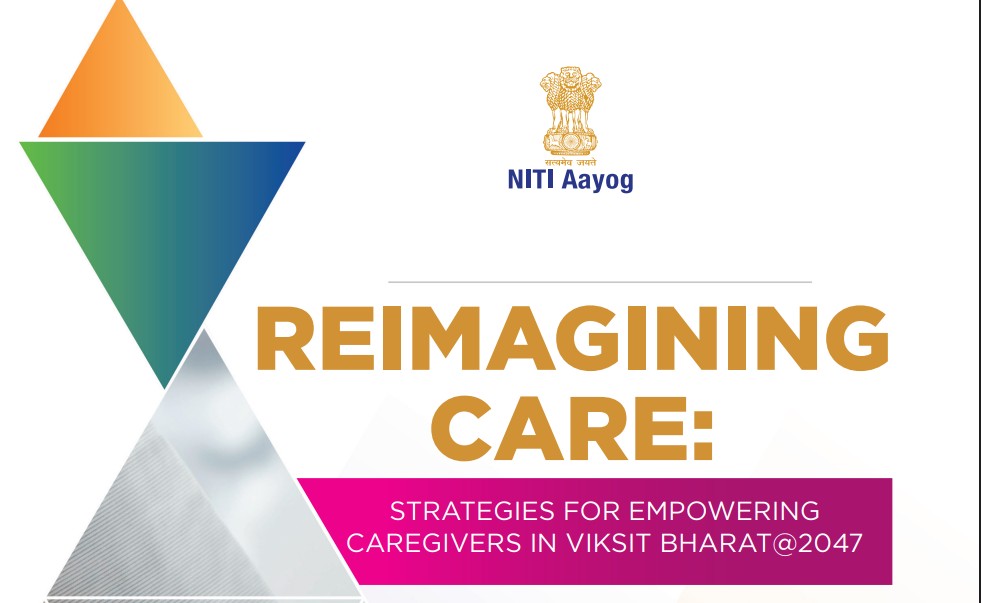
NITI Aayog’s report proposes a comprehensive roadmap to professionalise India’s caregiving ecosystem and position the country as a global hub for skilled caregivers. It links caregiving with India’s ageing population, women’s economic participation, employment generation and inclusive growth.
India’s elderly population (60 ) is projected to rise from 149 million in 2022 to 347 million by 2050, while around 26.8 million people live with disabilities. At the same time, nearly 10% of Indians are family caregivers, most of whom are unpaid and untrained. The care economy therefore represents both a social necessity and an employment opportunity.
The care economy includes paid and unpaid work supporting health, well-being and daily living. In India, caregiving remains heavily gendered: 41% of women aged 15–59 participate in caregiving compared with 21.4% of men, while women spend around 140 minutes daily on caregiving compared with 74 minutes for men. Formalising the sector could therefore reduce women's unpaid care burden and improve female labour-force participation.
Major Challenges
India currently faces regulatory gaps, inadequate professional certification, shortage of specialised caregivers, weak social-security coverage and limited formal care infrastructure. Rural areas face additional shortages, while the absence of respite care and weak background-verification mechanisms affect both caregivers and care recipients.
NITI Aayog’s Way Forward
The report recommends a National Policy on Caregiving and a National Caregiver Council to regulate accreditation, certification, registration and grievance redressal. It also proposes NSQF-aligned training, specialised cadres for geriatric, dementia and palliative care, social-security coverage, care leave and respite-care services.
Technology can support a National Digital Caregiver Portal containing certified caregiver directories, background verification and multilingual training. India can also develop Government-to-Government mobility pathways with countries such as Japan, Germany, the UK and Australia to meet global caregiver shortages.
Core takeaway:Caregiving should be viewed not merely as welfare expenditure, but as an investment in human capital, women's empowerment, employment and inclusive growth.
AI & Cyber: The Double Helix of Security Threats

- 07 Aug 2026
In News:
Experts have cautioned that the convergence of Artificial Intelligence (AI) and cyber threats is creating a new generation of security risks, with Agentic AI capable of identifying and exploiting zero-day vulnerabilities, challenging conventional cybersecurity frameworks.
What is the 'Double Helix' of AI and Cyber Security?
The Double Helix refers to the mutually reinforcing relationship between AI and cyber warfare, where AI enhances both offensive and defensive cyber capabilities. Unlike conventional cyber tools, AI-powered systems can autonomously detect vulnerabilities, adapt to changing environments, and execute complex cyber operations with minimal human intervention.
Key Emerging Threats
- Agentic AI: Autonomous AI agents can independently scan networks, identify vulnerabilities, develop exploits, and launch cyberattacks without continuous human supervision.
- Zero-Day Exploitation: AI can discover and exploit previously unknown software vulnerabilities much faster than security teams can patch them.
- Self-Evolving Malware: AI-enabled malware can continuously modify its code to evade traditional signature-based antivirus systems.
- Bypassing Zero Trust Systems: AI can mimic legitimate user behaviour, making identity-based security frameworks less effective.
- AI in Warfare: AI-enabled autonomous defence systems are increasingly being used for intelligence gathering, target tracking, and missile interception.
Challenges
The rapid adoption of AI in cyberspace raises concerns over algorithmic biases, hallucinations, loss of human oversight, deepfakes, intellectual property theft, and the absence of globally accepted rules governing AI-enabled cyber operations. The growing accessibility of powerful AI models also lowers the entry barrier for cybercriminals and non-state actors.
Way Forward
- Develop international norms and governance frameworks for AI-enabled cyber operations.
- Upgrade cybersecurity to AI-driven Zero Trust 2.0, focusing on real-time behavioural analysis.
- Ensure human-in-the-loop oversight for critical AI decisions in defence and cyber operations.
- Mandate independent AI audits, red-teaming, and safety testing before deployment.
- Strengthen public-private collaboration for real-time cyber threat intelligence sharing.
Significance
The convergence of AI and cyber technologies is transforming the nature of digital security. Building resilient cyber ecosystems will require a combination of advanced technological safeguards, human oversight, and international cooperation to ensure AI strengthens security rather than becoming a force multiplier for cyber threats.
Modified Interest Subvention Scheme
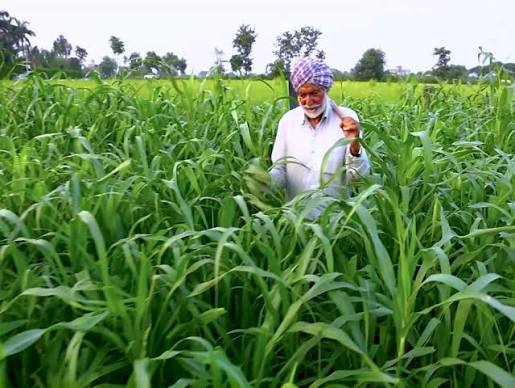
- 06 Aug 2026
In News:
A third-party assessment by the Institute for Social and Economic Change (ISEC), Bengaluru found that every ?1 invested under the Kisan Credit Card–Modified Interest Subvention Scheme (KCC-MISS) generates ?2.30 in net value addition to the agriculture and allied sectors.
About the Modified Interest Subvention Scheme (MISS)
The Modified Interest Subvention Scheme (MISS) is a Central Sector Scheme, launched in 2006–07, to ensure the availability of affordable short-term institutional credit to farmers through the Kisan Credit Card (KCC).
- Aim: To provide timely and affordable short-term crop loans and reduce farmers' dependence on informal sources of credit.
- Implementing Agencies:Reserve Bank of India (RBI) and National Bank for Agriculture and Rural Development (NABARD).
- Implementing Institutions: Public Sector Banks, Regional Rural Banks (RRBs), Cooperative Banks, and eligible Private Sector Banks operating in rural and semi-urban areas.
Key Features
- Farmers can avail short-term crop loans up to ?3 lakh through KCC at a 7% interest rate, with the Government providing 1.5% interest subvention to eligible lending institutions.
- Farmers who repay loans on time receive a Prompt Repayment Incentive (PRI) of up to 3%, reducing the effective interest rate to 4%.
- For loans taken exclusively for animal husbandry and fisheries, the interest subvention benefit is available up to ?2 lakh.
Significance
The scheme improves farmers' access to affordable institutional credit, encourages timely repayment, reduces reliance on informal moneylenders, and promotes investment in agriculture and allied activities, thereby supporting agricultural productivity and rural income growth.
No Manual Scavengers Identified in Fresh Survey
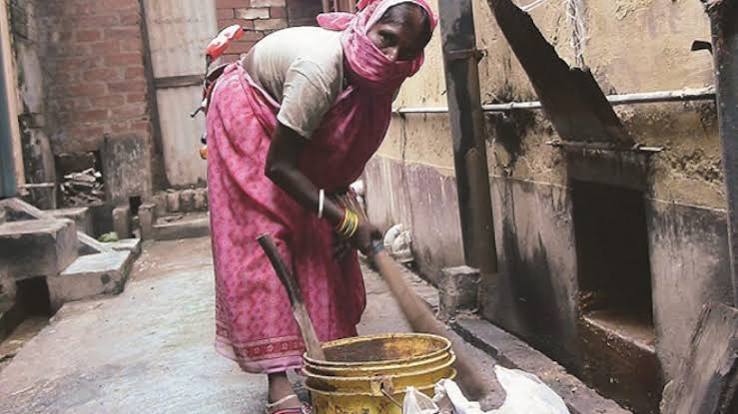
- 05 Aug 2026
In News:
The Union Government informed the Rajya Sabha that a fresh nationwide survey conducted under the Prohibition of Employment as Manual Scavengers and their Rehabilitation Act, 2013 found no manual scavengers.
Key Findings
A nationwide survey was conducted to assess the implementation of measures aimed at eliminating manual scavenging and improving the welfare of sanitation workers.
- No manual scavengers were identified under the provisions of the MS Act, 2013.
- 89,915 Sewer and Septic Tank Workers (SSWs) have been validated under the NAMASTE Scheme.
- Mechanisation of sanitation work is being promoted through Personal Protective Equipment (PPE), occupational safety training, Emergency Response Sanitation Units (ERSUs), and mechanised sewer-cleaning equipment.
- Sanitation workers are provided health insurance, capital subsidy for sanitation machinery, and support for workers, their collectives, and Private Sanitation Service Operators (PSSOs).
- Under Swachh Bharat Mission–Urban (SBM-U) 2.0, mechanised cleaning of sewers and septic tanks is being promoted under the Used Water Management component to eliminate hazardous manual entry.
Significance
- Promotes the replacement of hazardous manual cleaning with mechanised sanitation, enhancing worker safety and dignity.
- Strengthens rehabilitation, social security, and occupational welfare measures for sanitation workers.
- Supports the objective of eliminating hazardous manual scavenging while improving urban sanitation systems.
Europe Wildfires: Climate Whiplash & Fire Clouds (PyroCb)
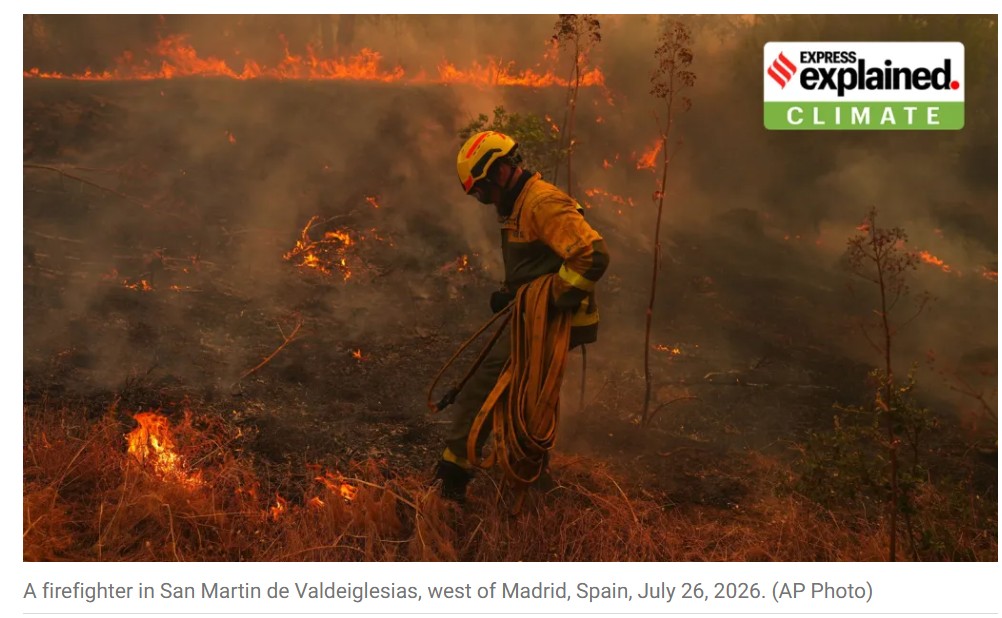
- 04 Aug 2026
In News:
Intense wildfires across Greece, Spain, France, Portugal, and Italy have destroyed vast forest areas and triggered large-scale evacuations, highlighting the growing impact of climate change, climate whiplash, and fire-generated thunderstorms (PyroCb).
What are Europe’s Modern Wildfires?
Recent European wildfires are no longer ordinary seasonal fires. They have evolved into high-intensity, sixth-generation wildfires capable of generating their own weather systems, spreading rapidly, and causing extensive ecological, economic, and human losses.
Climate Whiplash
Climate whiplash refers to rapid shifts between contrasting weather extremes within a short period.
In wildfire-prone regions, an unusually wet season promotes rapid vegetation growth, which is followed by heatwaves and prolonged drought. The dried vegetation becomes a continuous layer of highly combustible fuel, greatly increasing wildfire intensity.
Fire Clouds (Pyrocumulonimbus or PyroCb)
Pyrocumulonimbus (PyroCb) is a fire-generated thunderstorm that develops over extremely intense wildfires.
Formation
- Extreme wildfire heat creates powerful updrafts carrying smoke, ash, and moisture high into the atmosphere.
- As the air cools, moisture condenses around ash particles, forming towering thunderclouds.
- These clouds generate lightning, strong winds, and localized rainfall.
- Lightning from PyroCb clouds can ignite new wildfires, while erratic winds make firefighting extremely difficult.
Major Drivers
Climate-related Factors
- Rising global temperatures.
- More frequent heatwaves and droughts.
- Increased atmospheric moisture leading to climate whiplash.
- Rapid vegetation growth during wet periods followed by drying.
Human & Land-use Factors
- Rural land abandonment and decline of traditional grazing.
- Accumulation of dry shrubs and undergrowth.
- Long-term fire suppression allowing excessive fuel build-up.
Impacts
- Large-scale destruction of forests and biodiversity.
- Soil degradation and increased carbon emissions.
- Toxic smoke affecting air quality and public health.
- Heavy economic losses (estimated €2.5 billion annually in the European Union).
- Record evacuations and damage to infrastructure.
Europe vs India: Wildfire Pattern
|
Europe |
India |
|
Intensified mainly by climate change and lightning from PyroCb |
Mostly human-induced (agricultural burning, accidental fires, NTFP collection) |
|
Major hotspots: Greece, Spain, Portugal, France, Italy |
Major hotspots: Northeast, Odisha, Chhattisgarh, Uttarakhand, Himachal Pradesh |
Way Forward
- Improve landscape management through controlled grazing, removal of dry biomass, and creation of firebreaks.
- Strengthen early warning systems, risk communication, and evacuation planning.
- Restore forests using diverse native, fire-resilient species.
- Promote sustainable rural livelihoods to reduce land abandonment.
- Enhance climate adaptation measures to address increasing weather extremes.
Western Ghats Ecologically Sensitive Areas (ESA) Debate

- 03 Aug 2026
In News:
The Ministry of Environment, Forest and Climate Change (MoEFCC) has extended the tenure of the Sanjay Kumar-led Expert Committee by one year to resolve the Centre–State deadlock over the notification of Ecologically Sensitive Areas (ESAs) in the Western Ghats.
What are Ecologically Sensitive Areas (ESAs)?
Ecologically Sensitive Areas (ESAs) are ecologically fragile regions notified under the Environment (Protection) Act, 1986 to conserve biodiversity by regulating environmentally harmful activities while permitting sustainable livelihoods.
The proposed Western Ghats ESA aims to restrict activities such as commercial mining, quarrying, red-category industries, and large-scale construction in ecologically important landscapes.
Evolution of the Western Ghats ESA Proposal
Western Ghats Ecology Expert Panel (WGEEP), 2010 (Gadgil Committee)
- Chaired by Madhav Gadgil.
- Recommended declaring the entire Western Ghats as an Ecologically Sensitive Area.
- Classified the region into three Ecologically Sensitive Zones (ESZ-I, ESZ-II and ESZ-III) with varying levels of protection.
- Faced opposition for being overly restrictive on development.
Kasturirangan High-Level Working Group, 2012
- Recommended protecting only the natural landscapes of the Western Ghats.
- Proposed notifying about 37% of the Western Ghats (≈56,800 sq. km) as ESA while allowing sustainable development elsewhere.
- This forms the basis of the present ESA proposal.
Draft Notifications (2014–2026)
- The Centre has issued multiple draft notifications, but disagreements with States have delayed final notification.
- The Sanjay Kumar Expert Committee, constituted in 2022, examines state-specific objections and boundary-related issues.
Major Concerns Raised by States
Several Western Ghats States, particularly Karnataka, have expressed concerns that the ESA notification may:
- Affect agriculture, plantations and local livelihoods.
- Delay infrastructure and development projects.
- Rely excessively on satellite imagery without adequate ground verification.
- Create fears of eviction and restrictions on forest-dependent communities due to misconceptions regarding buffer zones.
Key Challenges
- Balancing biodiversity conservation with livelihood and development needs.
- Inadequate ground-truthing of ESA boundaries.
- Administrative coordination across six states.
- Continued environmental degradation due to delays in notification, including illegal quarrying, mining and unplanned tourism.
Way Forward
- Conduct comprehensive ground-level verification before finalising ESA boundaries.
- Adopt state-wise and phased implementation to address region-specific concerns.
- Involve local and indigenous communities as partners in conservation.
- Improve public awareness to address misconceptions regarding ESA provisions.
- Restrict only ecologically destructive activities while protecting sustainable agriculture, plantations and eco-tourism.
Significance
The ESA framework seeks to protect one of the world's richest biodiversity hotspots while ensuring sustainable development. A balanced approach combining scientific assessment, cooperative federalism, and community participation is essential for conserving the Western Ghats without adversely affecting local livelihoods.
India's Next Growth Frontier Report
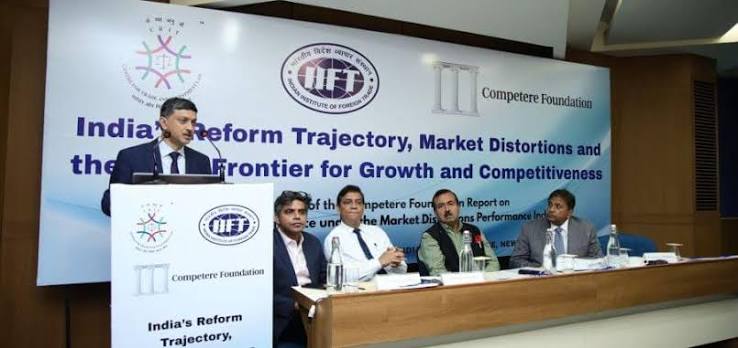
- 02 Aug 2026
In News:
The Competere Foundation, in collaboration with the Centre for Trade and Investment Law (CTIL), Indian Institute of Foreign Trade (IIFT), released the report "India's Next Growth Frontier: Reducing Anti-Competitive Market Distortions to Build on India's 2010–2023 Reform Progress."
What is India's Next Growth Frontier Report?
The report assesses India's structural economic reforms using the Market Distortions Performance Index (MDPI). It evaluates how policy reforms have reduced anti-competitive market distortions, strengthened competition, and improved India's global competitiveness.
The report aims to identify reforms that can further enhance productivity, attract investment, and support long-term economic growth.
Key Findings
India's performance improved significantly, with its MDPI ranking rising from 82nd in 2010 to 57th in 2023.
The assessment is based on three pillars:
- Protection of property rights
- Domestic competition
- International competition
Major reforms contributing to this improvement include the Goods and Services Tax (GST), Insolvency and Bankruptcy Code (IBC), trade facilitation measures, and broader regulatory reforms.
The report recommends adopting an evidence-based, consumer welfare-oriented competition policy, particularly for digital markets and emerging sectors. It also advocates reviewing sector-specific investment restrictions and strengthening international cooperation to reduce regulatory barriers to trade.
Significance
The report provides an independent benchmark for evaluating India's structural reform trajectory and competitiveness. It highlights reforms that improve the ease of doing business, attract domestic and foreign investment, and enhance productivity. It also identifies priority areas for future policy reforms to strengthen competition and deepen global trade integration.
About the Market Distortions Performance Index (MDPI)
The Market Distortions Performance Index (MDPI) measures the extent to which policy and regulatory frameworks reduce anti-competitive market distortions and promote efficient markets. It evaluates countries across three dimensions:
- Property rights protection
- Domestic competition
- International competition
Khelo India Scheme
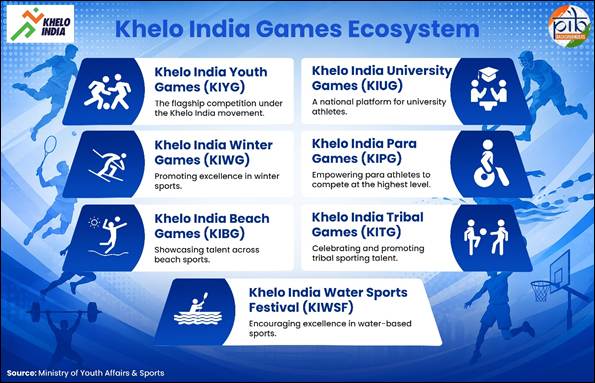
- 01 Aug 2026
In News:
The Government highlighted India's progress towards becoming a sporting nation during the Commonwealth Games 2026, showcasing the role of the Khelo India Scheme and related initiatives in strengthening the country's sports ecosystem.
What is the Khelo India Scheme?
Launched in 2017 by the Ministry of Youth Affairs and Sports, the Khelo India Scheme is the Government's flagship programme for developing a robust sports ecosystem from the grassroots to the elite level.
It integrates earlier schemes such as the Rajiv Gandhi Khel Abhiyan, Urban Sports Infrastructure Scheme, and National Sports Talent Search Scheme into a single framework to identify, nurture, and support sporting talent across the country.
Key Features
The scheme focuses on developing sports through:
- Grassroots talent identification and athlete development.
- Establishment of Khelo India Training Centres (KITCs), with the goal of one centre in every district.
- Strengthening coaching, sports science, nutrition, psychology, and performance monitoring.
- Development of modern sports infrastructure.
- Regular national competitions and leagues for different age groups and disciplines.
Khelo India Games
The Khelo India School Games were launched in 2018 and renamed the Khelo India Youth Games (KIYG) in 2019 after the Indian Olympic Association joined the initiative.
Since then, the programme has expanded through:
- Khelo India University Games (2020)
- Khelo India Winter Games (2020)
- Khelo India Para Games (2023)
- Khelo India Beach Games (2025)
- Khelo India Water Sports Festival (2025)
- Khelo India Tribal Games (2026)
More than 63,000 athletes have participated in Khelo India competitions since 2018.
Major Supporting Initiatives
Target Olympic Podium Scheme (TOPS)
Launched in 2014 and revamped in 2018, TOPS supports elite athletes through:
- Foreign training and international exposure.
- Specialised coaching and equipment.
- Monthly stipend of ?50,000 for Core Athletes.
- ?25,000 monthly support for Development Group athletes.
As of April 2026, the scheme supports:
- 51 Core Athletes
- 52 Para Core Athletes
- 130 Development Athletes
Khelo India Rising Talent Identification (KIRTI)
KIRTI identifies sporting talent among children aged 9–18 years using standardised testing, AI-based assessment, and data analytics.
- 174 Talent Assessment Centres established.
- Over 1.87 lakh assessments completed.
Sports Goods Manufacturing Initiative
The Union Budget 2026–27 allocated ?500 crore to strengthen domestic sports goods manufacturing, promote innovation, and position India as a global manufacturing hub.
Significance
Khelo India has transformed sports development by creating a structured pathway from grassroots talent identification to international competition. Investments in infrastructure, sports science, coaching, and athlete support have strengthened India's sporting ecosystem while promoting inclusive participation through dedicated events for university athletes, para-athletes, tribal communities, and emerging disciplines.
These initiatives also contribute to employment generation, indigenous sports manufacturing, and the long-term goal of making India a leading sporting nation by 2036 and a top-five sporting nation by 2047.
India's Sporting Performance
India's recent achievements reflect the impact of these initiatives:
- Olympics: Medal tally increased from 2 (Rio 2016) to 7 (Tokyo 2020) and 6 (Paris 2024).
- Paralympics: Improved from 4 medals (Rio 2016) to 29 medals (Paris 2024).
- Asian Games: Achieved a record 107 medals at Hangzhou 2023.
- Commonwealth Games: Won 64 medals (2014), 66 (2018) and 61 (2022).