
Indopottia Himalayensis
- 04 Jun 2026
In News:
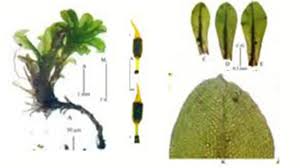
Scientists from the Botanical Survey of India (BSI) have discovered a new moss species, Indopottia himalayensis, in the high-altitude forests of Uttarakhand's Western Himalayas. The discovery is significant as it is only the third known species of the genus Indopottia worldwide, with the other two species found in the Western Ghats of India and Thailand.
About Indopottia himalayensis
- It is an entirely terrestrial moss that grows on soil-covered rocks.
- It reaches about 13 mm in height and is characterized by a rounded stem and a single upright cylindrical spore capsule.
- The capsule has a distinctive lid that bends sideways when dry, while its leaves lack the transparent bulging cells found in closely related species. These unique features helped scientists identify it as a new species.
- The discovery is significant from a biogeographical and evolutionary perspective. The presence of species belonging to the same genus in the Himalayas, Western Ghats, and Thailand suggests ancient ecological linkages and dispersal pathways across South and Southeast Asia.
- It also highlights the Himalayas as a repository of still-undiscovered biodiversity and reinforces the need for continued scientific exploration and conservation.
Mosses (Bryophytes): An Overview
- Mosses are small, non-vascular, spore-bearing plants belonging to the division Bryophyta. They are among the earliest plants to colonize land and are found across the world except in salt-water environments. Despite their simple structure, mosses have successfully adapted to diverse habitats ranging from damp forests and mountain slopes to deserts, volcanic regions, and even Antarctica.
- The major types of mosses include:Peat Moss (Sphagnum), Granite Moss, True Mosses
- Ecologically, mosses play a vital role in soil formation, moisture retention, nutrient cycling, and carbon sequestration. They also act as sensitive indicators of environmental change and ecosystem health.
The discovery of Indopottia himalayensis therefore goes beyond the addition of a new species to science. It underscores the ecological importance of bryophytes, enriches India's biodiversity records, and highlights the need to conserve fragile Himalayan ecosystems that continue to reveal new forms of life.