
VAIBHAV Fellowship Programme
- 06 Feb 2026
In News:
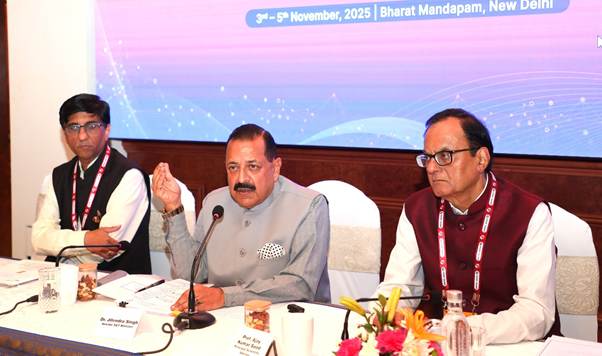
India has taken a strategic step to institutionalise engagement with its global scientific diaspora through the Vaishvik Bhartiya Vaigyanik (VAIBHAV) Fellowship Programme, aimed at strengthening the country’s research, innovation, and higher education ecosystem. The programme recently gained prominence when the Union Minister of State for Science and Technology interacted with VAIBHAV Fellows from across the world and outlined its role in India’s long-term development vision.
Overview of the VAIBHAV Fellowship Programme
The VAIBHAV Fellowship is designed to attract outstanding scientists and technologists of Indian origin including NRI, OCI, and PIO researchers who are actively engaged in advanced research abroad.
Key features include:
- Objective: To enhance India’s research ecosystem by facilitating structured academic and research collaboration between Indian institutions and leading global universities.
- Eligibility:
- PhD/MD/MS from a recognised university
- Affiliation with institutions ranked within the top 500 QS World University Rankings
- Duration: Up to 2 months per year, for a maximum of 3 years
- Financial Support: ?4 lakh per month for the entire fellowship period
- Scale and Scope:
- 75 fellows selected
- Engagement across 18 identified knowledge verticals, including quantum technologies, health, pharmaceuticals, electronics, agriculture, energy, computer sciences, and materials science
- Nodal Ministry: Department of Science and Technology, Ministry of Science and Technology
The fellowship seeks to lower collaboration barriers by simplifying travel, supporting structured student mobility, and enabling long-term institutional linkages.
VAIBHAV and the Shift from Brain Drain to Brain Exchange
Addressing NRI scientists at the Emerging Science, Technology and Innovation Conclave (ESTIC) 2025, Jitendra Singh emphasised that India’s engagement with its scientific diaspora must evolve from the traditional narrative of “brain drain” to “brain exchange” or “reverse brain drain”.
The vision underlying VAIBHAV is not merely physical relocation but continuous circulation of ideas, expertise, and innovation, enabled by digital technologies and collaborative research frameworks.
Institutional and Policy Significance
The programme reflects India’s broader strategy to:
- Internationalise its higher education and research ecosystem
- Integrate global best practices with indigenous problem-solving
- Strengthen science diplomacy and soft power
- Align diaspora expertise with national priorities such as Viksit Bharat @2047
VAIBHAV Fellows from countries including the United States, Canada, Sweden, and Australia have highlighted the need for:
- More structured student mobility frameworks
- Simplified travel and conference approval mechanisms
- Longer fellowship tenures to ensure sustainable research outcomes
Suggestions such as extending the fellowship duration from three to five years and creating pre-approved faculty lists for faster clearances were discussed.
Contribution to India’s Innovation Ecosystem
The discussions also underlined the importance of developing “systems for India”, focusing on indigenous technological solutions in emerging areas such as 5G/6G technologies, advanced manufacturing, and frontier sciences.
India’s improving innovation capacity was highlighted through indicators such as:
- A majority share of resident Indian patent filings in recent years
- Successful translation of research into outcomes, including indigenous vaccines, gene therapy, and space missions
The programme also complements efforts to promote public–private partnerships and cross-border research collaborations, enabling the translation of academic research into industrial and societal applications.