
Mahad Satyagraha
- 08 Dec 2025
In News:
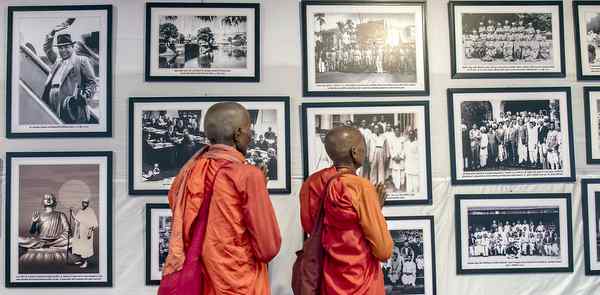
The Mahad Satyagraha was one of India’s earliest organisedcivil rights movements, led by Dr. B. R. Ambedkar in 1927 in Mahad (present-day Raigad district, Maharashtra). It challenged the practice of untouchability and asserted the right of Dalits to access public water sources, marking a crucial step in the evolution of India’s human rights discourse and later constitutional morality.
Background
- In 1923, the Bombay Legislative Council passed the Bole Resolution, recommending that so-called “untouchable” communities be allowed to use public wells, tanks, schools, and other civic facilities. Despite this legal provision, caste discrimination continued, especially in Mahad, where Dalits were denied access to the Chavdar (Chavadar) Tank, a public water reservoir.
- Mahad was chosen by Ambedkar due to its active social reform environment and presence of anti-caste leaders and organisations advocating equality.
Mahad Satyagraha - Phase I (March 19–20, 1927)
- Thousands of Dalits led by Ambedkar marched to the Chavdar Tank and drank water, symbolically asserting their right to equality and human dignity.
- The act triggered backlash from upper-caste groups, who performed “purification rituals” to “cleanse” the tank, reinforcing caste hierarchies.
- Legal disputes followed, with local elites claiming the tank was privately owned, leading to a court stay on Dalit access.
Mahad Satyagraha - Phase II (December 25–26, 1927)
- A second conference was organised at Mahad.
- As the legal case was pending, Ambedkar refrained from directly accessing the tank again.
- Instead, on December 25, 1927, he led the public burning of the Manusmriti, an ancient text seen as justifying caste hierarchy and gender inequality.
- Ambedkar also addressed women participants, stressing that gender equality was integral to the anti-caste struggle.
Key Features
- Assertion of Civil Rights: Access to public resources framed as a fundamental human right.
- Challenge to Scriptural Authority: Symbolic rejection of texts legitimising caste discrimination.
- Non-violent Protest: Inspired by democratic ideals but rooted in Ambedkar’s ethical vision of liberty, equality, and fraternity.
- Women’s Participation: Marked an early articulation of the link between caste oppression and gender inequality.
Outcomes and Legacy
- In 1937, the Bombay High Court ruled that there was no valid custom barring Dalits from public tanks, affirming equal civic rights.
- The movement strengthened Dalit political consciousness and laid the groundwork for later struggles, including temple entry movements.
- The principles articulated at Mahad later influenced the Fundamental Rights, equality provisions, and constitutional morality embedded in the Constitution of India.
- December 25 is commemorated in some traditions as Indian Women’s Liberation Day, recalling Ambedkar’s emphasis on gender justice.
Vaikom Satyagraha
- 30 Mar 2024
Why is it in the News?
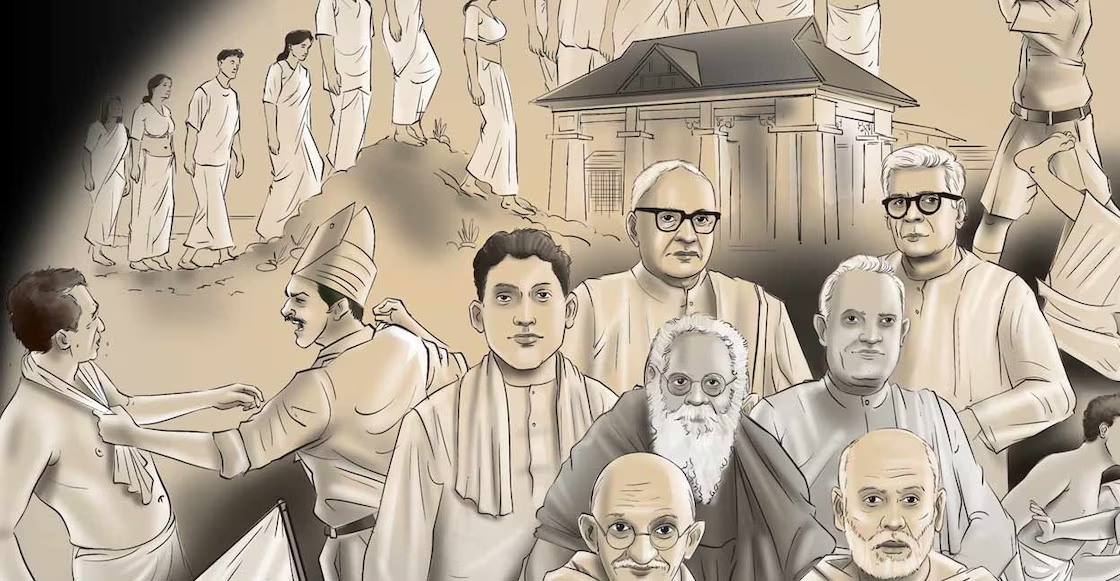
Vaikom, a temple town in the princely state of Travancore, saw the start of a non-violent agitation on March 30, 1924 — the first among temple entry movements that would soon sweep across the country.
What is Vaikom Satyagraha?
- Vaikom Satyagraha was a significant non-violent protest against the caste-based discrimination prevalent in the princely state of Travancore, characterized by a feudal, militaristic governance system entrenched with rigid social norms and customs.
- Discriminatory practices, such as the prohibition of lower castes like the Ezhavas and Pulayas from temple entry and even walking on roads near temples, were pervasive.
Contribution of Leaders:
- In 1923, the issue was brought to attention as a resolution by Madhavan during the Kakinada meeting of the All India Congress Committee.
- Subsequently, the Kerala Pradesh Congress Committee formed the Congress Untouchability Committee in January 1924 to address the matter.
- Pioneers of the Vaikom Satyagraha movement include Madhavan, K.P. Kesava Menon, then secretary of the Kerala Pradesh Congress Committee, and K. Kelappan, a prominent Congress leader and educationist known as Kerala Gandhi.
Factors Leading to Satyagraha:
- The expansion of Christian missionaries, backed by the East India Company, led to conversions among lower castes seeking liberation from an oppressive system.
- Maharaja Ayilyam Thirunal initiated several progressive reforms, notably the establishment of a modern education system providing free primary education for all, including lower castes.
- These reforms, alongside the influence of capitalism, contributed to the emergence of new social hierarchies, sometimes conflicting with traditional ones.
Commencement of Satyagraha:
- On March 30, 1924, the Satyagrahis embarked on a procession towards the restricted public roads, where a board warned oppressed communities against walking (near the Vaikom Mahadeva temple).
- Despite being halted 50 yards away, individuals such as Govinda Panikkar (Nair), Bahuleyan (Ezhava), and Kunjappu (Pulaya), adorned in khadi attire, courageously defied the prohibition orders.
- Subsequently, they were stopped by the police and, in protest, sat on the road, resulting in their arrest.
- Following this incident, three volunteers from different communities were designated each day to walk on the prohibited roads. Within a week, the movement's leaders were all apprehended by authorities.
Role of Women:
- Large-scale participation of women was witnessed for the first time during the Satyagraha, marking the passage of women into the socio-political consciousness of the country.
- Nagammai, the wife of Periyar, and Kannammal, his sister, played unprecedented roles in the struggle.
Arrival of Gandhi:
- In March 1925, Gandhi arrived at Vaikom and engaged in discussions with leaders from various caste groups.
- He also met with the Maharani Regent at her Varkala camp.
Withdrawal of Vaikom Satyagraha:
- The Vaikom Satyagraha was officially terminated on November 30, 1925, following consultations between Gandhi and W.H. Pitt, the police commissioner of Travancore.
- A compromise was reached, leading to the release of all prisoners and the granting of access to roads.
Temple Entry Proclamation:
- In 1936, the historic Temple Entry Proclamation was signed by the Maharaja of Travancore, abolishing the age-old ban on temple entry.
Significance:
- During a period of growing nationalist fervor and widespread agitation, the Vaikom Satyagraha emerged as a pivotal catalyst for social reform.
- Introducing Gandhian principles of nonviolent resistance to Travancore for the first time, marked a significant departure from traditional modes of protest.
- Enduring for over 600 consecutive days, despite social pressure, police interventions, and even a natural disaster in 1924, the steadfastness of the movement is commendable.
- The Vaikom Satyagraha fostered unprecedented unity across caste lines, showcasing a remarkable display of solidarity among diverse communities.