
Indian Mouse Deer
- 06 Nov 2025
In News:
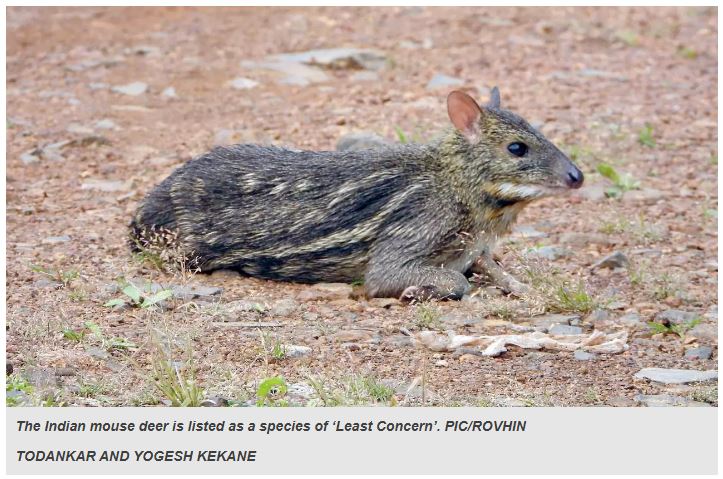
A rare Indian mouse deer (Moschiola indica) was recently photographed at the Tungareshwar Wildlife Sanctuary (TWS) in Vasai by the Wildlife Research Division of the Vivek PARC Foundation. Sightings of this species are uncommon due to its nocturnal and secretive behaviour, highlighting the ecological value of the sanctuary as a refuge for elusive fauna.
About the Indian Mouse Deer
Taxonomy
- Common Name: Indian Mouse Deer / Indian Spotted Chevrotain
- Scientific Name: Moschiola indica
- Family: Tragulidae
- Order: Artiodactyla (even-toed ungulates)
- One of the smallest ungulates globally and the smallest deer-like species in India.
Key Characteristics
- Size:
- Shoulder height: 25–30 cm
- Body length: ~57.5 cm (23 inches)
- Weight: 2–4 kg
- Appearance:
- Dark brown fur with 4–5 rows of white dorsal spots
- White underparts
- Canines: Males possess tusk-like upper canines, used during territorial or mating conflicts.
- Stomach: Unique among ruminant-like species—has a three-chambered stomach instead of the typical four.
- Diet:
- Omnivorous tendencies: fruits, leaves, herbs, roots
- Occasionally eats insects, crustaceans, and small mammals
- Lifespan: 8–12 years
- Behaviour:
- Nocturnal, shy, and highly elusive, usually found in dense forest cover.
- Prefers habitats away from human settlements, making sightings rare.
Distribution
- Endemic to the Indian Subcontinent.
- India:
- Widespread in peninsular India.
- Common in Western Ghats, Eastern Ghats up to Odisha, and central Indian forests.
- Outside India:
- Old records from Nepal.
- Sri Lanka hosts a separate species: Spotted Chevrotain (Moschiola meminna).
Habitat
- Found in:
- Semi-evergreen forests
- Moist evergreen forests
- Tropical deciduous forests
Conservation Status
- IUCN Red List: Least Concern (LC)
- However, populations face threats from:
- Habitat loss and fragmentation
- Human disturbance
- Declining forest quality
- However, populations face threats from: