
International Space Station (ISS)
- 07 Feb 2026
In News:
The International Space Station (ISS) is scheduled to be de-orbited in 2030, marking the end of nearly three decades of continuous human presence in low Earth orbit.
What is the International Space Station (ISS)?
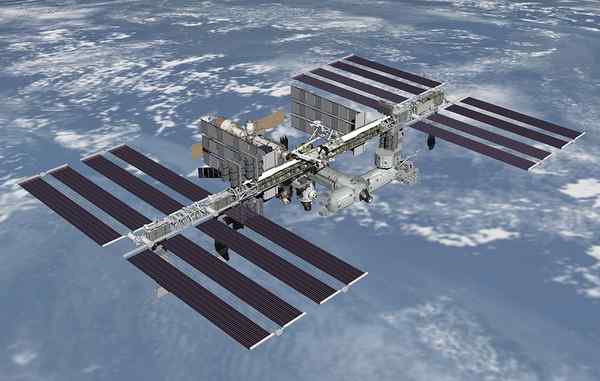
The International Space Station (ISS) is a permanently crewed, modular and habitable microgravity laboratory orbiting the Earth at an average altitude of ~400 km in Low Earth Orbit (LEO). It has remained continuously inhabited since November 2000, making it the longest-running human space mission in history.
Timeline and Development
- 1998: Assembly began with the launch of the first module Zarya.
- November 2000: Continuous human habitation started (Expedition 1).
- 1998–2011: Station assembled in orbit through multiple missions.
- 2030 (planned): Controlled de-orbit and re-entry over a remote oceanic region.
Participating Agencies
The ISS is operated through a unique international partnership involving five major space agencies:
- NASA (United States)
- Roscosmos (Russia)
- European Space Agency
- JAXA (Japan)
- Canadian Space Agency
The ISS is governed through shared responsibility, with each partner managing the hardware it contributes.
Key Features
- Largest human-made structure in space
- Mass: ~400,000 kg
- Length: ~109 metres
- Power Source: Large solar arrays generating tens of kilowatts of electricity.
- Modular Architecture: Multiple pressurised and truss modules assembled in orbit.
- Permanent Human Presence: Astronauts onboard 24/7 since 2000.
- Orbital Speed: ~7.7–8 km per second (one orbit every ~90 minutes).
Objectives and Functions
- Conduct microgravity research in biology, physics and materials science.
- Study long-term effects of spaceflight on humans:
- Bone density loss
- Muscle atrophy
- Immune system changes
- Radiation exposure
- Test technologies for deep-space missions (Moon and Mars).
- Enable Earth observation and climate-related studies.
- Support the emerging Low Earth Orbit (LEO) economy by hosting private experiments and technology demonstrations.
Planned De-orbit (2030)
- Ageing structure and outdated systems have necessitated retirement.
- A dedicated U.S. Deorbit Vehicle will slow the station and guide it into a controlled re-entry.
- The ISS will break up over a remote oceanic area (near Point Nemo) to avoid risk to human life.
- Similar controlled ocean disposal was used for earlier stations like Mir.
Significance
- Global Cooperation: A rare symbol of sustained peaceful collaboration even during geopolitical tensions.
- Scientific Legacy: Advanced understanding of human health, materials and long-duration spaceflight.
- Exploration Readiness: Operational experience critical for future lunar and Martian missions.
- Transition Phase: After 2030, China’s Tiangong will be the only operational space station in LEO, while focus shifts towards commercial space stations by private players.