
Frontier Nagaland Territorial Authority (FNTA)
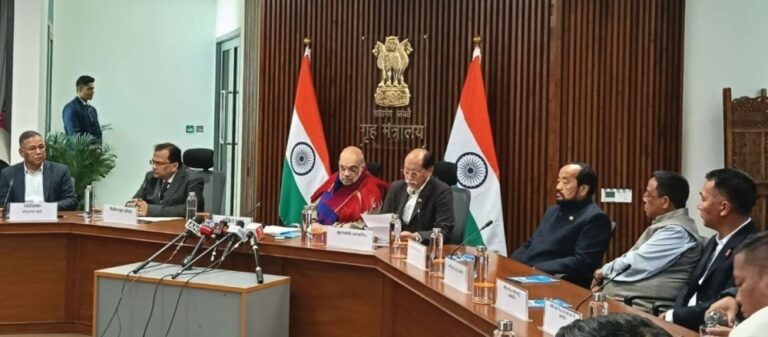
- 07 Feb 2026
In News:
A historic tripartite agreement was signed in New Delhi between the Government of India, the Government of Nagaland, and the Eastern Nagaland Peoples’ Organisation (ENPO) for the creation of the Frontier Nagaland Territorial Authority (FNTA).
Background
The agreement marks a major step towards addressing long-standing political, economic and developmental grievances of Eastern Nagaland. It aligns with the Government of India’s broader objective of achieving a peaceful, dispute-free and developed North-East through dialogue and negotiated settlements.
Since 2019, multiple peace and autonomy agreements have been concluded in the North-East, reflecting a shift from conflict-driven approaches to democratic and constitutional solutions.
Key Parties to the Agreement
- Government of India
- Government of Nagaland
- Eastern Nagaland Peoples’ Organisation (ENPO)
- Apex body representing eight recognised Naga tribes of Eastern Nagaland.
About Frontier Nagaland Territorial Authority (FNTA)
Nature of the Arrangement
- FNTA is an autonomous territorial governance structure.
- It remains within the State of Nagaland (not a separate state or UT).
- Designed to provide enhanced administrative and financial autonomy.
Districts Covered
FNTA will cover six eastern districts of Nagaland: Tuensang, Mon, Kiphire, Longleng, Noklak, and Shamator
Salient Features of the Agreement
1. Devolution of Powers
- 46 subjects transferred to FNTA.
- Enables localised decision-making and faster development execution.
2. Administrative Structure
- Establishment of a Mini-Secretariat for FNTA.
- Headed by an Additional Chief Secretary / Principal Secretary–level officer.
3. Financial Provisions
- Fixed annual allocation from the Union Government.
- Development outlay shared proportionate to population and area.
- Initial establishment expenditure to be borne by the Union Ministry of Home Affairs.
- Ensures financial autonomy and predictable funding.
4. Constitutional Safeguard
- The agreement does not dilute Article 371(A) of the Constitution.
- Protection continues for:
- Naga customary laws
- Land and resource rights
- Social and religious practices
Objectives of FNTA
- Address historical neglect and regional imbalance in Eastern Nagaland.
- Promote balanced regional development.
- Enable financial autonomy and participatory governance.
- Strengthen peace, stability and democratic engagement in the North-East.
Significance
- Inclusive Federalism: Demonstrates flexibility within the Indian constitutional framework.
- Peace-building: Reduces scope for political alienation and separatist demands.
- Developmental Push: Facilitates infrastructure development, economic empowerment and efficient resource use.
- Democratic Resolution: Reinforces dialogue and negotiation over violence and insurgency.
- Strategic Importance: Eastern Nagaland’s location enhances the significance of stable governance.