
Solid Waste Management (SWM) Rules, 2026
- 11 May 2026
In News:
The Solid Waste Management (SWM) Rules, 2026, which came into effect on April 1, 2026, were intended to be a watershed moment for India’s environmental governance. However, the framework has sparked a nationwide debate regarding the "Centralisation Reflex" of the Union government. While the rules aim for uniformity, critics argue they overlook the principles of subsidiarity and federalism, potentially prioritizing bureaucratic compliance over actual ecological restoration.
The Scale of India’s Ecological Emergency
India is currently grappling with a waste crisis that has evolved into a multi-dimensional ecological emergency. Centralized management has often failed to address the granular realities of this crisis:
- Fiscal Inefficiency: Currently, 40%–50% of municipal budgets are drained by secondary transport (moving waste to distant landfills) rather than processing it at the source.
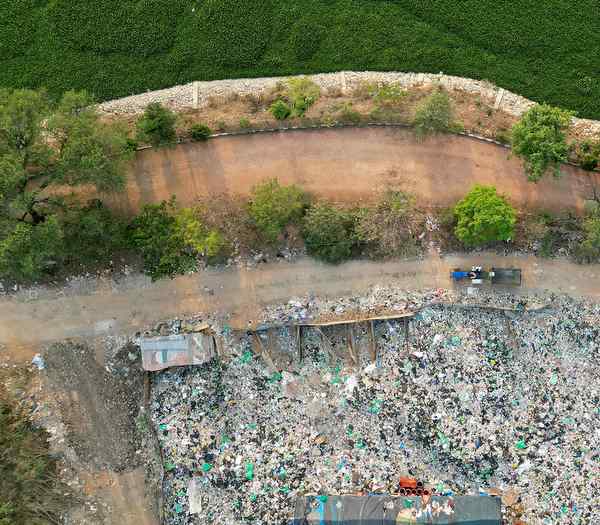
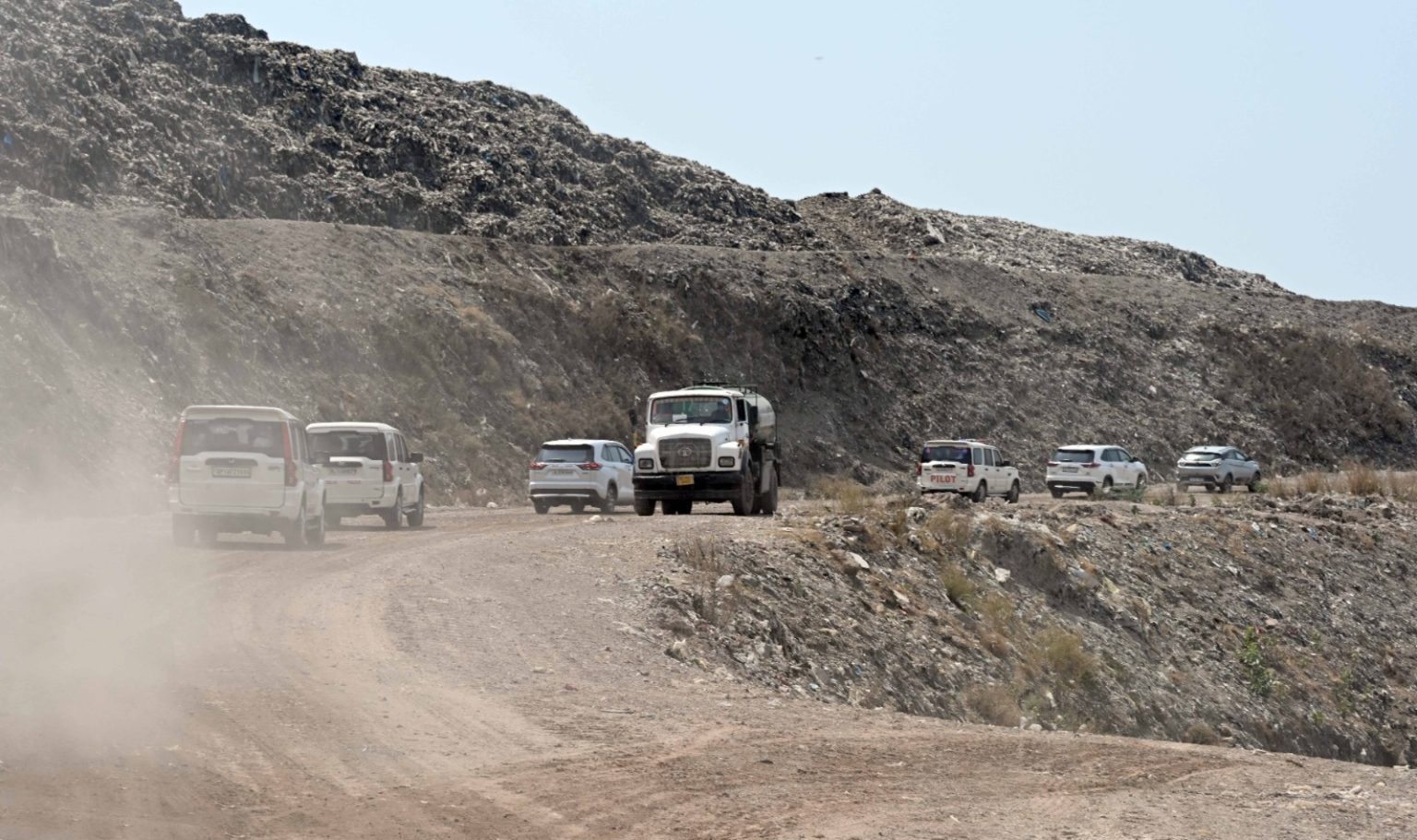
- The Landfill Menace: Urban centers are ringed by "mountains of methane." The 2024 fires in Kochi and Delhi underscored the catastrophic air pollution and greenhouse gas emissions stemming from these legacy dumpsites.
- Urban and Rural Clogging: In cities like Bengaluru and Mumbai, plastic-clogged drains were identified as the primary driver of the 2025 monsoon floods. Meanwhile, rural India is facing a new crisis: a surge in e-waste and hazardous pesticide containers without any localized collection mechanisms.
- Water Contamination: Toxic leachate from landfills adjacent to water bodies—visible in the hyacinth-choked lakes of Bengaluru—is leading to irreversible nutrient loading and groundwater poisoning.
The Centralisation Reflex: Why Top-Down Models Persist
The 2026 Rules lean heavily toward a "one-size-fits-all" technocratic vision. This centralization is driven by several institutional beliefs:
- The Incapacity Argument: A prevailing assumption that Gram Panchayats and Urban Local Bodies (ULBs) lack the technical competence to manage waste, leading the Centre to design a single operational blueprint for both a metropolis like Mumbai and a remote Himalayan village.
- Trust Deficit: The mandate for a centralized online portal managed by the Central Pollution Control Board (CPCB) forces local bodies to act as mere "data suppliers" rather than autonomous governors.
- Judicialised Administration: To meet court-mandated timelines and avoid litigation, the Centre creates rigid, uniform standards that are easier to defend legally but difficult to implement administratively at the grassroots level.
- Atrophy of Local Expertise: By shifting decision-making to New Delhi, local bodies lose the opportunity to "learn by doing," becoming dependent on central instructions rather than developing indigenous composting or recycling models.
Implications for Governance and Federalism
The shift toward centralized control carries significant risks for India’s democratic and administrative fabric:
- Blurred Accountability: When a village fails to manage waste based on a design made in Delhi, officials often engage in a "blame game"—local bodies cite a lack of funds, while the Centre alleges poor implementation.
- Erosion of the State List: Sanitation and public health are State subjects under the Seventh Schedule. The 2026 Rules effectively reduce States to mere implementing agencies, stifling their ability to act as "policy laboratories."
- Unproductive Compliance: The current system prioritizes "paper-based compliance." Sanitation workers are frequently diverted from street-level waste management to perform data entry for central dashboards.
- Fiscal Stress: New mandates often arrive without formula-based financing, forcing small local bodies to purchase expensive equipment they cannot maintain, leading to the quiet evasion of the rules.
A Decentralised Way Forward: The Path to Subsidiarity
To transform the SWM Rules, 2026, from a technocratic exercise into a successful ecological tool, the following reforms are essential:
- Embrace Subsidiarity: Authority must shift to the lowest level of governance—the Ward and Gram Sabha. Decisions should be made by those closest to the waste generation, utilizing local knowledge and informal worker networks.
- State-Led Policy Laboratories: States should be allowed to frame their own rules for a five-year period to test novel solutions, such as Kerala’s model of Self-Help Group-led composting.
- Phased and Tiered Rollout: Strict, high-tech compliance should be prioritized for megacities (population >1 crore), while rural hamlets should be allowed to adopt simplified, nature-based processing models.
- Shared Federal Data Platforms: The CPCB portal should evolve from a "monitoring tool" into a "service platform" where local bodies can customize dashboards for their own specific governance needs.
- Predictable Financing: Every new obligation mandated by the Rules must be backed by statutory, formula-based financial transfers to ensure local bodies are not set up for failure.
Solid Waste Management (SWM) Rules, 2026
- 02 Apr 2026
In News:
In a decisive step toward achieving a "Zero Waste to Landfill" goal, the Ministry of Environment, Forest and Climate Change (MoEFCC) has notified the Solid Waste Management Rules, 2026. Set to replace the decade-old 2016 framework starting April 1, 2026, these rules shift India's urban governance from a "collect-and-dump" model to a robust Circular Economy approach.
The rules are issued under the statutory powers of the Environment (Protection) Act, 1986, and aim to formalize the waste management sector through digital tracking and enhanced generator accountability.
Key Pillars of the 2026 Framework
A. Mandatory Four-Stream Segregation
Unlike the previous three-stream model, the 2026 rules mandate source segregation into four distinct categories to improve the efficiency of processing:
- Wet Waste: Organic and food waste for composting or bio-methanation.
- Dry Waste: Recyclables like plastic, paper, and metal destined for Material Recovery Facilities (MRFs).
- Sanitary Waste: Diapers and napkins must now be wrapped securely for specialized handling.
- Special Care Waste: Domestic hazardous items, including expired medicines, paint cans, and bulbs.
B. Extended Bulk Waste Generator Responsibility (EBWGR)
The rules tighten the definition and responsibility of "Bulk Generators." Entities generating over 100 kg/day, consuming 40,000 liters of water/day, or occupying 20,000 sq.m. must:
- Process organic waste on-site.
- Or, purchase EBWGR certificates to ensure their waste is managed scientifically elsewhere.
C. Digital Governance & Transparency
A Centralised Online Portal will be established to track the waste lifecycle. All stakeholdersfrom municipal bodies to private recyclersmust register, report data, and undergo digital audits. This aims to eliminate "leakage" where waste is illegally dumped.
D. Industrial Integration & RDF
To reduce the burden on landfills, the rules promote Refuse-Derived Fuel (RDF). Industries such as cement plants are mandated to increase their use of RDF as a fuel substitute from the current 5% to 15% over the next six years.
Remediation and Regional Provisions
- Legacy Waste: The rules mandate time-bound biomining and bioremediation of existing dumpsites (legacy waste) to reclaim land and prevent leachate contamination.
- Landfill Restrictions: Landfills are strictly limited to non-recyclable, non-combustible, and inert waste only.
- Hilly and Island Regions: Acknowledging the ecological sensitivity of these areas, local bodies are empowered to levy user fees on tourists and can regulate tourist inflow based on the local waste-processing capacity.
- Buffer Zones: New facilities must maintain mandatory buffer zones, with graded criteria to expedite land allocation for waste processing units.
Enforcement: The "Polluter Pays" Principle
The 2026 Rules introduce a stringent Environmental Compensation regime. Penalties will be levied for:
- Operating without mandatory registration.
- Submission of fraudulent data on the centralized portal.
- Failure to adhere to segregation or processing timelines.
The SWM Rules 2026 complement the Swachh Bharat Mission (Urban) 2.0 and India’s commitments under the UN Sustainable Development Goals (SDG 11 & 12) regarding sustainable cities and responsible consumption.
Solid Waste Management (SWM) Rules, 2026
- 05 Feb 2026
In News:
The Ministry of Environment Forest and Climate Change has notified the Solid Waste Management Rules, 2026, replacing the 2016 rules under the Environment Protection Act. The new framework comes into force from 1 April 2026 and aims to strengthen segregation, accountability, and circular use of waste.
Key Objectives
The rules seek to reduce landfill dependence, promote scientific waste processing, operationalise the polluter pays principle, and align waste governance with circular economy goals under urban missions like Swachh Bharat Mission 2.0 and AMRUT 2.0.
Major Features
- Four-Stream Segregation at Source (Mandatory): Households, institutions, and establishments must segregate waste into:
- Wet waste: Kitchen and biodegradable waste; to be composted or bio-methanated
- Dry waste: Plastic, paper, metal, glass, etc.; to be sent to Material Recovery Facilities (MRFs)
- Sanitary waste: Diapers, sanitary pads, etc.; to be securely wrapped and separately stored
- Special care waste: Bulbs, medicines, paint containers, batteries; to be handed to authorised agencies
- Polluter Pays Principle: Environmental compensation will be imposed for violations such as non-registration, false reporting, and improper disposal. Guidelines will be framed by the Central Pollution Control Board, while enforcement will be done by State Pollution Control Boards and Pollution Control Committees.
- Bulk Waste Generators (BWGs) – Clear Definition: Entities are classified as BWGs if they meet any one of these thresholds:
- Floor area ≥ 20,000 sq m
- Water consumption ≥ 40,000 litres/day
- Waste generation ≥ 100 kg/day
This includes government offices, residential societies, institutions, universities, and commercial complexes—together accounting for nearly 30% of total waste.
- Extended Bulk Waste Generator Responsibility (EBWGR): BWGs must process wet waste on-site wherever feasible or obtain an EBWGR certificate. This reduces pressure on urban local bodies and enforces accountability at the source.
- Centralised Digital Monitoring: A national online portal will track registration, authorisation, waste processing, audits, and legacy waste remediation, replacing manual systems and improving transparency.
- Faster Land Allocation for Processing Facilities: Graded siting criteria and buffer norms for facilities handling over 5 tonnes/day will speed up infrastructure creation, guided by CPCB norms.
- Refuse Derived Fuel (RDF) Mandate: Industries such as cement kilns and waste-to-energy plants must increase RDF use from 5% to 15% over six years. RDF is high-calorific fuel made from non-recyclable dry waste, promoting resource recovery.
- Restrictions on Landfilling: Only inert, non-recyclable, and non-energy-recoverable waste can be landfilled. Higher landfill fees for unsegregated waste are intended to incentivise segregation.
- Legacy Waste Remediation: Mandatory biomining and bioremediation of old dumpsites with time-bound targets and quarterly reporting via the portal. District Collectors will oversee audits.
- Duties of Local Bodies and MRFs: Urban local bodies must ensure collection, segregation, and transportation. MRFs are formally recognised as key facilities for sorting and can also receive sanitary and other waste streams.
- Special Provisions for Hilly Areas and Islands: Local bodies can levy tourist user fees, regulate visitor numbers, and promote decentralised processing of biodegradable waste by hotels and institutions.
- Institutional Mechanism: State-level committees chaired by Chief Secretaries (or UT Administrators) will supervise implementation and advise CPCB.
Significance
India generates roughly 1.85 lakh tonnes of municipal solid waste per day (CPCB data). The 2026 rules emphasise prevention, segregation, recycling, and energy recovery before disposal, embedding circular economy principles in urban governance. Scientific waste handling reduces pollution, greenhouse gas emissions from landfills, and public health risks such as vector-borne diseases.
Challenges
Implementation gaps at municipal levels, inadequate processing infrastructure, weak segregation at household level, financial stress on smaller towns, and the need to formally integrate waste pickers remain major hurdles.
Way Forward
Success depends on strengthening urban local body capacity, behavioural change campaigns for segregation, private sector participation in recycling, technological tools for monitoring, and integration with climate, plastic, and renewable energy policies. If effectively executed, the SWM Rules, 2026 can transform India’s waste burden into an opportunity for sustainable and resource-efficient urban development.