
Public Health Emergency of International Concern
- 19 May 2026
In News:
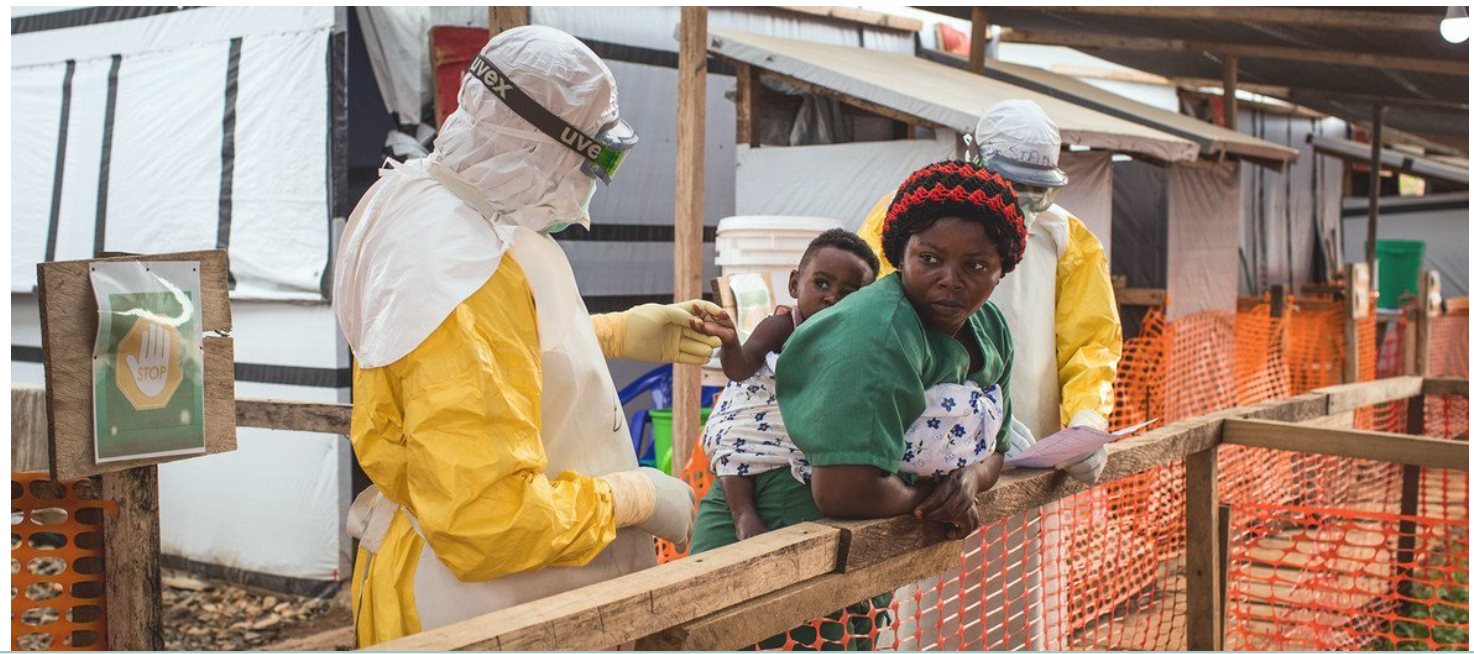
The World Health Organization (WHO) declared the ongoing Ebola outbreak in the Democratic Republic of the Congo (DRC) and Uganda a Public Health Emergency of International Concern (PHEIC). Triggered by rising cases, cross-border transmission, and the specific complexities of the Bundibugyo strain—for which no approved vaccines or specific treatments currently exist—the announcement emphasizes global health vulnerability.
What is a Public Health Emergency of International Concern (PHEIC)?
A PHEIC is a formal declaration by the WHO, representing its highest level of global health alert. It signifies an extraordinary event determined to constitute a public health risk to other states through the international spread of disease, potentially requiring a coordinated international response.
Key Institutional Features:
- Governance and Mandate: It is bound by the International Health Regulations (IHR), legally requiring involved state parties to respond promptly.
- The Decision-Making Body: Declarations are determined by the IHR Emergency Committee, an expert group constituted in the aftermath of the 2002–2004 Severe Acute Respiratory Syndrome (SARS) outbreak.
- Review Cycle: The declaration is reassessed on a tri-monthly (three-month) basis and renewed based on evolving epidemiological data.
- Scope Beyond Infections: Uniquely, a PHEIC can be triggered not just by infectious biological pathogens, but also by public health hazards arising from chemical agents or radioactive materials.
- Exceptional Powers: Certain critical disease outbreaks can be fast-tracked and declared a PHEIC directly by the WHO Director-General without prior consensus or approval from the broader IHR framework.
The International Health Regulations (IHR): Evolution and Mandate
The IHR functions as the governing legal instrument for global epidemiological surveillance and response.
- Origin: The Health Assembly (the apex decision-making organ of the WHO) initially adopted the IHR in 1969 to prevent cross-border disease spread.
- The 2005 Revisions: Following the highly disruptive, chaotic global outbreak of SARS (2002–2004), the framework underwent a massive overhaul. The IHR (2005) was adopted at the 58th World Health Assembly.
- Jurisdiction: It acts as a binding international agreement across 196 signatory countries committed to upholding global health security, with the WHO designated as the central coordinating body.