
Chandrayaan-3 Hop Experiment
- 25 May 2026
In News:
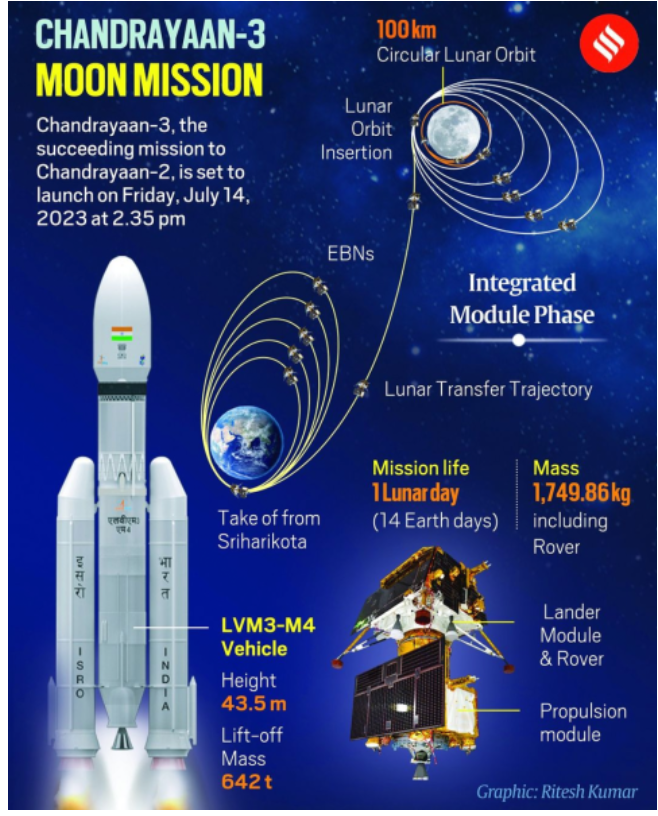
Findings from the Chandrayaan-3 Vikram lander's "hop" experiment, published in The Astrophysical Journal in April 2026, demonstrate significant heterogeneity in the Moon's surface composition at local scales — challenging previous assumptions about lunar soil uniformity and providing India's first in-situ geotechnical data from the lunar south polar region.
The Hop Experiment:
On 2 September 2023, engineers reignited Vikram's engines to perform a short vertical hop of approximately 50 centimetres using residual propellant. The manoeuvre was initially designed to validate re-ignition capabilities for future sample-return missions, but the engine exhaust inadvertently stripped away the top three centimetres of loose lunar dust, exposing denser material beneath — providing a unique opportunity to study subsurface regolith properties at the south pole for the first time.
The Chandra's Surface Thermophysical Experiment (ChaSTE) — equipped with temperature sensors and a heating probe that penetrated the regolith — was then redeployed at the new post-hop location, measuring thermal profiles during the twilight transition (16:25–17:30 lunar local time), a slow cooling period lasting hours due to the Moon's month-long day-night cycle.
Key Scientific Findings
Two-Layer "Cake-Like" Structure
The Moon's surface at the south pole exhibits a distinct, two-layer structure within the top few centimetres — not a uniform pile of dust as previously assumed.
Upper Layer (0–6 cm) — The "Fluffy Thermal Blanket": The top layer is hyper-porous and highly cohesive, behaving like loose flour near the surface. Bulk density increases dramatically from 750 kg/m³ at the surface to 1,600 kg/m³ at a depth of just 6.5 cm — where the material becomes significantly stiffer, behaving more like damp clay.
Thermal Behaviour:ChaSTE captured a sharp temperature drop after 17:00 lunar local time, as the absence of an atmosphere allows heat to radiate rapidly into space once the Sun's rays are blocked by local shadows — demonstrating how the hyper-porous top layer functions as a critical thermal insulator.
Supporting Evidence: 3D simulations using Chandrayaan-2's OHRC (Orbiter High Resolution Camera) high-resolution imagery confirmed the regolith's layered stratigraphy.
What is Lunar Regolith?
Scientists emphasise that the Moon's surface layer is more accurately termed "lunar regolith" rather than "lunar soil" — it consists of shattered rock fragments and jagged glass-like shards formed by billions of years of micrometeorite bombardment. Unlike terrestrial soil, it lacks organic material or water-formed minerals, and its jagged, angular particles create unusual mechanical properties — high cohesion yet extreme looseness at the surface.
Why It Matters: Five Implications
- Water-Ice Storage: The hyper-porous top layer is particularly significant for trapping water-ice molecules in the subsurface — critical for assessing the viability of in-situ resource utilisation (ISRU) at lunar south polar bases.
- Future Lunar Base Planning: The dramatic density gradient within just 6.5 cm means that drilling, foundation engineering, and habitat construction at the lunar south pole will require significantly different approaches than originally modelled — directly informing NASA's Artemis programme and ISRO's own lunar ambitions.
- Rocket Plume-Surface Interaction: Understanding how engine exhaust erodes the regolith is essential for safe landing zone design for future crewed and cargo missions — preventing landing struts from sinking into loose surface material.
- Sample Return Missions: The hop experiment validates critical engine re-ignition capabilities, setting a precedent for future sample-return missions.
- Chandrayaan-4 Design Inputs: India's upcoming Chandrayaan-4 mission — designed for lunar sample collection and return — will directly incorporate these findings in its lander design and landing site selection.
New Space Missions and Developments
- 28 Oct 2024
In News:
The Space Commission also approved a joint moon mission with Japan called the Lunar Polar Exploration Mission. For LUPEX, ISRO is developing a different moon lander than the one it used for Chandrayaan-3
New Space Missions and Developments
- Chandrayaan-4 (Moon Mission):
- Type: Sample-return mission.
- Launch: Expected by 2027.
- Cost: ?2,104 crore.
- Objective: Sample collection of moon soil and rock to return to Earth.
- Mission Details: Two LVM-3 launch vehicles will launch components that will dock in Earth orbit before heading to the moon. The samples will be sent back using a bespoke canister.
- Lunar Polar Exploration Mission (LUPEX):
- Collaboration: Joint mission with Japan.
- Objective: Exploration of lunar poles with a new lander design, intended for potential crewed missions in future.
- Venus Orbiter Mission:
- Launch Window: March 2028.
- Cost: ?1,236 crore.
- Objective: Study Venus' surface and atmosphere to understand planetary evolution in the Solar System.
- Next Generation Launch Vehicle (NGLV):
- Development Budget: ?8,240 crore for first three development flights.
- Objective: A new launcher developed with private sector collaboration for future space missions.
Cabinet Approvals for Space Initiatives
- Human Spaceflight Programme (Gaganyaan):
- Four new missions under Gaganyaan, including an uncrewed Gaganyaan flight.
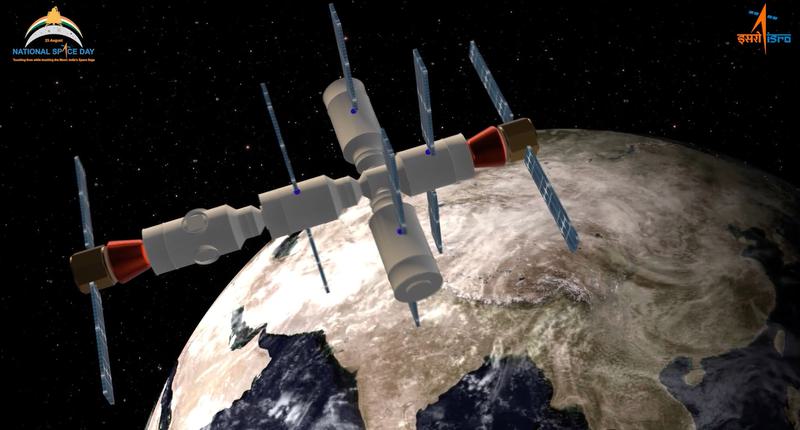
- Focus on developing technologies for India’s first space station, Bharatiya Antariksh Station (BAS), planned by 2028.
- Space-Based Surveillance (SBS) Missions:
- Phase 3: Approval for building 21 ISRO satellites, with 31 additional satellites by private companies.
- Total Cost: ?26,968 crore.
- Development of a Third Launch Pad:
- To support the NGLV and additional space missions at Sriharikota.
Upcoming Satellite Missions
- NISAR (NASA-ISRO Synthetic Aperture Radar):
- Launch: Early 2025 on a GSAT launch vehicle.
- Purpose: Earth observation using advanced radar technology.
- Issue: Protective coating added due to high temperatures during testing.
- Proba-3 (European Space Agency):
- Launch: November 29, 2024, aboard PSLV-XL.
- Objective: Study the Sun’s corona using two satellites in formation, mimicking an eclipse to capture unique solar data.
Private Sector Involvement
- Manastu Space & Dhruva Space:
- Collaboration: Testing green propulsion technology for the LEAP-3 mission.
- Technology: Hydrogen-peroxide-based green propulsion system.
- Launch: LEAP-3 mission in 2025.
- Bellatrix Aerospace:
- Project: Prototype satellite for ultra-low earth orbit at 200 km altitude.
- Ananth Technologies:
- Achievement: First private company to assemble, integrate, and test Space Docking Experiment (SpaDEx) satellites for ISRO.
Space Science and Research Updates
- Chandrayaan-3:
- Findings: The crater where Chandrayaan-3 landed is older than the South Pole-Aitken Basin (4.2-4.3 billion years old).
- Data Source: Optical High-Resolution Camera (Chandrayaan-2) and Pragyaan rover (Chandrayaan-3).
- Astrosat (India’s First Space Observatory):
- Mission Life: Expected to last two more years (originally planned for 5 years).
- Significance: Contributed to over 400 published papers based on multi-wavelength space observatory data.
Chandrayaan-3 Propulsion Module Retraces Steps to Earth Orbit (Indian Express)
- 07 Dec 2023
Why is it in the News?
Scientists have brought the Propulsion Module (PM) of the Chandrayaan-3 mission , which initially brought the Vikram lander to within 100 km of the Moon's surface before detaching and executing a historic controlled descent on August 23, back into Earth orbit.
What is a Propulsion Module in Chandrayaan-3?
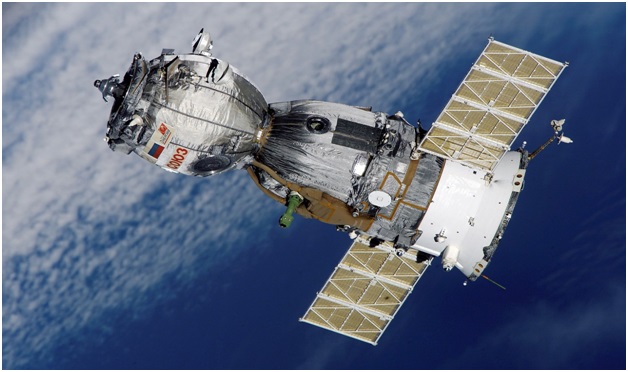
- The Propulsion Module is a rectangular component of the Chandrayaan-3 spacecraft, equipped with solar panels for power.
- Its primary purpose was to transport the Lander module to the lunar polar circular orbit and facilitate its separation.
- Following separation, the SHAPE payload within the Propulsion Module was activated.
- Initially intended for a three-month operation during the mission, the ISRO announced on December 4th that the Chandrayaan-3's Propulsion Module had been manoeuvred out of lunar orbit.
- Placed high above Earth for an additional mission, the module is currently sustained by residual fuel.
- This bonus mission will showcase technologies crucial for future lunar sample retrieval, according to ISRO.
- As of now, the ISRO has not disclosed its plans for the spacecraft once it depletes its fuel.
Importance of Propulsion Module's Return to Earth's Orbit:
- ISRO highlighted the key achievements resulting from the return manoeuvres conducted on the Propulsion Module (PM) in connection to upcoming missions:
- Planning and executing the trajectory and manoeuvres for the return journey from the Moon to Earth.
- Developing a software module for planning such manoeuvres, along with its initial validation.
- Planning and executing a gravity-assisted flyby around a planet or celestial body.
- Preventing uncontrolled crashing of the PM onto the Moon's surface at the end of its life, aligning with the requirement of avoiding debris creation.
What is Chandrayaan-3 Mission?
TransLunar Injection (TLI) (The Hindu)
- 02 Aug 2023
Why in the News?
The TransLunar Injection (TLI) was performed successfully from ISRO Telemetry, Tracking and Command Network (ISTRAC) in Bengaluru recently.
What is the TransLunar Injection (TLI)?
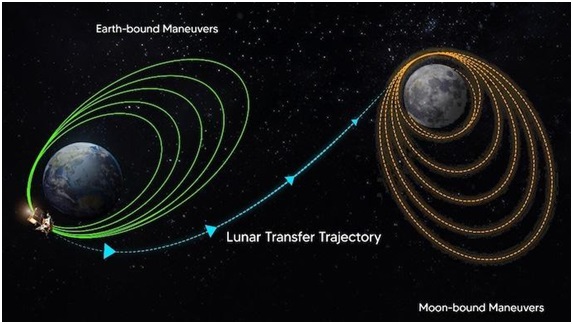
- TransLunar Injection (TLI) is a crucial space mission maneuver, propelling spacecraft from Earth's orbit to a trajectory aimed at reaching the Moon.
- An essential step in lunar missions, TLI allows spacecraft to break free from Earth's gravity and commence their journey toward the Moon.
- TLI is executed when the spacecraft reaches the perigee, the closest point to Earth in its orbit.
- During TLI, the spacecraft's propulsion system ignites its engines, accelerating the craft and providing the necessary speed to escape Earth's gravitational pull.
- The thrust and duration of the TLI burn are determined by factors like spacecraft mass, Earth's orbital velocity, and specific mission objectives.
- Following a successful TLI, the spacecraft is directed onto a lunar trajectory, continuing its autonomous journey to the Moon without further reliance on Earth's propulsion.
- Subsequent to TLI, the spacecraft enters a transfer orbit, an elliptical path that intersects with the Moon's orbit.
- The spacecraft traverses this highly eccentric orbit until it reaches the lunar surface.
- As the spacecraft approaches the Moon, additional maneuvers like lunar orbit insertion (LOI) may be executed to enter lunar orbit or facilitate landing, based on the mission's objectives.
- TLI has been effectively utilized in numerous Moon missions, including Apollo, Chang'e, and Artemis missions.