
Bhojshala Temple
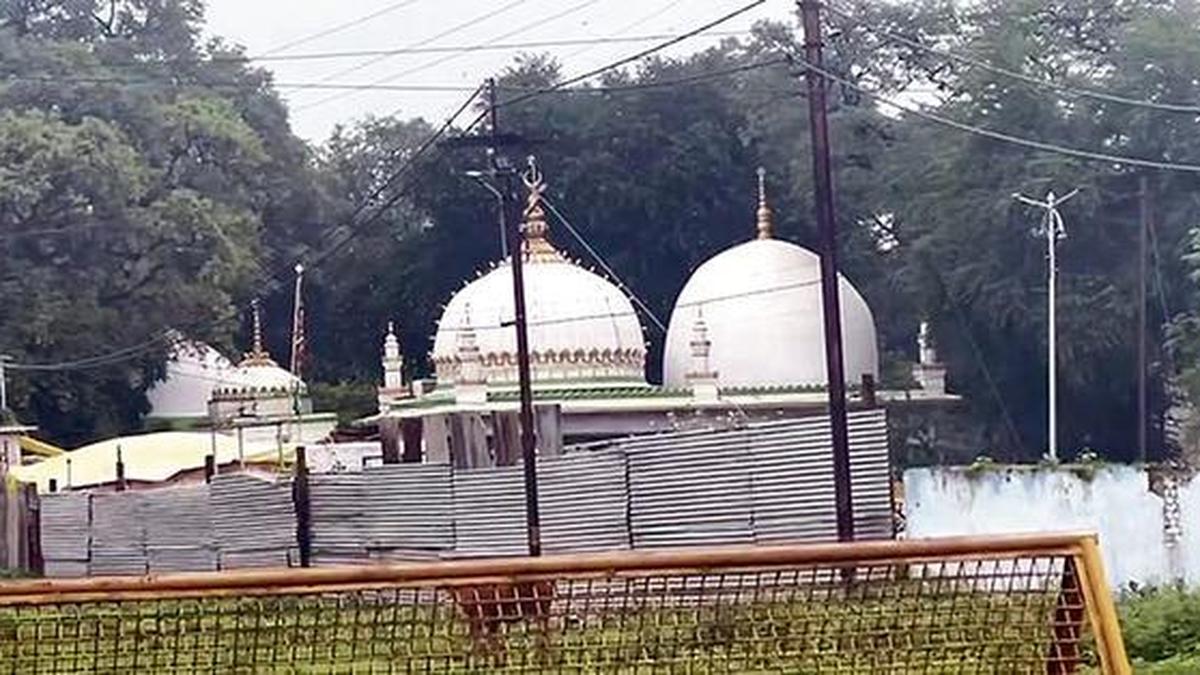
- 19 May 2026
In News:
The Indore Bench of the Madhya Pradesh High Court issued a landmark judgment declaring the disputed 11th-century Bhojshala-Kamal Maula Mosque complex in Dhar district fundamentally a Hindu temple dedicated to Goddess Vagdevi (Saraswati). In doing so, the High Court quashed a 2003 Archaeological Survey of India (ASI) arrangement that allowed shared worship (Tuesdays for Hindus, Fridays for Muslims) and transferred administrative stewardship to the ASI.
Core Historical Background of the Complex
The Bhojshala complex represents a critical site of medieval architecture, epigraphy, and educational heritage.
- The Paramara Legacy: The complex is historically tied to Raja Bhoj (1010–1055 CE) of the Paramara dynasty, a celebrated polymath and patron of arts and Sanskrit literature. He established the site as a premier university (Bhojshala) and temple dedicated to Vagdevi.
- Epigraphical Significance: The site houses unique Sarpabandha (serpentine chart) pillar inions containing grammatical tools like the Sanskrit alphabet and tenses. Additionally, walls feature ancient Prakrit odes honoring the Kurma-Avatara (tortoise incarnation of Vishnu) and theatrical dramas composed by the royal tutor Madana.
- The Vagdevi Idol: A highly sophisticated 11th-century white marble sculpture of Goddess Saraswati was excavated from the site in the late 19th/early 20th century and is currently housed in the British Museum, London.
- The Mosque Conversion Claim: The Muslim community identifies the site as the Kamal Maula Mosque, attributing its foundation to Hazrat Maulana Kamaluddin Chishti around 1306–1307 CE. Historical records like the Imperial Gazetteer of India (1908) corroborate that the mosque was built by reusing structural elements (basalt pillars and carved stone slabs) from a pre-existing Hindu temple.
Key Legal and Constitutional Dimensions
The high court's judgment introduces critical interpretations of Indian statutory and constitutional law:
1. Decoupling from the Places of Worship Act, 1991
The primary defense argued that the Places of Worship (Special Provisions) Act, 1991, freezes the religious character of any place of worship as it existed on August 15, 1947.
The High Court rejected this, clarifying that Section 4(3)(a) of the 1991 Act explicitly excludes any ancient and historical monument covered under the Ancient Monuments and Archaeological Sites and Remains (AMASR) Act, 1958. Because the Bhojshala complex had been declared a protected monument since 1904, it is exempt from the 1991 freeze, leaving its religious character open to judicial determination based on historical truth.
2. Application of the "Ayodhya Framework" and Preponderance of Probabilities
Instead of treating this as a property title suit (like the Babri Masjid case), the court addressed it as a Writ Petition under Article 226 seeking the enforcement of the fundamental right to worship (Article 25).
The Bench applied the 10 core judicial principles from the Supreme Court's 2019 Ayodhya Verdict, establishing that:
- The standard of proof is the preponderance of probabilities rather than mathematical certainty.
- Architectural and scientific evidence (like the 2,189-page ASI report detailing 1,700 artifacts and reused temple columns) holds strong evidentiary weight.
- The legal "pious purpose" and continuity of Hindu worship at the core of the deity's endowment are never legally extinguished by the physical destruction of an idol or subsequent architectural modifications.