
UMMID Programme
- 23 May 2026
In News:
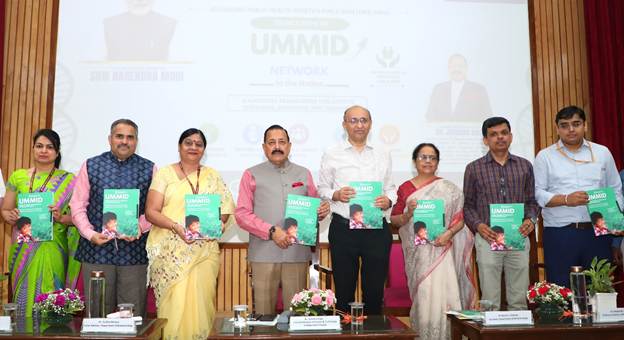
Union Minister Dr. Jitendra Singh dedicated the UMMID (Unique Methods of Management of Inherited Disorders)Programme for Rare Genetic Disorders to the Nation at Prithvi Bhawan, New Delhi.
What is UMMID?
- Nodal Ministry: Department of Biotechnology (DBT), Ministry of Science & Technology.
- Nature: India's first comprehensive national initiative addressing inherited and rare genetic disorders through an integrated, multi-pronged public health approach.
- Policy linkage: Supports implementation of the National Policy for Rare Diseases (NPRD) 2021 by creating structured care pathways for affected patients.
Three Pillars of UMMID
- NIDAN Kendras: Nearly 30 NIDAN Kendras have been established for advanced genetic diagnostics and counselling, ensuring genomic healthcare reaches beyond metropolitan centres to ordinary citizens.
- Outreach in Aspirational Districts: Targeted screening and awareness programmes in underserved and aspirational district populations — addressing the equity gap in rare disease detection.
- Specialised Training Centres: Capacity-building for clinicians, genetic counsellors, and healthcare professionals — addressing the long-standing knowledge deficit around rare disorders in mainstream medical practice.
Key Achievements
- The programme has benefited nearly three lakh individuals through screening and diagnostic services.
- Services span prenatal and newborn screening, genetic counselling, diagnostics, clinician training, and community outreach — all under one unified public health model.
- The UMMID Dashboard launched alongside will enable real-time nationwide monitoring of programme reach and outcomes.
Why It Matters: The Silent Burden
- Inherited and rare genetic disorders remained neglected for decades because diagnosis was difficult, treatment inaccessible, and medicines either unavailable or prohibitively expensive.
- Families often spend years moving from hospital to hospital in search of a diagnosis — imposing enormous emotional, social, and financial hardship despite affecting comparatively smaller populations.
- India's vast genetic diversity compounds the challenge, requiring robust ecosystem-level responses rather than isolated interventions.