
Giant’s Causeway
- 17 Jun 2026
In News:
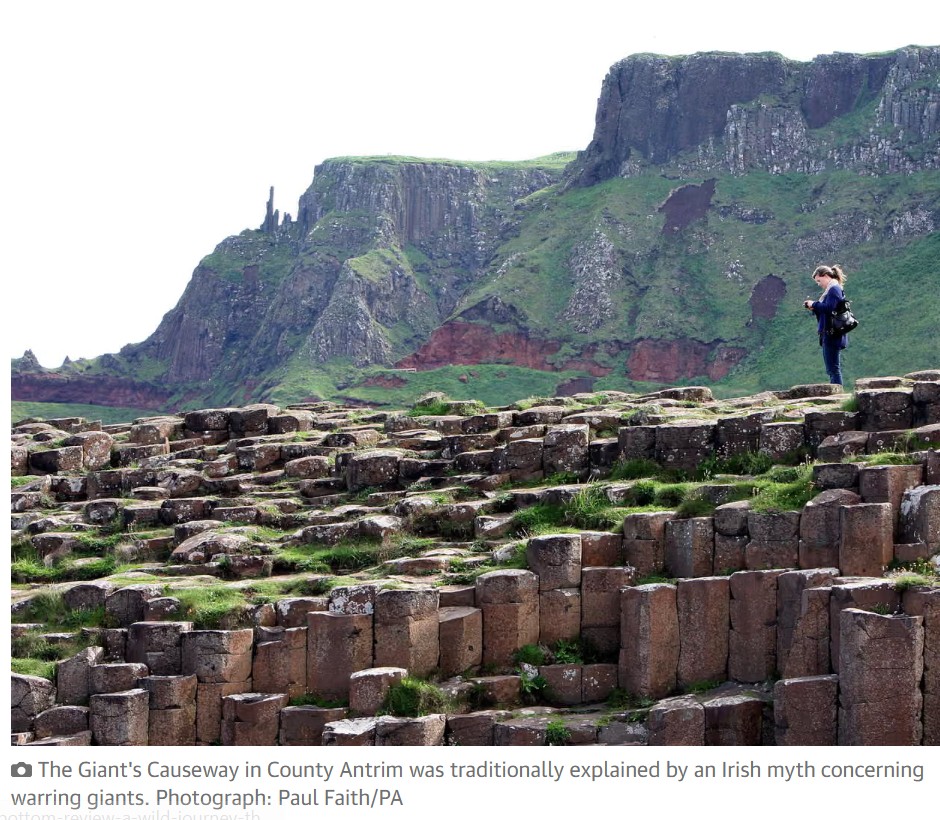
A recent geochronological study has revealed that the Giant's Causeway in Northern Ireland was formed over about 5.5 million years, nearly 8 million years shorter than previous estimates. The findings improve scientific understanding of one of the world's most iconic volcanic landscapes.
About Giant's Causeway
- The Giant's Causeway is a spectacular volcanic landform located along the Antrim Plateau on the northeastern coast of Northern Ireland. It comprises nearly 40,000 interlocking basalt columns extending over about 6 km of coastline. Most of the columns are hexagonal, though some have four, five, seven or eight sides. Their stair-like appearance gave rise to the name "Giant's Causeway."
- Recognised for its exceptional geological significance, it was designated a UNESCO World Heritage Site in 1986.
Formation of the Giant's Causeway
The basalt columns were formed during the Paleogene Period, around 50–60 million years ago, when intense volcanic activity affected the region.
The formation process involved:
- Extensive volcanic eruptions that produced large volumes of basaltic lava.
- The molten basalt rose through chalk beds, creating a vast volcanic plateau.
- As the lava cooled, it contracted, producing fractures known as columnar joints.
- Continued cooling caused the lava to shrink further, resulting in the development of tall, closely packed polygonal basalt columns.
- Rapid cooling led to greater contraction, producing the characteristic well-defined hexagonal columns visible today.
The latest research suggests that the volcanic processes responsible for this landscape occurred over approximately 5.5 million years, rather than the previously estimated 13.5 million years, indicating a much shorter but geologically significant volcanic episode.
Geological Significance
The Giant's Causeway is one of the world's finest examples of columnar jointing, demonstrating how cooling and contraction of basaltic lava produce regular polygonal rock columns. It provides valuable evidence for understanding igneous processes, volcanic evolution, and the geological history of the North Atlantic Igneous Province
Super El Niño
- 23 Apr 2026
In News:
Climate experts are sounding alarms over a potential "Super El Niño" developing in the 2026-27 cycle. With projections suggesting it could be the strongest in 140 years, this climate phenomenon is poised to redefine global temperature benchmarks in 2027 and trigger severe socio-economic disruptions.
Decoding the ENSO Mechanism
The El Niño-Southern Oscillation (ENSO) is a periodic fluctuation in sea surface temperatures (SST) and atmospheric pressure across the tropical Pacific Ocean. It consists of three phases: El Niño (warm), La Niña (cool), and Neutral.
Normal vs. El Niño Conditions
- Normal (Neutral) Phase: Strong trade winds blow from east to west (Easterlies), piling up warm surface water near Asia and Indonesia. This allows cold, nutrient-rich water to rise (upwelling) along the South American coast (Peru).
- El Niño Phase: Trade winds weaken or reverse into Westerly Wind Bursts. This allows the warm water pool to slide eastward toward the Americas as a Kelvin wave. This warm layer pushes down the thermocline (the transition layer between warm surface and cold deep water), shutting off the upwelling of cold water.
What Makes it a "Super" El Niño?
While a standard El Niño involves an SST anomaly of 0.5°C, a Super El Niño is defined by an extreme spike in the Niño 3.4 region (the central-eastern equatorial Pacific).
- Intensity Threshold: SST anomalies must soar at least 2.0°C (3.6°F) above the long-term average.
- Subsurface Heat Reservoir: A massive buildup of subsurface heat—currently measured at 7-8°C above average in localized areas—acts as high-octane fuel for surface warming.
- Westerly Wind Bursts: Unusually strong wind bursts from the west prevent the system from neutralizing, accelerating the eastward migration of heat.
- Global Warming Synergy: Human-induced climate change has raised the "baseline" temperature of the Pacific. Consequently, modern El Niños are "supercharged," starting from a warmer foundation and reaching unprecedented peaks.
Global and Regional Implications
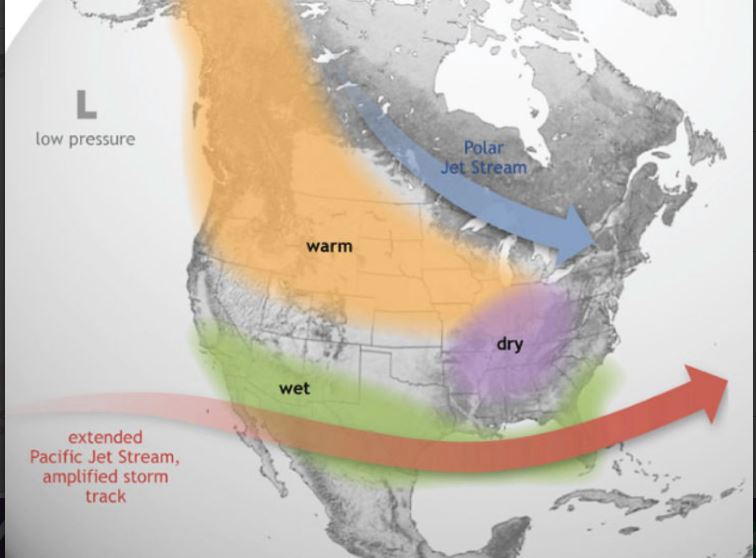
The atmospheric response to such extreme ocean warming alters global jet streams, creating a "domino effect" of weather disasters.
1. Global Consequences
- Record Temperatures: 2027 is projected to become the hottest year on record, potentially pushing global warming past the 1.5°C threshold temporarily.
- Hydrological Extremes: While the southern US and Peru face devastating floods and deluges, regions like Ethiopia, Central Africa, and Australia are likely to endure severe, multi-year droughts.
- Hurricane Dynamics: High-altitude winds (wind shear) in the Atlantic tend to "shred" developing hurricanes, leading to a quieter Atlantic season but a more active and vicious season in the Central and Eastern Pacific.
2. The "India Factor": Monsoon and Economy
For India, a Super El Niño is traditionally a harbinger of distress:
- Monsoon Failure: There is a strong correlation between El Niño and deficient Southwest Monsoon rainfall. A "Super" event could lead to widespread drought across the subcontinent.
- Agricultural Stress: Deficient rains during the Kharif season (rice, pulses, sugarcane) can lead to crop failure, triggering food inflation and a decline in rural demand.
- Heatwaves and Health: The phenomenon intensifies and prolongs summer heatwaves, straining the national power grid and increasing heat-related mortality.
- Economic Impact: The World Meteorological Organization (WMO) warns of billions in economic losses in climate-sensitive sectors like water management and hydroelectric power.
The impending 2026-27 Super El Niño is not just a weather event; it is a stress test for global climate adaptation strategies. For India, this underscores the urgency of strengthening Climate-Resilient Agriculture (CRA), improving water-use efficiency through the Jal Jeevan Mission, and enhancing early warning systems under the National Disaster Management Plan. As the planet enters uncharted thermal territory, proactive policy intervention will be the only shield against the "Super" extremes of a warming world.
Coeliac Disease
- 29 Mar 2025
In News:
Recent advancements in artificial intelligence (AI) may significantly accelerate the diagnosis of coeliac disease, an inherited autoimmune disorder triggered by gluten consumption. Researchers at the University of Cambridge have developed an AI-based tool capable of diagnosing the disease swiftly and accurately, potentially transforming current diagnostic practices.
What is Coeliac Disease?
- Nature: An inherited autoimmune disorder.
- Cause: Triggered by consumption of gluten, a protein found in wheat, barley, and rye.
- Mechanism: Gluten intake causes an immune reaction in the small intestine, damaging the intestinal lining (villi), leading to malabsorption of nutrients.
Key Symptoms:
- Gastrointestinal: Diarrhoea, bloating, stomach cramps, weight loss
- Systemic: Fatigue, anaemia, skin rashes
- In children: Impaired growth and development
- Long-term complications: Malnutrition, osteoporosis, infertility, anaemia, and increased risk of autoimmune diseases and certain cancers
Prevalence and Risk Factors:
- Affects approximately 1 in 100 people worldwide
- About 700,000 people in the UK live with the disease
- Individuals with a first-degree relative (parent, sibling, or child) with coeliac disease have a 1 in 10 risk
- It can develop at any age after gluten consumption begins
Diagnosis and Treatment:
- Current Diagnostic Method:
- Blood tests to detect gluten antibodies
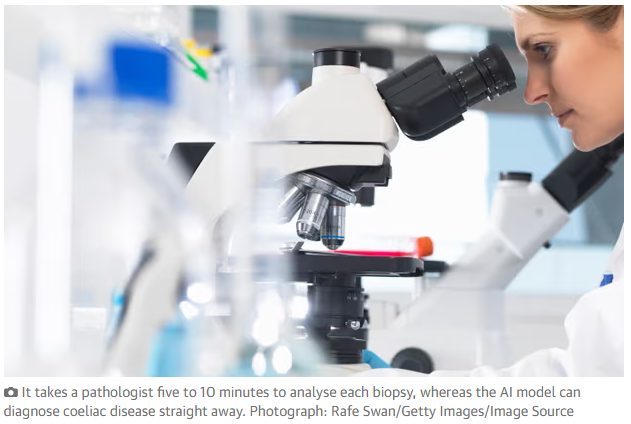
- Duodenal biopsy to assess damage to villi (requires analysis by pathologists)
- Treatment: No cure; managed through a strict lifelong gluten-free diet
AI-Based Diagnostic Advancement:
- Development: By University of Cambridge researchers
- Function: The AI model analyses biopsy images to detect villous damage
- Training: Based on 4,000+ biopsy images from five hospitals using scanners from four manufacturers
- Efficiency: Matches the accuracy of expert pathologists, with diagnosis in under a minute
- Impact: Could eliminate delays caused by backlog in pathology labs and speed up diagnosis for patients
Significance of AI in Healthcare:
- Benefits:
- Faster diagnosis for patients
- Reduces burden on pathologists and NHS waiting lists
- Frees up time for pathologists to focus on more critical cases (e.g., cancer)
- Expert Support:Recognised by the Royal College of Pathologists as a tool with the potential to transform diagnostic pathology
- Future Requirements:
- Investment in digital pathology
- Integrated IT systems across health organisations
- Training for medical professionals in AI-based diagnostic tools
Mount Taranaki
- 08 Feb 2025
In News:
In a significant legal and environmental development, Mount Taranaki—officially now known by its M?ori name Taranaki Maunga—has been granted legal personhood by the government of New Zealand.
This move marks it as the third natural feature in the country to receive such status, following the Te Urewera National Park (2014) and the Whanganui River (2017).
This recognition reflects an increasing global trend toward acknowledging the intrinsic rights of natural entities and respecting the spiritual beliefs of indigenous communities.
About Taranaki Maunga
- Location: Situated in Egmont National Park, North Island, New Zealand.
- Dual Naming: Historically known as Mount Egmont, it is now officially referred to by its indigenous name, Taranaki Maunga, as part of decolonization and cultural revival efforts.
- Elevation: Stands at 8,261 feet, making it the second-highest peak in the North Island of New Zealand.
- Geological Type: It is a stratovolcano (composite cone) with a nearly perfect symmetrical shape—one of the most symmetrical volcanic cones in the world.
- Formation: Formed due to the subduction of the Pacific Plate beneath the Australian Plate. The magma source lies deeper than that of the Taupo Volcanic Zone volcanoes.
- Topography: Surrounded by a circular ring plain formed from lahars (volcanic mudflows) and landslides.
- Status: A snow-capped dormant volcano and culturally revered natural landmark.
- Cultural Significance: The M?ori, indigenous people of New Zealand, regard Taranaki Maunga as a sacred ancestor, embedding it deeply in their oral traditions and spirituality.
Legal Personhood and Its Significance
Granting legal personhood to Taranaki Maunga means it now holds rights, duties, and liabilities akin to a legal human being, and its interests will be represented by appointed guardians—often including indigenous representatives.
This legal framework recognizes:
- The spiritual and cultural relationship that the M?ori have with the mountain.
- The need to protect natural ecosystems not merely for utility but as living entities deserving of rights and dignity.
Comparative Insights: India’s Legal Approach to Natural Entities
India has witnessed similar developments:
- Uttarakhand High Court (2017–18): Granted legal personhood to the Ganga and Yamuna rivers, along with the Gangotri and Yamunotri glaciers. However, the Supreme Court later stayed this ruling.
- Punjab and Haryana High Court (2020): Recognized Sukhna Lake (Chandigarh) as a living entity for environmental protection.
- These decisions stem from the Doctrine of Parens Patriae, which allows the state to act as a guardian for those who cannot protect themselves—extending this protection to natural entities such as rivers, forests, and wildlife.
Lunar Codex (The Guardian)
- 03 Aug 2023
Why in the News?
The Lunar Codex program has the potential to bestow immortality upon an assorted collection of human-created art.
About Lunar Codex:
- The Lunar Codex is a remarkable collection of art curated by artists worldwide, intended to endure on the lunar surface as a timeless testament to human creativity, even amid tumultuous times like wars, pandemics, and economic crises.
- At the helm of this endeavor is Samuel Peralta, a semi-retired physicist and art enthusiast from Canada.
- Comprising diverse forms of digitized art, the Lunar Codex will be dispatched to the moon to serve as a permanent record of human ingenuity. Memory cards and NanoFiche, an updated 21st-century version of film-based microfiche, guarantee the safe arrival of these artistic expressions to the lunar surface.
- Carefully assembled from contributions by 30,000 artists, writers, filmmakers, and musicians representing 157 countries, the collection spans an array of art forms, including images, magazines, books, podcasts, movies, and music.
- The art is divided into four capsules:
- The first capsule, the Orion collection, has already encircled the moon after being launched aboard NASA's Artemis 1 mission via the Orion spacecraft last year.
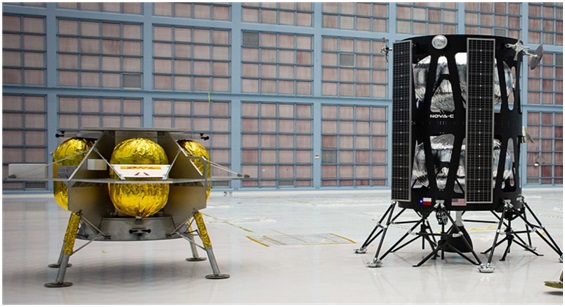
- In the months ahead, multiple lunar landers will transport the Lunar Codex capsules to distinct locations, including craters at the moon's South Pole and the lunar plain known as Sinus Viscositatis, ensuring the enduring legacy of human creativity on Earth's celestial neighbor.