
Sustainable Aviation Fuel
- 25 Apr 2026
In News:
Recently, the Government of India notified an amendment to the Aviation Turbine Fuel (ATF) (Regulation of Marketing) Order, 2001. This administrative measure formally brings ATF blended with Sustainable Aviation Fuel (SAF) under the regulatory ambit of the ATF Control Order, aligning India’s energy policy with global environmental standards.
The Core of the Amendment: Redefining ATF
Previously, Aviation Turbine Fuel was defined strictly as a petroleum-based product meeting Bureau of Indian Standards (BIS) specifications. The 2026 amendment expands this definition to include:
- Co-processed SAF: Sustainable fuel produced alongside traditional ATF in petroleum refineries.
- Blended SAF: SAF conforming to IS 17081 which is blended with traditional ATF meeting IS 1571 standards.
This regulatory shift is essential for operationalizing India’s blending targets and ensuring the domestic aviation industry remains integrated with the global supply chain.
Understanding Sustainable Aviation Fuel (SAF)
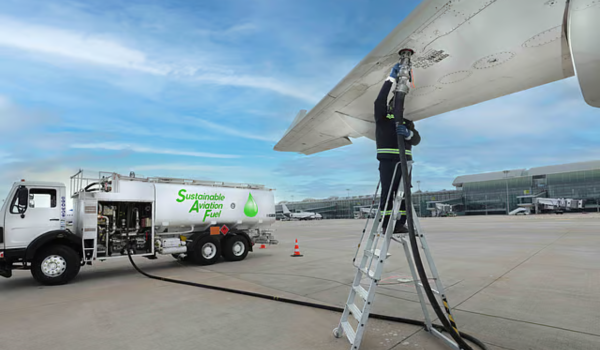
SAF is a "drop-in" biofuel, meaning it is chemically similar to conventional jet fuel derived from crude oil. It consists of specially processed aviation-grade hydrocarbons that are fully compatible with existing aircraft engines and infrastructure.
Key Characteristics and Sources:
- Performance: It does not alter the safety, fundamental nature, or performance of the fuel, requiring no modifications to aircraft engines.
- Feedstock: SAF is produced from renewable biomass and waste resources, including waste oils and fats, municipal solid waste, green waste, and non-food crops.
- Synthetic Production: It can also be produced synthetically by capturing carbon directly from the atmosphere.
- Rigorous Testing: To ensure safety, SAF undergoes International Civil Aviation Organization (ICAO) recognized testing as per ASTM International standards before being cleared for use.
The Global Context: CORSIA and Emission Mandates
The primary driver for SAF adoption is the Carbon Offsetting and Reduction Scheme for International Aviation (CORSIA), implemented by ICAO.
- CORSIA Compliance: Starting in 2027, the mandatory phase of CORSIA requires international flights to offset CO2 emissions that exceed a specific baseline.
- Strategic Advantage: Utilizing SAF reduces the "offsetting" requirements for airlines, as it significantly lowers life-cycle greenhouse gas (GHG) emissions compared to fossil fuels.
India’s Blending Roadmap and International Comparison
Recognizing the global shift, India has announced ambitious indicative blending targets for international flights:
- 1% SAF blend by 2027
- 2% SAF blend by 2028
- 5% SAF blend by 2030
These targets place India among other leading economies taking proactive climate action:
- European Union: Mandates 2% SAF by 2025, scaling to 70% by 2050.
- United Kingdom: Targeting 10% by 2030.
- Japan: Aiming for a 10% SAF mandate by 2030.
- Singapore: Requiring 1% SAF usage starting in 2026.