
SEHAT Mission
- 12 May 2026
In News:
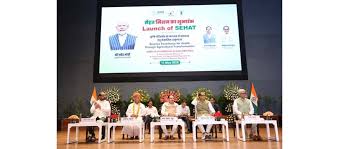
In a landmark shift toward preventive healthcare, the Union Ministers of India recently launched the ‘SEHAT Mission’ (Science Excellence for Health through Agricultural Transformation) in New Delhi. This initiative represents the first formal convergence of India’s agricultural and medical sectors, aiming to address the twin challenges of persistent malnutrition and the escalating burden of Non-Communicable Diseases (NCDs).
The Philosophy: From Reactive Treatment to Proactive Nutrition
For decades, India’s healthcare strategy has been largely reactive—focusing on the treatment of diseases. The SEHAT Mission seeks to overhaul this paradigm by adopting a "whole-of-government" approach. By shifting the focus to "preventive nutrition," the mission bridges the gap between what is grown on the farm and what is required for public health.
The mission is driven by a joint national partnership between two of India’s premier scientific bodies:
- Indian Council of Agricultural Research (ICAR): Providing the technical expertise in crop science and farming systems.
- Indian Council of Medical Research (ICMR): Offering clinical insights into nutritional requirements and disease prevention.
Core Pillars and Scientific Framework
The mission is built upon the vision of “Healthy Food, Healthy Farms, and a Healthy India.” To achieve this, it employs several scientific and strategic interventions:
- Bio-fortification of Crops: Rather than relying solely on external supplements, the mission promotes the development of crop varieties naturally enriched with essential micronutrients such as iron, zinc, and Vitamin A. This ensures that nutritional security is embedded within the primary food source.
- Revival of Traditional and Nutri-Cereals: There is a renewed emphasis on climate-resilient millets (Sri Anna), including Kodo, Kutki, Ragi, Jowar, and Bajra. These grains are not only sustainable to grow but are also nutrient-dense compared to traditional staples like polished rice and wheat.
- Integrated Farming Systems (IFS): The mission encourages rural households to move beyond monoculture. By integrating crop cultivation with animal husbandry, fisheries, and beekeeping, the initiative ensures that farming families have access to a diverse and balanced diet.
- Food as Medicine for NCDs: With lifestyle diseases like diabetes, hypertension, and certain cancers on the rise, the SEHAT Mission focuses on research-backed dietary solutions. It explores how specific agricultural products can function as preventive "medicine" to manage and mitigate these chronic conditions.
- The ‘One Health’ Approach: Recognizing that human health is inextricably linked to animal and environmental health, the mission facilitates joint planning between medical and agricultural scientists to monitor zoonotic threats and environmental contaminants.
Safeguarding the Producers: Farmer Health and Safety
A unique aspect of the SEHAT Mission is its focus on the health of the farmers themselves. Scientific interventions are being designed to reduce the risks associated with pesticide exposure and the handling of hazardous agricultural chemicals. By improving the health and safety of the primary producer, the mission ensures the sustainability of the entire food value chain.
Technological Integration and Policy Support
To ensure the mission's objectives are met with precision, the government is leveraging data-driven governance. This includes:
- Real-time Dashboards: For monitoring nutritional outcomes across different regions.
- Science-Based Policy Support: Aligning agricultural production targets with the specific nutritional requirements of the Indian population.