
PCOS renamed as PMOS
- 15 May 2026
In News:
In a landmark development for global public health and endocrinology, Polycystic Ovary Syndrome (PCOS) has been officially renamed Polyendocrine Metabolic Ovarian Syndrome (PMOS).
Key Administrative and Timeline Details
- Origin: Published in The Lancet, this transition is the culmination of a 14-year global consensus process led by institutions such as Monash University.
- Global Collaboration: The effort involved 56 international clinical organizations and survey data from over 14,000 patients and healthcare practitioners across six continents.
- Implementation Plan: The new nomenclature features a three-year progressive global rollout.
- Clinical Impact: The update does not immediately alter established diagnostic criteria (e.g., Rotterdam criteria) or treatment protocols. Instead, it builds a comprehensive, multi-systemic framework for future screening, diagnosis, and therapeutic management.
Structural Deficiencies of the Legacy Term (PCOS)
The historical designation, Polycystic Ovary Syndrome, introduced several clinical and communication bottlenecks that severely impacted patient care:
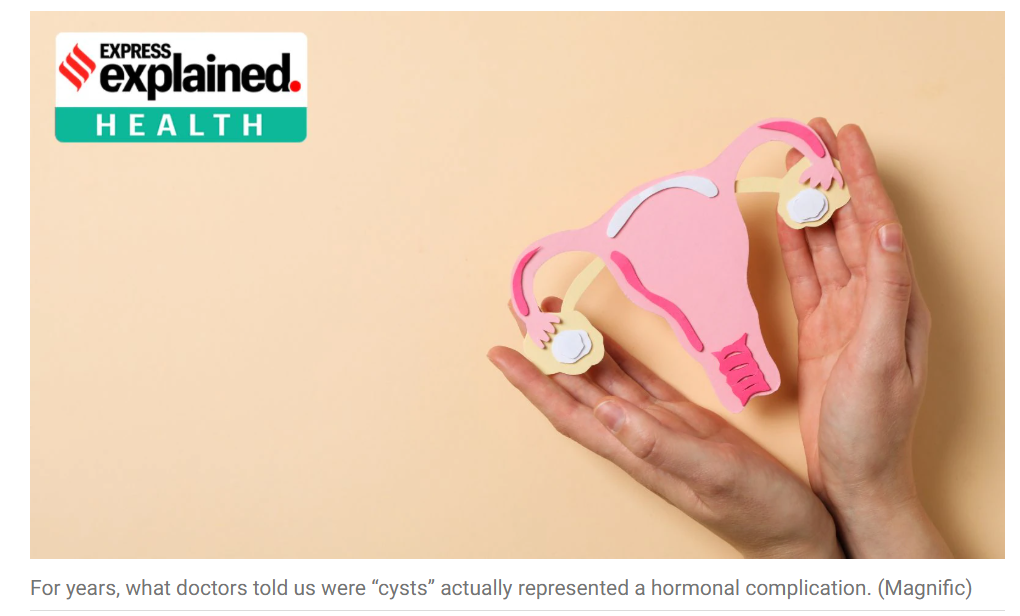
- The Pathological Misnomer: The term "polycystic" is scientifically inaccurate. Ultrasonography reveals that affected individuals do not possess abnormal, fluid-filled cysts. Instead, the observed morphology corresponds to arrested follicles—immature ovarian structures that stall midway through their physiological development due to a disrupted maturation process, preventing normal ovulation.
- Organ-Centric Misconception: By focusing entirely on the ovaries, the name "PCOS" reduced a complex, long-term systemic endocrine disorder to an isolated gynecological disease.
- The Diagnostic Delay: This localized definition created massive diagnostic blind spots. Approximately 70% of affected individuals globally remain undiagnosed, often enduring years of fragmented care and missed windows for early preventive interventions.
- Socio-Cultural Stigma: In many traditional societies, anchoring a multi-system metabolic disorder exclusively to reproductive and ovarian health inadvertently heightens the psychological distress and social stigma surrounding fertility, body weight, and associated skin changes.
Anatomy of the New Nomenclature: PMOS Explained
The updated term, Polyendocrine Metabolic Ovarian Syndrome, systematically breaks down the complex biological architecture of the condition:
Polyendocrine
This underscores the complex interplay of multiple hormone-producing pathways. The condition is driven by coordinated disruptions in several hormonal systems, including:
- Elevated androgens (male hormones) that disrupt steroidogenesis.
- Imbalances in luteinizing hormone (LH) and follicle-stimulating hormone (FSH).
- Neuroendocrine and stress-related hormonal dysregulations.
Metabolic
This acknowledges that insulin resistance and metabolic dysfunction are central pathophysiological drivers of the syndrome, rather than secondary complications. Elevated insulin triggers increased ovarian androgen secretion and significantly elevates the risk of long-term cardiometabolic morbidities.
Ovarian
This element preserves the reproductive health dimension, ensuring that chronic anovulation, menstrual irregularities, and implications for fertility remain addressed within the clinical framework.
Pathophysiology and Multi-Dimensional Risk Factors
The development of PMOS is driven by an intricate mix of fixed and modifiable elements:
- Genetic and Neuroendocrine Drivers: Strong hereditary links intertwined with disruptions in the brain-ovary signaling pathways (specifically the altered pulsatility of Gonadotropin-Releasing Hormone or GnRH).
- Modifiable Lifestyle Factors: Sedentary behavior, high-glycemic diets, and obesity aggravate insulin resistance, creating a feedback loop that worsens hormonal imbalances.
Clinical Characterization and Systemic Manifestations
PMOS is a chronic, multifaceted disorder affecting women of reproductive age. It presents a comprehensive array of symptoms across diverse biological systems:
- Reproductive and Gynecological: Chronic anovulation, highly irregular or absent menstrual cycles, and infertility. It also carries an elevated long-term risk of endometrial cancer due to prolonged unopposed estrogen exposure.
- Metabolic and Cardiometabolic: Impaired glucose tolerance, Type 2 diabetes, gestational diabetes, hypertension, dyslipidemia (abnormal cholesterol and triglyceride profiles), and Metabolic Dysfunction-Associated Steatotic Liver Disease (MASLD/fatty liver).
- Dermatological and Physical: Clinical hyperandrogenism presenting as hirsutism (excessive facial and body hair), severe treatment-resistant acne, male-pattern hair loss, and rapid weight gain.
- Psychological: Significant associations with anxiety, depression, mood swings, and eating disorders driven by both hormonal fluctuations and body image distress.
Metabolic Significance in the Indian Context
The transition to PMOS carries immense public health relevance for India, where the condition affects an estimated 16% to 18% of women of reproductive age.
The Thrifty Genotype Hypothesis
The Indian population carries a genetic predisposition known as the "thrifty genotype"—an evolutionary adaptation designed to conserve energy and store fat efficiently during periods of famine. In modern, urbanized environments characterized by sedentary routines and caloric excess, this genotype triggers heightened insulin resistance, rising obesity rates, and a sharp vulnerability to Type 2 diabetes.
The Paradox of "Lean PMOS"
Indian women frequently develop metabolic complications at a much younger age and at lower Body Mass Index (BMI) thresholds compared to Western populations. Under the old framework, individuals with "lean PCOS" (normal or low body weight) were frequently missed because they lacked the stereotypical physical signs of metabolic distress. The explicit inclusion of "metabolic" in PMOS ensures early screening for blood sugar, blood pressure, and lipid profiles in non-obese patients.
Evolving Management Frameworks: Modern vs. Traditional Paradigms
The recognition of PMOS as a systemic endocrine-metabolic disease is transforming the therapeutic landscape, shifting nutrition and lifestyle modification from supportive care to core clinical interventions.
Conventional Pharmacotherapy
- Metformin: An insulin sensitizer used to combat metabolic dysfunction and restore spontaneous ovulation.
- Oral Contraceptive Pills (OCPs): Prescribed to regulate menstrual cycles and suppress excess androgen levels.
- Advanced Metabolic/Fertility Options: The clinical shift has paved the way for utilizing modern metabolic treatments (such as GLP-1 receptor agonists/semaglutides) alongside advanced assisted reproductive technologies (IUI/IVF) for managing complex anovulatory infertility.
The Shift Toward Traditional and Herbal Paradigms
Due to the side effects associated with long-term reliance on synthetic drugs (e.g., gastrointestinal distress from Metformin or thromboembolic risks with specific OCPs), a notable research paradigm shift is underway toward traditional, complementary, and herbal medicines.
Natural supplements such as Myo-inositol are increasingly integrated to improve insulin sensitivity with fewer adverse effects. This highlights the growing need for integrative, evidence-based medicine that combines targeted lifestyle adjustments, metabolic therapies, and holistic care pathways to manage this chronic condition.