
Orbital Data Centres and the Pathfinder Mission
- 11 May 2026
In News:
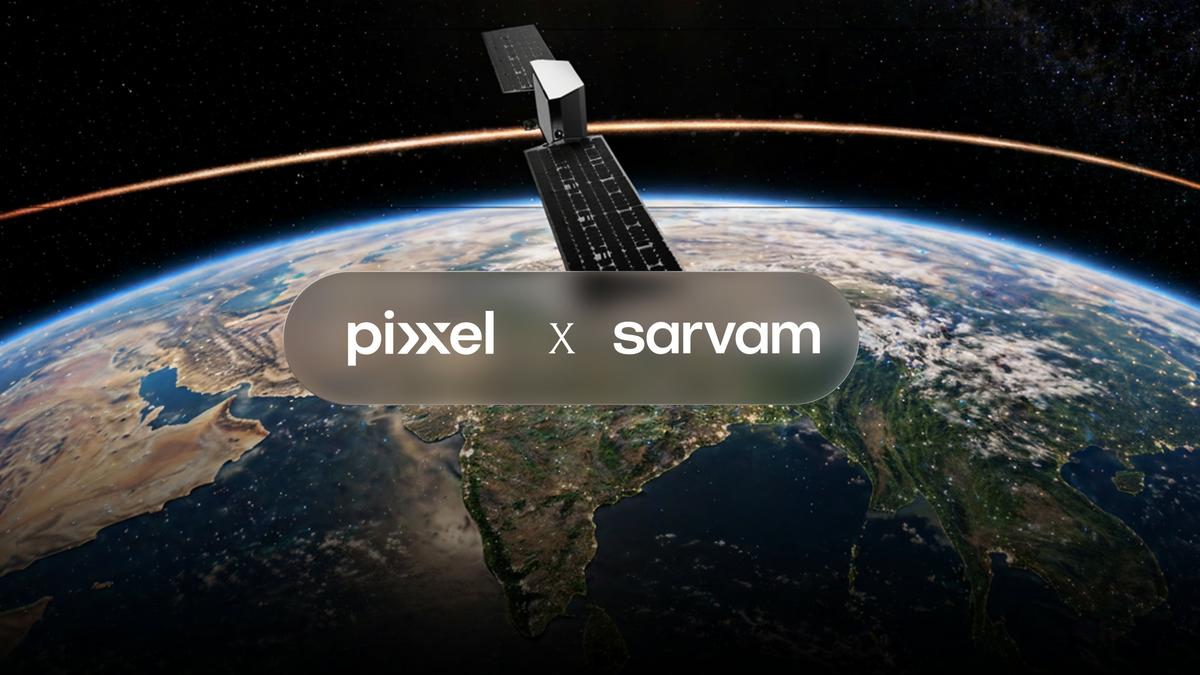
In a landmark collaboration that signals a paradigm shift in space-based technology, Bengaluru-based satellite startup Pixxel and Indian AI firm Sarvam AI have partnered to develop Pathfinder. Scheduled for launch by the final quarter of 2026, Pathfinder is set to be India’s first “orbital data centre” satellite. This mission represents a move toward decentralized, space-based computing, aimed at overcoming the physical and economic constraints of terrestrial AI infrastructure.
What is an Orbital Data Centre?
Traditionally, satellites function as data collectors; they capture high-resolution imagery or signals and transmit these massive raw files to ground stations for processing. This creates a significant "bandwidth bottleneck."
An Orbital Data Centre utilizes edge computing, placing high-performance hardware—specifically data-centre-grade Graphics Processing Units (GPUs)—directly into Low Earth Orbit (LEO). Instead of sending raw data back to Earth, the satellite processes the information in space, transmitting only "actionable insights" or finished analysis to the ground.
The Strategic Significance of Space-Based Computing
The shift from Earth to orbit is driven by several critical factors:
- Overcoming Terrestrial Constraints: Ground-based data centres are increasingly burdened by high land costs and the massive water requirements for cooling. Furthermore, the energy consumption of generative AI is hitting the limits of local power grids.
- Continuous Energy Supply: In specific orbits, solar power is effectively continuous. This provides a source of "free" electricity, making space an economically attractive location for high-intensity computation.
- Solving Data Bottlenecks: Hyperspectral imaging generates enormous datasets. Processing this data in-situ (at the source) eliminates the expensive and slow downlink of high-resolution files.
- Scalability and Commercial Viability: Emerging launch capabilities, such as high-payload rockets and the potential for large constellations (100–500 satellites), suggest that space-based computing could eventually rival terrestrial cloud infrastructure.
The Pathfinder Mission: India’s Technology Demonstrator
Pathfinder is a 200-kg class satellite designed to validate the technical feasibility of in-orbit data processing.
Key Components & Objectives:
- Datacentre-grade GPUs: It will carry high-performance GPUs similar to those used in Earth-based AI clusters.
- Hyperspectral Payloads: The satellite will feature Pixxel’s flagship hyperspectral camera, providing high-fidelity Earth observation data.
- Sovereign AI Backbone: Sarvam AI will integrate full-stack language models and an AI inference platform. This allows for AI training and inference to occur entirely within the satellite’s systems.
- Manufacturing: The craft is being built at Gigapixxel, Pixxel’s advanced facility designed for large-scale satellite production.
Note: While this is an Indian mission, the name "Pathfinder" also references NASA’s 1997 Mars Pathfinder mission, which deployed the Sojourner rover.
Formidable Challenges: The Harsh Reality of Space
Despite the benefits, computing in a vacuum presents unique engineering hurdles:
- Thermal Management: On Earth, fans and water systems use convection to cool hardware. In the vacuum of space, heat must be dissipated through radiative cooling using complex heat-transfer loops and radiating panels.
- Radiation Exposure: Cosmic radiation can cause “bit flips” (random changes in computer code) and degrade semiconductors. Hardware must be shielded or made "radiation-hardened," which adds weight and cost.
- Redundancy and Repair: Unlike a server room on Earth, a satellite cannot be easily repaired. High levels of redundancy are required to manage "eclipse periods" (when the satellite is in Earth's shadow) and potential hardware failures.
- Miniaturization: Scaling down power-hungry GPUs into a compact 200-kg payload requires extraordinary breakthroughs in power management and engineering.