
Kimberley Process (KP)
- 15 May 2026
In News:
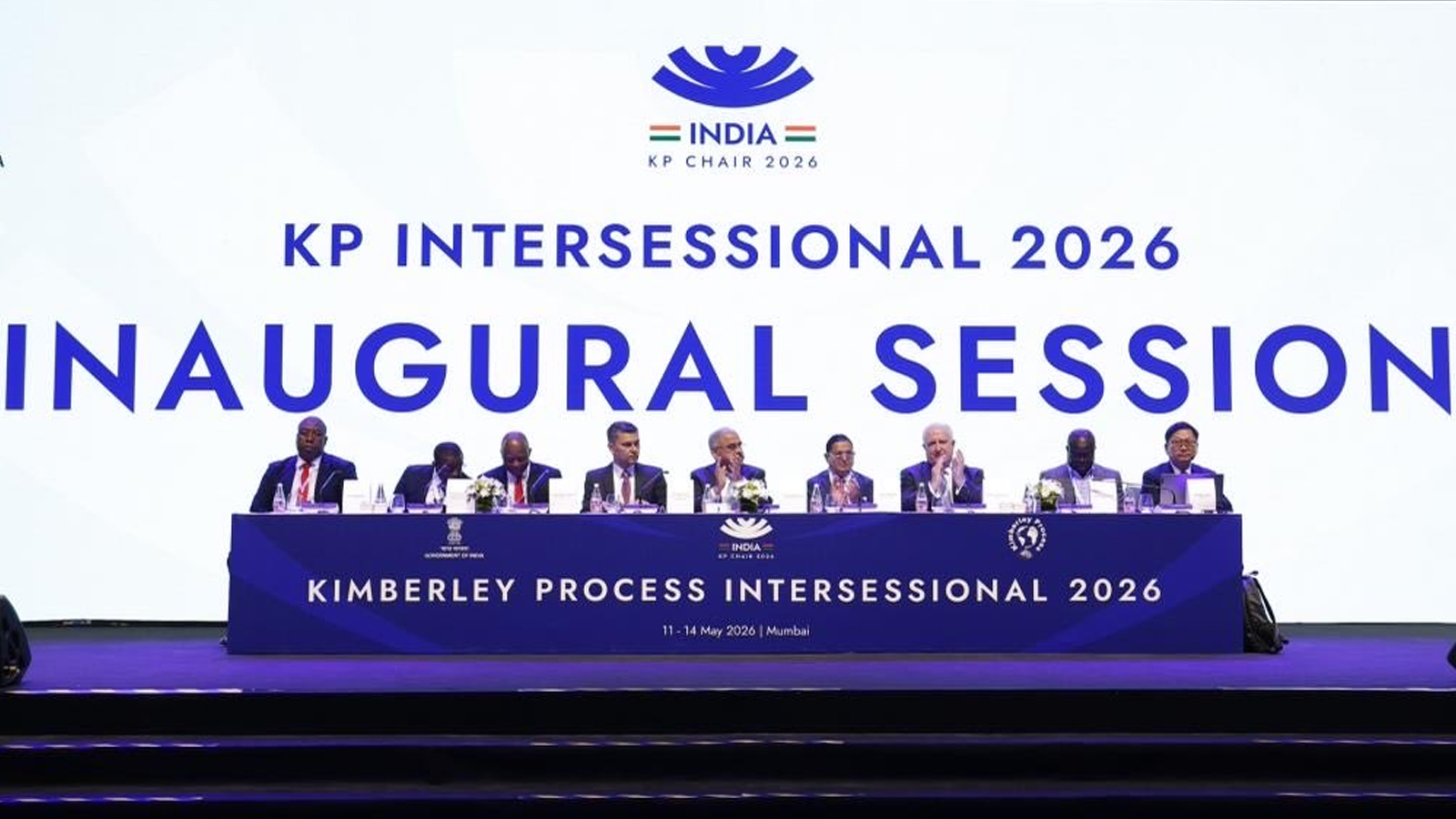
Recently, India commenced the Kimberley Process (KP) Intersessional Meeting in Mumbai, marking its third tenure as the Chair of this critical global body. As the world’s leading hub for diamond cutting and polishing—where 14 out of every 15 diamonds are processed—India’s leadership is pivotal in shaping the future of ethical trade.
What is the Kimberley Process (KP)?
The Kimberley Process is a multi-stakeholder international initiative that brings together governments, the diamond industry, and civil society.
- Genesis: The initiative was sparked in May 2000 in Kimberley, South Africa, following global outcry over "blood diamonds." It was formally launched in January 2003 under UN General Assembly Resolution 55/56.
- Mission: Its primary mandate is to eradicate the trade in "conflict diamonds"—defined as rough diamonds used by rebel movements or their allies to finance armed conflict aimed at undermining legitimate governments.
- India’s 2026 Chairship: Having assumed office on January 1, 2026, India has adopted the theme of the "3Cs": Credibility, Compliance, and Consumer Confidence.
Kimberley Process Certification Scheme (KPCS)
The KPCS is the operational "engine" of the process, acting as a rigorous regulatory "passport" for rough diamonds.
- Core Requirements: Every shipment of rough diamonds crossing an international border must be transported in a tamper-resistant container and accompanied by a government-validated Kimberley Process Certificate.
- Exclusionary Principle: To maintain the integrity of the chain, member states are strictly prohibited from trading rough diamonds with any non-member or any participant that fails to meet the scheme's minimum requirements.
- Legislative Mandate: Participants are required to implement national laws and internal controls to prevent smuggling and ensure the legality of the supply chain.
India’s 2026 Agenda: Digitalization and Reform
As the Chair, India is steering the KP toward modernization to meet the challenges of the 21st-century digital economy.
- Blockchain Integration: A major priority of the Mumbai Intersessional is the transition toward digital, tamper-proof certificates. By utilizing blockchain technology, India aims to provide real-time traceability, significantly reducing the risk of document fraud.
- Ad Hoc Committee on Review and Reform (AHCRR): India is leading discussions to broaden the definition of conflict diamonds. While the current definition focuses on rebel groups, there is a growing global demand to include broader human rights violations.
- Technical Cooperation: India is focusing on capacity building for African diamond-producing nations, ensuring that the legitimate diamond trade continues to support the livelihoods of millions.
Key Functions of the Kimberley Process
Beyond certification, the KP performs several systemic functions:
- Periodic Peer Reviews: Working groups conduct on-site visits to member countries to verify compliance.
- Statistical Accountability: Member states are obliged to share detailed trade and production data to maintain transparency.
- Market Stabilization: By filtering out illicit diamonds, the KP ensures the stability of the legitimate market, protecting the economy of countries where diamonds are a major export.