
Kerala’s Draft Oil Spill Contingency Plan and the National Framework
- 12 May 2026
In News:
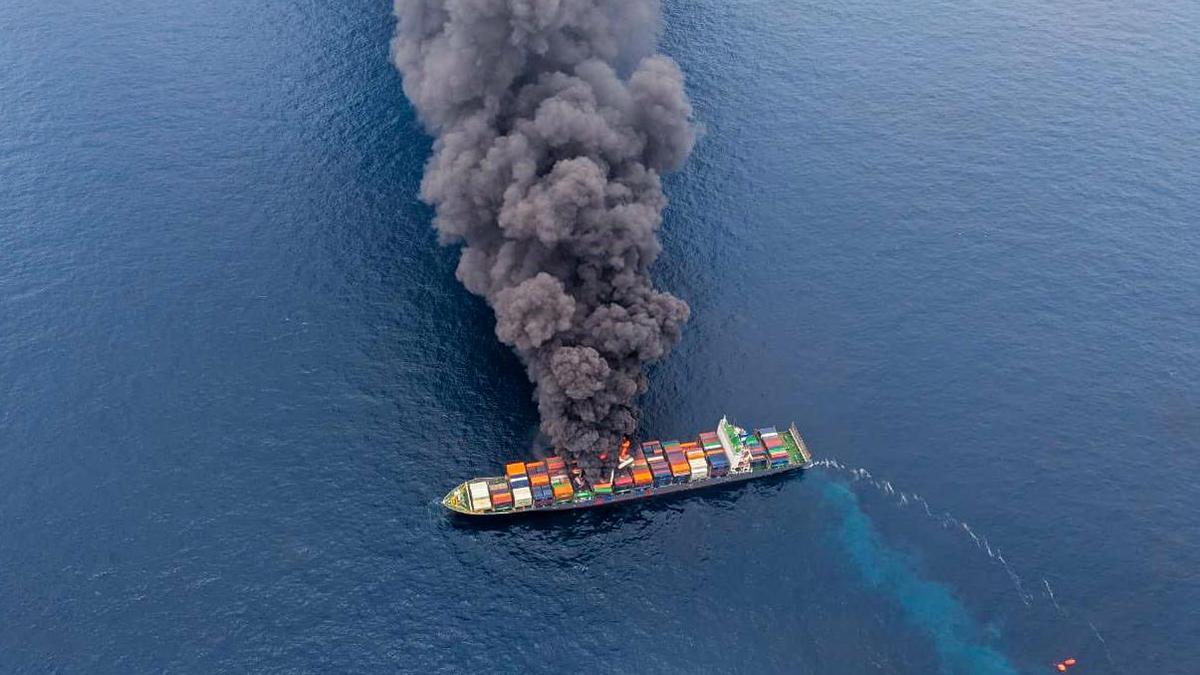
In response to increasing maritime risks and recent disasters involving vessels like the MSC Elsa 3 and MV Wan Hai 503, Kerala has finalized its draft Oil Spill Contingency Plan (OSCP). Designed to safeguard the state’s 590 km coastline, this plan aligns with the newly updated National Oil Spill Disaster Contingency Plan (NOS-DCP) 2024, marking a significant step toward maritime environmental security and disaster resilience.
Kerala’s OSCP: A Localized Strategy for a Fragile Coastline
Kerala’s draft plan is a specialized regional adaptation of national guidelines, focusing on the state's unique ecological and geographical needs.
1. Scope and Jurisdiction: The OSCP is designed to manage spills occurring within 12 nautical miles (India’s Territorial Waters). Recognizing the interconnectedness of Kerala’s water bodies, the plan uniquely extends its reach 40 km into inland riverine systems that are influenced by tidal actions, ensuring a holistic "ridge-to-reef" protection strategy.
2. Environmental Sensitivity Index (ESI) Mapping: A cornerstone of the plan is the ESI mapping, which identifies vulnerable marine ecosystems. This allows authorities to prioritize the protection of:
- Mangrove forests and coastal wetlands.
- Fish breeding grounds, which are vital for the state’s blue economy.
3. Technological and Scientific Interventions: The state will utilize hydrodynamic and oil spill modeling to predict the movement of hazardous cargo. This was prompted by the sinking of the MSC Elsa 3, which resulted in the loss of calcium carbide and plastic nurdles—pollutants that behave differently than traditional oil and require specialized recovery techniques.
4. Shoreline Response and Management: The plan establishes a clear chain of command for clean-up operations. It incorporates Net Environmental Benefit Analysis (NEBA), a scientific process used to weigh the advantages and disadvantages of different response options (e.g., using dispersants versus manual cleaning) to ensure the intervention does not cause more harm than the spill itself.
NOS-DCP 2024
Kerala’s efforts are anchored in the National Oil Spill Disaster Contingency Plan (NOS-DCP), India’s apex policy framework for marine pollution.
The Tiered Response Mechanism
The 2024 updates have refined the "Trigger Points" for different spill sizes to ensure a streamlined response:
- Tier 1 (Small): Handled by individual ports or oil facilities (Up to 700 tonnes).
- Tier 2 (Medium): Managed using regional resources and District Administration (700 to 10,000 tonnes).
- Tier 3 (Large): Classified as a National Disaster, requiring the Indian Coast Guard (ICG) and national-level authorities (Over 10,000 tonnes).
Recent National Enhancements
- Integrated Digital Tracking: Leveraging INCOIS (Hyderabad) models and the Online Oil Spill Advisory (OOSA) system, authorities can track oil trajectories using real-time satellite imagery and Automatic Identification Systems (AIS).
- HNS Preparedness: With a rise in chemical transport, there is an increased focus on Hazardous and Noxious Substances (HNS).
- Sustainable Dispersants: The 2024 guidelines approved "low-toxicity" chemical dispersants to minimize the ecological footprint on marine life.
- Green Energy Inclusion: For the first time, response protocols have been added for the offshore wind energy sector within India’s Exclusive Economic Zone (EEZ).
Institutional Framework and Coordination
The success of these plans depends on seamless inter-agency cooperation:
- Indian Coast Guard (ICG): The Central Coordinating Authority responsible for the National Inventory of pollution response equipment.
- Directorate General of Shipping: Oversees legal issues, salvage operations, and international regulations.
- Ministry of Environment (MoEFCC): Identifies and prioritizes Environmentally Sensitive Areas (ESAs).
- State Governments: Responsible for shoreline clean-up and local coordination within their jurisdiction.