
Information Agents
- 26 May 2026
In News:
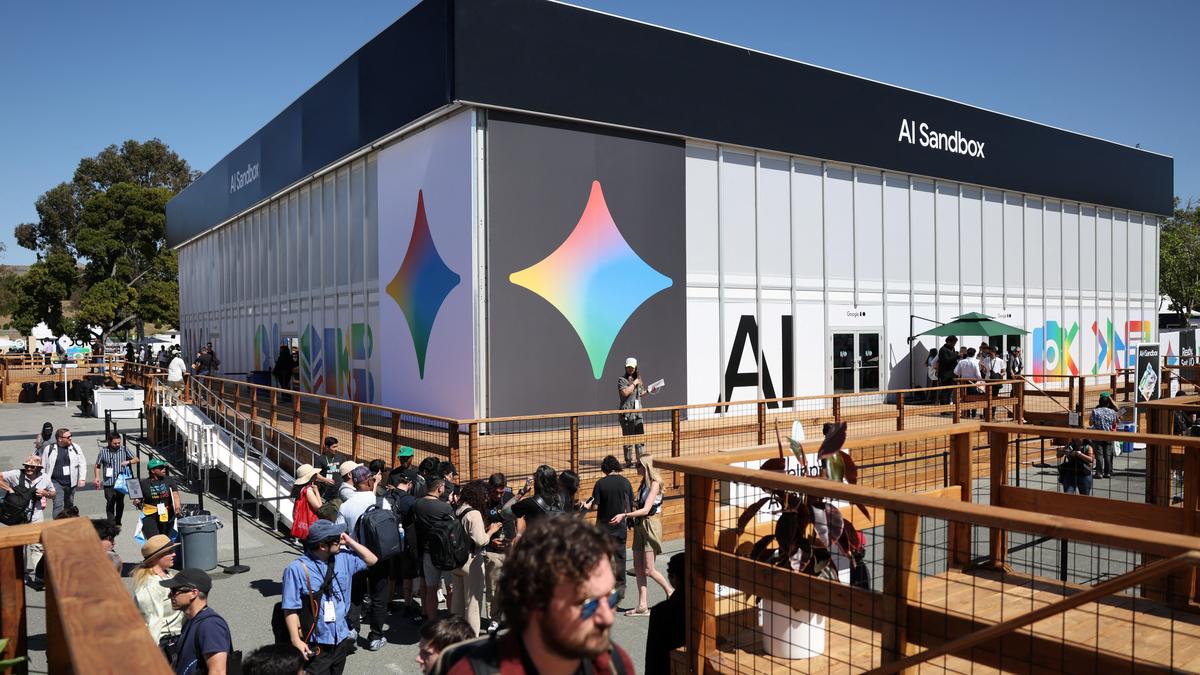
At its annual developer conference (Google I/O 2026), Google unveiled Information Agents, a feature built into Search that monitors the web on behalf of users. It represents one of the most significant shifts in how search engines interact with information since Google's founding.
What is an Information Agent?
An information agent is a computational software entity, a type of intelligent agent — that may access one or multiple, distributed, and heterogeneous information sources and proactively acquires, mediates, and maintains relevant information on behalf of its users.
The core purpose of information agents is to cope with the difficulties associated with information overload — the problem of too much data being available for a user to process and monitor manually.
How Information Agents Work — Key Capabilities
- Semantic Brokering of Information: Information agents go beyond simple retrieval. They semantically broker information by providing pro-active resource discovery, resolving the information impedance between information consumers and providers, and offering value-added information services and products to the user or other agents.
- Continuous Background Monitoring: Unlike traditional search tools that respond only when prompted, Google's information agents operate continuously — 24/7 — tracking topics a user has expressed interest in and pushing relevant updates proactively.
- Multi-Source Synthesis: The information sources accessible to agents may be of many types, including traditional databases, websites, and even other information agents — enabling a layered, interconnected web of intelligence gathering.
Illustrative Example
A user who has heard about a researcher proposing something called "agent-oriented programming" asks the agent to investigate. After carefully searching various sources, the agent returns not just with a relevant technical report, but also the name and contact details of the researcher involved — without the user having to visit a single website manually.
In Google's current implementation, similar scenarios play out in everyday life: a user tracking housing markets, flight prices, stock movements, or sports events simply sets a goal, and the agent does the continuous monitoring, notifying the user only when something relevant occurs.
Google's Implementation at I/O 2026
- How to Use It: Users open AI Mode in Google Search, enter a natural language prompt describing what they want to track, and the agent begins monitoring. Push notifications are sent when relevant updates are found. Active agents are visible in the AI Mode history, where users can manage, refine, or deactivate them.
- Rollout: Information agents will first be available to Google AI Pro and Ultra subscribers in the US during summer 2026, before expanding to additional markets.
- Beyond Google Alerts: The feature is considered the next evolution of Google Alerts (launched in 2003), but goes significantly further — rather than merely flagging keyword mentions, it synthesises information, explains context, compares perspectives, and offers actionable insights.
Concerns Raised
- Privacy: Always-on AI monitoring means users must share deeply personal data — budgets, schedules, preferences, locations — to get relevant results. This creates large pools of sensitive information concentrated within a single platform, raising serious data sovereignty concerns.
- Web Infrastructure: Since AI agents retrieve and summarise content without users visiting source websites, independent publishers and smaller platforms stand to lose significant web traffic — threatening the advertising-based economic model that sustains most of the open web.
- Centralisation: Critics warn that if a single platform becomes the primary gateway through which users access and filter online information, it could lead to dangerous centralisation of the internet — with Google acting as both the librarian and the library.
Significance
Information agents represent a paradigm shift from reactive search (user asks → engine responds) to proactive intelligence (agent monitors → agent informs). While they promise to dramatically reduce information overload, they simultaneously raise profound questions about privacy, the sustainability of independent web publishing, and the concentration of power in the hands of a few Big Tech platforms.