
Aspero
- 22 Apr 2026
In News:
In a landmark finding for pre-Columbian history, archaeologists in Peru have recently uncovered an architectural structure at Áspero specifically designed for celestial observation. This discovery provides unprecedented insight into the early scientific prowess of the Caral Civilization (Norte Chico), one of the oldest known urban societies in the Americas.
The Maritime Capital of Caral
Áspero serves as a coastal counterpart to the Sacred City of Caral. Located on the right bank of the Supe River, just 500 meters from the Pacific Ocean, it functioned as the primary fishing and marine supply hub for the inland urban centers of the Supe Valley.
- Timeline: Occupied during the Late Archaic (Preceramic) period, approximately 3000 BC to 1800 BC.
- Civilizational Link: It is a key site of the Norte Chico/Caral-Supe civilization, characterized by its monumental architecture without the use of ceramics.
- Social Complexity: The site features 25 architectural complexes, including platform mounds and sunken circular plazas, reflecting a highly organized society capable of large-scale cooperative labor.
The Discovery: An Ancient Observatory
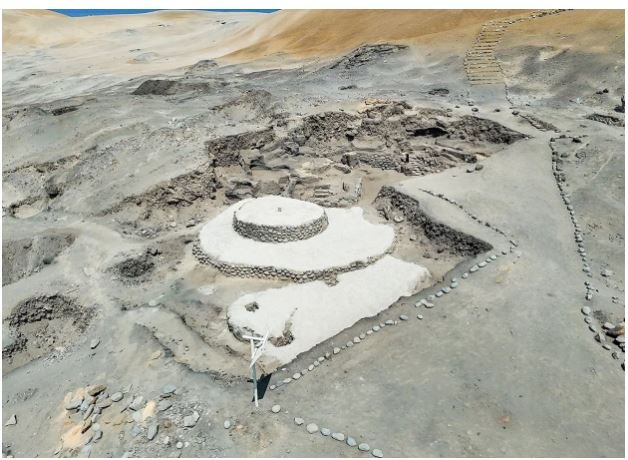
The newly identified structure, located in Sector J1, represents a specialized "astronomical center." This find confirms that the inhabitants of Áspero were not just expert fishers but also early scientists who mastered the observation of natural cycles.
Key Features of the Structure:
- Strategic Positioning: The observatory is situated near the settlement's main pyramid buildings. From this elevated vantage point, there is a clear, unobstructed view of both the coastline and the lower Supe Valley.
- Dual-Level Design: Unlike similar astronomical markers found in inland Caral, the Áspero observatory is a two-level structure. Researchers suggest this design was specifically tailored to its coastal location to monitor maritime and riverine phenomena simultaneously.
- The Shadow Effect: Constructed using rounded stones and pebbles bound with clay, the structure was engineered to cast specific shadows on its surfaces. By tracking these shadows, the ancient inhabitants could determine the cycles and movements of the sun, moon, and stars.
Functional Significance: Science in Service of Survival
The ability to "read the sky" was not merely a ritualistic endeavor; it was a critical tool for sustainable environmental management:
- Predicting Tides: Precise astronomical knowledge allowed the Caral people to predict tide changes, essential for their primary industry—fishing and shellfish gathering.
- Climate and Agriculture: While Áspero was maritime-focused, it engaged in intensive trade with agricultural inland sites. Monitoring celestial cycles helped predict El Niño events and the seasonal drying of the Supe River (which occurs between April and November), facilitating food security through exchange.
- Ritual and Governance: Such scientific knowledge likely reinforced the authority of the elite. Notable finds like the Lady of the Four Tupus and high-status child burials indicate a stratified society where "knowledge-keepers" held significant power.
Global and Comparative Significance
The discovery at Áspero challenges the notion that complex science only followed the advent of agriculture. It supports the "Maritime Foundations of Andean Culture" theory, suggesting that abundant marine resources provided the caloric surplus necessary to support a class of people dedicated to architecture, trade, and astronomy.
- Comparative Link: This observatory mirrors structures in the Sacred City of Caral, proving a unified civilizational knowledge system across the Supe Valley.
- Advanced Urbanism: The presence of such specialized scientific infrastructure 5,000 years ago places the Caral Civilization on par with the early civilizations of Mesopotamia, Egypt, and the Indus Valley.
Vishwa Sutra Initiative
- 22 Apr 2026
In News:
In a significant stride toward elevating India’s traditional craftsmanship, the Ministry of Textiles recently launched the ‘Vishwa Sutra – Weaves of India for the World’ initiative. Orchestrated by the Office of the Development Commissioner (Handlooms) in partnership with the National Institute of Fashion Technology (NIFT), this program seeks to bridge the gap between ancient heritage and modern international aesthetics.
The Core Vision: Globalizing Tradition
The "Vishwa Sutra" initiative is designed to place Indian handlooms within a contemporary global design framework. Rather than viewing handlooms as static relics of the past, the project treats them as dynamic canvases capable of resonating with international consumers.
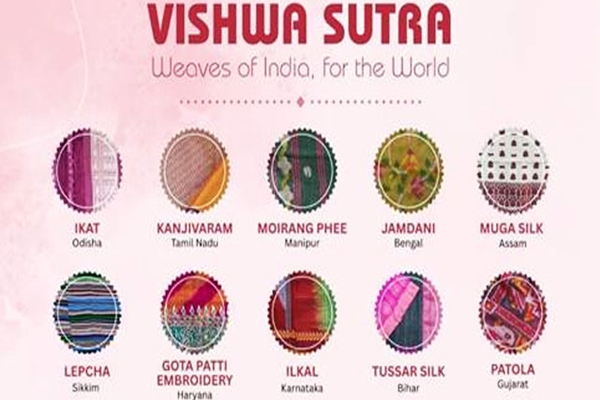
- Diverse Representation: The initiative brings together 30 distinct handloom weaves, each curated to represent a specific Indian state.
- Cultural Fusion: Each of these 30 weaves has been creatively reinterpreted using design inspirations from 30 different countries. This cross-cultural dialogue blends traditional Indian techniques with global fashion sensibilities.
Notable Cross-Cultural Reinterpretations:
- Odisha Ikat: Reimagined through the lens of Greek geometric forms.
- Kanchipuram (Tamil Nadu): Infused with Norwegian minimalist lines.
- Muga Silk (Assam): Integrated with structural Egyptian elements.
- Patola (Gujarat): Reinterpreted with vibrant Spanish influences.
- Banarasi (Uttar Pradesh): Designed into UAE-inspired ensembles.
Strategic and Economic Significance
1. The 5F Framework: Vishwa Sutra acts as a practical implementation of the government’s 5F Vision:
- Farm (Cotton/Silk cultivation) Fibre(Spinning) Factory(Weaving) Fashion(Design) Foreign (Export).
This linear progression ensures that the benefits of global demand reach the primary producers—the weavers—strengthening the rural economy.
2. From "Vocal for Local" to "Local to Global": The initiative marks a transition in the government's industrial policy. By making traditional industries globally competitive, it aims to increase India's share in the global textile market, which is currently dominated by mass-produced fast fashion.
3. Preservation of Intangible Heritage: By providing a modern market for traditional techniques, the initiative ensures the survival of skills that have been refined over generations. It provides a financial incentive for the younger generation of weaver communities to continue their ancestral crafts.
Yadava Dynasty
- 02 Mar 2026
In News:
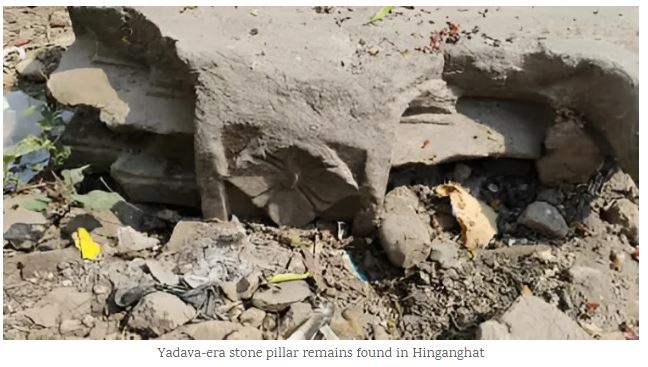
- Recently, remains of a 12th-century Mandir-style stone pillar associated with the Seuna (Yadava) dynasty were discovered along the Vena River in Hinganghat, Wardha district, Maharashtra.
- The find highlights the architectural and cultural legacy of the Yadavas in the Deccan region and provides material evidence of medieval temple construction traditions in central India.
About the Yadava (Seuna) Dynasty
The Yadava Dynasty, also known as the Seuna Dynasty, ruled a powerful Hindu kingdom in the Deccan between the 12th and 14th centuries CE.
Territorial Extent
At its peak, the Yadava kingdom extended:
- From the River Tungabhadra in the south
- To the River Narmada in the north
- Covering present-day Maharashtra, northern Karnataka, and parts of Madhya Pradesh
Political Evolution
Early Phase
- Initially feudatories of the Western Chalukyas of Kalyani.
- Rose to prominence under Bhillama V (c. 1187–1191 CE).
- Founded Devagiri (later Daulatabad) as the capital.
Zenith under Singhana (c. 1210–1247 CE)
- Grandson of Bhillama.
- Declared independence.
- Conducted military campaigns against:
- Hoysalas (South)
- Kakatiyas (East)
- Paramaras and Chalukyas (North)
This period marked the territorial and political high point of the dynasty.
Decline and Annexation
- During the reign of Ramachandra (1271–c. 1309 CE):
- In 1294, Alauddin Khalji invaded Devagiri.
- The Yadava kingdom was reduced to tributary status under the Delhi Sultanate.
- A later attempt to assert independence failed.
- In 1317, the kingdom was fully annexed by the Khalji Empire.
This marked the beginning of stronger Delhi Sultanate penetration into the Deccan.
Cultural and Architectural Contributions
1. Foundations of Marathi Culture
- The Yadavas played a crucial role in shaping early Marathi language and literature.
- Social and cultural institutions of Maharashtra evolved significantly during their rule.
2. Hemadpanti Architecture: The dynasty is closely associated with the Hemadpanti style, attributed to minister Hemadri (Hemadpant).
Key Features:
- Construction using large blocks of black stone
- Dry masonry technique (without mortar)
- Massive, durable structures
- Temple-oriented architectural designs
Numerous temples in Maharashtra are built in this style.
Tamil-Brahmi Inions in Egypt
- 13 Feb 2026
In News:
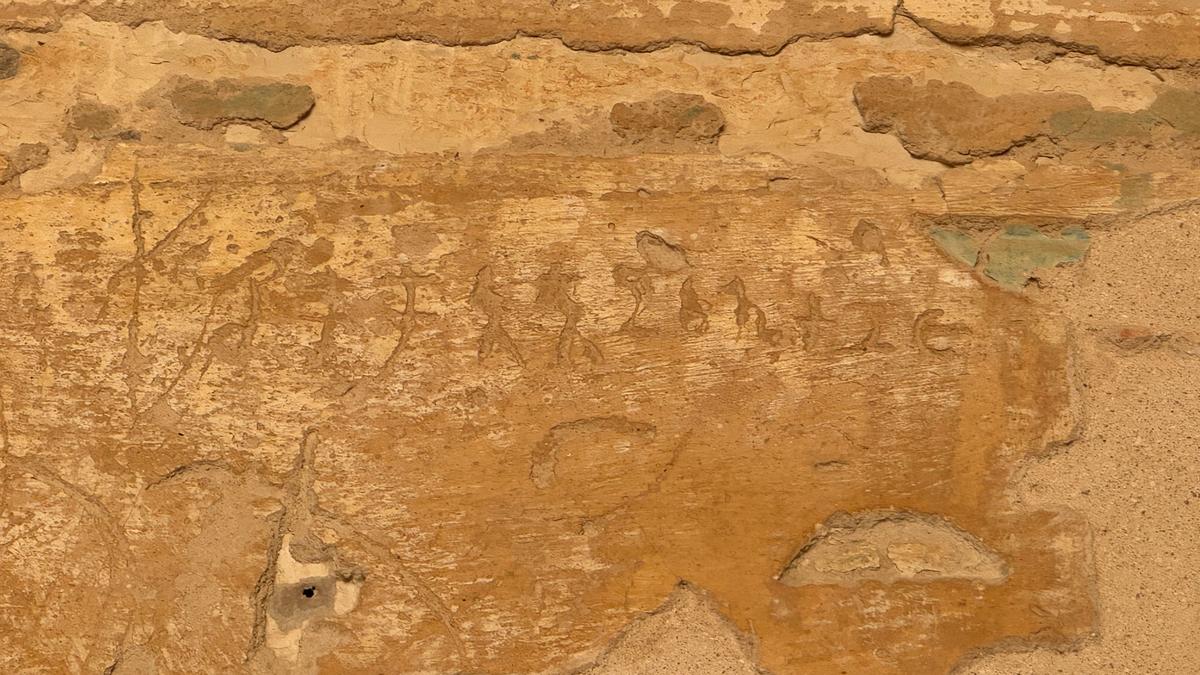
Nearly 30 Tamil-Brahmi, Prakrit and Sanskrit inions (1st–3rd century CE) have been identified inside tombs in Egypt’s Valley of the Kings, indicating direct Indian presence in Roman-era Egypt.
Researchers have documented around 30 ancient Indian inions inside six tombs at the Valley of the Kings, dating to the 1st–3rd centuries CE. These inions, written in Tamil-Brahmi, Prakrit, and Sanskrit, provide fresh evidence of maritime trade and cultural interactions between ancient Tamilakam and Roman Egypt.
About the Discovery
Location
- Found in six rock-cut tombs within the Valley of the Kings.
- The site forms part of the Theban Necropolis on the west bank of the Nile near Luxor.
Nature of Inions
- Nearly 30 inions identified.
- s used:
- Tamil-Brahmi
- Prakrit
- Sanskrit
- Suggests presence of people from diverse regions of ancient India.
Repeated Tamil Names
- The name “Cikai Korran” appears eight times across five tombs, indicating repeated visits or extended presence.
- Other names recorded: Kopan, Catan, Kiran - associated with Sangam-era Tamil culture.
- The inions resemble a graffiti tradition, similar to Greek inions left by visitors.
Link to Indo-Roman Trade
Maritime Trade Context
- Dating (1st–3rd century CE) coincides with peak Indo-Roman maritime trade.
- Trade route connected:
- Tamilakam (South India)
- Red Sea ports of Roman Egypt
- Nile Valley and Mediterranean world
Parallel Evidence
- Similar Tamil names were earlier found at Berenike, a major Roman port on the Red Sea.
- Confirms sustained contact beyond coastal ports.
Significance
- Demonstrates that Indian traders likely travelled beyond Egyptian ports into the Nile valley.
- Suggests deeper commercial and cultural exchanges, not merely port-level transactions.
- Reinforces literary references from:
- Periplus of the Erythraean Sea
- Sangam literature describing Yavana (Greek/Roman) trade.
About the Valley of the Kings
What It Is
A major burial site of pharaohs of Egypt’s New Kingdom.
Location
- West bank of the Nile River
- Near modern Luxor (ancient Thebes), Upper Egypt
- Designated a UNESCO World Heritage Site (1979) as part of Ancient Thebes.
Historical Period
- Primarily used during the 18th–20th Dynasties (c. 1539–1075 BCE).
- Royal burials from Thutmose I to Ramses X.
Architectural Features
- Rock-cut tombs with descending corridors.
- Pillared halls and burial chambers.
- Deep shafts to deter robbers.
- Walls decorated with funerary texts:
- Book of the Dead
- Book of Gates
- Book of That Which Is in the Underworld
Archaeological Importance
- Over 60 tombs discovered.
- Includes the famous tomb of Tutankhamun (KV62).
Historical Context: Tamil-Brahmi
- Early used to write Old Tamil.
- Dates back to at least the 3rd century BCE.
- Associated with the Sangam period.
- Previously found in Tamil Nadu, Sri Lanka, and Southeast Asia.
- Now documented in Egypt — expanding the geographical footprint of early Indian s.
Tamil-Brahmi Inions in Egypt
- 13 Feb 2026
In News:
Nearly 30 Tamil-Brahmi, Prakrit and Sanskrit inions (1st–3rd century CE) have been identified inside tombs in Egypt’s Valley of the Kings, indicating direct Indian presence in Roman-era Egypt.
Researchers have documented around 30 ancient Indian inions inside six tombs at the Valley of the Kings, dating to the 1st–3rd centuries CE. These inions, written in Tamil-Brahmi, Prakrit, and Sanskrit, provide fresh evidence of maritime trade and cultural interactions between ancient Tamilakam and Roman Egypt.
About the Discovery
Location
- Found in six rock-cut tombs within the Valley of the Kings.
- The site forms part of the Theban Necropolis on the west bank of the Nile near Luxor.
Nature of Inions
- Nearly 30 inions identified.
- s used:
- Tamil-Brahmi
- Prakrit
- Sanskrit
- Suggests presence of people from diverse regions of ancient India.
Repeated Tamil Names
- The name “Cikai Korran” appears eight times across five tombs, indicating repeated visits or extended presence.
- Other names recorded: Kopan, Catan, Kiran - associated with Sangam-era Tamil culture.
- The inions resemble a graffiti tradition, similar to Greek inions left by visitors.
Link to Indo-Roman Trade
Maritime Trade Context
- Dating (1st–3rd century CE) coincides with peak Indo-Roman maritime trade.
- Trade route connected:
- Tamilakam (South India)
- Red Sea ports of Roman Egypt
- Nile Valley and Mediterranean world
Parallel Evidence
- Similar Tamil names were earlier found at Berenike, a major Roman port on the Red Sea.
- Confirms sustained contact beyond coastal ports.
Significance
- Demonstrates that Indian traders likely travelled beyond Egyptian ports into the Nile valley.
- Suggests deeper commercial and cultural exchanges, not merely port-level transactions.
- Reinforces literary references from:
- Periplus of the Erythraean Sea
- Sangam literature describing Yavana (Greek/Roman) trade.
About the Valley of the Kings
What It Is
A major burial site of pharaohs of Egypt’s New Kingdom.
Location
- West bank of the Nile River
- Near modern Luxor (ancient Thebes), Upper Egypt
- Designated a UNESCO World Heritage Site (1979) as part of Ancient Thebes.
Historical Period
- Primarily used during the 18th–20th Dynasties (c. 1539–1075 BCE).
- Royal burials from Thutmose I to Ramses X.
Architectural Features
- Rock-cut tombs with descending corridors.
- Pillared halls and burial chambers.
- Deep shafts to deter robbers.
- Walls decorated with funerary texts:
- Book of the Dead
- Book of Gates
- Book of That Which Is in the Underworld
Archaeological Importance
- Over 60 tombs discovered.
- Includes the famous tomb of Tutankhamun (KV62).
Historical Context: Tamil-Brahmi
- Early used to write Old Tamil.
- Dates back to at least the 3rd century BCE.
- Associated with the Sangam period.
- Previously found in Tamil Nadu, Sri Lanka, and Southeast Asia.
- Now documented in Egypt — expanding the geographical footprint of early Indian s.
VrindavaniVastra
- 19 Nov 2025
In News:
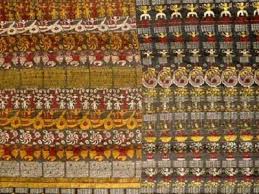
The Government of Assam has initiated formal discussions with the British Museum to facilitate the return of the VrindavaniVastra, a priceless 16th–17th century Assamese textile that holds immense cultural, historical, and religious significance. The move is part of broader efforts to reclaim India’s cultural artefacts preserved abroad.
What is VrindavaniVastra?
- A 400-year-old traditional textile originating from Assam.
- The word Vrindavani refers to Vrindavan, the sacred land of Lord Krishna’s childhood; Vastra means cloth.
- The textile depicts:
- Scenes from Lord Krishna’s childhood.
- His lilas (divine exploits).
- Various events of Vaishnav devotional narratives.
Origin & Patronage
- Created during the rule of Koch King Nara Narayan (16th century).
- Produced under the guidance of SrimantaSankardeva, the founder of Assamese Neo-Vaishnavism.
- Sankardeva took refuge under Nara Narayan after he faced hostility from sections of Ahom-era Brahmin priests.
Weaving Technique
- Made of woven silk using the complex lampas technique.
- Lampas weaving requires:Two weavers working simultaneously, making it a technically demanding process.
- Uses a rich palette of colours:Red, yellow, green, black, white, and others.
- Combines artistic traditions from:
- Assam
- Bengal
- Tibetan and broader Himalayan influences
Historical Journey
- The textile originally consisted of 15 separate silk panels, later stitched into a continuous piece.
- The specimen held in the British Museum is:
- Nine and a half metres long
- Assembled from several draped silk sections
- It travelled from Assam to Tibet through ancient cultural exchanges.
- Acquired by the British Museum in 1904, where it remains one of the most significant exhibits from South Asia.
Cultural Significance
- A masterpiece of Assamese Vaishnavite art and a visual representation of Sankardeva’s devotional philosophy.
- Reflects a synthesis of:
- Textile craftsmanship
- Storytelling
- Religious aesthetics
- Represents the rich heritage of Sattriya tradition, associated with monasteries (sattras) founded by Sankardeva.