
Cyrtodactylus varadgirii
- 11 May 2026
In News:
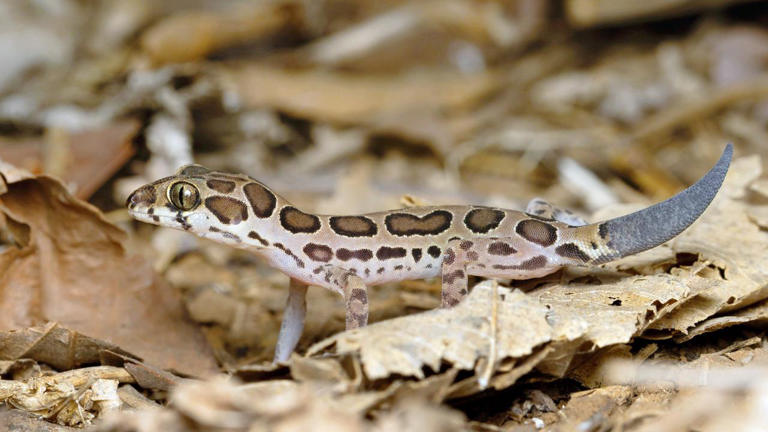
In a significant boost to urban biodiversity records, wildlife enthusiasts and researchers recently spotted the relatively uncommon gecko species, Cyrtodactylus varadgirii, within the Aarey forest of Mumbai. Commonly known as Giri’s Geckoella, this elusive reptile has long been considered a "disappearing resident" of the city's green lungs. Its recent sighting underscores the critical role that urban forests play as refugia for endemic wildlife amidst rapid metropolitan expansion.
Taxonomy and Discovery
The species belongs to the Gekkonidae family and was formally described in 2016. It is named in honor of the renowned Indian herpetologist Dr. Varad Giri, acknowledging his extensive contributions to the study of Indian reptiles. While it was once grouped with other similar geckos, detailed morphological and genetic analysis established it as a distinct species.
Biological and Behavioral Characteristics
Cyrtodactylus varadgirii is a specialized ground-dwelling reptile with distinct life-history traits:
- Nocturnal and Terrestrial: Unlike common house geckos that climb walls, this species is terrestrial. It is primarily active at night, navigating the forest floor.
- Diet and Habitat: It is strictly insectivorous, playing a vital role in controlling insect populations. It resides primarily in dense leaf litter, which provides both camouflage and hunting grounds.
- Adaptability: One of its most unusual features is its presence in both pristine natural habitats and human-modified landscapes. It has been recorded in urban green spaces and open areas, marking a departure from many of its close relatives who are restricted to deep forests.
Geographical Distribution
Giri’s Geckoella is endemic to India, with a distribution range covering parts of:
- Western India: Primarily Maharashtra (including Mumbai and the northern Western Ghats) and Gujarat.
- Central India: Recorded in parts of Madhya Pradesh.
Despite this relatively wide distribution across three states, the species remains "poorly known" due to a lack of long-term ecological studies. Most sightings are recorded during the monsoon season, when increased moisture levels likely drive activity or visibility.
Conservation Significance and Challenges
The rediscovery of the gecko in Aarey Forest is particularly relevant for environmental governance and conservation biology:
- Urban Biodiversity: Its survival in a city like Mumbai highlights the resilience of certain endemic species, provided their micro-habitats (like leaf litter and soil quality) remain undisturbed.
- Data Deficiency: There is a significant gap in the "natural history" of the species. Beyond occurrence records, little is known about its breeding cycles, population density, or specific threats.
- Habitat Fragmentation: As a terrestrial gecko dwelling in leaf litter, it is highly vulnerable to forest fires, land clearing, and the "beautification" of parks which involves removing natural debris.